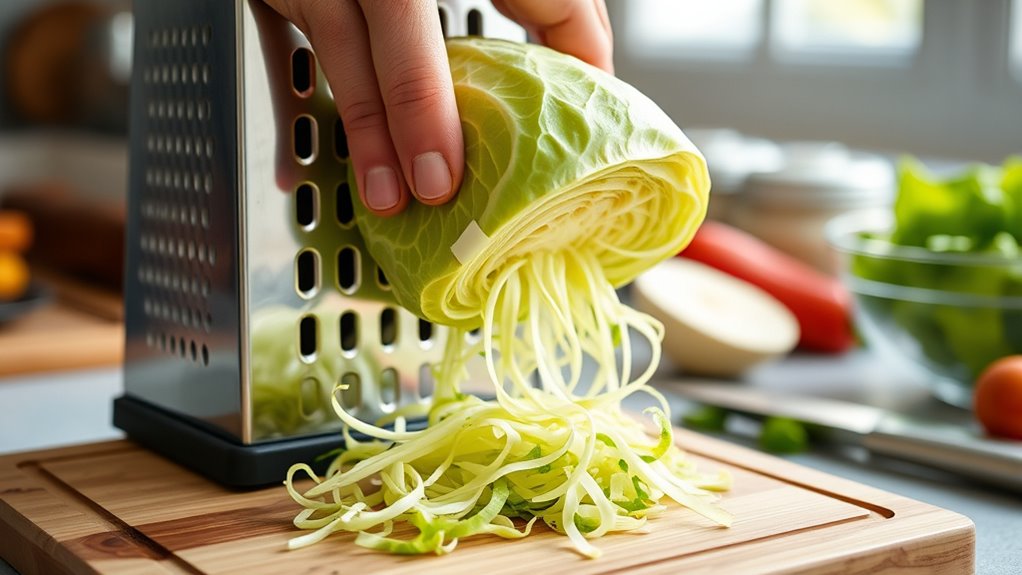
How to Shred Cabbage With a Grater in 7 Easy Steps
To shred cabbage with a grater in 7 easy steps, start by selecting a box grater with medium-sized holes and a stable base for safety and efficiency.
Fresh cabbage is best for shredding, so remove any damaged leaves and rinse it thoroughly before you begin. Proper preparation ensures better texture and flavor in your shredded cabbage.
Hold the cabbage firmly with your fingers curled away to avoid injury. Press it gently against the grater, and use controlled, downward strokes to shred the cabbage evenly.
Rotate the cabbage as you go to shred all sides uniformly.
After shredding, squeeze out any excess moisture to keep the cabbage crisp and fresh.
Store the shredded cabbage properly to maintain its quality and extend shelf life.
Keep reading to discover expert tips for safety, storage, and maintaining freshness.
Key Takeaways
- Choose fresh, firm cabbage, remove damaged leaves, rinse thoroughly, and dry completely before shredding.
- Use a sturdy box grater with medium-sized holes on a flat surface for even, safe shredding.
- Hold the cabbage firmly with fingers curled away from blades, applying steady downward strokes for uniform shreds.
- Rotate the cabbage gradually to shred all parts evenly and prevent wobbling during use.
- Immediately clean and dry the grater after use, and store shredded cabbage in airtight containers in the fridge.
Pick the Best Grater for Cabbage
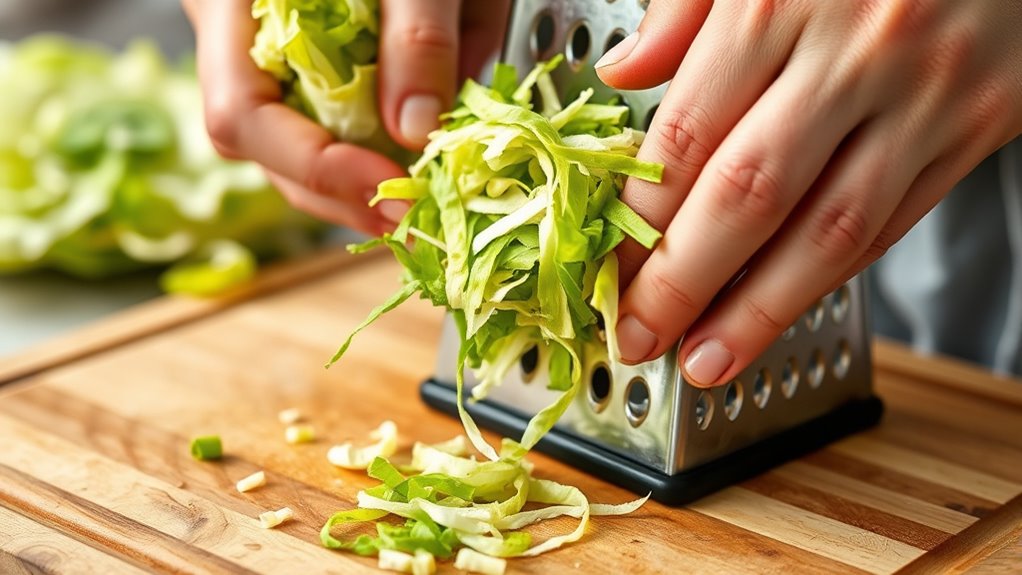
How do you choose the best grater for shredding cabbage? First, consider the type of grater. A box grater with medium-sized holes usually works best because it shreds cabbage into thin, even strips.
Avoid microplane graters—they’re too fine and won’t give you the right texture. Next, think about stability. You want a grater that won’t slip while you work, so look for one with a sturdy base or rubber grips.
Also, check the material; stainless steel blades are sharp and durable, making shredding easier. If you shred cabbage often, a handheld flat grater might be less comfortable than a box grater. Keep these points in mind, and you’ll pick a grater that makes shredding cabbage quick and efficient.
Prepare Your Cabbage for Shredding
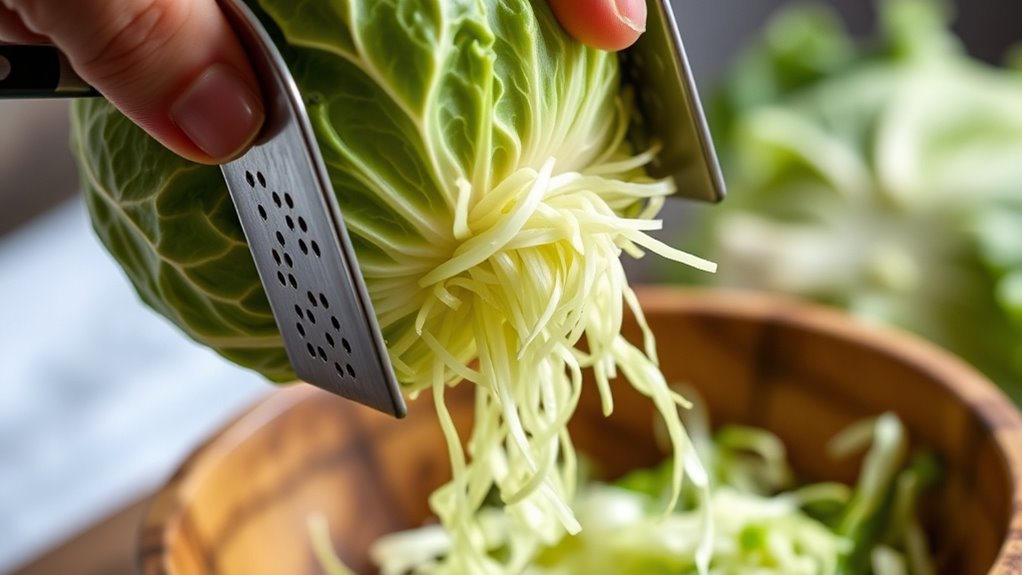
Before you start shredding, make sure you pick a fresh cabbage with firm leaves. Rinse it thoroughly under cold water and dry it well to avoid sogginess.
Don’t forget to remove the tough outer leaves—they can be bitter and tough to grate.
Choosing Fresh Cabbage
Although shredding cabbage is simple, choosing fresh, crisp cabbage makes a big difference in texture and flavor. When picking your cabbage, look for leaves that feel firm and tightly packed. Avoid heads with wilted, yellowed, or bruised outer leaves, as these indicate age or damage.
A fresh cabbage should feel heavy for its size and have a vibrant color—whether green, purple, or red. Also, give it a gentle squeeze; it should be dense without any soft spots. If the stem end looks dry or cracked, skip it, since freshness begins there.
Washing and Drying
Once you’ve chosen a fresh cabbage, cleaning it properly guarantees your shredded cabbage is safe and tastes its best. Start by rinsing the cabbage under cold running water, gently rubbing to remove dirt and pesticides. Avoid soaking, as waterlogged cabbage loses crispness.
After washing, dry the cabbage thoroughly. Use a clean kitchen towel or a salad spinner to remove excess moisture, which helps your shredded cabbage stay crunchy and prevents sogginess.
| Step | Action | Tip |
|---|---|---|
| 1 | Rinse under cold water | Use gentle rubbing |
| 2 | Avoid soaking | Preserves crispness |
| 3 | Dry thoroughly | Use towel or salad spinner |
| 4 | Prep for shredding | Ensure no excess moisture |
Removing Outer Leaves
Since the outer leaves of cabbage often carry dirt or damage, you’ll want to remove them before shredding. Start by peeling off these outer layers gently with your hands. If you notice any spots that look wilted, bruised, or slimy, discard those leaves to guarantee your shredded cabbage stays fresh and crisp.
Removing the outer leaves also helps reveal the firmer, cleaner layers inside, which shred more evenly. Once you’ve stripped away the damaged leaves, give the cabbage another quick rinse to eliminate any residual dirt. Then, pat it dry with a clean towel or use a salad spinner.
Hold Cabbage and Grater Safely
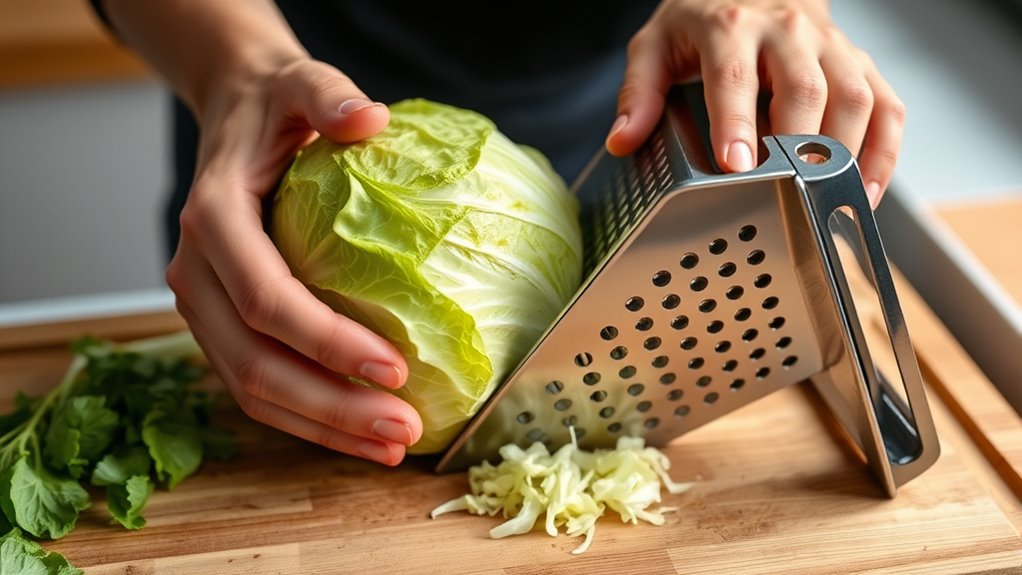
Before you start shredding, make sure you have a firm grip on both the cabbage and the grater to prevent slips that could cause injury. Hold the cabbage steady with one hand, pressing it gently but firmly against the grater. With your other hand, grip the grater securely on a flat surface or cutting board to keep it from moving.
Ensure a secure hold on both cabbage and grater to shred safely and avoid slips.
Picture this:
- Your fingers curled away from the sharp edges, holding the cabbage like a ball.
- The grater braced firmly, its base flat on the counter.
- Both hands working together, creating a controlled, stable shredding setup.
This careful hold guarantees safety and control, prepping you perfectly for the next step without risking cuts or accidents.
Shred Cabbage With Controlled Strokes
While keeping your grip steady, use smooth, controlled strokes to shred the cabbage against the grater. Apply consistent pressure without forcing the cabbage, allowing the blades to do the work. Move the cabbage evenly from top to bottom, maintaining a steady rhythm to prevent slips.
Avoid jerky or rushed motions, as these can cause uneven shreds or increase the risk of injury. Keep your fingers clear of the grater’s surface, especially as you near the end of the cabbage head. If the cabbage feels too large or awkward, trim it into smaller sections for better control.
Controlled strokes help produce uniform shreds, making your cabbage easier to cook or dress. Focus on technique rather than speed to shred safely and effectively.
How to Shred Cabbage Evenly and Avoid Mistakes
Even if you’ve mastered the basic shredding technique, achieving evenly shredded cabbage requires attention to detail and a few simple adjustments. First, make sure you trim the cabbage core properly so leaves separate easily without tearing. Then, hold the cabbage firmly but don’t squeeze too hard to avoid uneven pressure.
Finally, keep your grating strokes consistent in speed and angle to produce uniform pieces.
Here are three tips to help you shred cabbage evenly and avoid common mistakes:
- Position the cabbage flat against the grater surface, preventing wobbling.
- Use smooth, steady downward strokes, not quick jerks.
- Rotate the cabbage gradually to shred all parts evenly without forcing it.
These small steps ensure your cabbage looks neat and cooks uniformly.
What to Do With Your Shredded Cabbage
Once you’ve shredded your cabbage, you can use it in a variety of dishes that bring out its crisp texture and mild flavor. Whether you want something fresh, cooked, or tangy, shredded cabbage adapts well.
Here’s a quick guide to inspire your next meal:
| Dish Type | Idea |
|---|---|
| Salad | Classic coleslaw |
| Stir-fry | Garlic and soy cabbage |
| Soup | Cabbage and potato stew |
| Wraps | Cabbage lettuce wraps |
| Fermented | Homemade sauerkraut |
Try mixing shredded cabbage with your favorite veggies or proteins to add crunch and nutrition. You can also toss it into tacos, sandwiches, or grain bowls for extra texture.
Don’t be afraid to get creative!
Clean Up and Store Your Grated Cabbage
Once you’ve finished shredding, rinse any leftover cabbage from your grater right away to prevent it from drying and sticking. Make sure to clean the grater thoroughly with warm, soapy water to keep it in good shape.
Then, store your grated cabbage in an airtight container in the fridge to keep it fresh for your next meal.
Rinsing Residual Cabbage
How do you make sure no cabbage bits get wasted after grating? Rinsing residual cabbage off your grater and bowl is key. Simply hold the grater under cold running water to wash away tiny cabbage pieces stuck in the holes and grooves.
This helps preserve every shred you worked hard to create.
To maximize recovery, try these tips:
- Use a flexible silicone spatula to scrape leftover cabbage from the bowl edges.
- Gently shake the grater over your mixing bowl to dislodge any clinging bits.
- Soak the grater briefly in cold water if the cabbage is stubbornly stuck.
These simple steps help you capture all the cabbage and keep it fresh before storing or cooking.
Proper Grater Cleaning
Although cleaning your grater might seem like a chore, doing it promptly prevents cabbage bits from drying and sticking, making cleanup much easier. Right after rinsing, use a small brush or an old toothbrush to scrub both sides of the grater, focusing on the holes where cabbage often clings. Avoid letting bits sit too long, as they can become tough to remove.
Wash the grater with warm, soapy water, then rinse thoroughly to remove any soap residue. Be careful handling the sharp edges to avoid cuts. After washing, dry the grater completely with a clean towel or let it air dry to prevent rust.
Proper cleaning keeps your grater in good condition and ready for the next time you shred cabbage.
Storing Grated Cabbage
After shredding your cabbage, you’ll want to store it properly to maintain freshness and crispness. First, squeeze out excess moisture using a clean kitchen towel or paper towels. This prevents sogginess.
Next, transfer the grated cabbage to an airtight container or a resealable plastic bag. Remove as much air as possible to slow down oxidation. Label the container with the date to keep track of freshness.
Store it in the refrigerator’s crisper drawer, where the temperature and humidity are ideal for vegetables.
Here’s a quick checklist to keep in mind:
- Squeeze moisture out to avoid sogginess
- Use airtight containers or resealable bags
- Keep in the crisper drawer for optimal freshness
Following these steps will ensure your cabbage stays crisp and ready to use.
Frequently Asked Questions
Can I Shred Cabbage With a Food Processor Instead of a Grater?
Yes, you can shred cabbage with a food processor. Just use the shredding blade attachment, feed the cabbage through carefully, and pulse until you get the desired size.
It’s faster and less messy than grating by hand.
Is Shredded Cabbage Nutritious Compared to Whole Cabbage?
Shredded cabbage still packs the same nutritional punch as whole cabbage, like tiny green jewels bursting with vitamins and fiber. You’ll enjoy all the antioxidants and nutrients, just in a more convenient, easy-to-eat form.
How Long Does Shredded Cabbage Stay Fresh in the Fridge?
You can keep shredded cabbage fresh in the fridge for about 3 to 5 days. Make sure to store it in an airtight container or a sealed plastic bag to maintain its crispness and prevent it from spoiling quickly.
Can Shredded Cabbage Be Frozen for Later Use?
Yes, you can freeze shredded cabbage for later use. Just blanch it first to preserve texture and flavor, then cool, drain, and pack it in airtight bags or containers before freezing to keep it fresh longer.
What Dishes Pair Best With Freshly Shredded Cabbage?
Like pairing peanut butter with jelly, you’ll find freshly shredded cabbage perfect in coleslaw, tacos, stir-fries, or as a crunchy topping on sandwiches.
It adds that crisp, invigorating crunch every great dish deserves.
Conclusion
Shredding cabbage with a grater is as simple as peeling an orange when you follow the right steps. By choosing the best grater, preparing your cabbage properly, and using controlled strokes, you’ll get perfect shreds every time.
Remember to handle everything safely and clean up promptly to keep your kitchen tidy. Now, enjoy your fresh, crisp cabbage in salads, slaws, or stir-fries—your cooking just got a whole lot easier!
With these easy steps for how to shred cabbage with a grater, you can confidently prepare your cabbage quickly and efficiently. Mastering this technique will enhance your meal prep and add a fresh touch to your dishes every time.