7 Reasons Wood Cutting Boards Are Better Than Plastic
You’ll find wood cutting boards last longer than plastic since they resist warping, cracking, and deep grooves.
Wood cutting boards are also better for protecting your knives because they are softer and reduce dulling.
Additionally, wood naturally fights bacteria with antimicrobial properties and self-healing surfaces.
Wood cutting boards handle heat and stains without damage, developing a rich patina over time.
They are eco-friendly, easy to clean, and add warmth to your kitchen environment.
These qualities make wood cutting boards a superior choice compared to plastic options.
Keep exploring to uncover even more benefits of wood boards and why they are the preferred option for many home cooks and professionals alike.
Key Takeaways
- Wood cutting boards are more durable and resistant to warping or cracking compared to plastic boards.
- They are gentler on knives, preserving sharpness and reducing the need for frequent sharpening.
- Wood naturally inhibits bacteria growth through antimicrobial compounds and self-healing surfaces.
- They resist heat and stains better, maintaining shape and developing an attractive patina over time.
- Wood boards are eco-friendly, biodegradable, and add warmth and character to kitchen decor.
Why Wood Cutting Boards Are More Durable Than Plastic
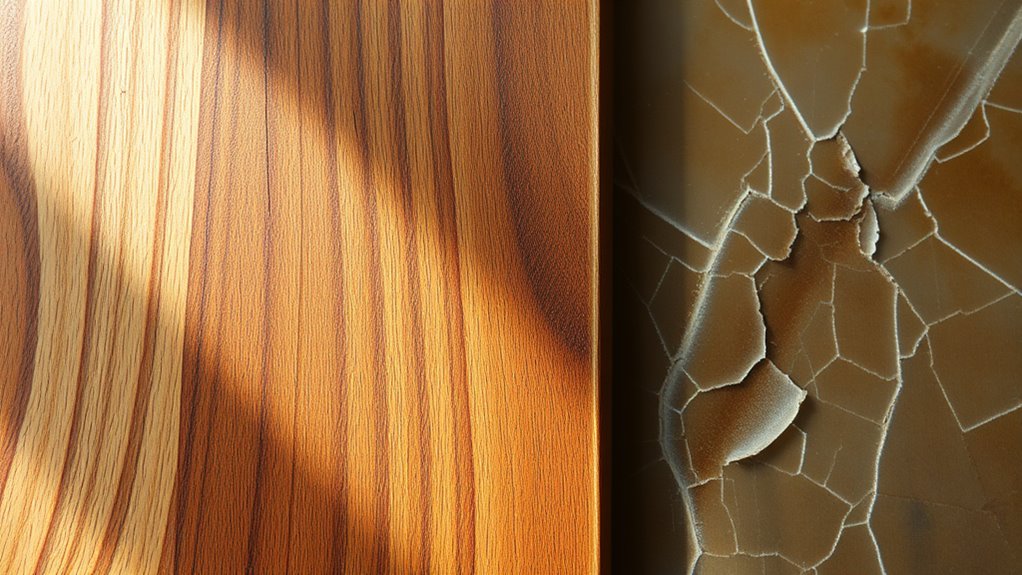
Although plastic boards might seem convenient, wood cutting boards outlast them because of their natural strength and resilience. When you use a wood board, you’re investing in a surface that can handle heavy chopping and slicing without warping or cracking. Unlike plastic, which often gets deep grooves that harbor bacteria and weaken the board, wood naturally self-heals with time.
Its dense fibers absorb impacts better, so your board maintains its integrity longer. Plus, wood boards won’t melt or degrade when exposed to heat, unlike plastic ones. You’ll find that a well-maintained wood cutting board can stay functional for years, making it a smarter, more durable choice for your kitchen.
Why Wood Cutting Boards Protect Your Knives Better
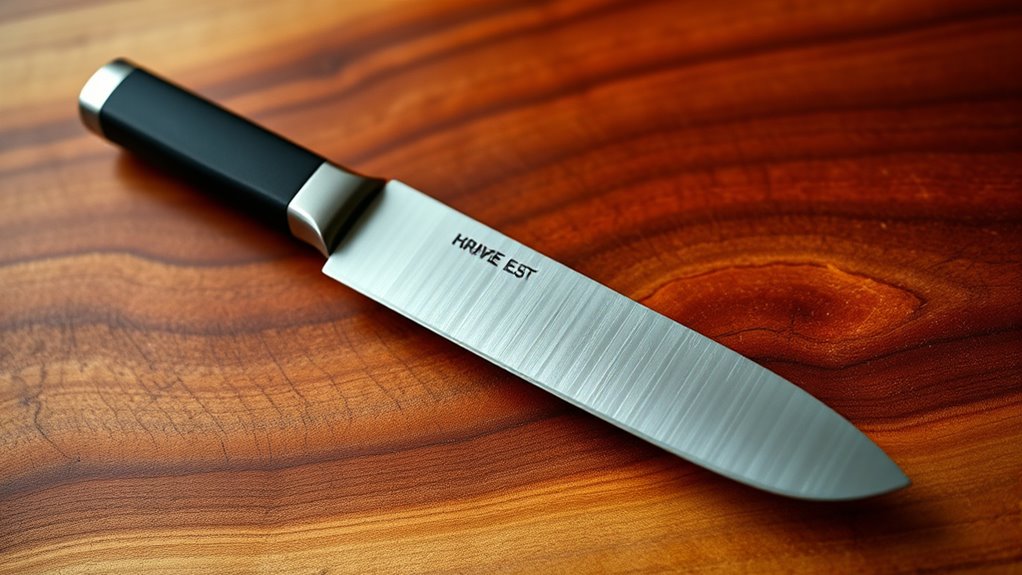
Because wood cutting boards have a softer surface than plastic or glass, they cause less wear on your knives’ edges. When you cut on wood, the blade meets gentle resistance, preserving its sharpness longer. Plastic boards, being harder and less forgiving, dull knives faster, meaning you’ll need more frequent sharpening.
Wood fibers also slightly compress under the knife, reducing edge damage. This helps you maintain precise cuts and extends the life of your knives. Below is a quick comparison:
| Feature | Wood Cutting Boards |
|---|---|
| Surface Hardness | Softer, gentle on blades |
| Edge Wear | Minimal, preserves sharpness |
| Compression | Slight, reduces damage |
| Knife Maintenance | Less frequent sharpening |
| Cutting Precision | Better over time |
Choosing wood means protecting your investment in quality knives.
Why Wood Cutting Boards Naturally Resist Bacteria and Germs
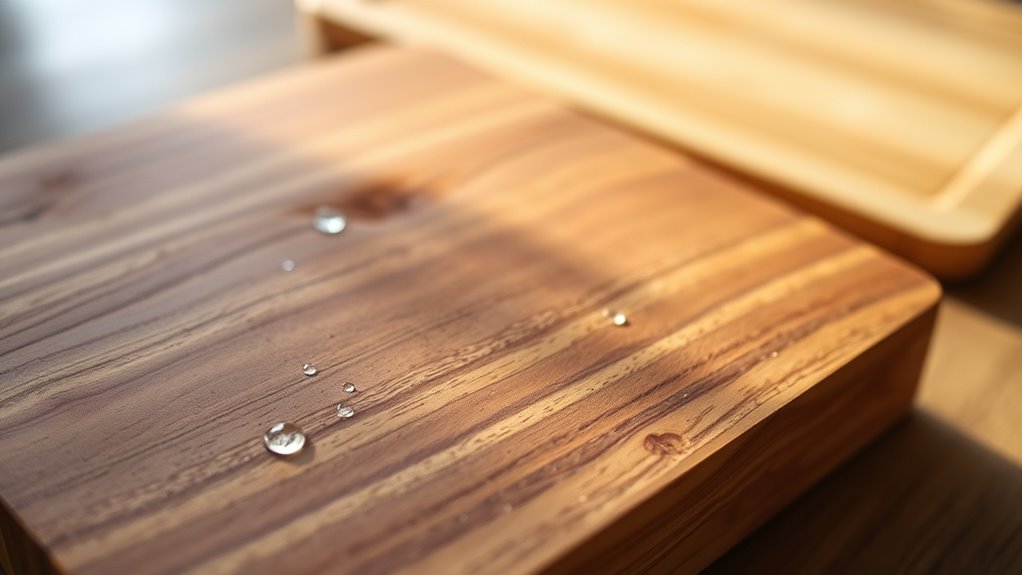
When you use a wood cutting board, you benefit from its natural ability to resist bacteria and germs. Unlike plastic, wood has unique properties that actively inhibit microbial growth, keeping your food safer.
Here’s why wood excels:
- Porous Structure: Wood’s tiny pores trap bacteria, but they don’t survive long inside.
- Natural Antimicrobial Agents: Wood contains compounds like tannins that kill or slow bacteria.
- Self-Healing Surface: Small cuts close up over time, reducing bacteria’s hiding spots.
- Moisture Regulation: Wood absorbs and releases moisture, creating an environment hostile to germs.
Why Wood Cutting Boards Handle Heat and Stains Better
If you’ve ever dealt with warped or permanently stained cutting boards, you’ll appreciate how wood stands up to heat and stains better than many other materials. Wood’s natural density and grain structure absorb heat slowly, so it won’t warp or crack when exposed to hot pots or pans.
Unlike plastic, which can melt or discolor from heat, wood maintains its shape and appearance over time. When it comes to stains, wood’s porous surface may seem like a drawback, but it actually helps by trapping stains below the surface, where they’re less visible.
Plus, wood’s natural oils act as a barrier, resisting deep staining from foods like beets or tomatoes. This means your cutting board stays looking better longer, even with regular use.
Why Wood Cutting Boards Are Easier to Maintain and Clean
Although cleaning any cutting board requires care, you’ll find wood boards surprisingly simple to maintain. Unlike plastic, wood naturally resists deep cuts where bacteria can hide, making your cleaning more effective.
Plus, wood’s natural oils help prevent water absorption, reducing the chance of warping or cracking. To keep your wood board in top shape, follow these easy steps:
- Wash with warm, soapy water immediately after use.
- Avoid soaking or placing it in the dishwasher.
- Disinfect occasionally with a vinegar or lemon solution.
- Apply food-safe mineral oil regularly to maintain moisture and prevent drying.
Why Wood Cutting Boards Are Better for the Environment
Because wood is a renewable resource, choosing a wood cutting board helps reduce your environmental footprint. Wood boards biodegrade naturally, unlike plastic, which lingers in landfills for centuries. When you pick wood, you support sustainable forestry practices that protect ecosystems.
Plus, wood cutting boards often last longer, meaning fewer replacements and less waste. You actively reduce plastic pollution and conserve non-renewable resources by opting for wood.
| Aspect | Wood Cutting Boards |
|---|---|
| Renewable Resource | Yes, sourced from sustainable trees |
| Biodegradability | Naturally decomposes |
| Carbon Footprint | Lower due to renewable sourcing |
| Longevity | Durable, reducing waste |
Choosing wood means you’re making a smarter, eco-friendly choice for your kitchen and the planet.
Why Wood Cutting Boards Look Better in Your Kitchen
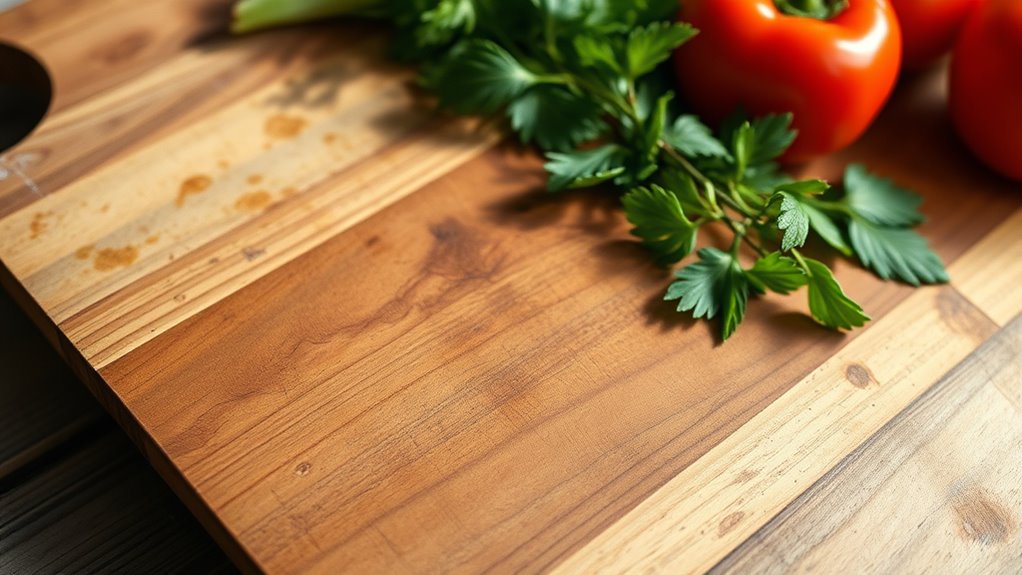
Choosing wood cutting boards not only benefits the environment but also enhances the look of your kitchen. You’ll find they bring warmth and character that plastic boards just can’t match.
Wood cutting boards add warmth and character to your kitchen, offering a natural charm plastic simply can’t achieve.
Here’s why wood boards look better in your space:
- Natural Beauty – The grain patterns add unique texture and depth.
- Timeless Appeal – Wood complements both modern and traditional kitchen styles.
- Aging Gracefully – Over time, wood develops a rich patina, adding charm.
- Versatile Design – Available in various woods and finishes, you can pick one that fits your kitchen’s vibe perfectly.
With wood cutting boards, your kitchen feels cozier and more inviting, making meal prep enjoyable and visually pleasing.
Frequently Asked Questions
Are Wood Cutting Boards Safe for Use With All Types of Food?
Yes, you can safely use wood cutting boards with all types of food, but you should clean them thoroughly after each use to prevent bacteria buildup. Avoid cross-contamination by using separate boards for raw meat and produce.
Make sure to dry the boards completely before storing them to avoid moisture-related issues. Regularly oiling the wood can also help maintain its condition and longevity.
How Do Wood Cutting Boards Compare in Price to Plastic Ones?
Wood cutting boards usually cost more upfront than plastic ones, but you’ll find they last longer and resist damage better.
Can Wood Cutting Boards Be Used for Both Cutting and Serving?
You’ll happily find wood cutting boards double as charming serving platters. They effortlessly shift from chopping veggies to presenting cheese, adding warmth and rustic elegance to your table without needing any extra dishes or fuss.
Do Wood Cutting Boards Require Special Oils or Treatments?
Yes, you should regularly oil wood cutting boards with food-safe mineral oil to prevent drying and cracking. Conditioning them keeps the wood hydrated, extends their lifespan, and maintains their natural beauty and durability.
Applying oil helps to create a protective barrier against moisture and stains. It is important to avoid using non-food-safe oils, as they can become rancid and damage the board. Regular maintenance ensures your cutting board remains safe and functional for years to come.
Are There Any Types of Wood Better Suited for Cutting Boards?
You’ll find hardwoods like maple, walnut, and cherry work best for cutting boards. Coincidentally, they’re dense enough to resist knife marks but gentle on blades, so you’ll keep your tools sharp and your board durable.
Conclusion
Now that you know why wood cutting boards outshine plastic in durability, knife care, hygiene, heat resistance, maintenance, eco-friendliness, and style, you might think the choice is obvious.
But here’s the twist: the real question isn’t which board is better—it’s what kind of kitchen experience you want.
Will you settle for the ordinary, or will you embrace a timeless, smarter choice that transforms every meal prep?
The answer lies just beneath the surface, where wood cutting boards offer unmatched quality and functionality.
Choosing wood means investing in durability, enhanced knife care, superior hygiene, and eco-friendliness.
Ultimately, it’s about creating a kitchen environment that reflects style and sustainability for years to come.