
What Pressure Is Requied to Operate a Blackstone Griddle
To operate your Blackstone griddle effectively, maintaining the correct propane pressure is essential. The ideal pressure for a Blackstone griddle is between 10 and 11 inches of water column, which is approximately 0.4 psi.
This specific pressure range ensures consistent heat distribution and reliable flame output. Operating within this pressure range guarantees steady flames and optimal cooking performance. It also helps prevent safety risks that can arise from improper pressure levels.
Too low a pressure results in weak flames and uneven heating, which can affect your cooking results. Conversely, too high a pressure may damage your griddle and create hazardous conditions.
Keeping the propane pressure steady helps your griddle operate smoothly and extends its lifespan. Learn how to check and adjust this pressure for the best cooking outcomes.
Key Takeaways
- Blackstone griddles typically require a propane pressure of around 10-11 inches of water column (WC) for optimal operation.
- The ideal pressure range ensures steady flames and consistent heat distribution across the cooking surface.
- Pressures below 5 inches WC cause weak flames and uneven heating, while above 11 inches WC risks safety hazards.
- Proper regulator settings, usually preset at the factory, should be verified to maintain correct pressure.
- Maintaining the recommended pressure improves fuel efficiency, cooking performance, and equipment safety.
Blackstone Griddle: Required Operating Pressure

Although it might seem straightforward, knowing the required operating pressure for your Blackstone griddle is essential to get the best performance. You need the right pressure to guarantee consistent heat and efficient fuel use. If the pressure is too low, your griddle won’t heat properly, resulting in uneven cooking and longer cook times.
Too high, and you risk damaging the regulator or burner components. Typically, Blackstone griddles are designed to operate at peak performance within a specific pressure range, so you should always check your model’s specifications. This pressure ensures your griddle delivers steady flames, maintaining the right cooking temperature.
Getting this right means your food cooks evenly, and your griddle runs safely and efficiently every time you fire it up.
Standard Propane Pressure Settings for Your Blackstone Griddle

To keep your Blackstone griddle running smoothly, you’ll want to maintain the correct propane pressure. The standard setting for most Blackstone griddles is around 11 inches of water column (WC), which equals roughly 0.4 psi. This pressure ensures your burners produce consistent heat without wasting fuel or causing uneven cooking.
You’ll typically see this pressure set at the regulator attached to your propane tank. Most Blackstone griddles come with a factory-installed regulator preset to this level, but it’s good to verify if you’re using a different regulator. Avoid adjusting the pressure without proper tools or guidance, as incorrect settings can impact your griddle’s performance.
Keeping to the standard 11-inch WC pressure helps you get the best cooking results every time.
How Propane Regulator Pressure Affects Griddle Performance
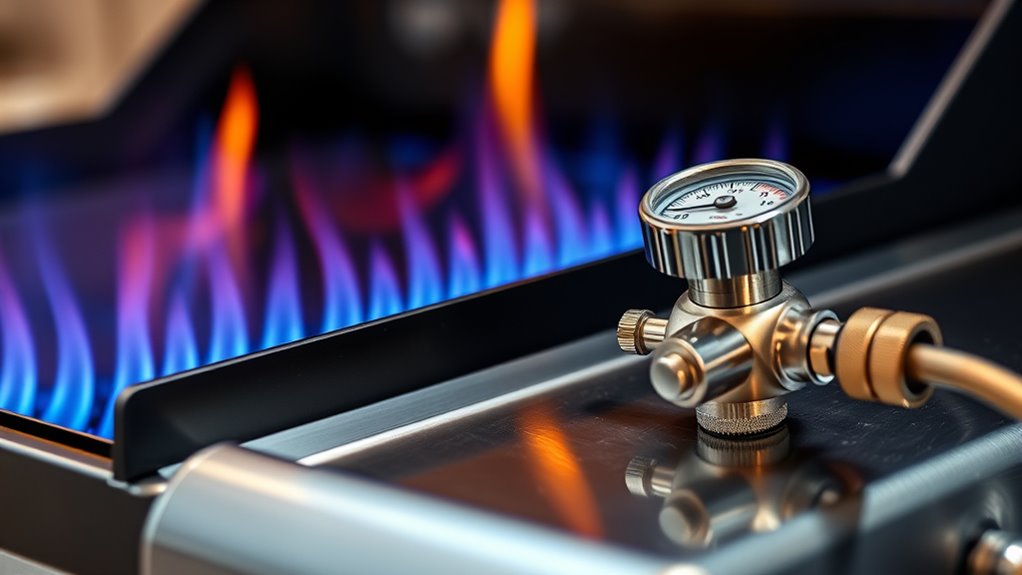
You need to keep your propane regulator within the ideal pressure range to guarantee your Blackstone griddle heats evenly. If the pressure is too low or too high, you’ll notice uneven heat distribution across the cooking surface.
Understanding this balance helps you get the best performance from your griddle every time.
Optimal Regulator Pressure Range
When you adjust the propane regulator to the correct pressure, your Blackstone griddle will deliver consistent heat and efficient fuel use. The ideal pressure range typically falls between 5 and 11 inches of water column (W.C.), ensuring your burners perform at their best. Pressures below this range may cause weak flames, while higher pressures risk safety issues and uneven cooking.
Here’s a quick guide:
| Pressure (inches W.C.) | Performance Effect |
|---|---|
| Below 5 | Flame is weak, poor heating |
| 5 to 7 | Steady flame, efficient use |
| 8 to 11 | Maximum heat output |
| Above 11 | Risk of safety hazards |
Stick to this range for safe, efficient cooking every time you fire up your griddle.
Impact on Heat Distribution
How does propane regulator pressure influence the way your Blackstone griddle distributes heat? Proper regulator pressure guarantees consistent gas flow, which directly affects burner flame size and intensity. When pressure is too low, flames become weak and uneven, causing hot spots and cold zones on the griddle surface.
This uneven heat makes cooking unpredictable and can lead to undercooked or burnt food. On the other hand, excessive pressure produces overly large flames that waste fuel and risk damaging your griddle. Maintaining the correct pressure helps your burners produce steady, even flames that spread heat uniformly across the cooking surface.
This balance assures efficient fuel use and ideal cooking performance, so your Blackstone griddle heats reliably, allowing you to prepare perfectly cooked meals every time.
Checking Pressure on Your Blackstone Griddle
Although it might seem straightforward, checking the pressure on your Blackstone griddle is essential for safe and efficient operation. Start by locating the pressure regulator attached to your propane tank. Make sure the tank valve is fully open, then observe the pressure gauge on the regulator.
It should read between 10 and 11 inches water column (WC), which is the ideal range for most Blackstone griddles. If the pressure is outside this range, your griddle might not heat evenly or could pose safety risks. Always perform this check before each use to ensure consistent performance.
Additionally, inspect hoses and connections for leaks or damage, as these can affect pressure. Proper pressure monitoring keeps your griddle running smoothly and safely every time you cook.
Common Pressure Problems and Fixes for Blackstone Griddles
If your Blackstone griddle isn’t heating properly, gas pressure issues might be the cause. You’ll want to check the regulator, as a faulty or clogged one can disrupt the flow.
Let’s look at how to identify these problems and get your griddle running smoothly again.
Gas Pressure Issues
Why does your Blackstone griddle sometimes struggle to maintain consistent heat? It often comes down to gas pressure issues. If the pressure’s too low, burners won’t get enough fuel, causing weak flames and uneven cooking.
On the flip side, too much pressure can create overly intense flames and even damage your griddle. Check your gas tank’s pressure with a gauge to verify it’s within the recommended range, usually around 11 inches of water column for propane. Also, inspect hoses for leaks or damage that could reduce pressure.
Keep your connections tight and clean to prevent pressure drops. Addressing these gas pressure issues promptly ensures your griddle runs smoothly, giving you steady heat and better cooking results every time.
Regulator Problems
When your Blackstone griddle experiences inconsistent flames or fails to light properly, the regulator often plays a key role in the problem. Regulators control the gas flow and maintain the correct pressure, so if yours is faulty, you might notice weak flames or complete flame loss. Common issues include dirt buildup, damaged diaphragms, or worn-out springs inside the regulator.
To fix this, first turn off the gas supply and disconnect the regulator. Clean any debris carefully and inspect for visible damage. If you find cracks or severe wear, replacing the regulator is the safest option.
Always make sure to reconnect everything securely and test the griddle outdoors for leaks before use. Proper regulator maintenance ensures steady pressure and reliable performance every time.
Adjusting Burner Pressure for Different Cooking Styles
Because different cooking styles demand varying heat levels, you’ll need to adjust your Blackstone griddle’s burner pressure accordingly. For high-heat searing, increase the pressure slightly to achieve a stronger flame, ensuring a perfect crust on steaks or burgers. When cooking delicate foods like eggs or pancakes, lower the pressure to maintain gentle, even heat, preventing burning or sticking.
Use the regulator knob to make these adjustments smoothly, watching your flame’s size and color for guidance—blue flames indicate efficient combustion. Keep in mind that drastic pressure changes can affect fuel consumption and flame stability, so adjust gradually and test as you go. By fine-tuning the burner pressure to your cooking style, you’ll maximize control and deliver consistent, delicious results every time.
Why Consistent Gas Pressure Ensures Even Cooking on Your Blackstone Griddle
Adjusting burner pressure helps you tailor heat for different foods, but maintaining consistent gas pressure throughout cooking keeps your Blackstone griddle performing at its best. When gas pressure stays steady, the burners produce an even flame, which distributes heat uniformly across the griddle surface.
This means your pancakes won’t burn on one side while staying raw on the other, and your burgers will cook evenly without hot or cold spots. If pressure fluctuates, you’ll notice temperature swings that make it tough to control cooking times and results.
Consistency in gas pressure helps you achieve reliable, repeatable cooking outcomes every time you fire up your griddle, ensuring your meals turn out just right without constant adjustments or guesswork.
Why Keeping Proper Pressure Keeps Your Blackstone Safe and Running Smoothly
If your Blackstone griddle doesn’t maintain proper gas pressure, you risk unsafe conditions and inefficient operation. Too high pressure can cause flames to flare up or burners to malfunction, increasing fire hazards. On the other hand, too low pressure leads to weak flames, causing uneven heating and incomplete combustion, which produces harmful carbon monoxide.
Maintaining the right pressure guarantees your griddle runs smoothly, providing consistent heat for safe cooking. It also prevents unnecessary wear on components like valves and regulators, reducing the chance of breakdowns. By keeping proper pressure, you protect yourself from potential gas leaks and ensure your griddle performs reliably every time.
Ultimately, proper pressure isn’t just about cooking well—it’s about keeping you and your equipment safe.
Tips to Maintain Proper Pressure and Extend Your Blackstone Griddle’s Lifespan
To keep your Blackstone griddle running smoothly, you’ll want to regularly check and maintain the gas pressure. Start by inspecting the regulator and hose connections for leaks or wear. Replace any damaged parts immediately to prevent pressure drops.
Use a pressure gauge to ensure the reading stays within the recommended range specified in your manual. Clean the burners and ports routinely to avoid blockages that can affect pressure and flame quality. Store your propane tank upright in a cool, ventilated area to maintain consistent pressure.
Finally, avoid over-tightening connections, as this can damage seals and cause leaks. By following these steps, you’ll keep your griddle performing efficiently and extend its lifespan, ensuring many great cooking sessions ahead.
Frequently Asked Questions
What Is the Best Cleaning Method for a Blackstone Griddle?
The best cleaning method for your Blackstone griddle is to scrape off food debris while it’s still warm, then wipe it down with a damp cloth.
Season the surface with oil afterward to prevent rust and maintain seasoning.
How Do I Season My Blackstone Griddle Before First Use?
You’ll want to coat your Blackstone griddle with oil like you’re protecting the last treasure on Earth—spread a thin layer, heat it until it smokes, then repeat twice.
This locks in flavor and prevents rust!
Can I Use Natural Gas Instead of Propane With My Blackstone Griddle?
You can use natural gas with your Blackstone griddle, but you’ll need a conversion kit designed for natural gas.
Propane and natural gas burners differ, so don’t try switching fuels without the proper parts and adjustments.
What Accessories Are Essential for Blackstone Griddle Cooking?
Like a painter needs brushes, you need essential accessories for your Blackstone griddle: spatulas, scraper, oil sprayer, and a griddle cover. These tools help you cook efficiently and keep your griddle in top shape.
Using the right accessories ensures your cooking process is smooth and enjoyable. They make flipping, cleaning, and seasoning much easier.
A good griddle cover protects your investment from the elements. Proper maintenance with these tools extends the life of your griddle.
How Do I Store My Blackstone Griddle During the Winter?
You should clean your Blackstone griddle thoroughly, apply a thin layer of oil to prevent rust, cover it with a weather-resistant cover, and store it in a dry, sheltered place to keep it safe during winter.
Conclusion
You might think higher pressure means hotter cooking, but with your Blackstone griddle, consistent, correct pressure is key. Too much pressure can cause uneven flames, while too little makes your griddle underperform.
By keeping your propane pressure around the recommended 10-11 inches water column, you guarantee even heat and safe operation. So, don’t chase extremes—maintain steady pressure, and your griddle will deliver perfect results every time.
Remember, the pressure required to operate a Blackstone griddle properly is essential for optimal performance and safety. Consistent propane pressure ensures your griddle cooks evenly and efficiently every time you use it.