Can Instant Pots Be Used as Slow Cookers
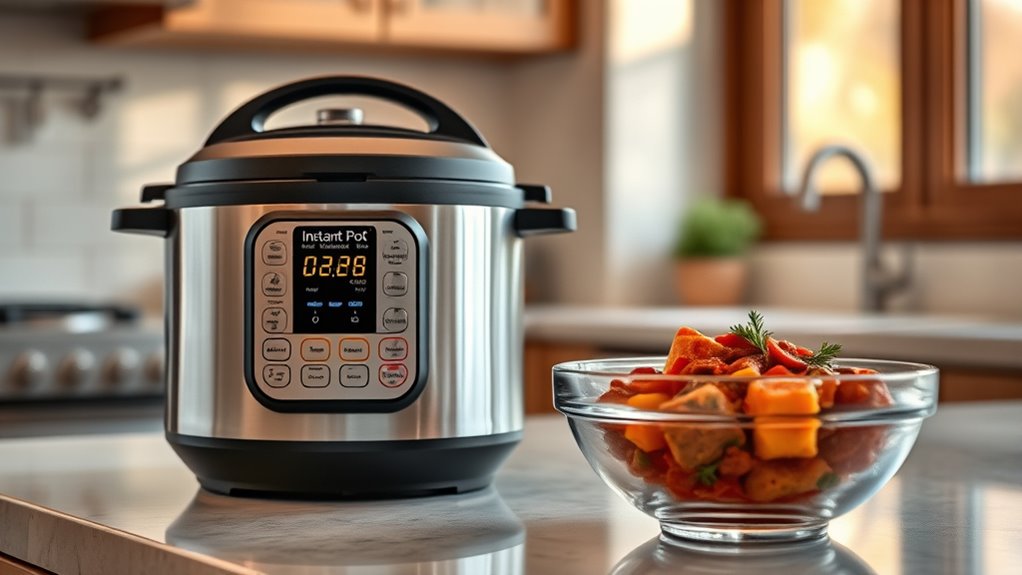
Yes, you can definitely use your Instant Pot as a slow cooker. Instant Pots are versatile kitchen appliances that combine multiple cooking functions, including pressure cooking, sautéing, and slow cooking.
Using your Instant Pot as a slow cooker allows you to enjoy the convenience of one device while replicating the low and steady heat of traditional slow cookers.
The Instant Pot mimics slow cooking by cycling heat on and off, maintaining temperatures between 190°F and 210°F. This process helps you achieve similar flavors and textures as a conventional slow cooker.
Additionally, the programmable settings and faster heat-up time save you counter space and reduce overall cooking time.
To get the best results, adjust recipes slightly and select the appropriate slow cook mode. Keep exploring to discover useful tips and common pitfalls to avoid when using your Instant Pot as a slow cooker.
Key Takeaways
- Instant Pots have a slow cooking function that mimics traditional slow cookers by cycling heat to maintain low, steady temperatures.
- They effectively handle most slow cooker recipes, delivering similar texture and flavor results.
- Instant Pots save counter space by combining slow cooking with pressure cooking, sautéing, and other functions.
- Slow cooking times may need reducing by 20-30% to avoid overcooking when using an Instant Pot.
- Use the Instant Pot’s slow cook mode with a loose or vented lid to prevent pressure buildup during cooking.
Can an Instant Pot Replace Your Slow Cooker?

Although Instant Pots are known for their pressure cooking abilities, they can also function as slow cookers, making them a versatile kitchen tool. If you’re wondering whether an Instant Pot can replace your traditional slow cooker, the answer is yes, in many cases. You’ll find it handles most slow cooker recipes well, offering similar results.
Plus, it saves you counter space since it combines multiple appliances into one. However, you should consider the size and shape differences; some recipes might cook differently due to the Instant Pot’s stainless steel insert compared to a ceramic slow cooker pot.
Still, for everyday slow cooking needs, your Instant Pot can be a reliable substitute without compromising on flavor or texture.
How Does the Instant Pot Slow Cooking Function Work?
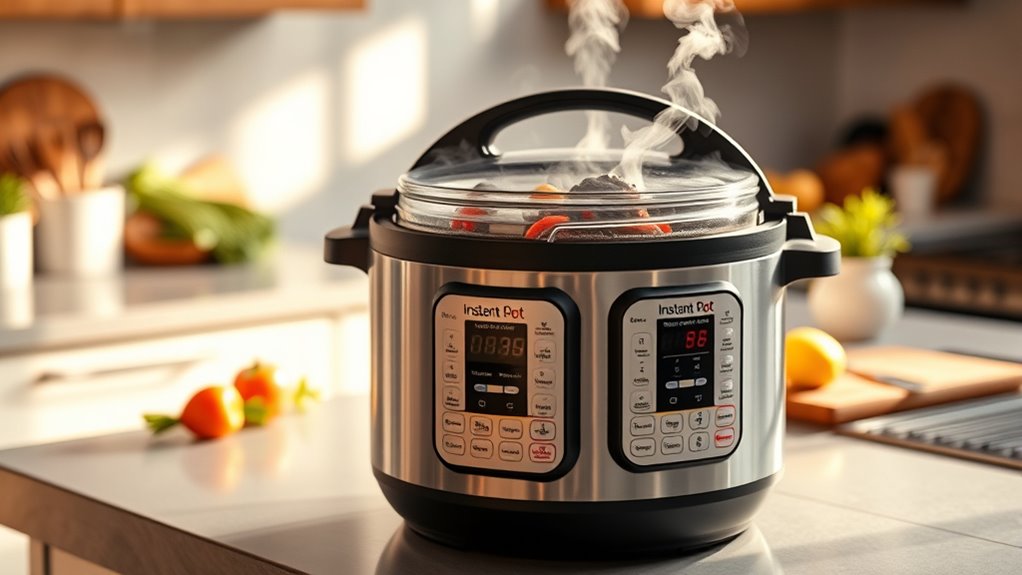
When you use the Instant Pot’s slow cooking function, it mimics the low and steady heat of a traditional slow cooker by maintaining a consistent temperature over several hours. The heating element cycles on and off to keep the pot at a set temperature, usually between 190°F and 210°F, depending on the setting you choose—low, medium, or high.
Unlike pressure cooking, the lid remains loose or vented, allowing steam to escape and preventing pressure buildup. This gentle heat gradually breaks down tough fibers in your ingredients, resulting in tender, flavorful meals.
You simply select the slow cook mode, set the time, and let the Instant Pot handle the rest, offering you the convenience of slow cooking without needing a separate appliance.
Instant Pot vs. Traditional Slow Cooker: What’s Different?
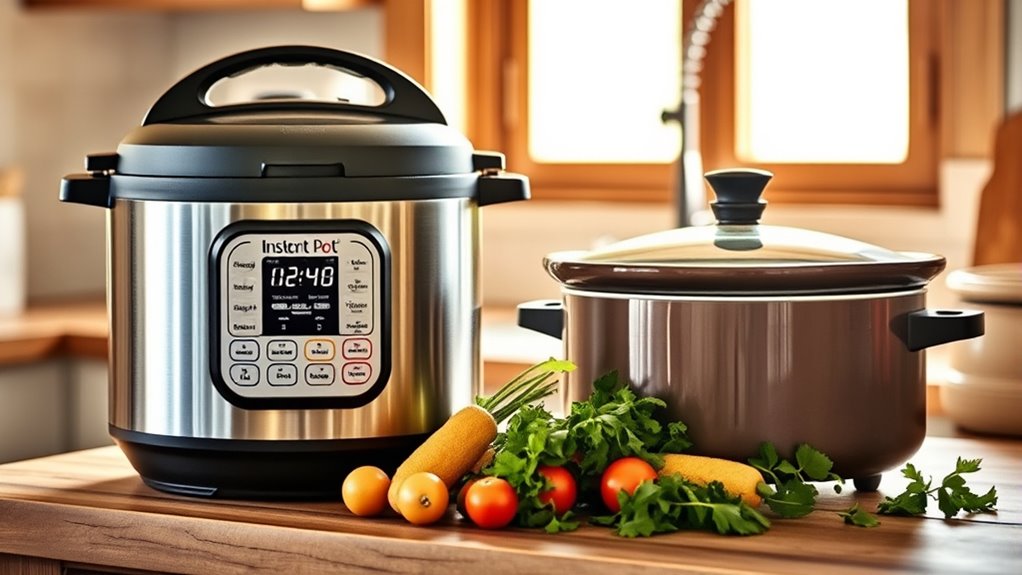
Understanding how the Instant Pot replicates slow cooking sets the stage for comparing it directly with a traditional slow cooker. You’ll notice the main difference lies in versatility—while a slow cooker focuses solely on low and slow heat, the Instant Pot combines pressure cooking, slow cooking, sautéing, and more in one device.
Also, slow cookers maintain a steady low temperature, perfect for unattended cooking, whereas the Instant Pot cycles its heat to mimic slow cooking, which can slightly alter texture and timing.
You control cooking time and temperature easily on both, but the Instant Pot offers programmable settings and quicker heat-up times. If you want a dedicated slow cooker, the traditional model is simple and reliable.
For multitasking, the Instant Pot saves kitchen space and adds flexibility.
Best Instant Pot Slow Cooker Recipes to Try
You can make a variety of delicious meals using your Instant Pot’s slow cooker function. Try hearty stews and soups, flavorful meat dishes, or even vegetarian and vegan options to suit your taste.
These recipes will help you get the most out of your Instant Pot’s versatility.
Hearty Stews And Soups
Since Instant Pots can mimic slow cooker settings, you can easily prepare hearty stews and soups that develop rich, deep flavors over time. Simply select the slow cook function, set the timer, and let the Instant Pot work its magic while you go about your day. You’ll love how ingredients like tender vegetables, beans, and broth meld perfectly, creating comforting meals that warm you up.
Whether you’re making a classic beef stew, a vibrant vegetable soup, or a spicy chili, the slow cook mode ensures every bite is full of flavor. Plus, with the Instant Pot’s sealed environment, your soups stay moist and flavorful without constant monitoring. It’s an effortless way to enjoy slow-cooked meals without needing a separate appliance.
Flavorful Meat Dishes
When you want tender, flavorful meat without spending hours in the kitchen, the Instant Pot’s slow cook function delivers exceptional results. You can prepare dishes like pulled pork, beef brisket, or chicken thighs that melt in your mouth. The slow cook setting allows flavors to deepen, making every bite rich and satisfying.
Here are some of the best meat dishes to try with your Instant Pot slow cooker:
| Dish | Meat Type | Cooking Time (Hours) |
|---|---|---|
| Pulled Pork | Pork Shoulder | 6-8 |
| Beef Brisket | Beef | 8-10 |
| Chicken Thighs | Chicken | 4-6 |
| Lamb Shanks | Lamb | 7-9 |
| Pot Roast | Beef | 8-10 |
Try these recipes for a hands-off, delicious meal every time.
Vegetarian And Vegan Options
Although meat dishes often steal the spotlight, Instant Pots excel at slow-cooking vibrant vegetarian and vegan meals too. You can easily prepare hearty stews, rich curries, and flavorful chili with beans, lentils, and fresh vegetables. The slow cooking process enhances the depth of flavors and tenderizes ingredients perfectly.
Try recipes like vegan mushroom bourguignon or slow-cooked ratatouille to impress your taste buds. With an Instant Pot, you don’t have to sacrifice convenience or taste when choosing plant-based options. Plus, you can customize spices and vegetables to suit your preferences.
Whether you’re a full-time vegan or simply want to add more meatless meals to your week, the Instant Pot makes slow cooking these dishes simple and rewarding.
Can You Use Any Slow Cooker Recipe in an Instant Pot?
If you want to try a slow cooker recipe in your Instant Pot, you’ll find that many recipes translate well with a few adjustments. Most slow cooker dishes, like stews, soups, and roasts, can be made in your Instant Pot using the slow cook function or pressure cooking. However, not every recipe will work perfectly without tweaking ingredients or cooking methods.
For example, recipes relying on long, low heat to develop flavors may need modifications to avoid overcooking or drying out. Also, recipes that call for browning ingredients first can benefit from using the sauté function on your Instant Pot. Overall, you can use many slow cooker recipes, but keep in mind that some recipes might require small changes to get the best results.
How to Adjust Cook Times Using Instant Pot Slow Cooker Mode
Many slow cooker recipes can work in your Instant Pot, but adjusting cook times is key to achieving the right texture and flavor. Since the Instant Pot’s slow cooker mode can cook slightly faster or at different temperatures than traditional slow cookers, you’ll want to reduce the cooking time by about 20-30%.
For example, if a recipe calls for 8 hours on low, try 6 to 6.5 hours in your Instant Pot. Keep an eye on your dish the first few times you try this—it helps you fine-tune cooking times for your specific model. Also, avoid opening the lid frequently, as this releases heat and can affect cooking time.
With a bit of practice, you’ll master perfectly timed slow cooking in your Instant Pot.
Best Instant Pot Settings for Slow Cooking
When you use your Instant Pot for slow cooking, selecting the right settings can make all the difference in your meal’s outcome. You’ll want to balance temperature and time to get tender, flavorful results.
Instant Pots usually offer Low, Medium, and High slow cook settings, which correspond to traditional slow cooker temperatures.
Here’s a quick guide to help you choose:
| Setting | Approximate Temperature |
|---|---|
| Low | 190°F (88°C) |
| Medium | 200°F (93°C) |
| High | 210°F (99°C) |
| Keep Warm | 145°F (63°C) |
Use Low for long, gentle cooking, Medium for moderate pace, and High when you’re short on time but still want slow cooker results.
Keep Warm keeps your food ready to serve without overcooking.
Tips for Getting the Best Flavor When Slow Cooking in Your Instant Pot
To get the best flavor from your Instant Pot slow cooker, start by choosing fresh, high-quality ingredients. You’ll also want to layer your flavors carefully, adding herbs and spices at the right times.
Finally, adjusting cooking times can make a big difference in how rich and tender your dish turns out.
Choosing Quality Ingredients
Because the quality of your ingredients directly impacts the final taste, choosing fresh, high-quality produce and meats is essential for slow cooking in your Instant Pot. When you pick the best ingredients, your dish will naturally develop deeper, richer flavors without extra effort.
Look for produce that’s vibrant and firm, and meats with a good marbling of fat to keep them tender and juicy throughout the long cooking process. Avoid anything that looks dull or dry.
Focus on these to elevate your meal:
- Locally sourced vegetables bursting with natural sweetness
- Grass-fed or organic meats for richer, more satisfying flavors
- Fresh herbs that infuse your dish with aromatic, bright notes
Prioritizing quality ingredients means every bite will feel like a comforting, home-cooked masterpiece.
Layering Flavors Strategically
Although slow cooking in an Instant Pot simplifies the process, you still need to layer flavors strategically to get the most out of your ingredients. Start by sautéing aromatics like onions, garlic, and spices using the sauté function before adding other ingredients. This step reveals deeper flavor profiles.
Next, add herbs and spices at different stages—some early for infusion, others later for freshness. Don’t forget to season each layer with salt and pepper to enhance taste gradually. When adding liquids, choose broths or sauces with bold flavors instead of plain water.
Finally, consider the order of ingredients: denser vegetables and tougher cuts of meat go at the bottom to absorb more flavor, while delicate items stay on top. This method guarantees a rich, well-rounded dish every time.
Adjusting Cooking Times
When you adjust cooking times in your Instant Pot’s slow cooker mode, you’ll release richer flavors and better textures. Slow cooking is all about patience—too short, and your dish may be underdeveloped; too long, and it might turn mushy. Start by following traditional slow cooker times, then tweak based on your Instant Pot’s performance.
For example, reduce the time slightly if you notice your food cooks faster. Trust your senses and check for tenderness or flavor depth.
- Feel the satisfaction of a perfectly tender roast melting in your mouth.
- Enjoy the comforting aroma that fills your kitchen hour after hour.
- Relish the joy of sharing a meal that tastes like it simmered all day.
Adjusting times thoughtfully makes your slow-cooked meals truly memorable.
Common Mistakes to Avoid When Slow Cooking With an Instant Pot
If you’re new to using an Instant Pot as a slow cooker, it’s easy to make mistakes that affect your meal’s texture and flavor. One common error is overfilling the pot, which can prevent even cooking. Keep the pot no more than two-thirds full.
Another mistake is not adjusting the cooking time; Instant Pot slow cook mode may cook faster than traditional slow cookers, so monitor your recipes closely. Also, avoid opening the lid too often, as it releases heat and prolongs cooking.
Finally, don’t forget to use the proper settings—Instant Pot’s slow cook mode differs from pressure cooking, so make sure you select it correctly to avoid unintended results. Following these tips helps you get the best slow-cooked meals every time.
Using Instant Pot vs. Slow Cooker Lids for Slow Cooking
Because the lid plays a crucial role in maintaining heat and moisture, choosing between an Instant Pot lid and a traditional slow cooker lid can impact your slow-cooked dishes. The Instant Pot lid seals tightly, designed for pressure cooking, which may trap more moisture than a slow cooker lid.
On the other hand, slow cooker lids are typically glass, allowing you to peek at your meal without losing heat.
When slow cooking with your Instant Pot, consider:
- Using the slow cooker mode lid or a glass lid designed for slow cooking to prevent over-steaming.
- Expecting slightly different moisture levels and adjusting liquid amounts accordingly.
- Enjoying the convenience of the Instant Pot lid, but knowing the traditional lid offers more visual control.
Choosing the right lid helps you achieve the perfect texture and flavor every time.
Cleaning Your Instant Pot After Slow Cooking
Although slow cooking in your Instant Pot leaves behind delicious flavors, it also means you’ll need to clean the appliance thoroughly to keep it in top condition. Start by removing the inner pot and soaking it in warm, soapy water to loosen any stuck-on food. Use a non-abrasive sponge to avoid scratching the surface.
Don’t forget to clean the sealing ring, which can trap odors; you can wash it with soap and water or place it in the dishwasher if your model allows. Wipe the lid carefully, paying attention to the steam release valve and float valve, where residue can accumulate. Finally, dry all parts completely before reassembling.
Regular cleaning after slow cooking guarantees your Instant Pot stays efficient and safe for every meal.
Frequently Asked Questions
Can I Use My Instant Pot for Canning Vegetables?
You can’t use your Instant Pot for canning vegetables safely because it doesn’t reach the high temperatures or maintain the pressure needed for proper sterilization.
Stick to a pressure canner designed specifically for canning to avoid risks.
Is It Safe to Leave the Instant Pot Unattended While Slow Cooking?
You shouldn’t leave your Instant Pot unattended while slow cooking because it requires monitoring to prevent overheating or accidents.
Staying nearby guarantees safety and lets you adjust settings if needed for the best cooking results.
Do Instant Pots Consume More Electricity Than Traditional Slow Cookers?
Instant Pots usually consume more electricity than traditional slow cookers because they use heating elements and electronics for pressure cooking. However, when used just as slow cookers, their energy use is fairly comparable, so you won’t see huge differences.
Can I Use the Sauté Function Before Slow Cooking in My Instant Pot?
Of course, you can sauté before slow cooking—your Instant Pot loves multitasking! Just hit sauté, brown your ingredients, then switch to slow cook mode.
It’s like giving your meal a mini spa day before the long chill.
Are There Specific Instant Pot Models Better Suited for Slow Cooking?
You’ll find that Instant Pot Duo and Ultra models handle slow cooking best, offering precise temperature controls and programmable settings.
These features let you slow cook with more consistency and flexibility than basic models.
Conclusion
Think of your Instant Pot as a versatile Swiss Army knife in the kitchen—it can slow cook just like a traditional slow cooker, but with extra tricks up its sleeve. While it’s not a perfect clone, it lets you simmer flavors gently, saving space and time.
So, don’t hesitate to embrace your Instant Pot’s slow cooking function—it’s like having a trusty companion that adapts to your cooking journey with ease and flair. Using an Instant Pot as a slow cooker offers convenience and flexibility, making it a valuable addition to any kitchen.
In conclusion, Instant Pots can be used as slow cookers effectively, providing the benefits of slow cooking with the added versatility of a multifunctional appliance.