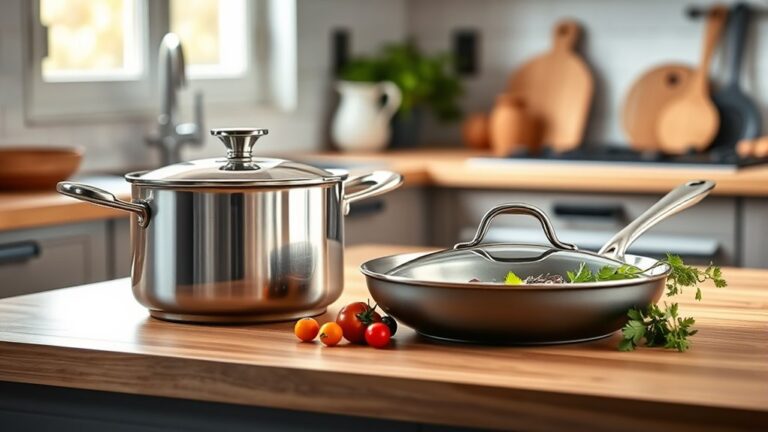
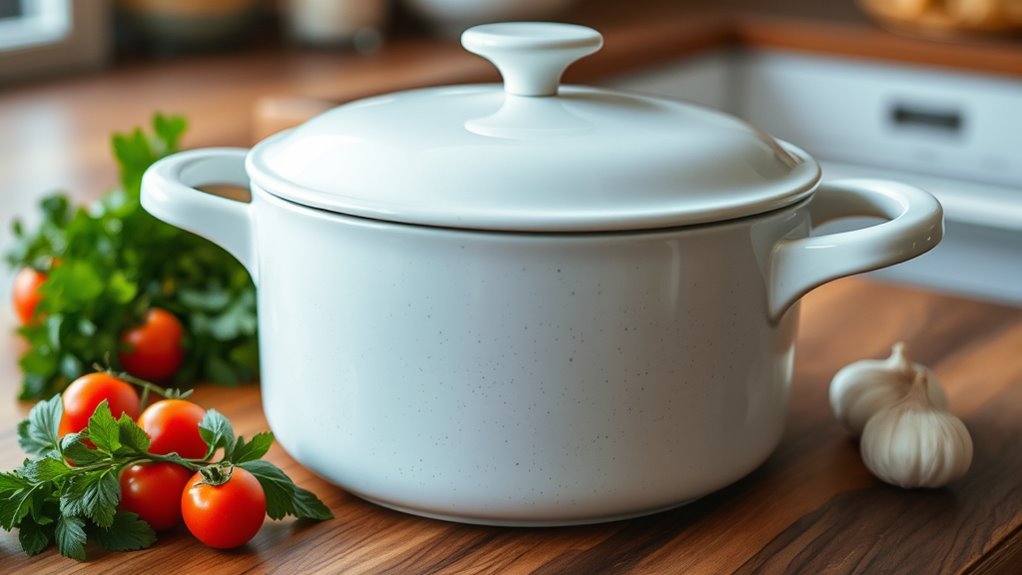
What Is Ceramic Cookware
Ceramic cookware is a popular choice for those seeking durable and eco-friendly kitchen options. Made from natural clay combined with minerals, ceramic cookware provides a naturally non-stick surface without the use of harmful chemicals like PTFE or PFOA. This makes it a safe alternative for healthy cooking.
It heats evenly, allowing you to use less oil while preparing your meals. Ceramic cookware is versatile and suitable for various cooking styles, from sautéing to baking.
However, it requires gentle care to maintain its quality and longevity.
Understanding how ceramic cookware compares to traditional pans helps you make an informed choice. Proper maintenance ensures you get the best performance from your cookware over time.
Key Takeaways
- Ceramic cookware is made from natural clay mixed with silica and minerals, fired at high temperatures for durability and strength. It features an inorganic, chemical-free ceramic coating that provides a non-stick surface without harmful substances like PTFE or PFOA. Ceramic pans heat evenly, retain heat well, and require less oil, supporting healthier cooking with consistent temperature distribution.
- They are eco-friendly, free from metals like aluminum or Teflon, and avoid chemical leaching risks common in traditional non-stick pans. Proper care includes using low to medium heat, avoiding metal utensils, and gentle cleaning to maintain coating integrity and lifespan.
Ceramic Cookware Materials
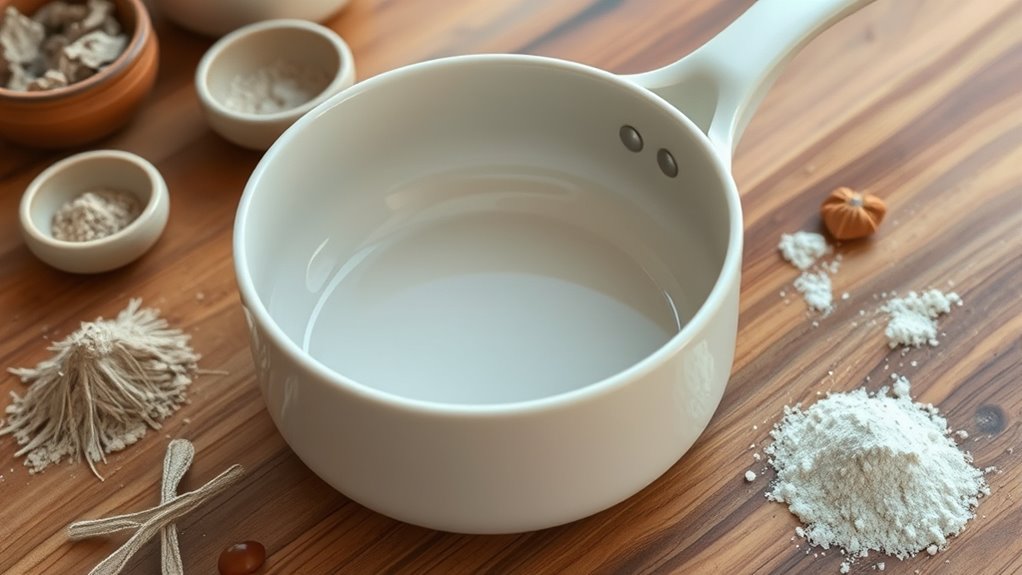
Although ceramic cookware comes in various types, you’ll often find it made from natural clay combined with other materials like silica and minerals. These ingredients create a durable base that withstands high temperatures. Sometimes, manufacturers add elements like quartz or feldspar to enhance strength and thermal stability.
The ceramic coating, which you see on the surface, usually consists of inorganic materials that provide a non-stick finish without synthetic chemicals. This makes it a popular choice if you want something more natural and eco-friendly. You’ll notice that ceramic cookware doesn’t contain metals like aluminum or Teflon in the cooking surface, reducing the risk of harmful chemical leaching.
Understanding these materials helps you choose cookware that matches your cooking style and safety preferences.
Manufacturing Process of Ceramic Cookware

When you look closely at ceramic cookware, you’ll see that its manufacturing process combines traditional craftsmanship with modern technology. It starts with mixing natural materials like clay, minerals, and water to form a smooth, workable base. Then, this mixture undergoes shaping, either by molding or pressing, to create the cookware’s structure.
Finally, the piece is fired at high temperatures, which strengthens it and forms the durable ceramic coating.
Here’s a quick breakdown of the key steps:
- Material preparation: Combining raw ingredients to create the ceramic base.
- Shaping: Forming the cookware’s shape using molds or presses.
- Firing and glazing: Heating at high temperatures to harden and add a smooth, non-stick surface.
This process guarantees you get cookware that’s strong, heat-resistant, and safe for your kitchen.
Ceramic vs. Traditional Non-Stick Pans
When choosing between ceramic and traditional non-stick pans, you’ll notice they differ in material composition and how well they prevent food from sticking. You’ll also want to compare their durability and how easy they are to maintain over time.
Understanding these factors helps you pick the best cookware for your kitchen needs.
Material Composition Differences
Because ceramic cookware relies on a natural, inorganic coating derived from silica and minerals, it offers a different cooking experience compared to traditional non-stick pans that use synthetic chemical coatings like PTFE. When you choose between them, understanding their material differences can help you decide what fits your kitchen best.
- Ceramic coatings are made from sand-based minerals, making them free from chemicals like PFOA and PTFE.
- Traditional non-stick pans typically feature a polymer-based surface, which can degrade at high heat.
- The base materials also differ: ceramic cookware often uses aluminum or stainless steel, while traditional pans might rely mostly on aluminum for heat conduction.
These distinctions affect durability, heat tolerance, and safety, shaping how you cook and care for your pans.
Non-Stick Performance Comparison
Although both ceramic and traditional non-stick pans aim to make cooking and cleanup easier, they perform quite differently regarding their non-stick capabilities. Ceramic pans offer a natural, chemical-free coating that works well with moderate heat, but food can stick if you cook on very high temperatures.
Traditional non-stick pans, usually coated with PTFE, provide superior slickness, especially for low to medium heat cooking, making flipping pancakes or eggs effortless.
| Feature | Ceramic Pans |
|---|---|
| Heat Sensitivity | Avoids very high heat |
| Non-Stick Effectiveness | Good but can degrade faster |
| Best Use | Low to medium heat cooking |
Traditional pans excel in non-stick performance but may release fumes if overheated. Choose based on your cooking style.
Durability and Maintenance
Since you rely on your cookware every day, understanding how durable and easy to maintain ceramic and traditional non-stick pans are can save you time and money. Ceramic pans generally resist scratches better, but their coating can wear down faster if not cared for properly. Traditional non-stick pans often lose their coating sooner, especially with metal utensils or abrasive cleaning.
To keep your pans in great shape, follow these tips:
- Use wooden or silicone utensils to prevent scratches.
- Hand wash with mild soap instead of the dishwasher.
- Avoid high heat to preserve the coating’s integrity.
Benefits of Ceramic Cookware
You’ll appreciate how ceramic cookware supports your health by avoiding harmful chemicals often found in traditional pans. It also heats evenly, so your meals cook consistently without hot spots.
Let’s explore how these benefits make ceramic a smart choice for your kitchen.
Health Benefits
How does ceramic cookware contribute to a healthier kitchen? When you choose ceramic cookware, you reduce your exposure to harmful chemicals often found in traditional non-stick pans. Ceramic coatings are free from PTFE, PFOA, lead, and cadmium, making them a safer option for cooking your meals.
Plus, ceramic surfaces are naturally non-stick, so you can use less oil or butter, helping you prepare lower-fat dishes.
Here’s why ceramic cookware supports your health:
- It avoids toxic chemical release at high temperatures.
- It helps retain nutrients by cooking food evenly without burning.
- It’s easy to clean, reducing bacterial buildup in your kitchen.
Switching to ceramic cookware means cooking with peace of mind and better health.
Heat Distribution Efficiency
Although many cookware options heat unevenly, ceramic cookware distributes heat efficiently, giving you better control over your cooking. When you use ceramic pots or pans, you’ll notice how quickly and evenly the heat spreads across the surface. This means no hot spots that can burn your food or cold areas that leave it undercooked.
You can cook your meals more consistently, which enhances flavor and texture. Plus, ceramic cookware often retains heat well, so your food stays warm longer after cooking. This efficiency also helps save energy since you can cook at lower temperatures without compromising results.
Is Ceramic Cookware Really Safe to Use?
Since ceramic cookware has gained popularity for its non-stick qualities and aesthetic appeal, many wonder if it’s truly safe for everyday cooking. The good news is, ceramic cookware is generally safe when used properly. It’s free from harmful chemicals like PTFE and PFOA, which you’ll find in some traditional non-stick pans.
Ceramic cookware offers a safe, chemical-free non-stick option for everyday cooking when used correctly.
However, safety depends on the quality and care of the cookware.
Here’s what you should keep in mind:
- Choose high-quality ceramic cookware from reputable brands.
- Avoid overheating the pan, as extreme heat can damage the ceramic coating.
- Inspect regularly for chips or cracks, which can affect safety and performance.
Common Uses and Cooking Techniques With Ceramic Cookware
When you use ceramic cookware, you’ll find it’s versatile enough for a variety of cooking methods, from sautéing vegetables to simmering sauces. You can also bake casseroles or roast meats since ceramic distributes heat evenly, ensuring consistent cooking without hot spots. Because ceramic has a nonstick surface, you’ll use less oil, making it ideal for healthier meals.
It’s great for slow cooking, too—perfect for tenderizing tougher cuts of meat or creating rich stews. You can even use it to reheat leftovers gently without drying them out. Just avoid sudden temperature changes, as ceramic can crack under thermal shock.
How to Care for and Maintain Ceramic Cookware
Using ceramic cookware regularly means you’ll want to keep it in good shape to enjoy its benefits for a long time. To maintain your ceramic pots and pans, always avoid using metal utensils that can scratch the surface. Instead, choose wooden, silicone, or plastic tools.
When cleaning, let the cookware cool before washing to prevent thermal shock, and use mild dish soap with a soft sponge—never abrasive pads. Also, avoid sudden temperature changes, like rinsing a hot pan with cold water, which can cause cracking.
Here are three essential tips to care for your ceramic cookware:
- Use low to medium heat settings to prevent damage.
- Hand wash instead of using a dishwasher.
- Store carefully to avoid chipping or scratching.
Following these steps keeps your ceramic cookware looking and performing great.
Key Features to Consider When Buying Ceramic Cookware
Although ceramic cookware offers many benefits, choosing the right set can be tricky if you don’t know what to look for. First, check the coating’s quality; it should be thick and smooth to guarantee durability and non-stick performance. You’ll want cookware that heats evenly, so look for a solid base, often aluminum or stainless steel, for consistent cooking.
Consider the handle design—ergonomic, heat-resistant handles make cooking safer and more comfortable. Also, think about your stovetop type; some ceramic pans aren’t compatible with induction cooktops. Finally, prioritize easy cleaning and dishwasher safety for convenience.
Frequently Asked Questions
Can Ceramic Cookware Be Used in a Dishwasher?
You can use ceramic cookware in a dishwasher, but it’s best to hand wash it to preserve the coating. Dishwashers might cause chipping or dull the finish over time, so gentle care keeps it looking great longer.
Hand washing helps maintain the cookware’s appearance and extends its lifespan. Avoid using harsh detergents or abrasive scrubbers. This will help protect the ceramic surface from damage.
Does Ceramic Cookware Work on Induction Stoves?
You won’t find ceramic cookware dancing on induction stoves because they lack the magnetic charm. Unless the base has a magnetic layer, your induction cooktop and ceramic pots won’t quite get along.
How Long Does Ceramic Cookware Typically Last?
You can expect ceramic cookware to last about 3 to 5 years with regular use. If you handle it carefully, avoid metal utensils, and clean it properly, it might even serve you well beyond that timeframe.
Is Ceramic Cookware Oven-Safe, and at What Temperatures?
You might think ceramic cookware is a delicate flower, but it’s oven-safe! You can safely use it up to around 450°F.
Just avoid sudden temperature changes to keep it strong and lasting longer.
Can Ceramic Cookware Handle Sudden Temperature Changes Without Cracking?
No, ceramic cookware usually can’t handle sudden temperature changes without cracking. You should avoid moving it directly from the fridge to a hot stove or oven to prevent thermal shock and keep your cookware intact.
Thermal shock can cause the ceramic to crack or break, reducing the lifespan of your cookware. To protect your ceramic pots and pans, allow them to come to room temperature before heating.
Gradual temperature changes help maintain the integrity of the ceramic material. This way, you can enjoy your cookware for a longer time without damage.
Conclusion
When you choose ceramic cookware, you’re inviting a reliable kitchen companion that blends beauty and function like a well-choreographed dance. It’s not just about cooking; it’s about crafting meals with a touch of care and safety. Treat your ceramic pans gently, and they’ll reward you with durability and ease.
So, let your culinary journey shine brightly, knowing ceramic cookware has your back. This versatile and eco-friendly cookware turns every meal into a masterpiece. Embrace ceramic cookware for a safer, stylish, and enjoyable cooking experience.