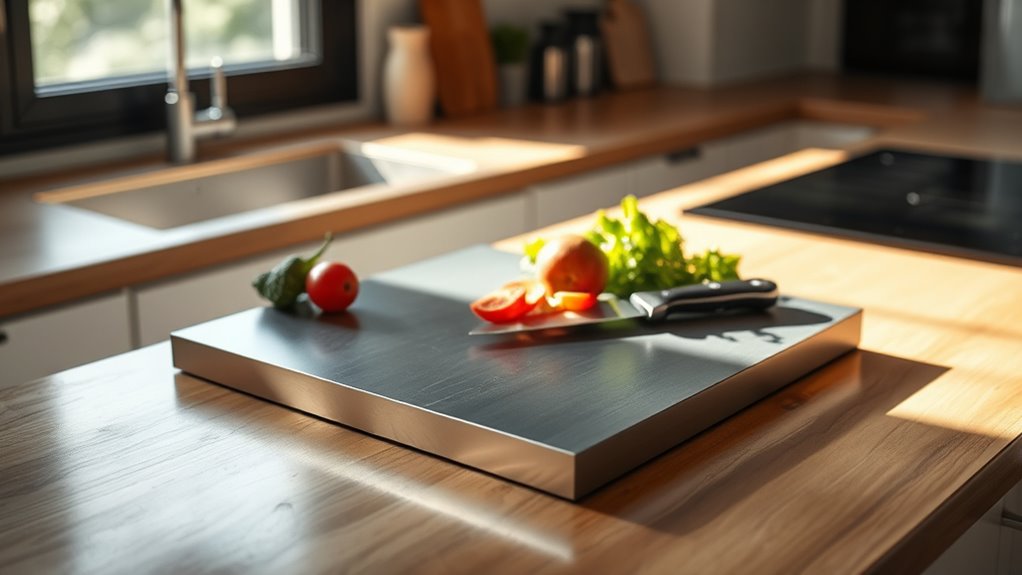
Are Titanium Cutting Boards Good
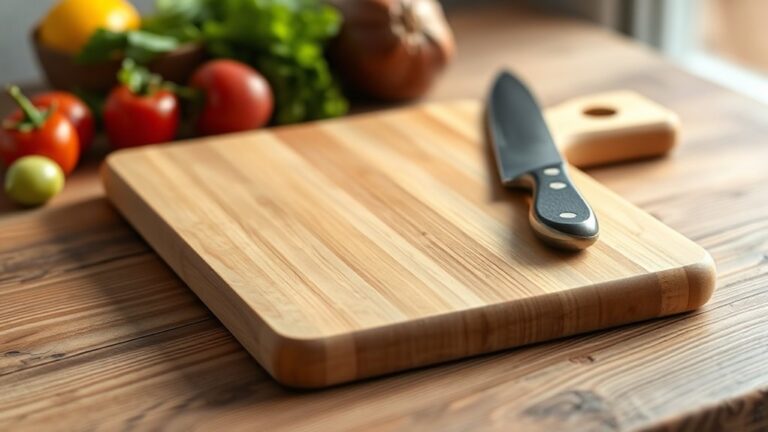
Titanium cutting boards are an excellent choice if you want a durable, hygienic, and corrosion-resistant surface for your kitchen. Compared to traditional wood and plastic boards, titanium cutting boards offer superior strength and lightweight convenience.
They naturally resist bacteria, making them a great option for maintaining cleanliness while prepping meals.
These boards also stand up well to moisture and stains, ensuring long-lasting use. However, keep in mind that titanium cutting boards can dull your knives faster than softer materials.
They also tend to be more expensive, which might be a consideration depending on your budget.
If you prep meals daily and prioritize hygiene, titanium cutting boards are a solid investment. Proper maintenance is key to maximizing their lifespan.
You’ll find more insights on their benefits, care tips, and ideal users in the sections ahead.
Key Takeaways
- Titanium cutting boards are highly durable, corrosion-resistant, and maintain shape better than wood or plastic.
- They offer excellent hygiene with antimicrobial properties that reduce bacteria and cross-contamination risks.
- The hard surface dulls knives faster, requiring more frequent sharpening and careful knife maintenance.
- They are lightweight yet rigid, making them suitable for frequent cooks prioritizing sanitation and durability.
- Higher cost and weight, along with less flexibility, are trade-offs compared to traditional cutting boards.
What’s Inside a Titanium Cutting Board?

Although titanium cutting boards might look simple, they contain a carefully designed combination of materials that give them strength and durability. When you look closer, you’ll find that pure titanium rarely makes up the entire board. Instead, manufacturers often use titanium alloys combined with other metals like aluminum or vanadium.
These blends enhance the board’s toughness and resistance to scratches. You’ll also notice a special surface treatment or coating that helps prevent sticking and makes cleaning easier. This layered structure balances lightweight feel with rigidity, so your board won’t warp or bend during use.
When you choose a titanium cutting board, you’re getting more than just metal—it’s a smart mix of materials engineered to perform well in your kitchen.
Durability: Titanium vs. Wood and Plastic
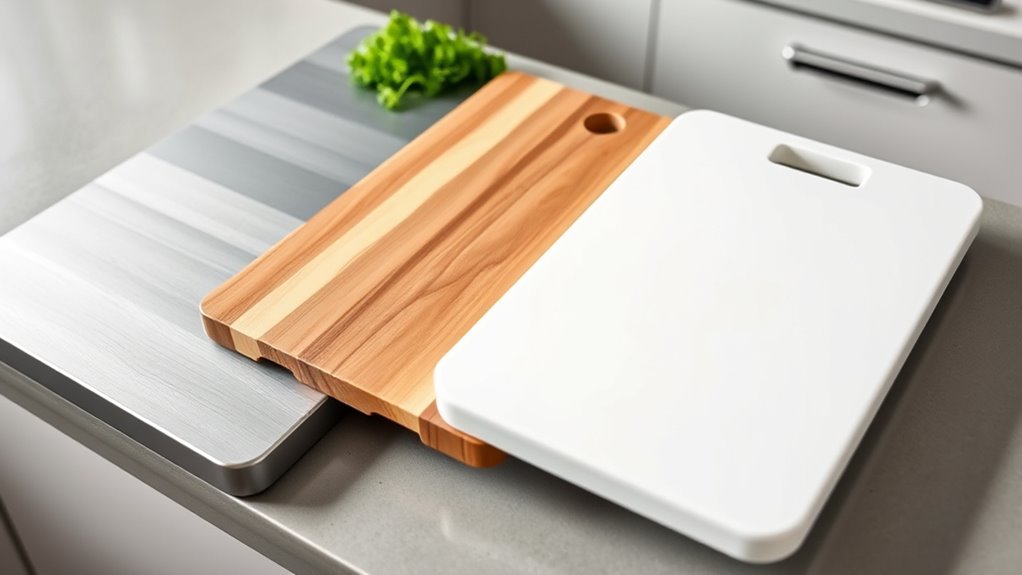
When you compare titanium cutting boards to wood and plastic options, their durability stands out immediately. Titanium resists scratches, dents, and warping much better than wood or plastic. This means your board will maintain its shape and surface quality over time, even with heavy use.
Wood boards can crack or absorb moisture, while plastic often gets deep cuts that harbor bacteria. Titanium, on the other hand, stays strong and intact, making it a long-lasting choice.
| Material | Durability Feature |
|---|---|
| Titanium | Scratch and dent resistant |
| Wood | Prone to cracking |
| Plastic | Easily scratched |
| Titanium | Warping resistant |
| Wood | Moisture absorption |
How Safe and Hygienic Are Titanium Cutting Boards?

You’ll appreciate that titanium cutting boards naturally resist bacteria thanks to their antimicrobial properties. Keeping them clean is simple, but knowing the right maintenance tips guarantees they stay safe and hygienic.
Let’s explore how to care for your titanium board effectively.
Antimicrobial Properties Explained
Since bacteria and germs pose significant risks in the kitchen, you’ll want a cutting board that actively fights contamination. Titanium cutting boards offer natural antimicrobial properties, which means they inhibit the growth of bacteria on their surface. Unlike wood or plastic, titanium doesn’t provide a hospitable environment for microbes to thrive.
This helps reduce the chances of cross-contamination, keeping your food safer. The metal’s surface also resists stains and odors caused by bacteria, making it more hygienic over time. While titanium cutting boards alone don’t replace proper food safety practices, their antimicrobial nature adds an extra layer of protection.
Maintenance and Cleaning Tips
Maintaining titanium cutting boards is simpler than you might expect, thanks to their durable and non-porous surface. You don’t have to worry about deep stains or absorbing odors like with wood or plastic boards. Just wash your board with warm, soapy water after each use, and rinse thoroughly.
Avoid using harsh abrasives or steel wool, which can scratch the surface. To keep it hygienic, sanitize your board regularly with a mild bleach solution or vinegar spray, then rinse well. Titanium boards are also dishwasher safe, so you can use your dishwasher for a thorough clean.
Dry your board completely before storing to prevent any moisture buildup. With these easy steps, your titanium cutting board will stay safe, hygienic, and in great condition.
How Do Titanium Boards Affect Your Knives?
You might wonder how titanium boards impact your knife’s edge durability given their surface hardness. Using these boards can affect how often you need to maintain and sharpen your knives.
Let’s explore what that means for your blades.
Knife Edge Durability
Although titanium cutting boards are prized for their durability and hygiene, they can be tough on your knife edges. When you cut on a titanium surface, the hardness of the metal resists the blade’s edge more than traditional wood or plastic boards. This resistance causes your knife’s edge to dull faster, meaning you’ll need to sharpen it more frequently.
If you want to keep your knives sharp, avoid using titanium boards for delicate slicing or frequent chopping. Instead, use them selectively for tasks where durability and cleanliness are critical. Remember, titanium boards won’t damage your knives instantly, but consistent use without proper maintenance will wear down your blades quicker than softer cutting surfaces.
Surface Hardness Impact
The hardness of titanium cutting boards plays a major role in how they affect your knives. Titanium is much harder than traditional wooden or plastic boards, meaning your knives will encounter a tougher surface every time you cut. While this durability prevents the board from deep scratches and gouges, it also means your knife edges can dull faster because they meet more resistance.
You’ll notice that titanium boards don’t offer the slight give that softer materials provide, which can help preserve sharpness. So, if you prioritize maintaining your knife’s edge, using titanium cutting boards means you’ll need to be ready for more frequent touch-ups. However, the trade-off is a highly durable board that won’t wear down quickly under heavy use.
Maintenance and Sharpening
Since titanium cutting boards are considerably harder than traditional options, they demand more frequent maintenance and sharpening of your knives to keep them performing well. When you use your knives on titanium, the blades dull faster because the board’s toughness puts extra wear on the edges. To maintain sharpness, you’ll need to hone your knives regularly and sharpen them more often than usual.
Skipping this can lead to frustratingly blunt knives and uneven cuts. However, the trade-off is a durable, long-lasting cutting surface that resists deep cuts and scratches. Just be prepared to invest a bit more time into knife care.
With proper maintenance, your knives will stay sharp, and you’ll enjoy the benefits of your titanium cutting board without sacrificing cutting precision.
Pros of Titanium Cutting Boards
When you choose a titanium cutting board, you get a tool that combines exceptional durability with lightweight convenience. Titanium resists scratches and dents, so your board stays smooth and functional for a long time. Its non-porous surface means it won’t absorb liquids or harbor bacteria, making it a hygienic choice for food prep.
You’ll also appreciate how easy it is to clean—simply wash it with soap and water, and it’s ready for your next task. Plus, titanium doesn’t react with acidic foods, so it won’t alter flavors or discolor. Its corrosion resistance ensures it won’t rust or degrade over time, even with frequent washing.
Cons of Titanium Cutting Boards
Although titanium cutting boards offer many benefits, they come with some drawbacks you should consider before buying. First, they tend to be more expensive than traditional wooden or plastic boards, which might not fit every budget.
Second, titanium’s hard surface can dull your knives faster, meaning you’ll need to sharpen them more often. Third, these boards are heavier and less flexible, making them less convenient to move or store compared to lighter options.
- Higher cost compared to other materials
- Increased knife dulling due to hardness
- Heavier and less flexible, limiting portability
Weigh these cons carefully to decide if a titanium cutting board suits your cooking needs and lifestyle.
How to Care for Your Titanium Cutting Board
To keep your titanium cutting board in top shape, you’ll want to clean and maintain it properly after each use. Rinse it with warm, soapy water immediately to remove food particles. Avoid harsh abrasives or steel wool that could scratch the surface.
Dry it thoroughly to prevent water spots or potential corrosion, even though titanium resists rust. Periodically, sanitize your board by wiping it with a vinegar solution or mild bleach diluted in water, then rinse well. Don’t put your titanium board in the dishwasher, as high heat and harsh detergents may damage its finish.
Store it in a dry place away from direct sunlight. With these simple steps, your titanium cutting board will stay durable, hygienic, and looking great for years to come.
Who Benefits Most From Titanium Cutting Boards?
If you value durability and hygiene in your kitchen tools, titanium cutting boards offer clear advantages. You’ll especially benefit if you:
- Cook frequently and need a board that withstands heavy use without warping or cracking.
- Prioritize cleanliness, since titanium’s non-porous surface resists bacteria and odors better than traditional wood or plastic boards.
- Want a lightweight, corrosion-resistant option that’s easy to clean and maintain over time.
Whether you’re a home chef who loves prepping meals daily or someone with food allergies requiring extra sanitary tools, titanium boards provide a reliable, long-lasting solution. You’ll save money and avoid the hassle of replacing worn-out boards while keeping your kitchen safe and efficient.
Where to Buy Quality Titanium Cutting Boards and What to Look For
When searching for quality titanium cutting boards, you’ll want to focus on trusted retailers and brands known for their craftsmanship and material integrity. Start by checking specialized kitchen stores or reputable online platforms like Amazon, Williams Sonoma, or Sur La Table. Look for boards made from pure titanium or high-grade titanium alloys to assure durability and resistance to corrosion.
Pay attention to the board’s thickness and weight—too thin might warp, while overly heavy can be cumbersome. Also, consider non-slip features or textured surfaces that help keep your cutting stable. Reading customer reviews can reveal real-world performance and potential issues.
Frequently Asked Questions
Can Titanium Cutting Boards Be Used for Outdoor Camping?
Yes, you can use titanium cutting boards for outdoor camping. They’re lightweight, durable, and resistant to rust, making them perfect for rough conditions.
Plus, they’re easy to clean, so you’ll stay hygienic on the go.
Do Titanium Cutting Boards Have a Warranty?
Yes, many titanium cutting boards come with a warranty, but it varies by brand. You should check the specific product details to see what coverage and duration they offer before buying to guarantee you’re protected.
Are Titanium Cutting Boards Environmentally Friendly to Produce?
You won’t find titanium cutting boards very environmentally friendly to produce because mining and refining titanium consumes lots of energy and resources.
However, their durability means you’ll replace them less often, reducing waste over time.
How Heavy Are Titanium Cutting Boards Compared to Others?
Like a knight wielding Excalibur, you’ll find titanium cutting boards surprisingly lightweight compared to traditional wood or plastic ones. They’re sleek and durable, making them easier to handle without sacrificing strength or stability in your kitchen.
Can Titanium Cutting Boards Be Used in Commercial Kitchens?
You can use titanium cutting boards in commercial kitchens since they’re durable, hygienic, and resist corrosion. However, they might be heavier and costlier than plastic or wood, so consider your kitchen’s specific needs before choosing.
Conclusion
If you want a cutting board that’s basically indestructible, ultra-hygienic, and so sleek it belongs in a sci-fi movie, titanium’s your go-to. Sure, it’s not your grandma’s wooden board, but it’ll outlast your kitchen adventures and keep your knives surprisingly happy. You might even start thinking your other boards are just flimsy souvenirs.
Ready to upgrade? Titanium cutting boards aren’t just good—they’re practically kitchen superheroes you didn’t know you needed! Their durability and hygienic properties make titanium cutting boards an excellent choice for any serious home cook or professional chef. When considering quality and longevity, titanium cutting boards stand out as a top option.