How to Season Ceramic Cookware in 7 Easy Steps
To season your ceramic cookware properly, start by inspecting it for any damage and cleaning it thoroughly with warm, soapy water. This essential step ensures your cookware is free from residue and ready for seasoning.
Next, dry the cookware completely to prevent any water from interfering with the oil application. Choose a high smoke point oil, such as grapeseed oil, which is ideal for creating a durable, non-stick surface.
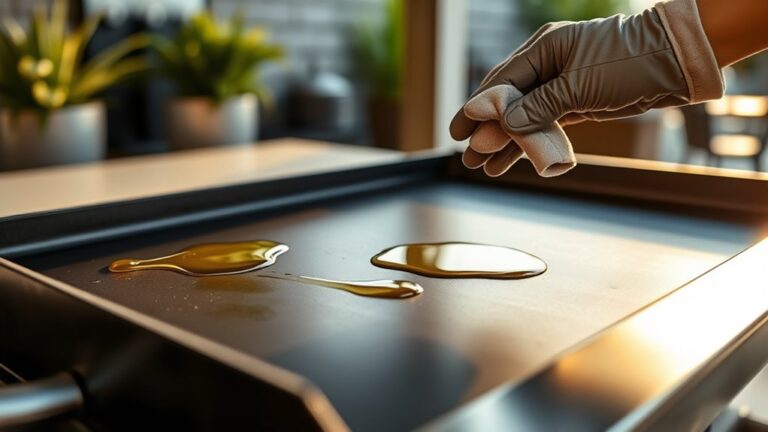
Apply a thin, even layer of oil using a cloth. Heat the pan on low to medium heat for about 10-15 minutes until you notice faint smoke.
Then, allow the cookware to cool before wiping off any excess oil.
This seasoning process helps build a natural non-stick coating and extends the life of your ceramic cookware. Keep following these steps to maintain your cookware’s performance and discover more helpful care tips.
Key Takeaways
- Thoroughly clean and dry ceramic cookware to remove residue and moisture before seasoning.
- Choose a high smoke point, neutral oil like grapeseed or avocado for seasoning.
- Apply a thin, even oil layer over the entire cookware surface using circular motions.
- Heat cookware on low to medium heat for 10-15 minutes until faint smoke appears to bond the oil.
- Let cookware cool completely, then wipe off excess oil gently to finish seasoning.
Inspect and Ready Your Ceramic Cookware
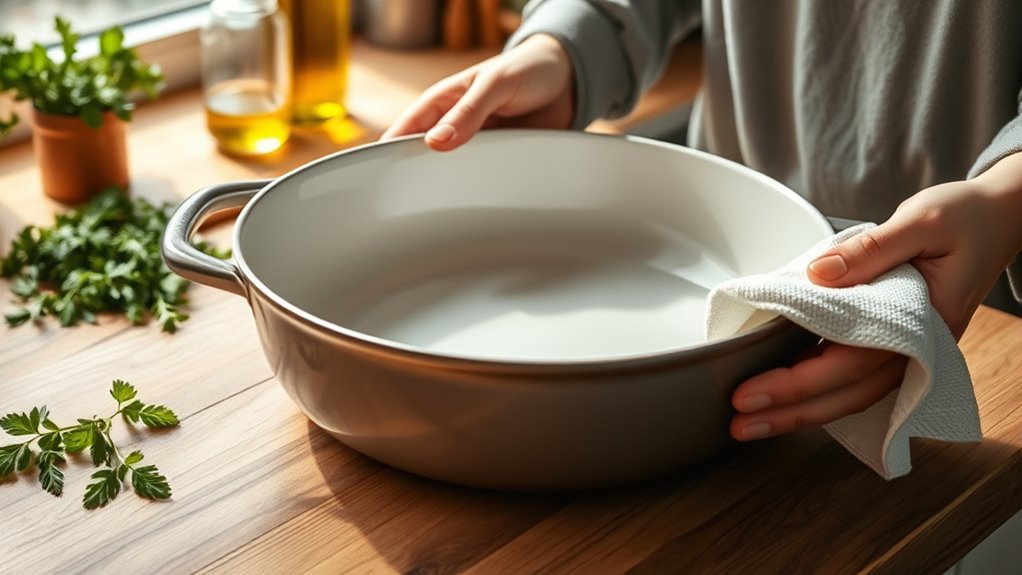
Before you begin seasoning, carefully inspect your ceramic cookware for any cracks, chips, or residue. These imperfections can affect the seasoning process and your cookware’s performance. If you spot any damage, avoid seasoning, as it might worsen the condition or cause uneven heating.
Take a close look at the cooking surface, handles, and edges to confirm everything is intact. Residue from previous cooking can interfere with seasoning, so make sure the surface looks clean and smooth. If you notice stuck-on food or greasy spots, you’ll want to tackle those before moving forward.
This step helps you avoid issues later and guarantees your ceramic cookware is ready to absorb the oil and develop a protective, non-stick layer effectively.
Clean and Dry Your Cookware Thoroughly
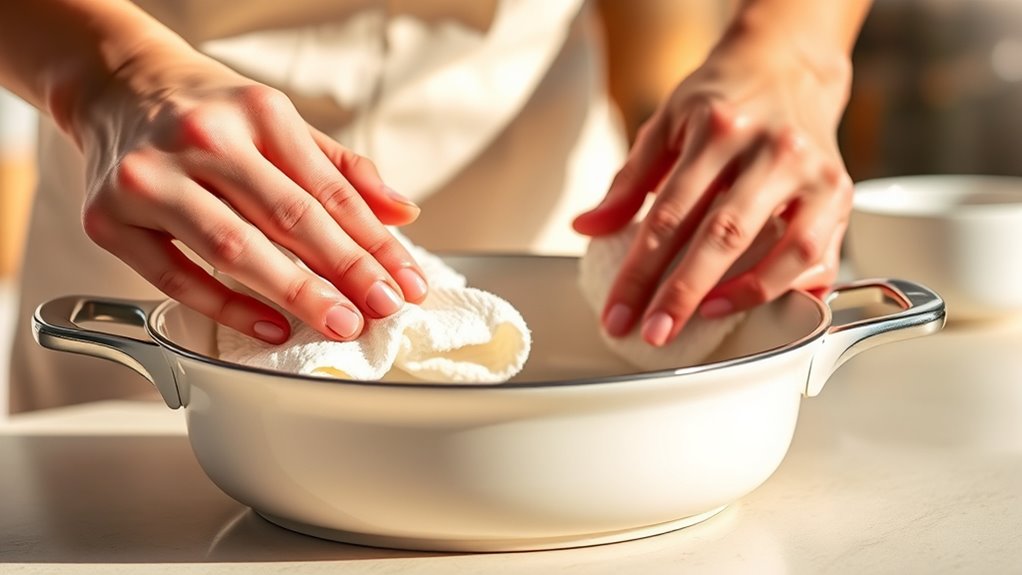
Although you’ve inspected your ceramic cookware, you’ll need to clean it thoroughly to remove any lingering residue or oils that could interfere with seasoning. Start by washing your cookware with warm, soapy water, using a soft sponge or cloth to avoid scratching the surface. Rinse it well to guarantee no soap remains, as leftover detergent can affect the seasoning process.
Next, dry your cookware completely with a clean towel or let it air dry. Moisture left on the surface can prevent oil from bonding properly during seasoning, so don’t skip this step. Taking the time to clean and dry your ceramic cookware properly sets the foundation for an even, durable seasoning layer that enhances its nonstick properties and longevity.
Pick the Best Oil for Seasoning
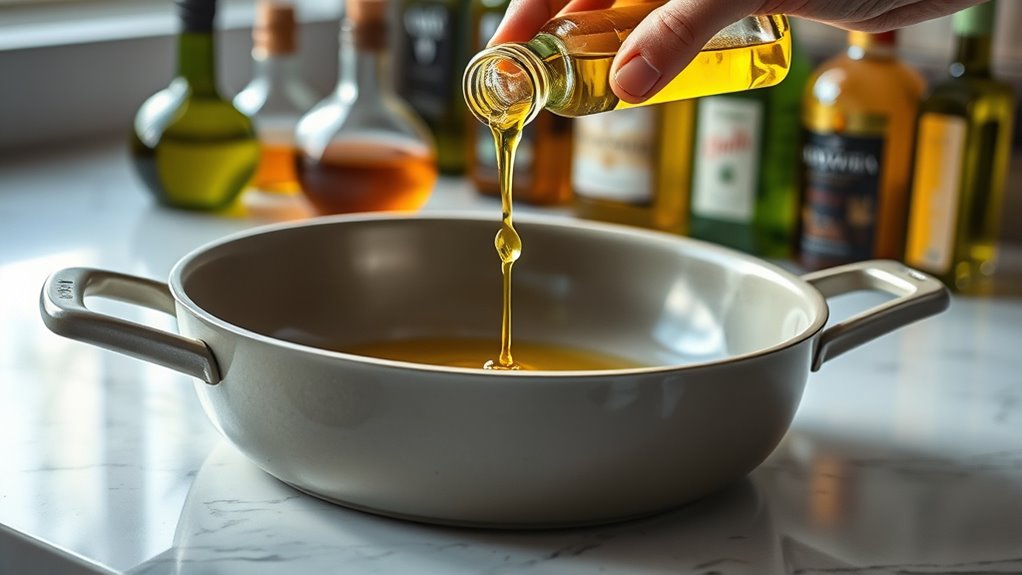
When seasoning your ceramic cookware, choosing the right oil makes all the difference in achieving a smooth, durable coating. You’ll want an oil with a high smoke point to avoid burning during the seasoning process. Oils like grapeseed, avocado, or refined coconut oil work great because they withstand heat without breaking down.
Olive oil, while popular, has a lower smoke point and might not create as strong a layer. Avoid butter or unrefined oils since they tend to burn quickly and leave sticky residues. Also, pick an oil with a neutral flavor to keep your cookware’s taste unaffected.
Apply a Thin Layer of Oil to Your Ceramic Cookware
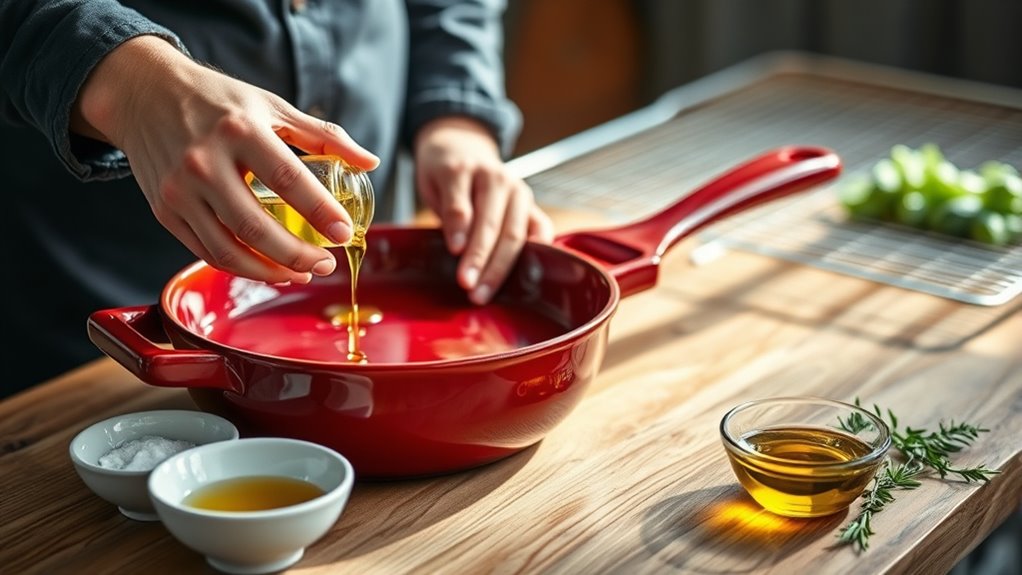
You’ll want to choose the right oil that can handle high heat without smoking. Apply a thin, even layer over your ceramic cookware to guarantee proper seasoning.
This thin coating helps protect the surface and improves its non-stick performance.
Choosing The Right Oil
Selecting the right oil is essential for seasoning your ceramic cookware effectively. You want an oil with a high smoke point to prevent burning during the heating process. Oils like avocado, grapeseed, or refined coconut oil work well because they withstand higher temperatures without breaking down.
Avoid using unrefined or extra virgin oils, as their lower smoke points can create sticky residues. Neutral-flavored oils also won’t alter the taste of your food. Additionally, choose oils rich in polyunsaturated fats; these oils polymerize better, creating a durable non-stick layer.
Applying Oil Evenly
Although seasoning starts with choosing the right oil, applying it evenly is just as essential. You want to spread a thin, consistent layer over the entire cooking surface, including the sides. Use a clean cloth or paper towel to dab a small amount of oil, then rub it gently but thoroughly in circular motions.
Avoid pouring oil directly onto the cookware, as this can lead to uneven coating and pooling. Make sure no spots are missed or overly saturated. An even layer prevents sticky patches and ensures your ceramic cookware develops a smooth, durable finish.
Take your time during this step—it sets the foundation for effective seasoning and helps your cookware perform better over time.
Benefits Of Thin Layer
Why does applying a thin layer of oil matter so much? When you use just a small amount, it evenly coats your ceramic cookware, preventing sticky buildup or uneven seasoning. A thick layer can turn sticky or gummy, reducing the non-stick benefits you’re aiming for.
Plus, thin layers dry faster, so you won’t have to wait long before using your pan. Applying too much oil also risks smoking or burning during heating, which can damage the ceramic surface. By keeping the oil layer light, you maintain your cookware’s smooth surface and extend its lifespan.
Heat Your Ceramic Cookware to Seal the Seasoning
Once you’ve applied the seasoning layer, you’ll need to heat your ceramic cookware to properly seal it. Place the cookware on the stove over low to medium heat. Gradually warming it allows the oil to bond with the ceramic surface, creating a durable, non-stick coating.
Keep the heat steady for about 10 to 15 minutes, ensuring the oil polymerizes evenly. You might notice a faint smoke as the oil sets—that’s normal and indicates the seasoning is forming. Avoid using high heat, which can damage the ceramic or cause uneven seasoning.
Heating also helps fill microscopic pores in the cookware, enhancing its resistance to sticking and staining. This step is essential for a lasting, effective seasoning layer that improves your cooking experience.
Let the Cookware Cool Before Wiping Off Excess Oil
After heating your ceramic cookware to seal the seasoning, you’ll want to let it cool down completely before wiping off any excess oil. If you wipe the oil while the pan is still hot, you risk burning yourself or smearing the oil unevenly. Cooling allows the seasoning to set properly, guaranteeing a smooth, non-stick surface.
Once cooled, use a clean, soft cloth or paper towel to gently remove any leftover oil. This step prevents sticky residue and keeps your cookware looking pristine. Don’t rush this process—patience here improves the durability of the seasoning layer.
Care Tips for Long-Lasting Seasoned Cookware
Although seasoning your ceramic cookware creates a strong non-stick surface, maintaining that layer requires consistent care. To keep your cookware performing well and extend its lifespan, follow these essential tips:
Seasoning ceramic cookware builds a strong non-stick surface, but consistent care is key for lasting performance.
- Hand wash only – Avoid dishwashers; use mild soap and a soft sponge to preserve the seasoning.
- Avoid metal utensils – Use wooden, silicone, or plastic tools to prevent scratching the surface.
- Dry thoroughly – Always dry your cookware completely after washing to prevent rust and damage.
- Re-season periodically – After several uses or if food starts sticking, repeat the seasoning process to renew the coating.
Frequently Asked Questions
Can I Use Ceramic Cookware on Induction Stovetops?
You can use ceramic cookware on induction stovetops only if it has a magnetic base. Check with a magnet; if it sticks, your cookware works.
Otherwise, it won’t heat properly on an induction burner.
How Often Should I Reseason My Ceramic Cookware?
Think of reseasoning like watering a plant; you should do it every few months or when food starts sticking.
If your ceramic cookware feels less smooth, it’s time to reseason and keep it nonstick and healthy.
Is Seasoning Necessary for Brand New Ceramic Cookware?
You don’t have to season brand new ceramic cookware, but doing so helps create a non-stick surface and protects it. Seasoning improves performance and extends your cookware’s life, so it’s definitely worth the extra step.
Can I Use Butter Instead of Oil for Seasoning?
You can use butter for seasoning, but it’s not ideal because it contains dairy solids that may burn and leave residue. It’s better to use oils with higher smoke points, like vegetable or avocado oil, for best results.
Will Seasoning Change the Color of My Ceramic Cookware?
Think of your ceramic cookware as a blank canvas; seasoning is like adding a protective glaze. It might darken slightly, but it won’t ruin the original color.
You’ll actually enhance its character and durability over time.
Conclusion
Seasoning your ceramic cookware is like painting a protective glaze that enhances its beauty and performance. By following these simple steps, you’re creating a non-stick surface that makes cooking and cleaning easier.
Keep caring for your cookware with gentle use and regular maintenance. It’ll reward you with years of reliable service. Treat it well, and your ceramic cookware will become your kitchen’s trusted companion, ready for every culinary adventure.
Proper seasoning and care are key to maintaining the durability and non-stick properties of your ceramic cookware. With consistent attention, your ceramic cookware will continue to deliver excellent cooking results and long-lasting performance.