How to Use Thyme and Table Cookware Safely in Your Kitchen
Choosing fresh thyme with vibrant green leaves and a strong aroma is essential for both flavor and safety in your kitchen. Proper handling of thyme, along with the safe use and care of table cookware, ensures delicious meals and a hygienic cooking environment. By following simple tips, you can master the art of using thyme and maintaining your cookware effectively.
Store thyme damp and refrigerated to preserve its freshness. Rinse and dry thyme before stripping leaves from stems carefully to avoid bruising. Use small amounts to avoid overpowering dishes, adding early for flavor infusion or late for aroma.
Pick cookware suited to your stovetop, clean it thoroughly after use, and inspect for damage regularly to guarantee safety. Keep your kitchen organized and hygienic to prevent cross-contamination.
Discover tips to master thyme and cookware care easily.
Key Takeaways
- Select fresh thyme with vibrant green leaves, store it refrigerated in damp paper towels or airtight containers to maintain freshness and aroma.
- Rinse thyme thoroughly under cold water, dry gently, strip leaves from stems, and add in appropriate quantities to cooking for balanced flavor.
- Choose cookware compatible with your stovetop, use oven mitts, turn handles inward, and avoid leaving pots unattended to prevent accidents.
- Clean cookware immediately after use with hot, soapy water, dry completely, and inspect regularly for damage to ensure safe kitchen use.
- Store cookware in dry areas with protective padding, keep raw and cooked food prep separate, and practice strict hygiene to avoid cross-contamination.
How to Choose Fresh Thyme for Cooking
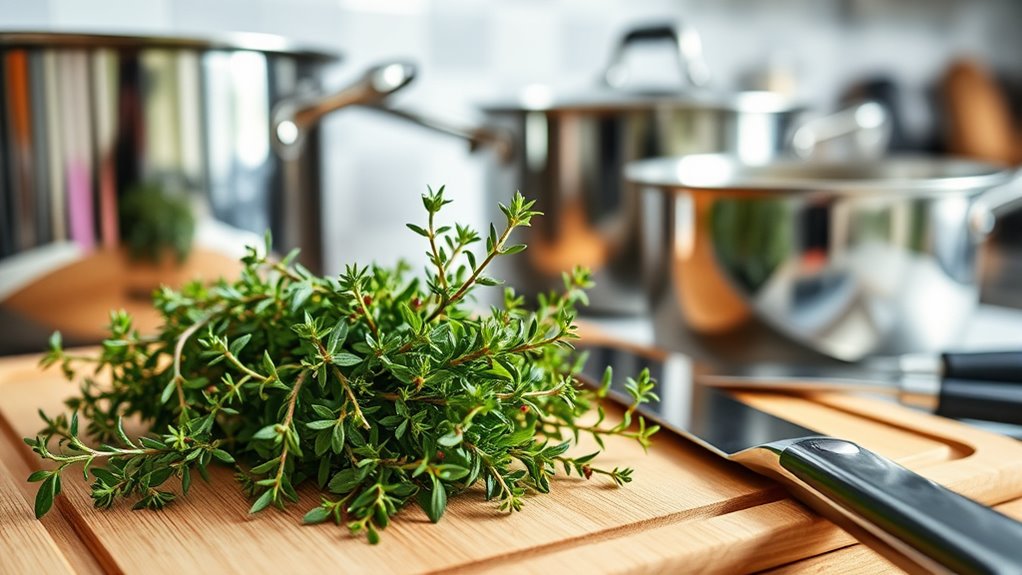
When selecting fresh thyme for cooking, focus on vibrant green leaves and firm stems, as these indicate freshness and flavor. You want to avoid bunches with yellowing or wilting leaves because they’ll impart a dull taste. Gently rub a few leaves between your fingers to check for a strong, earthy aroma—that’s a good sign the thyme is potent.
Also, choose sprigs that feel sturdy rather than brittle, which means they’re still moist and full of essential oils. If you’re buying thyme in a market or store, look for thyme that hasn’t been sitting out too long. Fresh thyme should snap easily when bent, so don’t hesitate to test a stem before buying to guarantee you’re getting the best quality for your dishes.
How to Store Thyme to Keep It Fresh
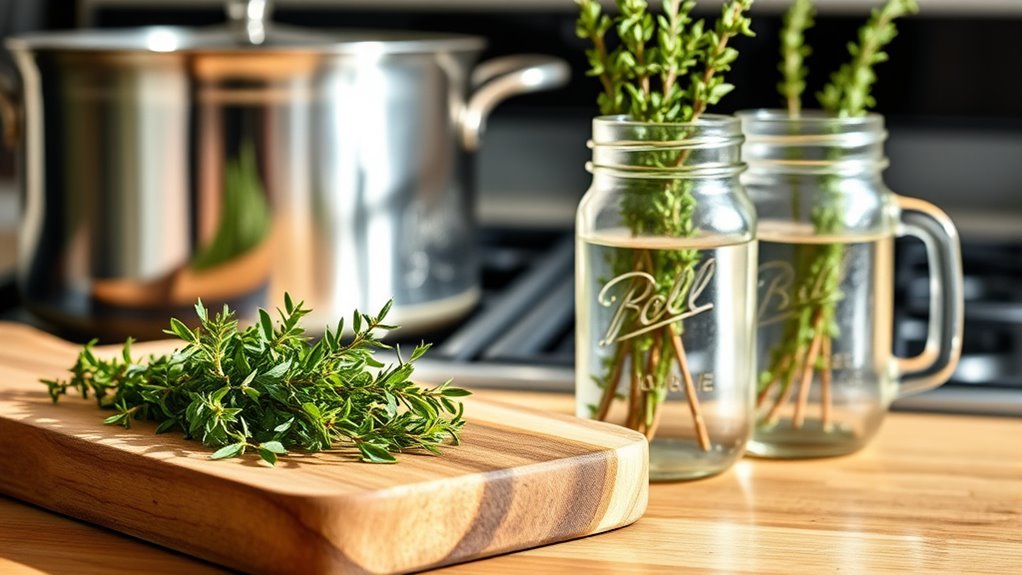
To keep thyme fresh longer, you’ll want to store it properly right after buying or harvesting. Simple methods like wrapping it in a damp paper towel or placing it in a sealed container can make a big difference.
Let’s look at the best ways to extend thyme’s freshness so you always have it ready for your recipes.
Proper Thyme Storage Methods
Although thyme is a hardy herb, storing it properly guarantees it stays fresh and flavorful for your dishes. Start by trimming the stems and discarding any wilted leaves. Wrap the thyme loosely in a damp paper towel to maintain moisture without making it soggy.
Then, place the wrapped herb inside a resealable plastic bag or airtight container. Store it in the refrigerator’s crisper drawer, where the temperature and humidity help preserve its freshness. If you prefer, you can also store thyme upright in a glass of water, covering it loosely with a plastic bag.
Avoid washing thyme before storage, as excess water promotes mold growth. By following these simple steps, you assure your thyme remains vibrant and ready to enhance your cooking.
Extending Thyme Freshness
Keeping thyme fresh goes beyond just proper storage—it involves taking extra steps that help maintain its flavor and aroma for longer periods. First, trim the stems and place thyme in a glass of water like a bouquet, covering it loosely with a plastic bag. Store it in the refrigerator, changing the water every couple of days.
Alternatively, wrap thyme sprigs in a damp paper towel before placing them in a sealed plastic bag or container. This method keeps moisture balanced, preventing wilting and mold. You can also freeze thyme by spreading sprigs on a baking sheet, freezing them, then transferring to airtight bags.
These simple actions guarantee your thyme stays vibrant and flavorful, ready to enhance your dishes whenever you need it.
How to Clean and Prepare Thyme Safely
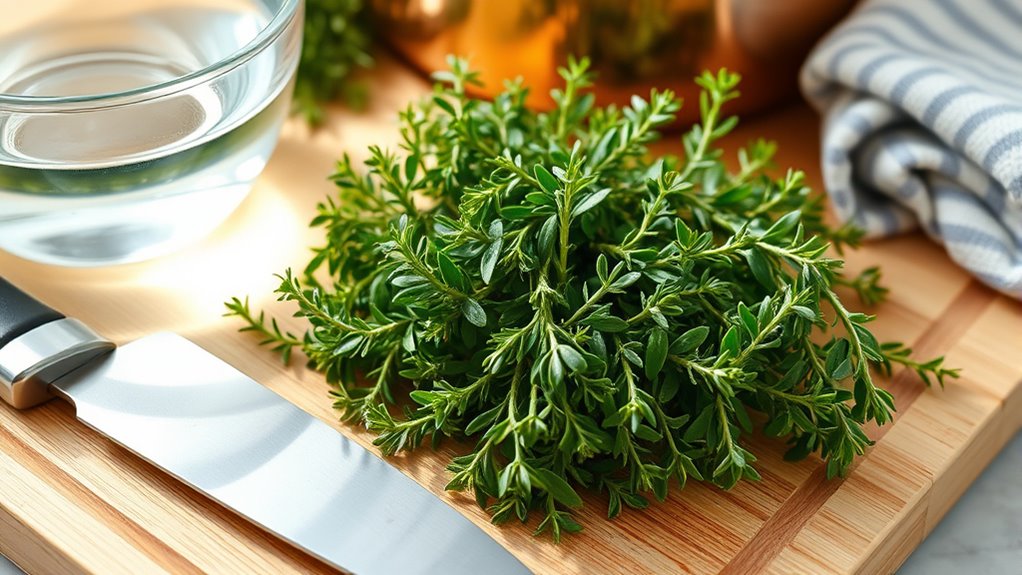
To start, pick thyme that looks fresh and vibrant without any wilting or discoloration. Rinse the sprigs gently under cold water to remove dirt and debris without damaging the leaves.
Then, carefully strip the leaves from the stems to avoid bruising and keep your thyme ready for cooking.
Selecting Fresh Thyme
When you pick fresh thyme, look for vibrant green leaves that feel firm and fragrant. Avoid bunches with yellowing, wilting, or dry leaves, as these indicate age or poor storage. Choose thyme sprigs with an intact stem and minimal bruising to guarantee freshness.
You want thyme that smells earthy and slightly minty, a sign of potent essential oils. If possible, buy thyme locally or from trusted sources to reduce the chance of contamination. Keep an eye out for any visible dirt or insects; these can be removed during cleaning, but selecting cleaner thyme reduces effort.
Washing Thyme Properly
After selecting fresh thyme, the next step is washing it thoroughly to remove dirt, insects, and any residual contaminants. Start by placing the thyme sprigs in a bowl of cold water. Gently swish them around to loosen any debris.
Avoid using hot water, as it can damage the delicate leaves. After soaking for a minute or two, lift the thyme out of the water to prevent re-contamination, and place it in a colander. Rinse under a gentle stream of cold running water to remove any remaining particles.
Shake off excess water carefully or pat dry with a clean kitchen towel. Proper washing guarantees your thyme is clean and safe to use, preserving its flavor and preventing any unwanted substances from entering your dishes.
Removing Stems Safely
Although thyme stems are edible, you’ll want to remove them for a smoother texture and better flavor in your dishes. Start by holding a small bunch and gently strip the leaves off by running your fingers downward. Avoid pulling too hard to prevent bruising the leaves.
Use a sharp knife if needed to trim stubborn stems. Removing stems also helps you avoid woody bits that can affect your meal’s taste.
Here’s a quick guide to evoke the joy of cooking safely:
| Feelings | Actions | Outcome |
|---|---|---|
| Satisfaction | Strip leaves gently | Smooth texture |
| Confidence | Use sharp knife wisely | Better flavor |
| Enjoyment | Prepare with care | Delicious, safe dishes |
Using Thyme Without Overpowering Your Dishes
Because thyme has a strong, earthy flavor, you’ll want to add it carefully to avoid overwhelming your dish. Start with a small amount—usually a pinch or one sprig—and taste as you go. You can always add more, but you can’t take it out once it’s in.
Fresh thyme is milder than dried, so adjust accordingly. When cooking, add thyme early to let its flavor infuse slowly, especially in soups or stews. If using it in quick-cooking recipes, add it near the end to preserve its aroma without making the dish bitter.
Picking the Best Cookware for Your Kitchen
When choosing cookware, you want pieces that suit your cooking style and last through daily use. Consider your needs carefully to pick the best options for your kitchen. Here’s how you can start:
- Material: Choose between stainless steel, non-stick, cast iron, or copper based on heat conduction and maintenance.
- Size: Select sizes that fit the meals you cook most often to avoid clutter and inefficiency.
- Compatibility: Ensure your cookware works with your stovetop, whether gas, electric, or induction.
- Durability: Look for sturdy construction and good warranty to ensure longevity.
Handling Cookware Safely to Prevent Burns
If you want to keep your kitchen accident-free, handling cookware carefully is essential to prevent burns. Always use oven mitts or pot holders when touching hot pans, pots, or baking dishes. Avoid grabbing cookware with wet or greasy hands, as this increases the risk of dropping them.
Turn pot handles inward on the stove to stop accidental knocks. When moving hot cookware, take your time and use both hands for better control. Be cautious when lifting lids to avoid steam burns—tilt the lid away from you to let the steam escape safely.
Never leave cookware unattended on a hot burner, as it can overheat and cause burns or fires. By following these simple steps, you’ll protect yourself and enjoy safer cooking every time.
Cleaning Cookware Properly to Avoid Contamination
Properly cleaning your cookware is essential to prevent contamination and keep your kitchen safe. You want to remove all food residues and bacteria to avoid any health risks. Follow these steps every time you finish cooking:
- Rinse cookware immediately to prevent food from drying and sticking.
- Use hot, soapy water and a non-abrasive sponge to scrub surfaces thoroughly.
- Pay special attention to handles, lids, and edges where grime can hide.
- Dry cookware completely with a clean towel or air dry to prevent moisture buildup, which can cause bacteria growth.
How to Avoid Cross-Contamination When Cooking
Although cooking involves many steps, preventing cross-contamination is one of the most important to protect your health. Always use separate cutting boards and utensils for raw meats and ready-to-eat foods like vegetables or herbs such as thyme. Wash your hands thoroughly before and after handling raw ingredients to stop bacteria from spreading.
Avoid placing cooked food back on plates or surfaces that held raw items. When marinating, keep raw meat in its container and discard any leftover marinade that touched raw meat. Clean and sanitize countertops and cookware immediately after use.
Maintaining and Inspecting Cookware for Safety
You’ll want to clean your cookware thoroughly after every use to keep it safe and in good shape. Take a close look for any cracks, warping, or other damage before cooking.
Finally, store your pots and pans properly to avoid scratches and contamination.
Regular Cleaning Practices
Since your cookware faces daily exposure to heat and food residues, regular cleaning and inspection are essential to keep it safe and effective. You should follow these steps to maintain your thyme and table cookware properly:
- Wash immediately after use with warm, soapy water to prevent residue buildup.
- Use non-abrasive sponges to avoid scratching surfaces, preserving their non-stick quality.
- Rinse thoroughly to remove all soap, which can affect the cookware’s performance and food taste.
- Dry completely with a soft cloth to prevent rust or water spots, especially on metal cookware.
Visual Damage Inspection
After cleaning and drying your thyme and table cookware, take a close look for any visible signs of damage. Check for cracks, chips, or warping that could compromise safety or cooking performance. Inspect handles and lids to guarantee they’re firmly attached and not loose.
Look for discoloration or burnt areas that might indicate overheating. If you notice any rust or corrosion, especially on metal cookware, address it promptly or consider replacement. Damaged cookware can harbor bacteria or cause accidents, so don’t ignore even minor flaws.
Regularly inspecting your cookware helps you maintain a safe kitchen environment and ensures your meals cook evenly. Staying attentive to these details makes your culinary experience both safer and more enjoyable.
Proper Storage Techniques
Although proper storage might seem straightforward, how you store thyme and table cookware considerably impacts their longevity and safety. You need to keep them dry and avoid scratches or dents that could harbor bacteria.
Here are four key tips to help you store your cookware correctly:
- Store thyme in airtight containers away from heat and sunlight to keep it fresh.
- Stack cookware with protective padding or use hanging racks to prevent damage.
- Keep lids and pots separate or with spacers to avoid chipping or cracking.
- Regularly inspect stored cookware for signs of rust, warping, or stains and clean immediately.
Storing Cookware and Utensils Safely
When you store your cookware and utensils properly, you not only protect them from damage but also keep your kitchen organized and safe. Keep heavy pots on lower shelves to prevent accidents, and use drawer dividers to separate utensils, so you can find what you need quickly. Avoid stacking nonstick pans to preserve their coating.
Hang frequently used tools within easy reach, and make certain that knives are stored in a block or magnetic strip to avoid injury.
| Item Type | Storage Tip |
|---|---|
| Heavy Pots | Store on lower shelves |
| Nonstick Pans | Avoid stacking |
| Utensils | Use drawer dividers |
| Knives | Store in block or magnetic strip |
| Frequently Used | Hang within easy reach |
Following these tips keeps your kitchen safe and efficient.
Frequently Asked Questions
Can Thyme Be Used for Medicinal Purposes Safely at Home?
Yes, you can safely use thyme for medicinal purposes at home by brewing it as tea or applying diluted thyme oil topically. Just don’t overuse it, and consult a healthcare provider if you’re pregnant or have allergies.
Using thyme in moderation helps minimize any potential side effects. Always perform a patch test before applying thyme oil to your skin. This ensures you do not have an adverse reaction.
Are There Any Kitchen Materials That React Negatively With Thyme?
You don’t have to worry about thyme reacting negatively with most kitchen materials. However, avoid prolonged contact with reactive metals like aluminum or copper, as their acidity can cause discoloration or off-flavors when cooking with thyme.
How Does Thyme Affect People With Allergies or Sensitivities?
If you have allergies or sensitivities, thyme might trigger reactions like skin rashes, headaches, or digestive issues. You should avoid it or test small amounts first to see how your body responds before using it regularly.
Can Thyme Enhance the Safety or Preservation of Cooked Food?
Yes, thyme can enhance food safety by acting as a natural preservative due to its antimicrobial properties. You’ll reduce spoilage and extend freshness when you add thyme to your cooked dishes.
Its natural compounds help inhibit the growth of harmful bacteria, making your meals safer to consume. Incorporating thyme into recipes can be a simple way to boost preservation without relying on artificial additives. This makes it a valuable herb in both flavor and food safety.
What Are the Environmental Impacts of Disposing of Old Thyme and Cookware?
Like tossing a parchment scroll, disposing of old thyme and cookware can harm the environment if not handled properly. You should compost thyme and recycle or donate cookware to reduce landfill waste and pollution.
Conclusion
By choosing fresh thyme and properly storing it, you’ll keep your dishes flavorful without overpowering them.
Remember, 60% of kitchen-related foodborne illnesses stem from improper cookware cleaning.
So, always clean and maintain your pots and pans thoroughly to avoid contamination.
With the right care, your thyme and cookware will work together safely, making your cooking both delicious and healthy.
Keep these simple tips in mind, and you’ll enjoy a safer, tastier kitchen every day!
Safe use of thyme and table cookware is essential for a healthy kitchen environment.