What Is Non-Stick Cookware and How to Use It
Non-stick cookware is designed with special coatings like PTFE or ceramic on aluminum or stainless steel surfaces to prevent food from sticking. This feature allows you to cook healthier meals using less oil, making it a popular choice in many kitchens.
Understanding how to use non-stick cookware properly is essential for maximizing its benefits and lifespan.
You’ll want to use moderate heat to avoid damaging the coating and refrain from using metal utensils that can scratch the surface.
Cleaning should be done gently with soapy water to maintain the integrity of the non-stick layer. Avoiding overheating and abrasive tools helps keep your cookware in great condition.
By following these simple tips, you’ll enjoy easy cooking and cleanup. There is plenty more guidance available on selecting and maintaining your pans to ensure long-lasting performance.
Key Takeaways
- Non-stick cookware features coatings like PTFE or ceramic that prevent food from sticking and enable easy cooking and cleaning.
- Use moderate heat to protect coatings and avoid overheating or preheating empty pans to maintain surface integrity.
- Cook with wooden, silicone, or plastic utensils to prevent scratching and prolong non-stick performance.
- Clean with warm, soapy water and soft sponges; avoid abrasive scrubbers and aerosol sprays that damage coatings.
- Replace pans showing peeling, flaking, warping, or increased sticking to ensure safety and optimal cooking results.
What Is Non-Stick Cookware Made Of?
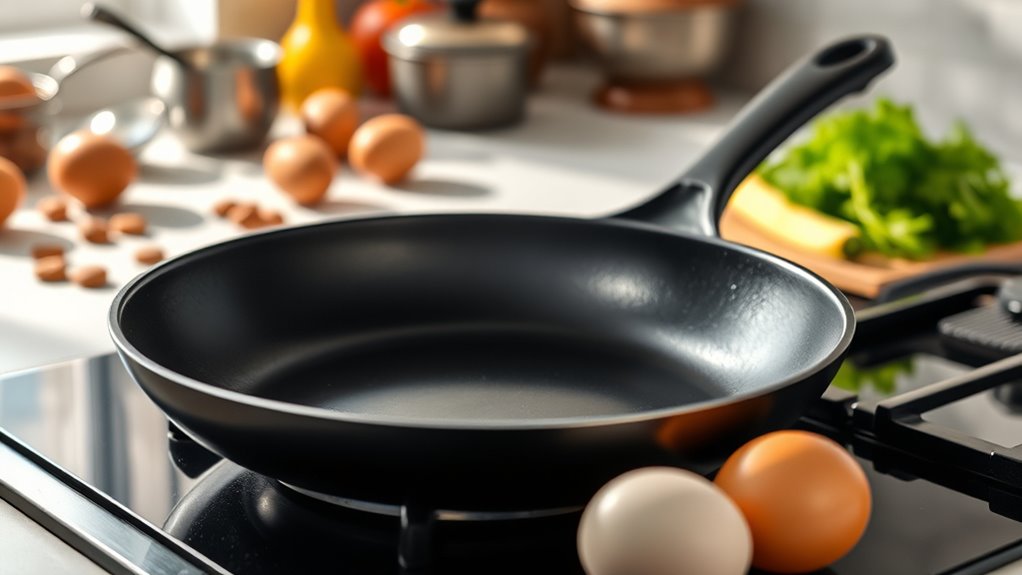
What makes non-stick cookware so effective? It’s all about the special coating on the surface that prevents food from sticking. Most non-stick pans have a layer made from polytetrafluoroethylene, or PTFE, which you might know as Teflon.
This synthetic material creates a smooth, slippery surface that stops food from clinging. Some non-stick cookware uses ceramic coatings instead, which are made from inorganic minerals and offer a chemical-free alternative. Underneath these coatings, manufacturers typically use aluminum or stainless steel for durability and even heat distribution.
When you pick non-stick cookware, understanding these materials helps you choose the right one for your cooking style. Just remember, the magic lies in that unique coating, designed to make cooking and cleanup easier for you.
How Does Non-Stick Cookware Work?
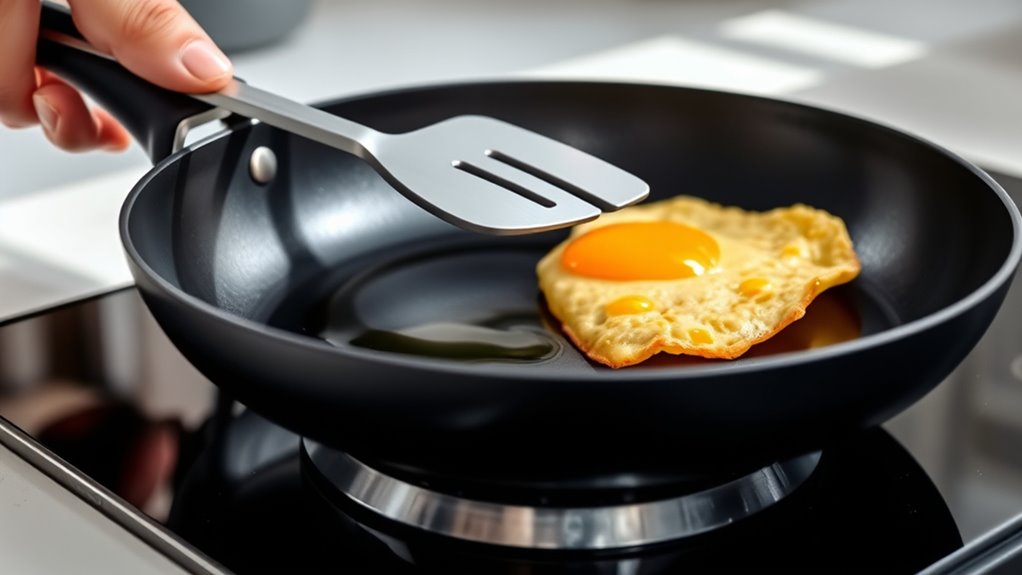
You’ll want to understand how the non-stick coating materials create a slick surface that prevents food from sticking. The science behind the surface chemistry plays a key role in this process.
Plus, how heat distributes across the cookware affects how well it performs.
Non-Stick Coating Materials
Although non-stick cookware might seem simple, the secret lies in its special coating materials that prevent food from sticking. These coatings create a smooth surface, reducing friction and making cooking and cleaning easier for you. The most common materials include PTFE, ceramic, and anodized aluminum, each offering unique benefits and care requirements.
| Coating Material | Key Features |
|---|---|
| PTFE (Teflon) | Durable, very slick surface |
| Ceramic | Non-toxic, heat resistant |
| Anodized Aluminum | Hard, scratch-resistant surface |
Understanding these materials helps you choose the right non-stick cookware for your kitchen and maintain it properly, ensuring it lasts longer and performs well every time you cook.
Surface Chemistry Explained
The secret behind non-stick cookware lies in the surface chemistry of its coatings. These coatings, often made from materials like PTFE, create a smooth, low-energy surface that repels water and oils. When you cook, food molecules don’t bond with this surface, so they slide right off instead of sticking.
The coating’s chemical structure reduces adhesion by minimizing the attractive forces between the food and the pan. This means less scrubbing and easier cleanup for you. However, these coatings need careful handling—abrasive tools or high heat can damage them, exposing the underlying metal and causing food to stick.
Understanding this chemistry helps you appreciate why non-stick pans perform as they do and why proper use extends their non-stick properties.
Heat Distribution Effects
When cooking with non-stick cookware, how heat spreads across the surface plays a crucial role in its performance. Non-stick pans often have aluminum or copper cores that conduct heat quickly and evenly. This means you won’t get hot spots that burn your food while other areas remain undercooked.
You’ll notice that the heat distribution helps your food cook consistently, requiring less oil or butter. However, since some non-stick coatings aren’t designed for extremely high heat, it’s best to keep your cooking temperature moderate. Doing so preserves the coating and maintains even heat flow.
Types of Non-Stick Coatings You Should Know
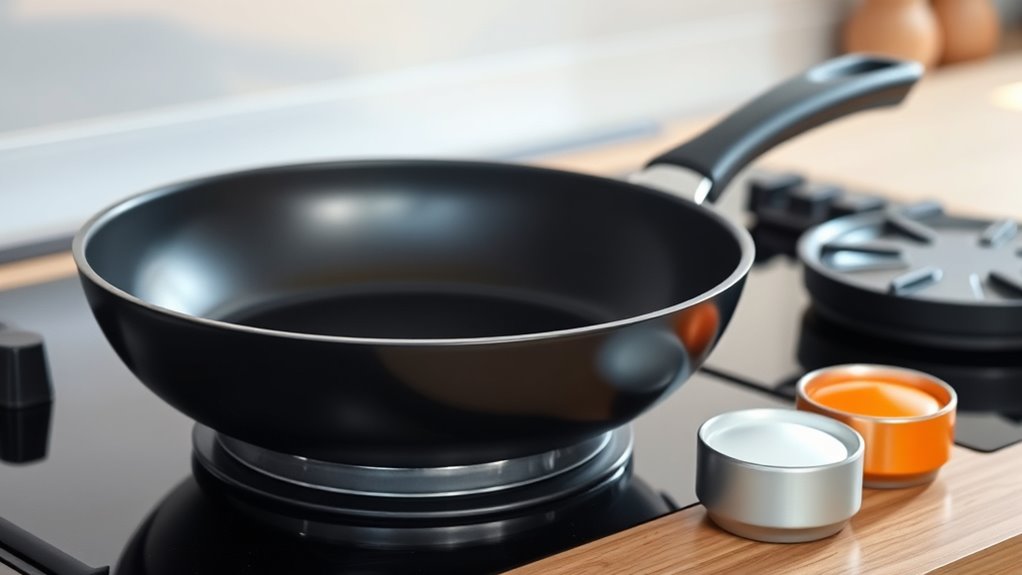
Since choosing the right non-stick cookware depends largely on the coating, you’ll want to understand the main types available. Each coating offers unique benefits and care requirements, so picking one that fits your cooking style matters.
| Coating Type | Durability | Best Use |
|---|---|---|
| PTFE (Teflon) | Moderate | Low to medium heat cooking |
| Ceramic | Less durable | High heat, quick cooking |
| Anodized Aluminum | Highly durable | Even heating, versatile |
PTFE coatings, like Teflon, provide excellent non-stick performance but require careful heat control. Ceramic coatings are eco-friendly and handle higher temperatures but wear faster. Anodized aluminum offers a tough surface with good heat distribution, combining durability and performance.
Choose based on your cooking habits and maintenance willingness.
When and Why to Use Non-Stick Cookware
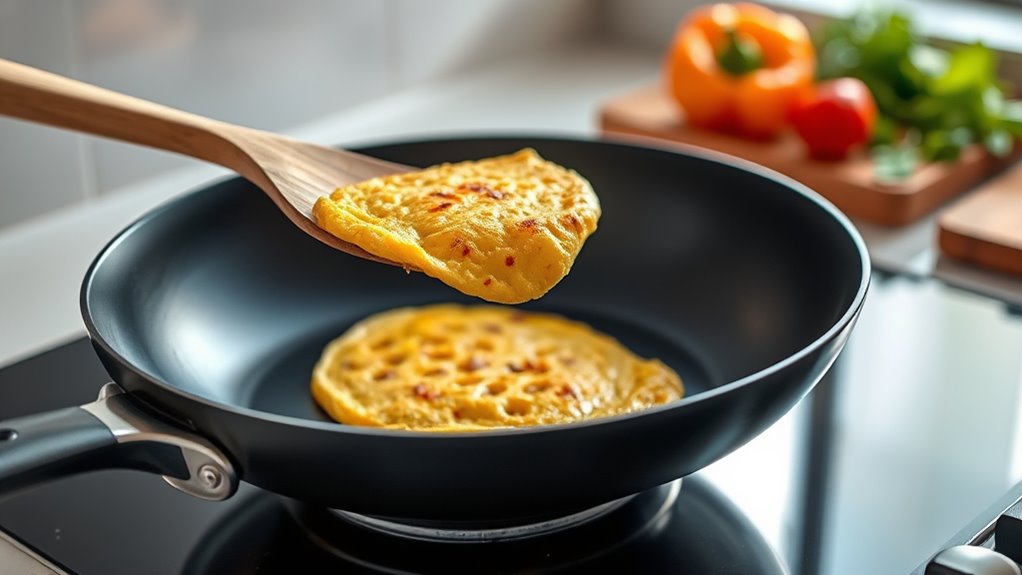
You’ll want to reach for non-stick cookware when cooking delicate foods like eggs or fish that can easily stick. It makes cleanup faster and helps you use less oil, making meals healthier.
Understanding these benefits can help you decide when non-stick pans are the best choice in your kitchen.
Ideal Cooking Scenarios
Although non-stick cookware isn’t suited for every cooking task, it excels in specific scenarios where ease and precision matter most. When you’re cooking delicate foods that tend to stick or break apart, non-stick pans give you control and a smooth release. They’re perfect for quick meals requiring minimal oil, helping you maintain flavor without extra fat.
You’ll also find them handy for evenly cooking eggs, pancakes, or fish without worrying about tearing. Here’s a quick guide:
| Food Type | Why Use Non-Stick? | Tips |
|---|---|---|
| Eggs | Prevents sticking | Use low-medium heat |
| Pancakes | Easy flipping | Preheat pan |
| Fish | Keeps delicate texture | Use gentle spatula |
| Stir-fry | Quick cooking, less oil | Don’t overcrowd pan |
| Sauces | Easy cleanup | Stir frequently |
Benefits of Non-Stick
When you want to cook with less oil and avoid food sticking to your pan, non-stick cookware offers a clear advantage. It lets you prepare healthier meals by reducing the need for oils or butter. Cleaning up becomes quick and effortless since food residues slide right off.
You’ll also find it easier to cook delicate foods like eggs and fish without them breaking apart. Non-stick pans heat evenly, so your food cooks consistently, helping you get better results every time. Plus, they’re lightweight, making them easy to handle.
Use non-stick cookware when cooking low to medium heat dishes to preserve the coating and extend its life. Overall, non-stick pans simplify your cooking process, saving you time and effort in the kitchen.
Safe Cooking Tips for Non-Stick Cookware
To keep your non-stick cookware in top condition and guarantee your meals stay healthy, it’s important to follow a few simple safety tips. First, avoid overheating your pans; non-stick coatings can degrade at high temperatures, so cook on low to medium heat. Never preheat an empty pan, as this can cause damage.
Use wooden, silicone, or plastic utensils to prevent scratching the surface—metal tools can ruin the coating. Also, don’t use aerosol cooking sprays, which leave residues that affect non-stick performance. Make certain good ventilation while cooking, as overheated pans may release fumes.
Finally, replace your cookware if you notice peeling or flaking, since ingesting flakes can be harmful. Following these tips helps you cook safely and extend your cookware’s lifespan.
Cleaning and Maintaining Non-Stick Cookware
Proper cleaning and maintenance play an essential role in preserving the non-stick coating and ensuring your cookware lasts longer. After cooking, let your pan cool before washing it with warm, soapy water using a soft sponge or cloth. Avoid abrasive scrubbers or steel wool, as they can damage the surface.
For stubborn residue, soak the pan in warm water for a few minutes before gently scrubbing. Dry your cookware thoroughly to prevent water spots and potential rust on metal parts. Store non-stick pans carefully by stacking them with a cloth or paper towel between to avoid scratches.
Regularly check for signs of wear and replace cookware if the coating starts peeling or flaking, as damaged surfaces can affect performance and safety.
Common Mistakes That Damage Non-Stick Surfaces
Although non-stick cookware simplifies cooking, many people unknowingly damage the surface through common mistakes. To keep your pans in top shape, avoid these pitfalls:
- Using Metal Utensils – They scratch and wear down the coating quickly.
- Overheating the Pan – High heat can break down the non-stick layer and release harmful fumes.
- Cleaning with Abrasive Tools – Steel wool or harsh scrubbers ruin the smooth surface.
- Stacking Without Protection – Placing pans directly on top of each other causes scratches and chips.
How to Choose the Right Non-Stick Cookware for Your Kitchen
Taking care to avoid common mistakes is just one part of maintaining your non-stick cookware. To choose the right set, consider your cooking habits first. If you cook often and want durability, look for hard-anodized aluminum pans—they’re sturdy and heat evenly.
For easy cleaning, opt for ceramic non-stick coatings, but know they might wear out faster. Check the cookware’s compatibility with your stove, especially if you use induction. Size matters too; pick pans that fit your typical meal portions without crowding your stove.
Finally, avoid cheap options that sacrifice coating quality. Investing in reputable brands ensures better performance and longer lifespan. By focusing on material, compatibility, and your cooking style, you’ll select non-stick cookware that fits your kitchen perfectly.
When to Replace Your Non-Stick Pan
Even if you handle your non-stick pan carefully, its coating will eventually wear down. You’ll want to replace it when you notice signs that affect performance or safety. Here are four key indicators:
Non-stick pans wear out over time; replace them at the first sign of performance or safety issues.
- Scratches or peeling: If the non-stick surface starts flaking, it can contaminate your food and reduce effectiveness.
- Food sticks more: When cooking becomes a struggle and food clings despite proper use, the coating is compromised.
- Warping or dents: A warped pan won’t heat evenly, ruining your dishes and potentially damaging the pan further.
- Discoloration: Significant discoloration or chipping signals degradation, which can affect both taste and safety.
Replacing your pan promptly guarantees better cooking results and keeps your meals safe.
Frequently Asked Questions
Can Non-Stick Cookware Be Used in the Oven?
You can use non-stick cookware in the oven, but only if the manufacturer says it’s oven-safe. Always check the temperature limit, usually around 350-500°F, to avoid damaging the coating or handles.
Using it above the recommended temperature can cause the non-stick surface to degrade. Some handles may not withstand high heat, so verifying oven safety is essential. When in doubt, consult the product guidelines or contact the manufacturer.
Are Non-Stick Pans Safe for Cooking Acidic Foods?
Yes, you can cook acidic foods in non-stick pans, but avoid prolonged cooking to prevent damaging the coating. Always use low to medium heat, and don’t scrub aggressively to keep your pan’s surface intact and safe.
This will help extend the life of your pan and maintain its safety for cooking.
Can Metal Utensils Be Used on Non-Stick Surfaces?
Using metal utensils on non-stick surfaces is like scratching a delicate painting; you’ll damage the coating. You shouldn’t use them—opt for wooden, silicone, or plastic tools to keep your cookware smooth and long-lasting.
How Long Does Non-Stick Cookware Typically Last?
Non-stick cookware typically lasts about 3 to 5 years, depending on usage and care. If you avoid metal utensils, harsh cleaning, and high heat, you’ll extend its lifespan and keep it performing well longer.
Is Non-Stick Cookware Dishwasher Safe?
Most non-stick cookware isn’t dishwasher safe because harsh detergents and high heat can damage the coating. You’ll want to hand wash it gently with a soft sponge to keep it lasting longer and working well.
This helps maintain the cookware’s non-stick properties and extends its lifespan. Avoid using abrasive scrubbers or strong cleaning agents.
Conclusion
Now that you know the nuts and nuances of non-stick cookware, you can confidently cook without clinging concerns. Use your pans wisely, wash with care, and watch out for wear and tear to keep that slippery surface shining. Choosing the right cookware creates culinary convenience, cutting down chaos in your kitchen.
Remember, respecting your non-stick tools will reward you with reliable, radiant results every time you cook. Keep it clean, keep it cool, and cook creatively! Proper use and maintenance of non-stick cookware ensure durability and enhance your cooking experience.