How to Cook a Ribeye in a Cast Iron Skillet
To cook a ribeye in a cast iron skillet, start by selecting a well-marbled ribeye steak that is about 1 to 1.5 inches thick. Let the steak reach room temperature before cooking to ensure even cooking and better flavor.
Using a cast iron skillet is ideal for searing because it retains heat well and creates a beautiful crust.
Preheat your skillet until it’s smoking hot to get the perfect sear.
Season the steak generously with salt and pepper on both sides.
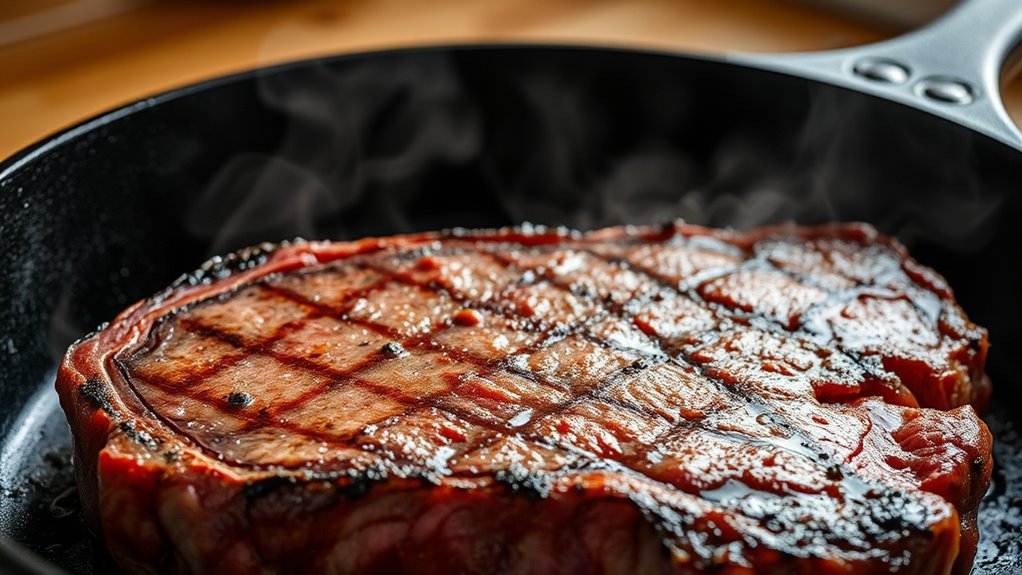
Place the steak in the skillet and sear for 3-4 minutes per side.
Add butter and fresh herbs like rosemary or thyme near the end of cooking for extra flavor.
Use a meat thermometer to check for your desired doneness.
Once cooked, let the steak rest before slicing to keep it juicy and tender.
Key Takeaways
- Choose a well-marbled ribeye about 1 to 1.5 inches thick and let it reach room temperature before seasoning.
- Preheat a clean, well-seasoned cast iron skillet over medium-high heat until smoking hot.
- Season the steak generously with salt and pepper, then sear undisturbed for 3-4 minutes per side to form a crust.
- After searing, reduce heat, add butter, garlic, and herbs, and baste the steak for 1-2 minutes to finish cooking.
- Rest the steak 5-10 minutes loosely covered before slicing against the grain for maximum tenderness.
How to Select the Ideal Ribeye Cut for Cast Iron Skillet
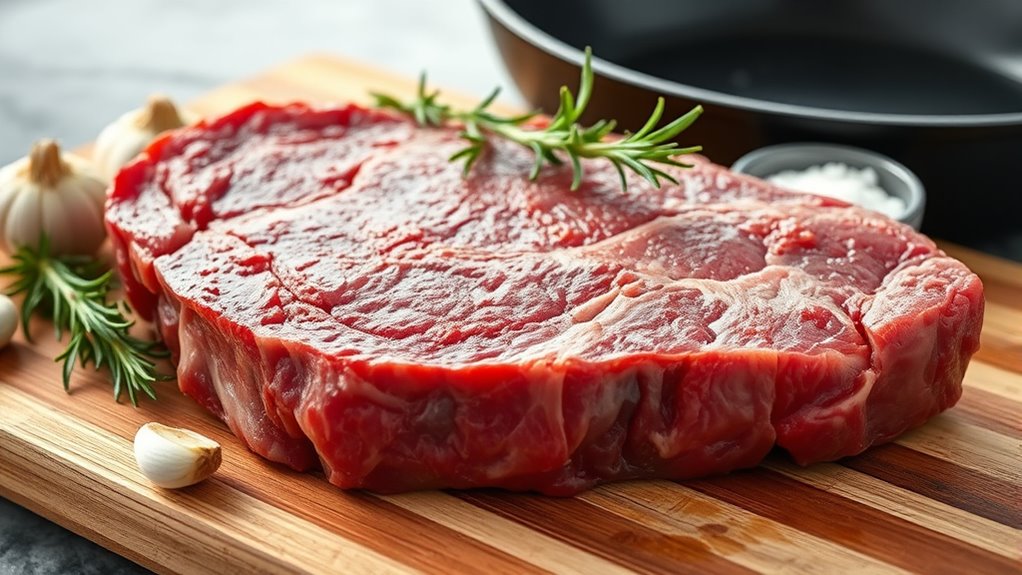
When you choose a ribeye for your cast iron skillet, look for one with good marbling, as the fat will melt and keep the steak juicy and flavorful. Pick a cut that’s about 1 to 1.5 inches thick to guarantee even cooking and a perfect sear. Avoid overly thin steaks because they can cook too fast and dry out.
Also, check the color—aim for bright red meat, which indicates freshness. If possible, select a bone-in ribeye; the bone adds flavor and helps the steak cook evenly. When buying, ask your butcher for USDA Choice or Prime grades; these have better marbling and tenderness.
Preparing Your Ribeye: Seasoning and Room Temperature Tips
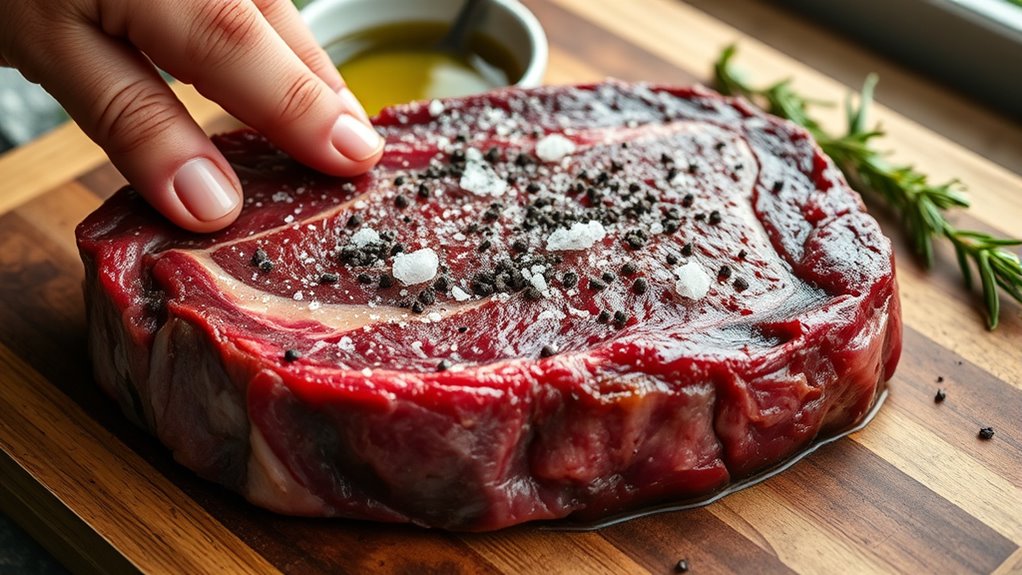
Before you start cooking, make sure your ribeye is seasoned well with salt and pepper to enhance its natural flavor. Letting the steak come to room temperature helps it cook more evenly and prevents a cold center.
These simple steps set the foundation for a perfectly cooked ribeye in your cast iron skillet.
Optimal Seasoning Techniques
Although seasoning might seem straightforward, mastering the right technique can dramatically enhance your ribeye’s flavor and texture. Start by patting the steak dry to guarantee the seasoning sticks well.
Next, apply a generous layer of coarse salt and freshly ground black pepper. You can add garlic powder or smoked paprika for extra depth, but keep it simple to let the beef shine.
Press the seasoning gently into the meat so it adheres without falling off during cooking.
| Seasoning | Amount | Tips |
|---|---|---|
| Coarse Salt | 1 tsp per side | Enhances crust formation |
| Black Pepper | ½ tsp per side | Use freshly ground |
| Garlic Powder | ¼ tsp | Adds subtle aroma |
| Smoked Paprika | ¼ tsp | Optional, for smoky flavor |
| Olive Oil | Light brush | Helps seasoning stick |
Importance Of Room Temperature
Since cooking a ribeye straight from the fridge can lead to uneven cooking, you’ll want to let your steak reach room temperature first. Taking this step guarantees that the heat penetrates the meat evenly, giving you a perfectly cooked interior. About 30 to 60 minutes on the counter is usually enough.
While waiting, keep your ribeye uncovered or loosely covered with a paper towel to avoid moisture buildup, which can prevent a good sear. This also lets the seasoning you applied earlier settle into the meat. Remember, a room temperature steak sears faster and develops a better crust, locking in juices and enhancing flavor.
Skipping this step may result in a steak that’s overcooked on the outside and underdone inside.
Cast Iron Skillet Temperature for Ribeye Steak
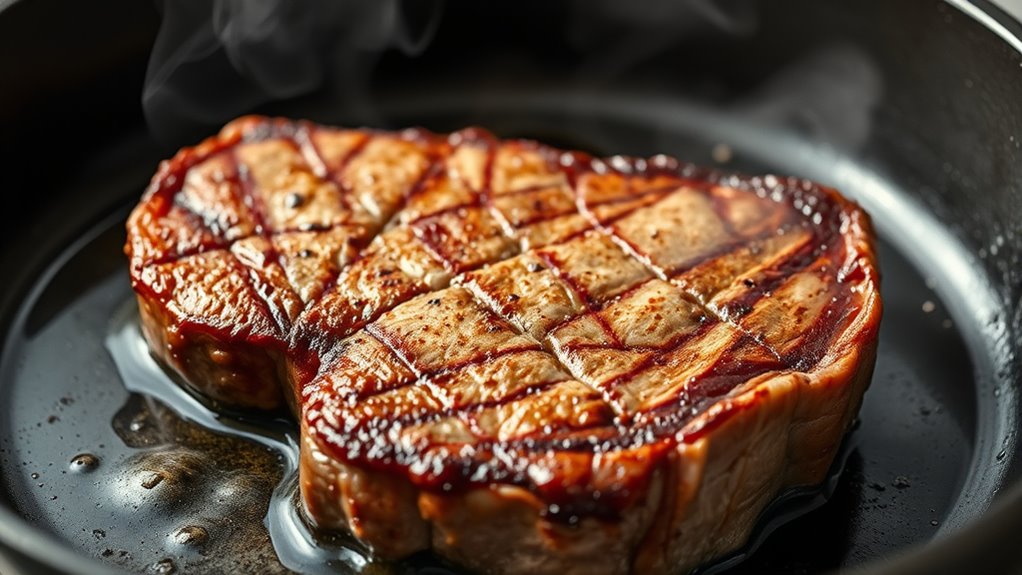
When you heat your cast iron skillet to the right temperature, you guarantee a perfect sear on your ribeye steak that locks in juices and flavor. Aim to preheat your skillet over medium-high heat until it’s smoking hot—around 450°F to 500°F. You can test this by flicking a few drops of water onto the pan; they should sizzle and evaporate immediately.
Prevent overheating, as it can burn the oil and create unpleasant flavors. On the other hand, if it’s not hot enough, the steak won’t sear properly, resulting in a less flavorful crust. Using a thermometer or trust your skillet’s responsiveness to heat ensures you get that ideal temperature before placing your ribeye on the pan.
How to Cook a Ribeye Steak in Cast Iron: Searing and Finishing
Before you place your ribeye in the cast iron skillet, make sure it’s dry and seasoned with salt and pepper to enhance the crust. Heat the skillet over medium-high until it’s smoking hot. Gently lay the ribeye down without crowding the pan.
Let it sear undisturbed for about 3-4 minutes to develop a rich, caramelized crust. Flip the steak using tongs and sear the other side for another 3-4 minutes. After both sides are browned, reduce the heat slightly.
Add a tablespoon of butter, crushed garlic, and fresh herbs like thyme or rosemary to the pan. Spoon the melted butter over the steak repeatedly for about 1-2 minutes to finish cooking and infuse flavor. Remove the ribeye from the skillet and let it rest before slicing.
How to Check Ribeye Doneness for Perfect Results
To get your ribeye just right, you’ll want to recognize key visual doneness signs like color and texture. Using a meat thermometer takes the guesswork out, letting you hit your preferred temperature every time.
Let’s explore how these methods help you achieve perfect results.
Visual Doneness Indicators
Although you can rely on a meat thermometer, learning to recognize visual doneness indicators lets you check your ribeye’s progress quickly and confidently.
Look for color changes on the surface and juices pooling on top. The steak’s firmness also signals its doneness—softer means rare, firmer means well done.
Here’s a quick guide:
| Doneness | Visual Cue | Texture/Feel |
|---|---|---|
| Rare | Bright red center | Very soft |
| Medium Rare | Warm red center | Slightly soft |
| Medium | Pink center | Springy, slightly firm |
| Medium Well | Slightly pink center | Firm |
| Well Done | No pink, brown throughout | Very firm |
Use these signs to nail the perfect ribeye without breaking your flow in the kitchen.
Using a Meat Thermometer
When you want consistent results every time, using a meat thermometer takes the guesswork out of cooking your ribeye. It ensures you hit the perfect doneness without cutting into your steak prematurely. Simply insert the thermometer into the thickest part of the ribeye, avoiding bone or fat.
Here’s a quick guide to internal temperatures for your ideal steak:
- Rare: 120-125°F
- Medium Rare: 130-135°F
- Medium: 140-145°F
- Medium Well: 150-155°F
- Well Done: 160°F and above
Remember to remove the steak from heat a few degrees before your target temp since it continues to cook while resting. Using a meat thermometer guarantees juicy, perfectly cooked ribeye every time.
Resting and Serving Your Cast Iron Ribeye Steak
Since you’ve cooked your ribeye to perfection, letting it rest before slicing is essential to lock in the juices and enhance flavor. Remove the steak from the skillet and place it on a warm plate or cutting board. Cover it loosely with foil and let it rest for 5 to 10 minutes.
This pause allows the juices to redistribute throughout the meat, keeping it tender and juicy when you cut into it.
When ready to serve, slice the ribeye against the grain to maximize tenderness. Arrange the slices on a serving platter or individual plates. Add any finishing touches like a sprinkle of flaky sea salt or a pat of herb butter for extra richness.
Now, enjoy your perfectly cooked cast iron ribeye steak!
Mistakes to Avoid When Cooking Ribeye in Cast Iron
Enjoying a perfectly rested ribeye is rewarding, but cooking it in cast iron comes with its own set of challenges. To get that steak just right, avoid these common mistakes:
Cooking ribeye in cast iron is rewarding but requires avoiding key mistakes for the perfect sear and flavor.
- Don’t cook a cold steak straight from the fridge; let it reach room temperature first.
- Avoid overcrowding the pan; it lowers the temperature and prevents a good sear.
- Skip using oil with a low smoke point—choose one with high heat tolerance like avocado or grapeseed oil.
- Don’t move the steak too much; let it develop a crust before flipping.
- Avoid under-seasoning; salt and pepper are essential for flavor and crust formation.
How to Clean and Maintain Your Cast Iron Skillet
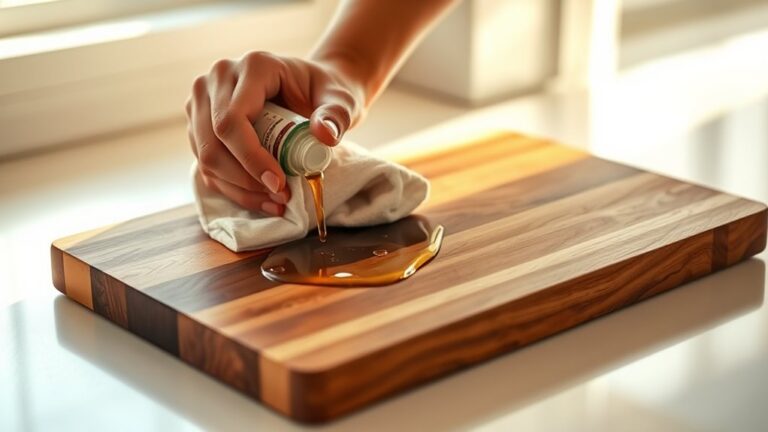
Although cast iron skillets are incredibly durable, you’ll need to clean and maintain them properly to keep their non-stick surface and prevent rust. After cooking, let your skillet cool slightly, then rinse it under hot water using a brush or sponge—avoid soap, which can strip seasoning.
For stuck-on bits, scrub with coarse salt and a little water as a natural abrasive. Dry your skillet thoroughly to prevent rust, then apply a thin layer of vegetable oil while it’s still warm. Store it in a dry place.
Occasionally, re-season your skillet by coating it with oil and baking it upside down in the oven at 375°F for an hour. Following these steps guarantees your cast iron stays reliable and ready for your next ribeye.
Frequently Asked Questions
Can I Use Olive Oil Instead of Butter for Cooking Ribeye?
Yes, you can use olive oil instead of butter for cooking ribeye. It has a higher smoke point, so it won’t burn as easily.
Just remember, olive oil won’t add the same rich flavor butter does.
How Long Can I Store Leftover Cooked Ribeye Steak?
Leftover ribeye’s freshness fades like twilight, best enjoyed within 3 to 4 days in your fridge.
Wrap it tight, so it doesn’t lose its juicy soul, then savor or freeze for longer magic.
What Sides Pair Best With Cast Iron Ribeye Steak?
You’ll love pairing your ribeye with garlic mashed potatoes, roasted asparagus, or a fresh arugula salad. These sides balance the rich steak, adding freshness and texture to your meal without overpowering that delicious flavor.
Is It Safe to Use a Cast Iron Skillet on Induction Cooktops?
Yes, you can safely use a cast iron skillet on induction cooktops because cast iron is magnetic and works well with induction technology. Just be careful lifting it, as cast iron is heavy and retains heat intensely.
Its weight means you should handle it with care to avoid damage to the cooktop surface.
Additionally, because it holds heat so well, it can continue cooking food even after you turn off the burner.
Can I Cook Other Types of Steak in a Cast Iron Skillet?
Yes, you can cook other types of steak in a cast iron skillet. It’s perfect for searing and getting a great crust on steaks like sirloin, filet mignon, or strip steak, locking in flavor and juiciness.
Conclusion
Now that you’ve mastered cooking ribeye in a cast iron skillet, you’re ready to wow your taste buds with every juicy, flavorful bite.
Remember, the skillet is your trusty steed—treat it well, and it’ll deliver steak perfection every time. Keep practicing, avoid common pitfalls, and don’t rush the resting stage.
With these simple steps, you’ll turn a humble ribeye into a mouthwatering masterpiece that’s worth every sizzling second. Cooking ribeye in a cast iron skillet ensures a beautifully seared crust and tender, flavorful interior every time.