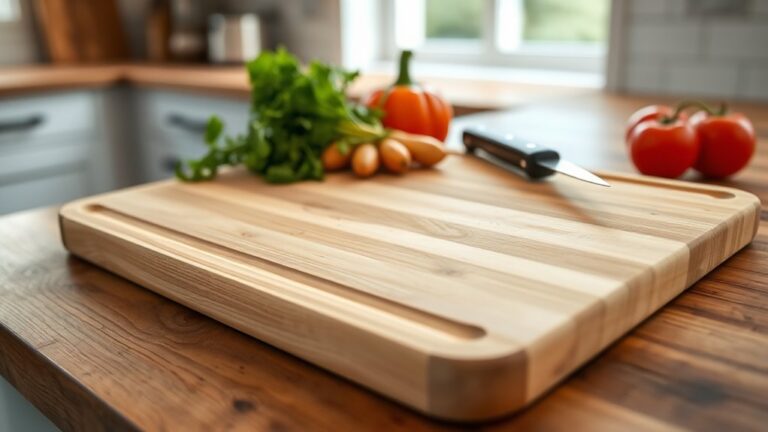
10 Healthiest Cutting Boards to Use in 2026
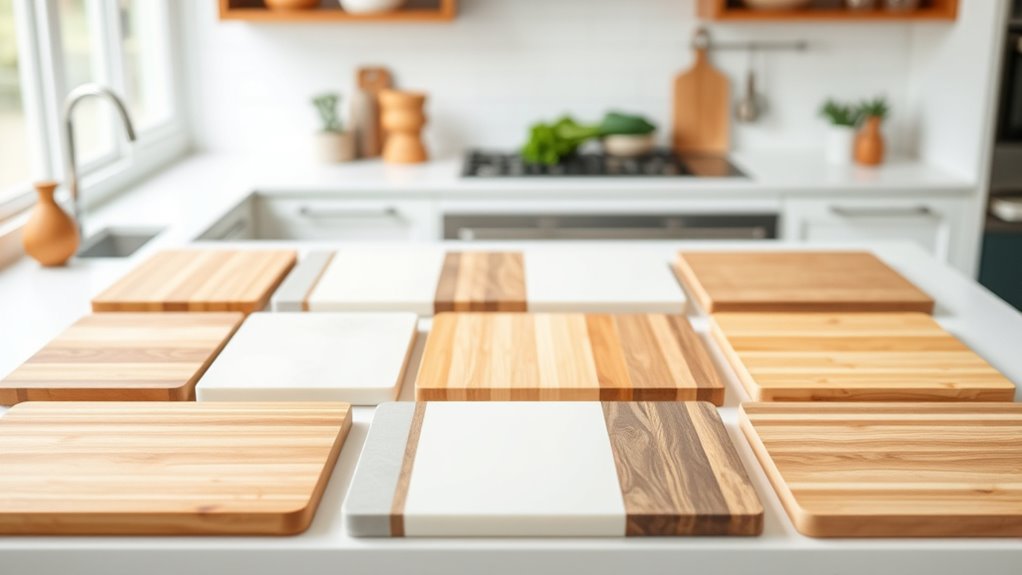
When choosing the healthiest cutting boards to use in 2026, prioritize materials that resist bacteria and provide durability. Popular choices include hardwoods like maple and walnut, bamboo, and high-density plastic. These options are known for their safety and longevity in the kitchen.
Bamboo stands out as an eco-friendly choice with natural antibacterial properties.
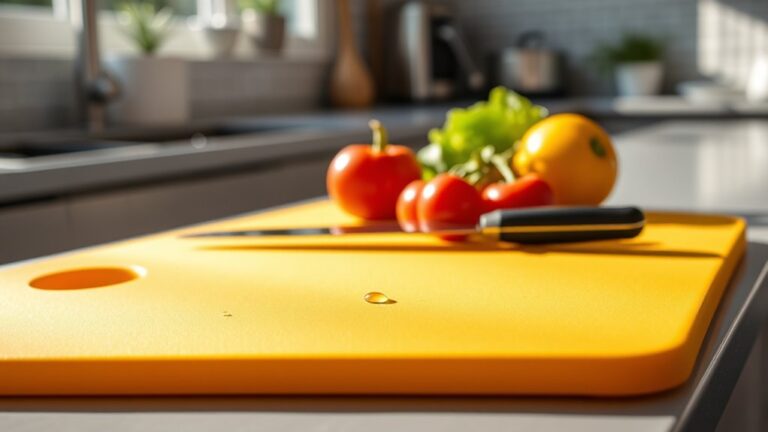
Plastic cutting boards are easy to sanitize and dishwasher-safe, though they may wear out more quickly.
Look for boards with smooth, non-porous surfaces and antimicrobial treatments for added protection.
Proper care and maintenance will keep your cutting board effective and hygienic over time.
Explore the top picks and useful tips to ensure your kitchen stays safe, clean, and efficient in 2026.
Key Takeaways
- Choose hardwood boards like maple or walnut for natural bacteria resistance and long-lasting durability in 2026 kitchens.
- High-density polyethylene plastic boards offer non-porous, easy-to-sanitize surfaces, ideal for preventing cross-contamination.
- Bamboo cutting boards provide eco-friendly, antibacterial properties and resist warping and deep knife cuts.
- Consider composite boards combining resin and wood fibers for modern, durable, and knife-friendly options.
- Look for antimicrobial treatments and certifications to ensure enhanced bacterial inhibition and food safety.
Why the Right Cutting Board Matters for Your Health
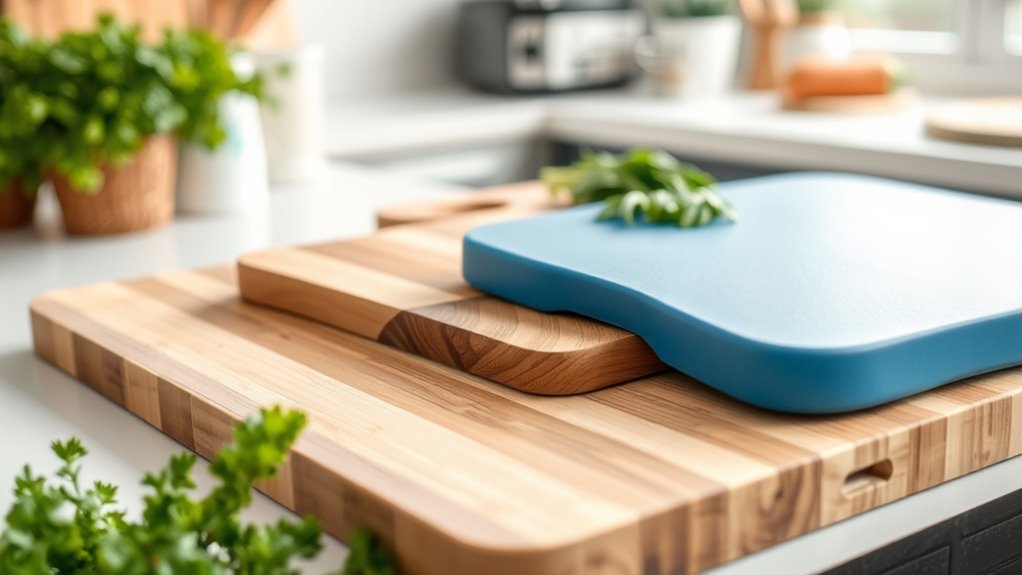
Although it might seem like a simple kitchen tool, choosing the right cutting board plays an essential role in keeping you healthy. When you use a poorly made or damaged board, bacteria can easily hide in grooves and cracks, increasing your risk of foodborne illness. You’ll want a board that resists deep cuts and is easy to clean thoroughly.
Some materials naturally inhibit bacterial growth, which helps keep your food safer. Also, the right board prevents cross-contamination between raw meats and other ingredients, so you don’t accidentally transfer harmful microbes. By picking the right cutting board, you’re taking a key step to safeguard your meals and protect your family’s health.
It’s a small choice that makes a big difference in your kitchen hygiene.
Key Criteria for Choosing the Healthiest Cutting Boards
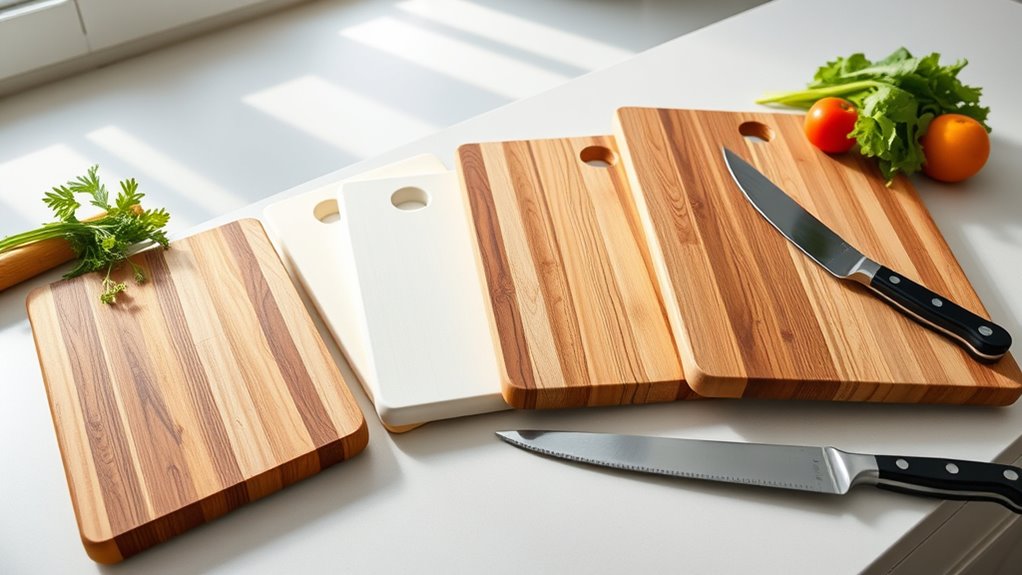
When choosing the healthiest cutting board, you need to take into account factors like material, durability, and ease of cleaning to guarantee safety and longevity. You want a board that resists deep grooves, as these can harbor bacteria. Consider how well it stands up to regular washing without warping or cracking.
The surface should be non-porous or treated to prevent absorption of juices and odors. Also, think about maintenance—boards that require minimal upkeep reduce the risk of contamination. Size matters too; pick one that fits your kitchen space and tasks comfortably.
Finally, confirm it won’t dull your knives quickly, preserving their sharpness and your efficiency. Balancing these criteria helps you find a cutting board that supports both hygiene and practicality in your kitchen.
What Materials Make Cutting Boards Safe and Durable?
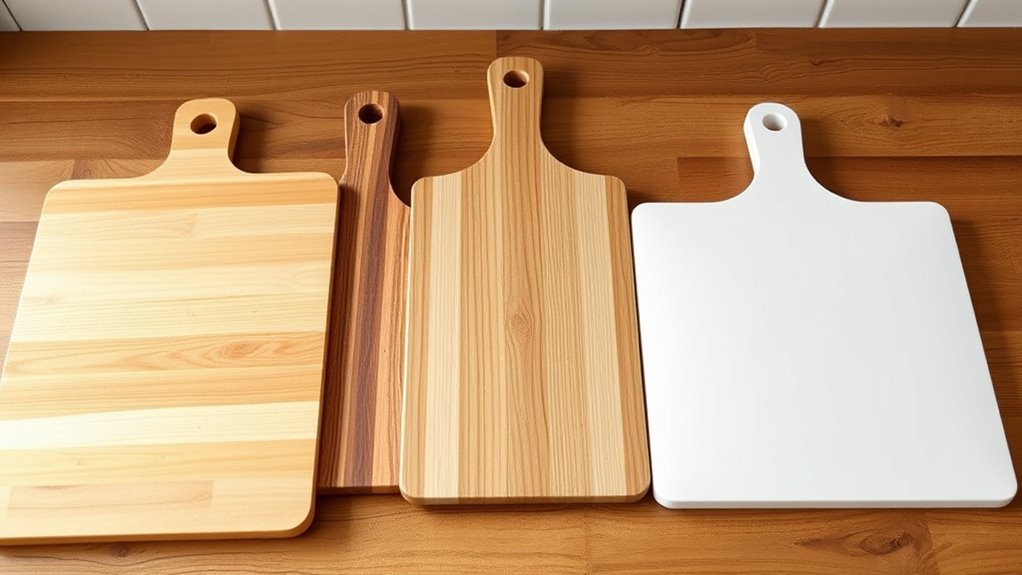
Choosing the right material for your cutting board directly impacts its safety and durability. You want a surface that resists deep grooves where bacteria can hide and withstand regular knife use without warping or cracking. Hardwood boards, like maple and walnut, offer tight grains that make them naturally resistant to bacteria and durable enough for everyday chopping.
Plastic boards, especially those made from high-density polyethylene, are non-porous and easy to sanitize, making them a practical choice for handling raw meats. Avoid softwoods, as they can scar easily and harbor germs. Stainless steel boards are durable but can dull your knives quickly and feel less comfortable.
Ultimately, pick a material that balances hygiene with longevity, fitting your cooking habits and maintenance preferences.
Bamboo Cutting Boards: Health Benefits and Durability
You’ll appreciate bamboo cutting boards for their natural antibacterial properties that help keep your kitchen safer. Since bamboo is eco-friendly, choosing it supports sustainability without sacrificing quality.
Plus, its long-lasting strength means your board will handle plenty of use without wearing down quickly.
Natural Antibacterial Properties
Why do many people prefer bamboo cutting boards for their kitchens? It’s largely due to bamboo’s natural antibacterial properties. When you use a bamboo board, you’re choosing a material that naturally inhibits bacterial growth without needing harsh chemicals.
Bamboo contains natural antimicrobial agents that help reduce the risk of foodborne illnesses, making it safer for preparing raw meats and vegetables. Plus, bamboo’s tight grain structure means it’s less porous than many wood types, so it doesn’t soak up moisture and bacteria as easily. This makes cleaning your bamboo board simpler and more effective.
Eco-Friendly Material Benefits
Bamboo’s natural antibacterial qualities also contribute to its reputation as an eco-friendly choice. When you choose bamboo cutting boards, you’re opting for a renewable resource that grows rapidly without needing pesticides or fertilizers. This means less environmental impact compared to hardwood boards that require longer growth periods and more intensive farming.
Bamboo’s fast growth helps reduce deforestation, making it a sustainable option for your kitchen. Plus, bamboo absorbs less water, which means it resists warping and cracking without chemical treatments. This natural resilience not only protects your health by limiting bacteria growth but also supports eco-conscious living.
Long-Lasting Strength and Wear
Although many cutting boards wear down quickly, bamboo boards stand out for their exceptional strength and durability. You’ll find that bamboo resists deep cuts and warping better than softer woods, making it a smart long-term investment.
Its natural hardness means it won’t dull your knives as much, and it’s less prone to cracking or splitting over time. When you choose bamboo, you get a board that maintains its integrity even with frequent use.
| Feature | Benefit |
|---|---|
| Hardness | Resists deep cuts |
| Low Porosity | Prevents moisture absorption |
| Flexibility | Less prone to cracking |
| Knife-Friendly | Maintains blade sharpness |
This combination guarantees your bamboo board stays strong and hygienic.
Plastic Cutting Boards: Safe and Practical Choices in 2026
When you choose a plastic cutting board in 2026, you’re opting for a material that balances safety, durability, and ease of cleaning. Plastic boards resist deep grooves where bacteria can hide, making them a hygienic choice, especially when handling raw meats. You can wash them in the dishwasher without worrying about warping or cracking, which simplifies maintenance.
Their lightweight nature also makes them easy to move and store. While some may worry about chemical leaching, modern food-grade plastics used today are rigorously tested for safety. To keep your plastic board in top shape, replace it once it shows significant wear or deep cuts.
Understanding Glass and Composite Cutting Boards for Hygiene
Plastic cutting boards provide great hygiene and convenience, but you might be curious about how glass and composite options stack up. Glass boards are non-porous, making them easy to clean and highly resistant to bacteria. However, their hard surface can dull knives quickly, which might frustrate you if you value sharp blades.
Glass cutting boards resist bacteria and clean easily but may dull your knives faster.
Composite boards blend resin and wood fibers, offering durability and a softer cutting surface that’s gentler on knives. They resist moisture and staining well, giving you confidence in their hygiene.
Here’s why you might consider these options:
- Glass boards offer a sleek, stain-free surface that’s dishwasher safe.
- Composite boards balance hygiene with knife care.
- Both give you a modern, durable alternative to traditional materials.
How to Identify Cutting Boards That Resist Bacteria
You’ll want to look for cutting boards made from materials with built-in safety features that inhibit bacterial growth. Pay close attention to surface texture—smoother boards tend to resist bacteria better than rough or cracked ones.
Also, consider boards treated with antimicrobial coatings for an extra layer of protection.
Material Safety Features
Although many factors influence a cutting board’s cleanliness, the material it’s made from plays a crucial role in resisting bacteria. When choosing the healthiest cutting board, pay attention to these material safety features:
- Non-porous surfaces: Materials like bamboo or high-density polyethylene (HDPE) don’t absorb liquids, preventing bacteria from hiding deep inside. This means your board stays safer for longer.
- Naturally antimicrobial materials: Some woods, like maple and teak, contain natural oils that inhibit bacterial growth. You’ll feel more confident using these because they actively resist germs.
- BPA-free and food-grade certification: Ensure the board is free from harmful chemicals and meets food safety standards. This protects you from toxic residue and keeps your meals wholesome.
Surface Texture Importance
The material of your cutting board sets the stage, but the surface texture plays a big role in how well it resists bacteria. You want a board with a smooth, tight grain that won’t trap food particles or moisture. Rough or deeply grooved surfaces create perfect hiding spots for bacteria to thrive, even after washing.
When you inspect boards, look for minimal cuts or scratches, as these imperfections can harbor germs. If you notice your board’s surface becoming worn, it’s time to sand it down or replace it. Opt for cutting boards that maintain their texture over time, resisting deep knife scars.
Antimicrobial Treatments Benefits
How can you tell if a cutting board actively fights bacteria? Look for antimicrobial treatments that inhibit bacterial growth right on the surface. These treatments give you peace of mind, knowing your food prep area stays cleaner and safer.
Here’s how to identify cutting boards with effective antimicrobial properties:
- Check for certifications like EPA registration or FDA approval, ensuring the treatment meets safety standards.
- Look for embedded silver ions or copper, which naturally resist bacteria and prevent odor buildup.
- Read product descriptions carefully—manufacturers often highlight antimicrobial technology as a key feature.
Choosing a cutting board with these treatments helps you reduce cross-contamination risks, protect your family’s health, and maintain a fresher, longer-lasting board.
Easy-to-Clean Cutting Boards That Keep Your Kitchen Safe
When you choose easy-to-clean cutting boards, you reduce the risk of harmful bacteria lingering on your surfaces. Look for boards made from non-porous materials like plastic or tempered glass, which don’t absorb juices or odors. These materials let you scrub away contaminants quickly, keeping your kitchen hygienic.
Avoid boards with deep grooves or cracks where bacteria can hide, and opt for smooth surfaces instead. Dishwasher-safe options are especially convenient, as high heat kills germs more effectively. Remember to clean your board thoroughly after each use, particularly when handling raw meat or seafood.
Top 10 Healthiest Cutting Boards for Durability and Ease
When choosing a cutting board, you’ll want one that stands up to daily use without wearing down quickly. Comparing materials helps you find options that balance durability with easy cleaning.
Let’s explore the top 10 healthiest cutting boards that make your kitchen routine smoother and safer.
Material Durability Comparison
Choosing the right material for your cutting board directly impacts its durability and ease of use. You want a board that withstands daily chopping without warping or cracking.
Here’s how the top materials stack up:
- Wood: Offers excellent durability and self-healing properties but requires gentle care to avoid splitting.
- Bamboo: Eco-friendly and harder than many woods, it resists knife marks but can be prone to cracking if not maintained.
- Plastic: Lightweight and dishwasher-safe, it’s less durable over time, often developing deep grooves that harbor bacteria.
Selecting the right material means balancing toughness with practicality—giving you a board that lasts while making meal prep smoother and safer every day.
Maintenance and Cleaning Ease
Although durability is essential, how easily you can maintain and clean your cutting board plays an equally important role in keeping your kitchen hygienic. You want a board that resists staining and odors, so materials like bamboo and plastic often shine for their low-maintenance nature. Simply wash them with hot, soapy water after each use, and occasionally sanitize with vinegar or diluted bleach.
Wood boards, while durable, require more care—regular oiling prevents cracking, and you need to avoid soaking them in water. Remember, you should never toss wooden boards in the dishwasher, as heat and moisture can damage them. Ultimately, choosing a cutting board that matches your cleaning habits ensures you’ll keep bacteria at bay without extra hassle.
How to Maintain Your Cutting Board for Long-Term Health
To keep your cutting board in top shape and make certain it stays safe for food prep, you need to clean and care for it properly after each use. Neglecting maintenance can lead to cracks and bacteria buildup, risking your health and ruining your investment. Here’s how you can protect your cutting board long-term:
Proper care after each use prevents cracks and bacteria, keeping your cutting board safe and lasting longer.
- Clean immediately: Wash with hot, soapy water right after use, then dry thoroughly to prevent warping and bacterial growth.
- Oil regularly: Apply food-grade mineral oil weekly to wooden boards; it keeps the surface hydrated and prevents splitting.
- Sanitize smartly: Use a vinegar or diluted bleach solution occasionally to kill germs without damaging the board.
Stick to these steps, and your cutting board will serve you safely and beautifully for years.
Frequently Asked Questions
Can Cutting Boards Affect the Taste of Food?
Yes, cutting boards can affect your food’s taste. If they retain odors or bacteria from previous use, you’ll notice off-flavors.
Keeping them clean and choosing the right material helps guarantee your food tastes fresh every time.
Are There Eco-Friendly Disposal Options for Old Cutting Boards?
When my old wooden board cracked, I composted it—eco-friendly disposal is possible! You can recycle plastic boards, donate usable ones, or repurpose them as garden tools.
These options help you reduce waste responsibly and sustainably.
How Often Should Cutting Boards Be Replaced for Safety?
You should replace cutting boards when deep grooves or cracks appear, as bacteria can hide there. For safety, check weekly and replace every 1-2 years, or sooner if damage or persistent stains develop.
Can Cutting Boards Cause Allergic Reactions?
Yes, cutting boards can cause allergic reactions, especially if you’re sensitive to certain surfaces like silicone or wood. You’ll want to watch for worry-worthy wear and wipe them well to ward off unwanted irritants.
Do Cutting Boards Require Seasoning or Special Treatments?
Yes, you should season wooden cutting boards regularly with food-safe mineral oil to prevent cracking and warping. Plastic boards don’t need seasoning, but you should clean them thoroughly to avoid bacteria buildup and maintain their condition.
Conclusion
Choosing the right cutting board matters more than you might think—did you know that bacteria can survive up to 14 days on some surfaces? By picking a cutting board made from safe, durable materials like bamboo or high-quality plastic, you’re reducing your risk of contamination and keeping your kitchen healthier.
Plus, maintaining your board properly means it’ll last longer and stay safer. So, invest wisely and enjoy a cleaner, safer cooking space every day!
Remember, selecting one of the healthiest cutting boards is key to a healthier kitchen environment and safer food preparation in 2026.