Is Rubberwood Good for Cutting Boards?
Rubberwood is a great choice for cutting boards if you want something eco-friendly, affordable, and knife-friendly. This sustainable hardwood is moderately hard and durable, making it an excellent option for food preparation surfaces.
Its natural resistance to stains and bacteria adds to its appeal as a hygienic cutting board material.
Rubberwood resists dents better than softer woods but requires regular oiling and drying to prevent warping.
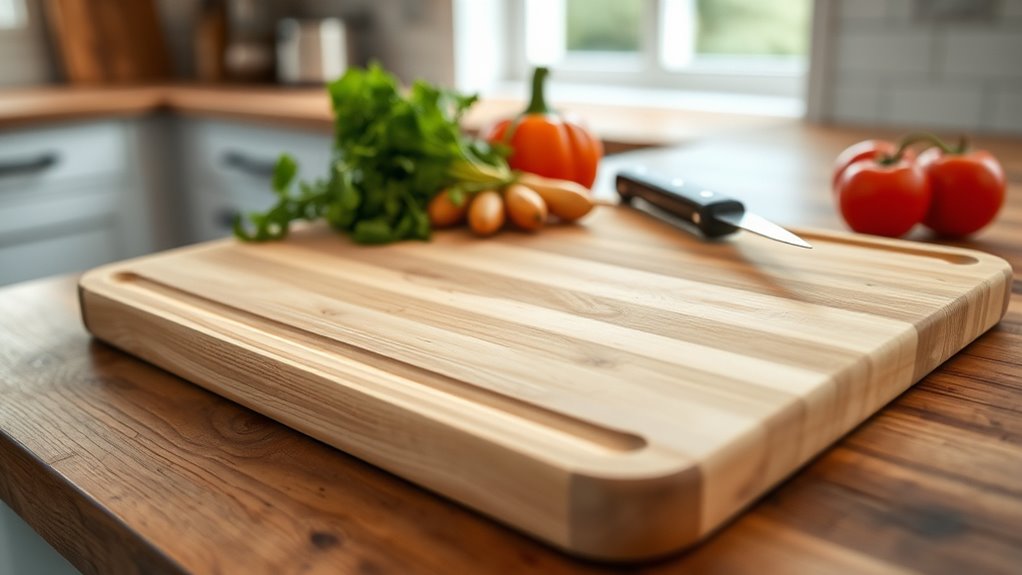
Its light color gives a modern look that fits well in most kitchens.
While it needs care to avoid moisture issues, it balances practicality and sustainability effectively.
Overall, rubberwood cutting boards offer a blend of durability, hygiene, and eco-conscious benefits. You can discover more about its advantages and upkeep ahead.
Key Takeaways
- Rubberwood is eco-friendly, repurposing trees after latex use, supporting sustainability and reducing deforestation.
- It offers moderate hardness and durability, resisting dents and scratches better than softer woods.
- Proper maintenance like oiling and drying prevents warping and moisture damage.
- Its fine grain is knife-friendly and naturally resists bacteria for hygienic use.
- Rubberwood is affordable and widely available, making it a practical, stylish option for cutting boards.
Why Choose Rubberwood Cutting Boards?
Why should you consider rubberwood for your cutting boards? Rubberwood offers an eco-friendly option because it comes from rubber trees that have completed their latex-producing cycle. Instead of wasting this wood, manufacturers repurpose it, reducing deforestation.
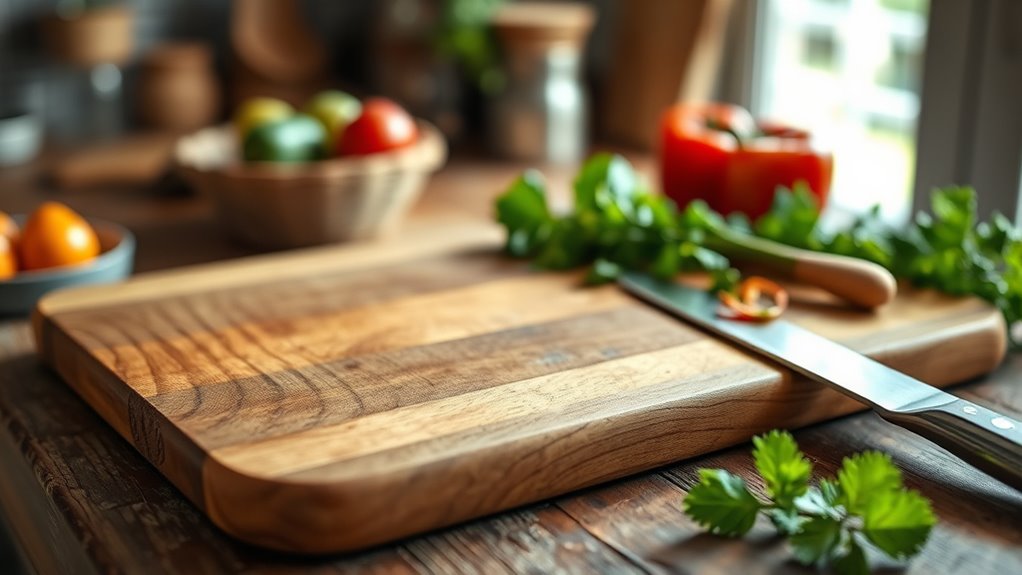
You’ll appreciate its light color and straight grain, which give your kitchen a clean, modern look. Plus, rubberwood’s fine texture means it’s gentle on your knives, helping them stay sharper longer. It also resists stains and odors better than some other woods, keeping your board looking and smelling fresh.
If you want a sustainable, attractive, and practical cutting board, rubberwood fits the bill without compromising your kitchen’s style or functionality. It’s a smart choice you’ll feel good about using every day.
How Durable and Hard Is Rubberwood?
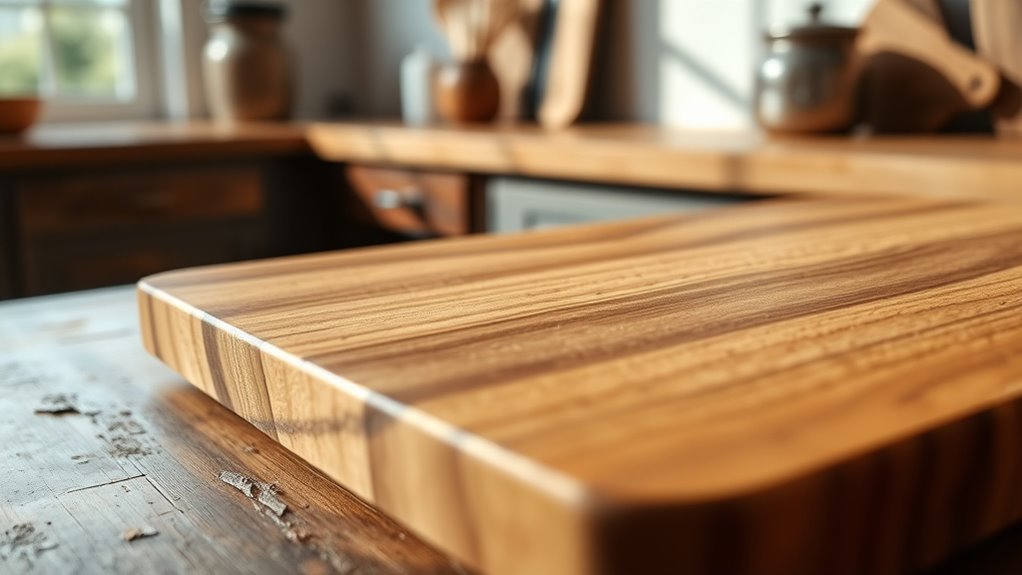
You’ll find that rubberwood has a moderate hardness rating, making it sturdy enough for everyday cutting tasks. It resists impacts better than many softer woods, so it won’t dent easily.
Plus, with regular use, rubberwood cutting boards hold up well over time, giving you good longevity.
Rubberwood Hardness Rating
How does rubberwood measure up when it comes to hardness and durability? On the Janka hardness scale, which gauges a wood’s resistance to denting and wear, rubberwood scores around 980 to 1,000 pounds-force. This places it in the medium hardness category, making it harder than pine but softer than maple or oak.
For your cutting board, this means rubberwood offers decent resistance to scratches and knife marks without being overly tough on your blades. Its moderate hardness ensures it won’t easily dent during everyday kitchen use, while still providing a stable, durable surface.
If you want a cutting board that balances durability with gentleness on knives, rubberwood’s hardness rating makes it a practical choice for your kitchen.
Impact Resistance Comparison
While rubberwood’s Janka hardness gives you a good idea of its resistance to dents and scratches, impact resistance reveals another layer of durability that matters for cutting boards. You want a board that can handle the occasional drop or heavy chop without cracking or splintering. Rubberwood scores well here; its dense grain structure absorbs shocks better than softer woods like pine.
Compared to harder woods like maple or oak, rubberwood offers a balanced toughness—it’s not as brittle, so it resists impact-related damage effectively. This means you can trust rubberwood cutting boards to withstand everyday kitchen use without sudden failures. If durability under force is important to you, rubberwood’s impact resistance makes it a practical choice for your cutting surface.
Longevity Under Usage
Because rubberwood combines moderate hardness with natural resilience, it stands up well to years of regular kitchen use. You’ll find that it resists dents and scratches better than softer woods like pine, making it a reliable choice for cutting boards.
While it’s not as hard as maple or walnut, rubberwood strikes a good balance between durability and ease of maintenance. To get the most longevity out of your rubberwood cutting board, consider these factors:
- Proper sealing and oiling to prevent moisture damage
- Avoiding prolonged soaking or dishwasher use
- Regularly sanding out minor cuts and scratches
Does Rubberwood Resist Moisture and Warping?
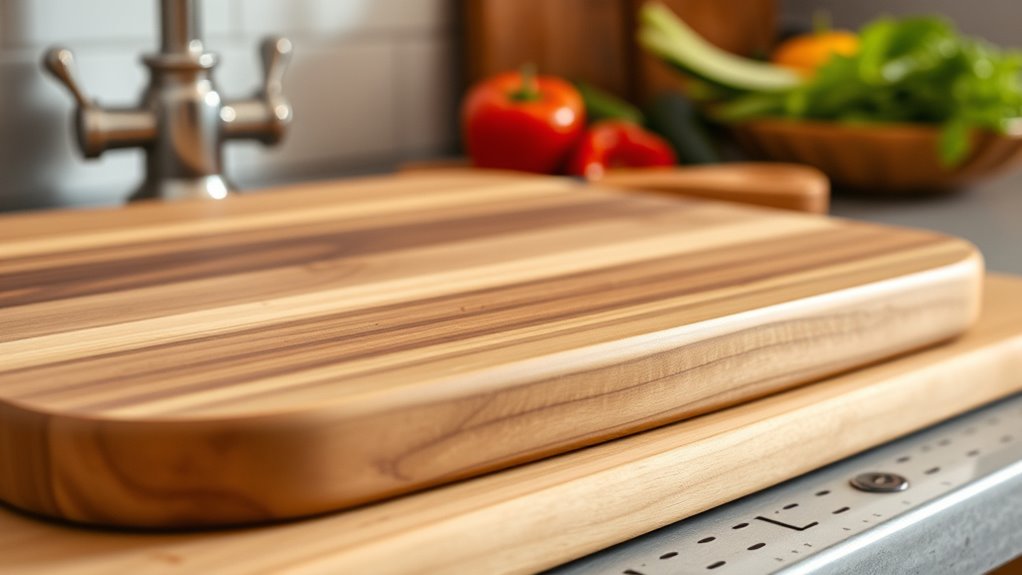
You’ll want to know how rubberwood handles moisture since cutting boards often face wet conditions. Its natural resistance to warping depends largely on how well it absorbs moisture and the finishing techniques used.
Let’s explore how these factors affect rubberwood’s performance in your kitchen.
Moisture Absorption Characteristics
Although rubberwood is often praised for its durability, it doesn’t fully resist moisture absorption, which can lead to warping if not properly treated. When you use rubberwood for cutting boards, you’ll notice it tends to soak up water more than some hardwoods. This means you need to be careful with how you clean and dry your board to maintain its quality.
To manage moisture absorption effectively:
- Seal the board with a food-safe oil or finish to create a moisture barrier.
- Avoid soaking the board in water to prevent excessive absorption.
- Dry the board thoroughly after washing to minimize water retention.
Warping Resistance Properties
Managing moisture absorption plays a big role in how well rubberwood resists warping. When you use rubberwood for cutting boards, its natural density helps it handle moisture better than softer woods. This means it won’t easily swell or shrink when exposed to water during food prep.
However, rubberwood is still a natural material, so it can warp if left wet for too long or exposed to extreme humidity changes. To keep your rubberwood cutting board flat and functional, you’ll want to dry it properly after washing and avoid prolonged soaking.
While rubberwood offers decent resistance to warping, treating it with good care guarantees it maintains its shape and durability over time, making it a reliable choice for your kitchen cutting board needs.
Impact of Finishing Techniques
Since rubberwood’s natural properties offer moderate moisture resistance, applying the right finishing techniques can considerably boost its ability to withstand warping. You’ll want to seal the wood properly to create a moisture barrier, which prevents water absorption that leads to swelling and warping.
Using food-safe finishes is essential since your cutting board comes in contact with food. Some effective finishing methods include:
- Applying multiple coats of mineral oil to penetrate and protect the wood fibers
- Using beeswax or a beeswax and oil blend for added water resistance and a smooth surface
- Sealing with a food-safe polyurethane for a durable, moisture-resistant finish
How Well Does Rubberwood Stand Up to Knife Marks?
When you use rubberwood cutting boards, you’ll notice they resist knife marks better than many softer woods. Rubberwood’s medium hardness gives it a durable surface that withstands regular chopping and slicing without showing excessive wear. While no wood is completely immune to knife marks, rubberwood strikes a good balance—it’s tough enough to endure daily use but not so hard that it dulls your knives quickly.
You might see minor scratches over time, but these don’t usually compromise the board’s integrity or appearance. If you maintain your rubberwood board properly, occasional sanding can refresh the surface, keeping it smooth and functional. Overall, rubberwood handles knife marks well, making it a practical choice for cutting boards that see regular kitchen action.
Is Rubberwood Safe and Hygienic for Food Prep?
While rubberwood holds up well against knife marks, you might wonder if it’s safe and hygienic for food preparation. The good news is, rubberwood is generally considered safe because it’s a hardwood with a tight grain that resists deep cuts where bacteria can hide.
Plus, it’s naturally antimicrobial to some extent, making it a solid choice for your kitchen. To keep it safe and hygienic, remember these key points:
- Use separate boards for raw meat and vegetables to prevent cross-contamination.
- Regularly oil your rubberwood board to maintain its protective surface.
- Inspect for cracks or deep grooves where bacteria could accumulate and replace if needed.
With proper care, rubberwood cutting boards can be both safe and hygienic for your food prep.
How Easy Is It to Clean and Maintain Rubberwood Boards?
Although rubberwood is durable, you’ll want to clean and maintain it properly to keep it in top shape. After each use, wash your rubberwood board with warm, soapy water and rinse thoroughly. Avoid soaking it or putting it in the dishwasher, as excessive moisture can cause warping or cracking over time.
Dry it immediately with a clean towel and let it air dry standing upright.
To maintain its smooth surface, regularly oil your board with food-safe mineral oil or beeswax. This prevents the wood from drying out and helps repel water and stains. With simple daily care and occasional oiling, your rubberwood cutting board will stay clean, functional, and looking great for years.
What Are the Environmental Benefits of Rubberwood Cutting Boards?
Taking good care of your rubberwood cutting board not only keeps it looking great but also extends its life, reducing the need for frequent replacements. Choosing rubberwood supports environmental sustainability because it comes from trees that have already served their primary purpose in latex production. This means you’re using wood that might otherwise be discarded.
Proper care of rubberwood boards prolongs their use and promotes eco-friendly sustainability by repurposing latex trees.
Plus, rubberwood is a renewable resource, harvested responsibly with minimal waste. Here are some key environmental benefits:
- Reduces deforestation by utilizing plantation trees instead of old-growth forests
- Minimizes waste by repurposing trees after latex extraction
- Supports sustainable forestry through managed rubber plantations
What Are the Drawbacks of Rubberwood Cutting Boards?
Even though rubberwood cutting boards offer many benefits, they come with some drawbacks you should consider. Rubberwood is more porous than hardwoods like maple, so it can absorb moisture and harbor bacteria if not dried properly. You’ll need to clean and maintain it carefully to avoid warping or cracking over time.
Also, rubberwood is softer, which means your knives might dull faster compared to cutting on harder surfaces. If you’re looking for a board with superior durability, rubberwood might not meet your expectations. Additionally, the wood’s natural oils can sometimes cause a slight odor or discoloration, especially when new.
Being aware of these issues helps you decide if rubberwood cutting boards fit your kitchen needs.
How Does Rubberwood Compare in Price and Availability?
When you’re looking for a cutting board, price and availability often play a big role in your decision. Rubberwood stands out because it’s generally more affordable than hardwoods like maple or walnut. Since it’s sourced from rubber trees after their latex-producing years, manufacturers can offer it at competitive prices.
Rubberwood offers an affordable, sustainable alternative to hardwood cutting boards like maple and walnut.
Plus, it’s widely available due to its sustainable harvesting and high demand in furniture production.
Here’s why rubberwood is a practical choice for you:
- Cost-effective compared to premium hardwood options
- Readily available in many markets worldwide
- Sustainable sourcing makes it an eco-friendly option
Frequently Asked Questions
Can Rubberwood Cutting Boards Be Used for Hot Pots and Pans?
You shouldn’t place hot pots or pans directly on rubberwood cutting boards because the heat can cause damage or warping. Instead, use trivets or heat-resistant pads to protect your board and keep it in good shape.
This will help maintain the board’s durability and appearance. Always take care to avoid exposing the wood to extreme temperatures. Your cutting board will last longer with proper use.
Are Rubberwood Boards Suitable for Professional Chefs?
Of course, you’d trust a rubberwood board to survive a culinary war zone! But seriously, it’s durable and eco-friendly, so you can confidently chop and slice like a pro without worrying about it cracking under pressure.
Do Rubberwood Cutting Boards Have a Natural Scent or Odor?
You won’t notice much natural scent or odor from rubberwood cutting boards since the wood is usually kiln-dried and treated. Any faint smell typically fades quickly, so it won’t affect your food preparation or kitchen experience.
Can Rubberwood Boards Be Customized With Engraving or Designs?
Yes, you can customize rubberwood boards with engraving or designs. Their smooth, light surface makes it easy to add personalized touches, whether with laser engraving or hand carving, giving your board a unique, stylish look.
How Do Rubberwood Cutting Boards Affect Knife Sharpness Over Time?
Rubberwood cutting boards are gentle on your knives, so they help maintain sharpness longer compared to harder woods or synthetic boards.
You’ll find your blades stay sharper with less frequent honing and sharpening needed over time.
Conclusion
So, is rubberwood the perfect choice for your cutting board? You’ve seen its durability, hygiene, and eco-friendly perks—but what about those knife marks and moisture worries?
Before you decide, consider how it fits your kitchen habits and budget. Rubberwood might just surprise you with its balance of strength and sustainability.
Ready to take the plunge or still weighing the pros and cons? The answer could transform your cooking experience with a cutting board made of rubberwood.