How You Use Coconut Oil to Treat Cutting Boards Step by Step
To treat your cutting board with coconut oil effectively, start by thoroughly cleaning and drying the board. Using food-grade, virgin coconut oil is essential for safe and natural maintenance.
This method helps preserve the wood, prevents cracking, and keeps your cutting board looking fresh and durable over time.
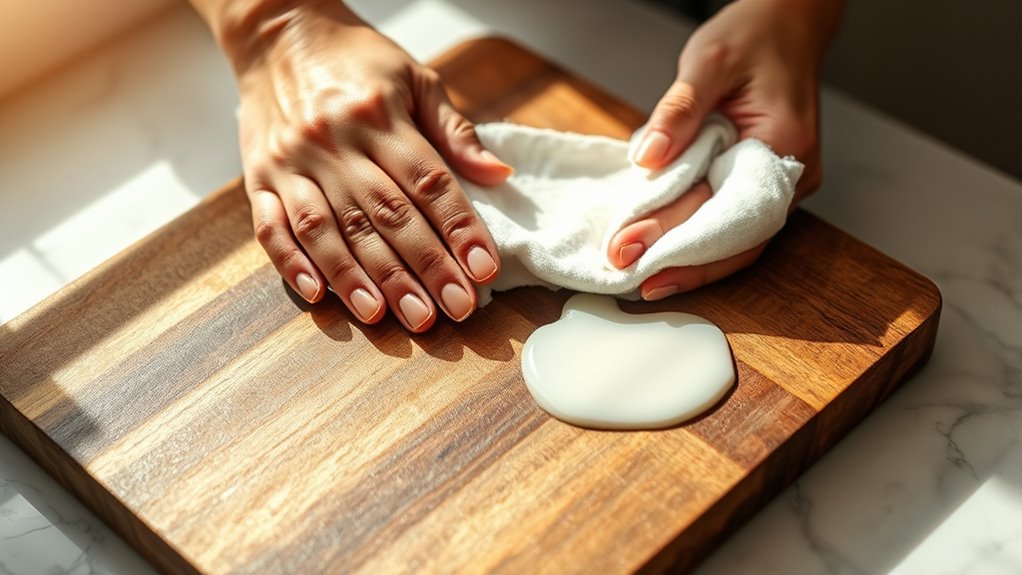
First, warm a tablespoon of the coconut oil until it becomes liquid but not hot. Apply the oil evenly in circular motions using a clean cloth.
Let the oil soak into the wood for at least two hours or overnight for the best results.
After soaking, wipe off any excess oil and allow the board to air dry completely.
Regular oiling is key to maintaining your board’s durability and appearance.
Follow these simple steps to care for your cutting board and avoid common issues like drying or warping.
Key Takeaways
- Clean and dry the cutting board thoroughly before applying coconut oil to ensure optimal absorption and prevent moisture damage.
- Warm about one tablespoon of virgin, food-grade coconut oil to 76–86°F for easy spreading and even application.
- Apply the oil evenly in circular motions using a clean, lint-free cloth or paper towel, then wipe off any excess to avoid stickiness.
- Let the oil soak into the wood overnight or for at least two hours for deep conditioning and protection against cracking.
- Wipe off leftover oil with a dry cloth, buff the surface, and air dry for 20 minutes before regular use and repeat monthly.
Why Use Coconut Oil to Treat Cutting Boards
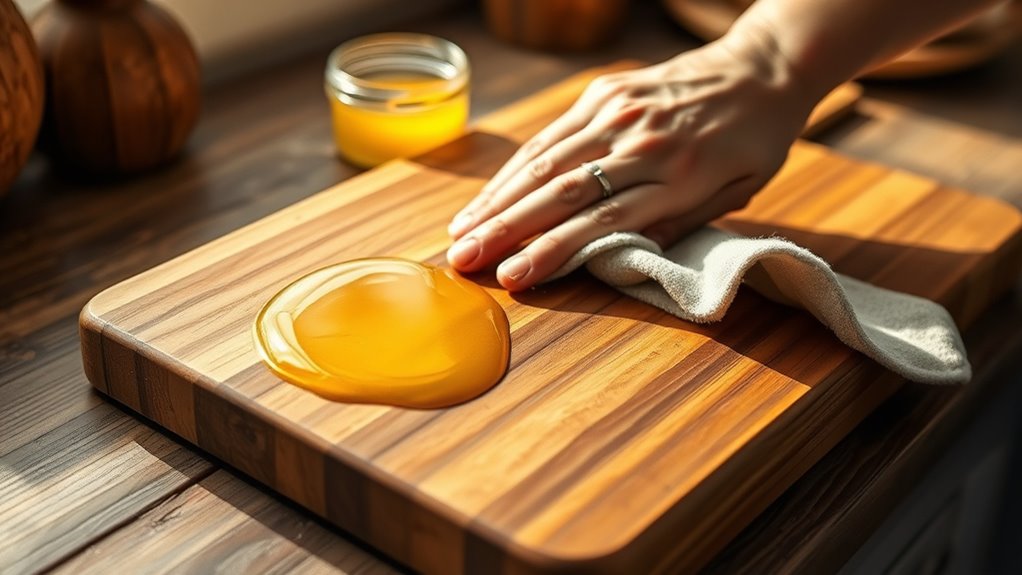
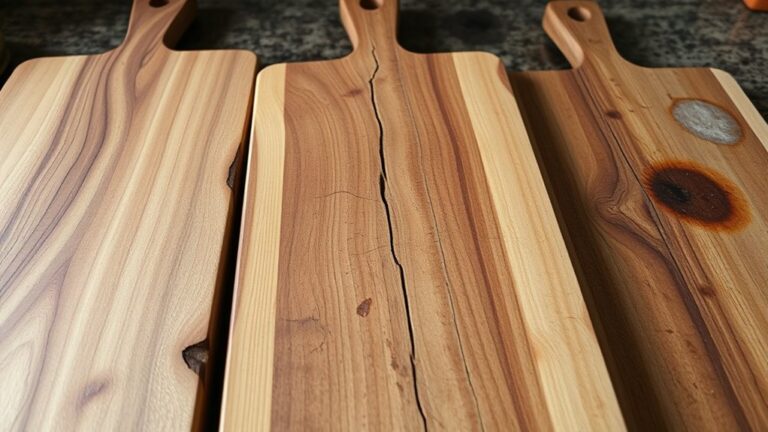
Although you might not think about it often, treating your cutting board with coconut oil can protect it from cracking and warping. Coconut oil seeps into the wood, creating a moisture barrier that prevents drying out and damage from water exposure. Unlike some oils, coconut oil won’t go rancid quickly, so you don’t have to reapply as often.
It also enhances the natural grain and color of your board, giving it a fresh, polished look. Using coconut oil is safe and non-toxic, which matters since your cutting board comes into contact with food. By regularly oiling your board, you extend its lifespan and maintain hygiene by reducing the absorption of liquids that can harbor bacteria.
It’s a simple step that keeps your kitchen tool in great shape.
Essential Supplies for Treating Cutting Boards With Coconut Oil
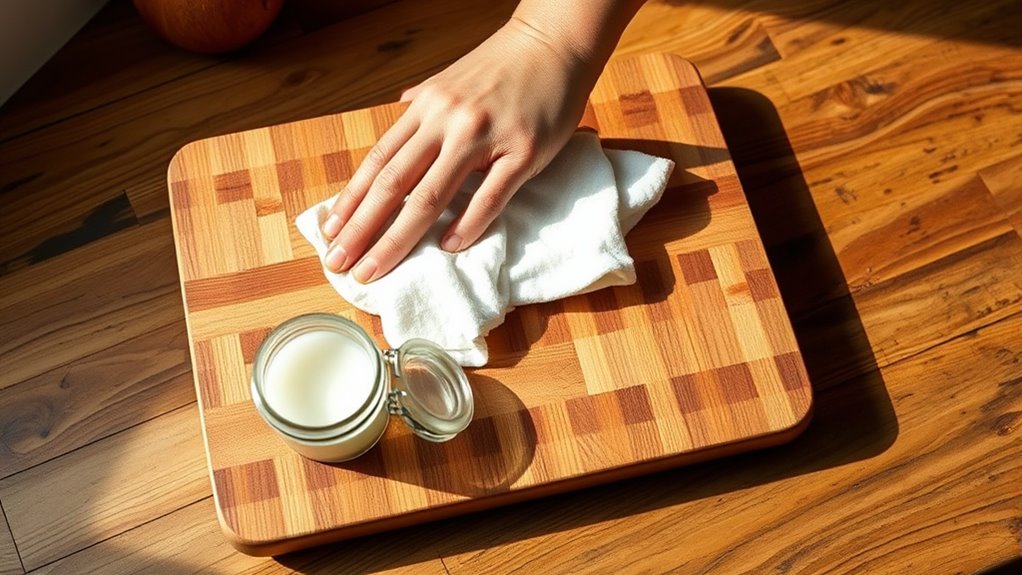
To treat your cutting board properly, you’ll need high-quality, food-grade coconut oil that’s pure and unrefined. Besides the oil, gather a clean cloth or paper towels and some mild soap for prep and cleanup.
Having these supplies ready makes the process smooth and effective.
Selecting Quality Coconut Oil
When choosing coconut oil for your cutting board, you’ll want to pick a product that’s pure and food-grade to guarantee safety and effectiveness. Look for unrefined, virgin coconut oil since it retains natural nutrients and doesn’t contain harmful additives. Refined oils may have undergone bleaching or deodorizing, which could reduce their protective qualities.
Organic certification ensures the oil is free from pesticides, adding extra peace of mind. Also, consider the oil’s texture—solid at room temperature but melts easily—making it easy to apply evenly. Avoid products with added fragrances or colorants, as they might leave residues or affect your board’s surface.
Selecting high-quality coconut oil not only nourishes your cutting board but also extends its lifespan and keeps it safe for food preparation.
Additional Necessary Materials
Choosing the right coconut oil sets a solid foundation for caring for your cutting board, but you’ll also need a few other supplies to apply it properly. These materials help guarantee even coverage and a clean, nourished surface.
| Material | Purpose | Tips |
|---|---|---|
| Clean Cloth | Spreading oil | Use lint-free for smooth finish |
| Paper Towels | Wiping excess oil | Prevents sticky residue |
| Sandpaper (fine) | Smoothing surface | Use gently before oiling |
| Gloves | Protecting hands | Optional, but good for sensitive skin |
Gather these essentials to treat your cutting board effectively and keep it looking great longer.
Cleaning Your Cutting Board Before Coconut Oil Treatment
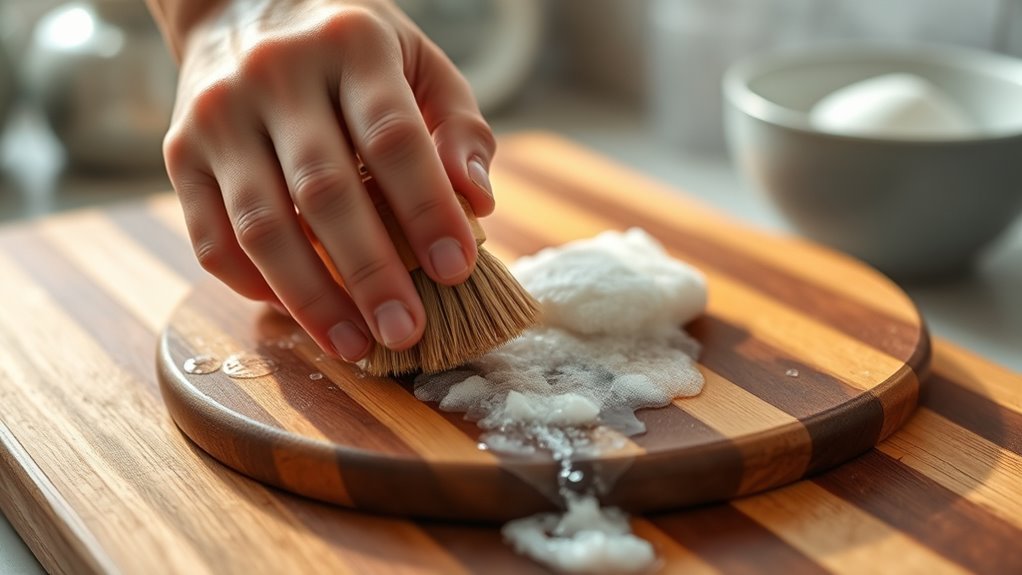
Although applying coconut oil can protect and nourish your cutting board, you should clean it thoroughly before treatment. Start by scrubbing the board with hot, soapy water using a sponge or brush to remove food particles and bacteria. Rinse it well and dry with a clean towel.
For deeper cleaning, sprinkle coarse salt or baking soda on the surface, then scrub with a lemon half to deodorize and lift stains. Rinse again and dry completely. Make certain there’s no moisture left, as oil won’t absorb well on a damp board.
Proper cleaning ensures the coconut oil penetrates evenly, maximizing protection and extending your board’s life. Avoid using harsh chemicals or soaking the board, which can damage the wood. Now, your cutting board is ready for coconut oil treatment.
When Is the Best Time to Apply Coconut Oil?
Once your cutting board is completely dry and clean, you’re ready to apply coconut oil for the best results. The ideal time to oil your board is right after thorough cleaning and drying, ensuring the wood can fully absorb the oil without trapping moisture. Avoid applying oil immediately after washing, as dampness can prevent proper penetration, leading to uneven treatment.
Also, choose a time when you won’t need to use the board right away—allow at least a few hours or overnight for the oil to soak in and protect the surface. Regularly oiling your board every few weeks or whenever it looks dry will maintain its durability and keep it from cracking or warping.
Warming Coconut Oil for Easy Use
To make applying coconut oil easier, you’ll want to warm it gently using safe methods like a warm water bath or brief microwaving. Keep the temperature low, ideally below 100°F, so the oil liquefies without overheating.
Avoid high heat to preserve the oil’s beneficial properties and prevent any damage to your cutting board.
Safe Heating Methods
When you need to soften coconut oil for easy application on your cutting board, warming it gently is key to preserving its beneficial properties. To do this safely, avoid direct heat from the stove or microwave at high power, as this can overheat the oil and degrade it.
Instead, place the coconut oil jar in a bowl of warm water for a few minutes, stirring occasionally until it softens. You can also use a double boiler method by heating water in a pot and setting a heat-safe container with coconut oil on top, ensuring the water doesn’t touch the container.
These methods prevent overheating, keeping the oil’s natural qualities intact and making it easier to spread evenly on your cutting board.
Ideal Temperature Range
Gently warming your coconut oil helps it spread smoothly on your cutting board, but maintaining the temperature just right makes all the difference. Too cold, and the oil will stay solid, making it hard to apply evenly. Too warm, and you might lose some of its beneficial properties.
Follow these tips to find the ideal temperature range:
- Heat the coconut oil to about 76–86°F (24–30°C), where it becomes liquid without getting too hot.
- Use a warm water bath to gently raise the temperature, checking with a thermometer if you can.
- Stir the oil occasionally to ensure even warmth and avoid hot spots.
This approach keeps the oil in perfect condition for easy, effective application on your cutting board.
Avoiding Overheating Risks
Although warming coconut oil makes it easier to spread on your cutting board, overheating can degrade its quality and reduce its effectiveness. To avoid this, gently warm the oil using a double boiler or microwave in short bursts of 10-15 seconds, stirring in between.
Never heat it directly on high heat, as excessive temperatures break down beneficial properties and may cause the oil to smoke. Aim for a temperature just enough to melt the solid oil—around 76°F to 85°F (24°C to 29°C). This keeps the oil’s nourishing qualities intact while making application smooth.
Always test the temperature before applying; it should feel warm, not hot. By carefully controlling the warming process, you’ll protect the coconut oil’s benefits and extend your cutting board’s lifespan.
Step-by-Step Guide to Applying Coconut Oil
Before you start applying coconut oil, make sure your cutting board is clean and completely dry to guarantee better absorption.
Ensure your cutting board is clean and dry before applying coconut oil for optimal absorption.
Once ready, follow these steps to treat your board effectively:
- Apply a small amount: Pour a tablespoon of coconut oil onto the surface. You can always add more if needed, but start small to avoid excess.
- Rub it in: Use a clean cloth or paper towel to spread the oil evenly, working in circular motions. Focus on all sides, including edges and corners.
- Remove excess oil: Wipe off any surplus oil with a dry cloth to prevent sticky buildup.
How Long to Let Coconut Oil Soak In
Once you’ve rubbed the coconut oil into your cutting board, let it soak in for at least a few hours to guarantee deep absorption. Ideally, leave it overnight, especially if your board is dry or has cracks, so the oil has enough time to penetrate and nourish the wood.
If you’re short on time, a minimum of two hours will still provide some protection and moisture. Avoid using the board or wiping off the oil during this period to maximize its effectiveness. The longer you allow it to soak, the better the wood will be conditioned, preventing drying and cracking.
Just make sure you give it enough time to absorb fully before moving on to the next step in your cutting board care routine.
Removing Excess Coconut Oil After Treatment
After allowing the coconut oil to soak in, you’ll want to remove any excess to prevent a sticky or greasy surface. Here’s how you can do it effectively:
- Use a clean, dry cloth – Gently wipe the board’s surface to absorb leftover oil without removing the treatment.
- Buff the surface – With a fresh, lint-free cloth, rub the board in circular motions to evenly distribute oil and eliminate shine.
- Let it rest – Allow the board to air dry for about 20 minutes so any remaining oil fully penetrates or evaporates.
Simple Daily Care Tips for Your Coconut Oil-Treated Cutting Board
Allowing your cutting board to rest after removing excess coconut oil sets the stage for maintaining its condition daily. To keep your board looking fresh, wipe it clean with a damp cloth after each use. Avoid soaking it in water or putting it in the dishwasher.
Periodically reapply a thin layer of coconut oil to prevent drying and cracking.
Here’s a quick guide to daily care:
| Task | Frequency | Tip |
|---|---|---|
| Wipe clean | After each use | Use a damp cloth, no soap |
| Air dry | Every time | Stand upright for airflow |
| Re-oil | Monthly or as needed | Apply evenly, wipe excess |
Following these steps keeps your coconut oil-treated cutting board durable and hygienic.
Fixing Common Coconut Oil Treatment Problems
How do you handle issues like sticky residue or uneven absorption when treating your cutting board with coconut oil? First, make sure you’re using virgin, food-grade coconut oil—it absorbs better and won’t leave a sticky film. If you notice uneven absorption, wipe off excess oil after 20 minutes to avoid buildup.
To fix sticky residue or patchy spots, follow these steps:
- Gently wipe the board with a clean cloth soaked in warm, soapy water, then dry thoroughly.
- Lightly sand the surface with fine-grit sandpaper to even out the texture.
- Reapply a thin layer of coconut oil, letting it soak in gradually.
How Often You Should Oil Your Cutting Board
You should oil your cutting board based on how often you use it—weekly for heavy use and monthly for lighter use. Watch for dryness, cracks, or a dull surface as signs it’s time to reapply coconut oil.
Keeping an eye on these clues helps you maintain your board’s condition effectively.
Frequency Based On Usage
Since your cutting board sees different levels of use, you’ll need to adjust the oiling frequency accordingly. Regular oiling keeps the wood hydrated and prevents cracking.
Here’s a simple guide based on how often you use your board:
- Daily or heavy use: Oil your board once a week to maintain its condition and protect it from moisture.
- Moderate use (a few times a week): Oiling every two to three weeks is sufficient to keep the surface smooth and sealed.
- Occasional use (once a week or less): Apply oil once a month to prevent drying out and maintain the board’s durability.
Following this routine guarantees your cutting board stays in great shape, ready for any chopping task you throw at it.
Signs Your Board Needs Oiling
Adjusting your oiling schedule based on usage is a great starting point, but sometimes your cutting board will show clear signs it needs attention regardless of timing. If you notice the board looking dry, dull, or pale, it’s a clear signal to oil it.
Check for small cracks or rough patches—these indicate the wood is losing moisture and needs conditioning. When water no longer beads on the surface and instead soaks in quickly, it’s time to apply oil.
If your board feels sticky or develops an unpleasant odor, thorough cleaning followed by oiling can help restore it. Paying attention to these signs ensures your board stays durable, hygienic, and visually appealing, extending its lifespan with simple, timely care.
Frequently Asked Questions
Can Coconut Oil Prevent Bacteria Growth on Cutting Boards?
Coconut oil can help reduce bacteria growth on cutting boards because it has natural antimicrobial properties. While it won’t completely prevent bacteria, regular application keeps your board more hygienic and less prone to harmful microbes over time.
Is Coconut Oil Safe for All Types of Wood Cutting Boards?
As the saying goes, “Don’t put all your eggs in one basket.” You shouldn’t use coconut oil on every wood type; it’s safe for most, but avoid it on delicate or unfinished woods to prevent damage or uneven absorption.
How Does Coconut Oil Compare to Mineral Oil for Treating Boards?
Coconut oil’s natural antibacterial properties make it a great choice, but it can turn rancid over time. Mineral oil won’t spoil and provides a longer-lasting, odorless finish, so you’ll need to reapply coconut oil more often.
Can Treated Cutting Boards Be Used Immediately After Oiling?
You shouldn’t use treated cutting boards immediately after oiling. Let the coconut oil soak in for several hours or overnight to fully penetrate and protect the wood.
This guarantees better conditioning and prevents food contamination.
Will Coconut Oil Leave a Smell or Taste on the Cutting Board?
No, coconut oil usually won’t leave a strong smell or taste on your cutting board.
If you use refined coconut oil, it’s even less likely to transfer any scent or flavor, keeping your board neutral and ready.
Conclusion
Treating your cutting board with coconut oil isn’t just a chore—it’s like giving it a spa day it desperately deserves! Imagine your board glowing with health, resisting cracks and stains like a warrior.
Skipping this step? That’s like sending your favorite knife into battle without armor. So, don’t wait—oil it up regularly, and you’ll keep your cutting board looking and performing so well, it might just become the MVP of your kitchen!
Using coconut oil to treat cutting boards ensures they stay moisturized, protected, and durable. Regular application prevents damage and extends the life of your board, making coconut oil an essential part of your kitchen care routine.