
How Long Does It Take to Preheat an Oven
You’ll usually spend 10 to 15 minutes preheating a conventional oven to the desired temperature. However, smaller or convection ovens can cut that time down to 5–10 minutes.
Faster models like microwave-convection hybrids may take under 5 minutes.
Keep the door closed and use convection if available to speed things up.
Oven size, age, and target temperature also affect timing.
If you want to guarantee perfect cooking every time, there’s more to know about preheating efficiency and techniques.
Key Takeaways
- Most ovens take 10-15 minutes to preheat to the desired temperature.
- Convection ovens with fans preheat faster, often within 5-10 minutes.
- Microwave-convection hybrids can preheat in under 5 minutes.
- Higher target temperatures and larger oven sizes increase preheat times.
- Keeping the oven door closed and using convection settings speeds up preheating.
How Long Does It Usually Take to Preheat an Oven?
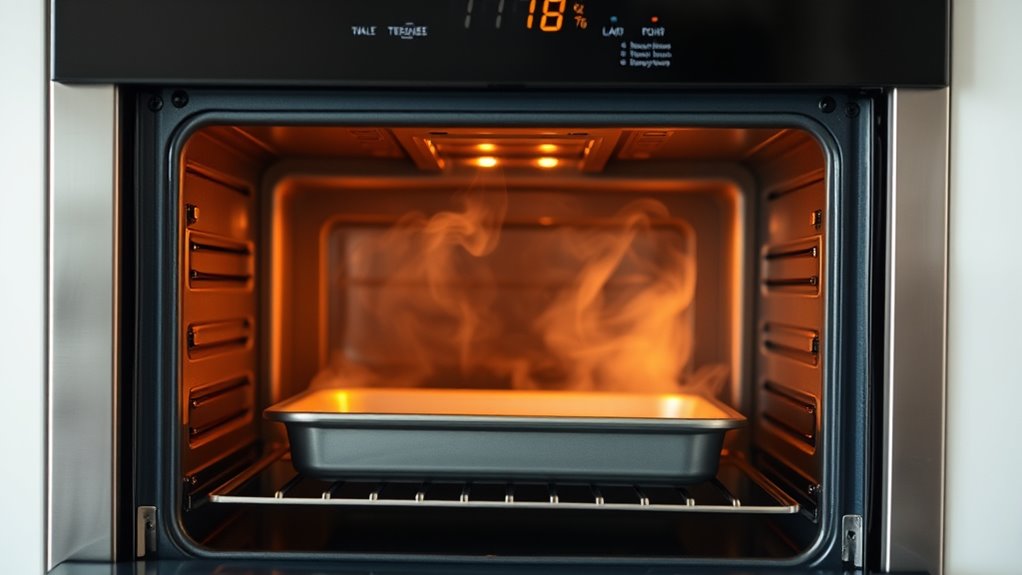
Although oven models vary, it usually takes about 10 to 15 minutes to preheat an oven to the desired temperature. When you turn your oven on, the heating elements or gas burners work to reach the set heat level. Factors like your oven’s size, age, and type influence this time.
For example, smaller or newer ovens with convection fans often heat faster, while older or larger models might take longer. If you’re aiming for higher temperatures, expect the preheat time to extend slightly. Also, opening the oven door frequently can slow down the process.
Knowing this timeframe helps you plan your cooking better and avoid putting food in too early, which could affect cooking results.
How to Know When Your Oven Is Fully Preheated
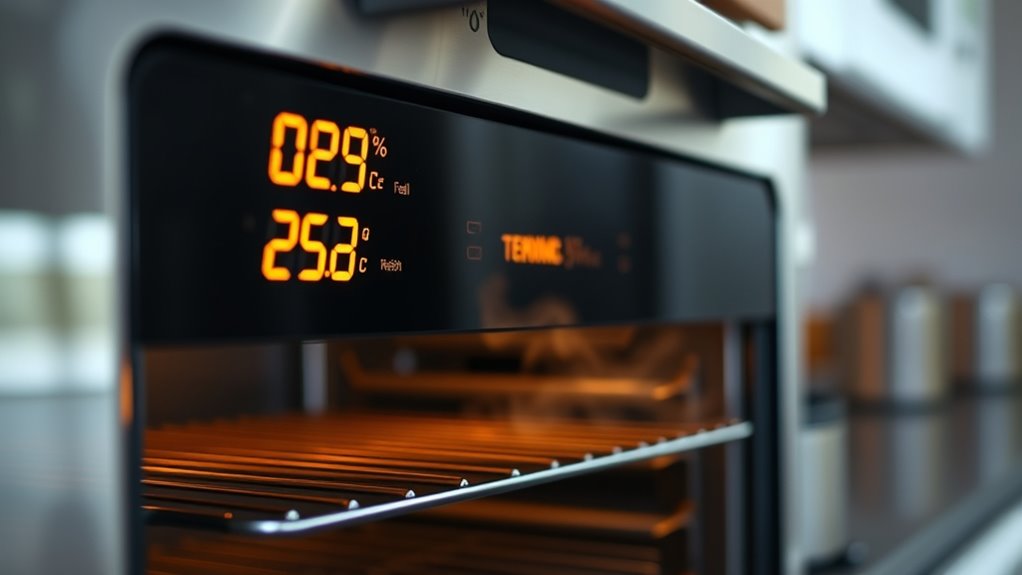
You’ll first want to watch for your oven’s indicator light or beep, signaling it’s reached the set temperature.
Keep in mind, the built-in temperature gauge may not always be perfectly accurate. Estimating preheat time based on your oven model can help, but checking these signs guarantees your oven is truly ready.
Oven Indicator Lights
When your oven reaches the set temperature, its indicator lights usually signal that it’s fully preheated and ready to use. These lights help you avoid guessing and guarantee consistent cooking results.
Typically, one light turns on when you start preheating and switches off or changes color once the oven hits the desired temperature.
Here’s a quick reference to common oven indicator light behaviors:
| Indicator Light Status | Meaning |
|---|---|
| Solid red | Oven is heating up |
| Blinking red | Preheating in progress |
| Solid green | Oven has reached set temperature |
| Off | Oven is off or temperature reached |
| Flashing green | Temperature held or timer alert |
Knowing these signals helps you time your cooking perfectly every time.
Temperature Gauge Accuracy
Since oven temperature gauges can sometimes be inaccurate, relying solely on their readings may lead to undercooked or overcooked meals. To know when your oven is fully preheated, you need to go beyond just watching the dial.
Here’s what you can do:
- Use an oven thermometer placed inside to get a precise temperature reading.
- Wait for the oven’s preheat indicator light to turn off, signaling it reached the set temperature.
- Allow an extra 5–10 minutes after the light goes off to guarantee heat distributes evenly.
Preheat Time Estimation
Accurate temperature readings help, but knowing how long to wait before placing your food inside also plays a big role in successful baking or roasting. To estimate preheat time, start by checking your oven’s manual for recommended preheat durations. Most ovens take between 10 to 15 minutes to reach standard baking temperatures around 350°F (175°C).
You can also rely on the oven’s preheat indicator light or beep; when it turns off or sounds, the oven has likely reached the set temperature. However, if your oven lacks this feature, use an oven thermometer to confirm the temperature. Keep in mind that factors like oven size, age, and the starting temperature affect preheat times.
How Oven Types Affect Preheating Speed

Different types of ovens heat up at varying rates, so understanding your oven’s design can help you estimate preheating times more accurately.
Here’s how common oven types affect preheat speed:
- Conventional Ovens: These use heating elements at the top and bottom. They usually take longer to preheat, around 10-15 minutes, due to slower heat distribution.
- Convection Ovens: Equipped with a fan to circulate hot air, these ovens preheat faster—typically 5-10 minutes—because they distribute heat more evenly and quickly.
- Microwave Ovens with Convection: These hybrid ovens combine microwave energy and convection heat, drastically reducing preheat times, often under 5 minutes.
Knowing your oven type helps you plan your cooking more efficiently and avoid unnecessary waiting.
How Target Temperature Changes Preheat Time
Although preheating times vary by oven type, the target temperature you set plays a crucial role in how long you’ll wait. The higher the temperature, the longer your oven needs to reach it. For example, preheating to 350°F usually takes less time than reaching 450°F.
When you set a lower temperature, your oven heats up faster because it requires less energy. Conversely, if you’re cooking something that demands a high heat, expect to wait a bit longer before placing your dish inside. Keep in mind that frequently opening the oven door during preheating lets heat escape, extending the time.
Setting the appropriate temperature for your recipe helps you avoid unnecessary delays and guarantees your food cooks evenly once it’s inside.
Why Oven Size Matters for Preheating
You’ll notice that larger ovens take longer to preheat because they have more space to warm up. The oven’s capacity affects how evenly heat spreads, which impacts cooking results.
Understanding this helps you time your preheat more accurately.
Impact Of Oven Capacity
Because larger ovens have more space to heat, they generally take longer to reach the desired temperature than smaller ones. When you’re preheating, oven capacity plays a key role in timing. Here’s why:
- Heat Volume: Bigger ovens contain more air and materials, so your oven’s heating elements need extra time to warm everything evenly.
- Energy Consumption: Larger ovens require more energy to reach the set temperature, impacting the preheat duration.
- Usage Influence: If you fill a large oven fully, it might retain heat better, slightly reducing preheat time for future use compared to an empty oven of the same size.
Understanding your oven’s capacity helps you manage expectations and adjust your cooking schedule accordingly.
Heat Distribution Efficiency
Beyond capacity, how your oven distributes heat plays a big role in how quickly and evenly it reaches the right temperature. Larger ovens often take longer to preheat because their heating elements must warm a bigger space.
Plus, if heat isn’t evenly circulated, some areas get hotter faster, causing uneven cooking. Smaller ovens generally heat up faster and more efficiently due to less volume and better heat retention.
Convection ovens, with fans to circulate air, improve heat distribution regardless of size, speeding preheat time.
| Oven Size | Heat Distribution Efficiency |
|---|---|
| Small (Compact) | High – heats quickly, evenly |
| Medium | Moderate – balanced heating |
| Large | Low – slower, uneven heat |
| Convection (Any) | High – fans circulate heat |
| Conventional (Any) | Variable – depends on size |
Does Your Oven’s Age Affect Preheat Time?
Although newer ovens often come with advanced heating technology, your oven’s age can still impact how quickly it reaches the desired temperature. Older ovens may have worn-out heating elements or less efficient insulation, which slows preheating. Here’s what you should consider:
- Heating Elements Wear: Over time, heating elements lose efficiency, making your oven take longer to heat up.
- Insulation Degradation: Older ovens might have deteriorated insulation, causing heat loss and longer preheat times.
- Thermostat Accuracy: Aging thermostats can misread temperatures, causing the oven to cycle improperly and extend preheat.
If your oven is older, you might notice it takes noticeably longer to preheat. Regular maintenance or calibration can help, but sometimes replacement is the best way to guarantee consistent, quick heating.
How Convection and Other Features Affect Preheating
If you’re using a convection oven, you’ll notice it usually heats up faster thanks to the fan circulating hot air. Other features like rapid preheat settings or self-cleaning modes can also change how long it takes to reach the right temperature.
Understanding these effects helps you plan your cooking more efficiently.
Convection Oven Efficiency
When you use a convection oven, you’ll notice it heats up faster than a traditional oven because its fan circulates hot air evenly throughout the cavity. This airflow speeds up heat transfer, reducing preheat time.
Additionally, convection ovens maintain a consistent temperature, so you don’t waste energy compensating for hot or cool spots.
Here’s why convection ovens are more efficient:
- Faster heat distribution: The fan spreads heat quickly, so the oven reaches your set temperature sooner.
- Even cooking temperature: Consistent heat means you can trust your oven’s accuracy without frequent adjustments.
- Reduced energy use: Faster preheating and stable temps use less electricity or gas compared to conventional ovens.
Impact of Additional Features
Convection isn’t the only feature that influences how quickly your oven heats up. Features like self-cleaning modes, steam injections, and smart sensors also play a role. For example, self-cleaning ovens often lock the door and ramp up to extremely high temperatures, which can alter your preheating time if you activate this mode accidentally.
Steam ovens use water vapor, which may slightly extend the preheating phase to reach the necessary humidity levels. Smart ovens with sensors adjust heat dynamically, sometimes shortening or lengthening preheat based on the food type. When you’re aware of these features, you can better estimate how long preheating might take and avoid surprises.
Keep these factors in mind for more efficient cooking and accurate timing.
Common Mistakes That Slow Down Oven Preheating
Although preheating seems straightforward, several common mistakes can unnecessarily extend the time it takes for your oven to reach the right temperature. First, you might forget to close the oven door properly, causing heat to escape and slowing the process.
Second, placing cold or frozen food inside during preheating forces the oven to work harder, which delays reaching the set temperature. Third, using an oven thermometer that’s inaccurate can mislead you into thinking the oven isn’t ready, prompting longer wait times than necessary.
Avoid these pitfalls to guarantee your oven heats efficiently. Recognizing and correcting these errors can save you frustration and improve your cooking experience.
Tips to Speed Up Oven Preheating
If you want your oven to heat faster, there are simple steps you can take that make a noticeable difference. First, keep the oven door closed during preheating to prevent heat from escaping. Next, remove any unnecessary racks or trays so the heat circulates more efficiently.
You can also preheat the oven while preparing your ingredients to save time. Using an oven thermometer helps you monitor the temperature accurately, so you don’t over-preheat. Another tip is to avoid opening the oven door frequently, as it causes heat loss and extends preheating.
Finally, consider using the convection setting if your oven has one; the fan circulates hot air evenly, speeding up the process. These tips help you get your oven ready quicker and start cooking sooner.
How Preheating Affects Cooking Results
Keeping your oven at the right temperature before cooking sets the stage for consistent and even results. When you preheat properly, you guarantee your food cooks as intended without surprises.
Here’s how preheating impacts your cooking:
- Accurate Cooking Times: Recipes assume a specific starting temperature. Preheating helps you stick to those times without undercooking or overcooking.
- Even Heat Distribution: Your oven reaches a stable temperature, which means your dish cooks uniformly, avoiding hot or cold spots.
- Better Texture and Rise: For baked goods, preheating creates the right environment for proper rising and texture, giving you flaky crusts and fluffy interiors.
Skipping preheating can lead to unpredictable outcomes, so take the time—it really makes a difference in your final dish.
When Should You Skip Oven Preheating, and When Is It Necessary?
Since some dishes cook well without a fully heated oven, you can skip preheating in certain cases to save time and energy. For example, casseroles or slow-roasted meats benefit from gradual heating.
However, for baked goods like cakes or cookies, preheating ensures even rising and texture.
| When to Skip Preheating | When Preheating Is Necessary |
|---|---|
| Casseroles | Cakes and cookies |
| Slow-roasted meats | Bread and pastries |
| Frozen foods with long cook times | Quick-cooking or delicate dishes |
| One-pot meals | Recipes requiring precise timing |
Frequently Asked Questions
Can I Preheat My Oven While It’s Still Cooling Down?
You can’t preheat your oven while it’s cooling down because it needs to reach room temperature first.
Wait until it’s fully cooled, then start preheating to guarantee even cooking and accurate temperature control.
Does Opening the Oven Door During Preheating Impact Time?
Opening the oven door during preheating lets warm air escape, like a balloon losing air, slowing the process.
How Do Oven Racks Position Affect Preheating Efficiency?
You’ll find that placing racks in the middle allows even heat distribution, helping your oven preheat efficiently. Avoid overcrowding racks, as restricted airflow slows heating.
Adjust racks based on what you’re cooking for best results.
Is It Safe to Preheat an Oven Without Any Food Inside?
Yes, it’s safe to preheat an oven empty. Just make sure it’s clean and nothing flammable is inside.
Preheating without food helps the oven reach the right temperature for cooking or baking efficiently.
Can Preheating Affect Energy Consumption Significantly?
Yes, preheating can affect energy consumption, especially if you preheat for too long or at very high temperatures.
You can save energy by preheating only when necessary and avoiding extended times before cooking.
Conclusion
You might think preheating takes forever, but it’s really just a few minutes—no need to wait an eternity! Knowing your oven type and target temperature can shave off precious time, turning you into a kitchen speed demon.
Skip preheating only when you dare, but don’t underestimate its power to transform your cooking. So, embrace the heat-up hustle—it’s your secret weapon for perfectly cooked meals every single time!
Understanding how long it takes to preheat an oven helps you plan better and get the best results. Preheating ensures even cooking and enhances flavors, making it a crucial step in your cooking routine. Never overlook the importance of this simple yet effective technique!