Do I Have to Season My Blackstone Griddle Every Time
You don’t have to season your Blackstone griddle every time you use it, but regular seasoning is essential for maintaining its non-stick surface, preventing rust, and ensuring optimal performance. Proper seasoning helps extend the life of your griddle and enhances your cooking experience.
If you use your Blackstone griddle daily, seasoning it about once a week is sufficient. For occasional use, seasoning every few months works well.
Always season your griddle whenever food starts to stick, rust appears, or residue remains after cooking. Skipping this step can lead to sticking, uneven cooking, and surface damage.
Keep your griddle in top shape—there’s plenty more to learn about maintaining it properly.
Key Takeaways
- You don’t need to season your Blackstone griddle every time, but regular seasoning is essential for optimal performance.
- Season once a week with daily use, or every few months if used occasionally.
- Season whenever food sticks, rust appears, or residue remains after cooking.
- Proper seasoning maintains a non-stick surface and prevents rust and sticking issues.
- Skipping seasoning leads to uneven cooking, rust buildup, and reduced griddle lifespan.
How Often Should You Season Your Blackstone Griddle?
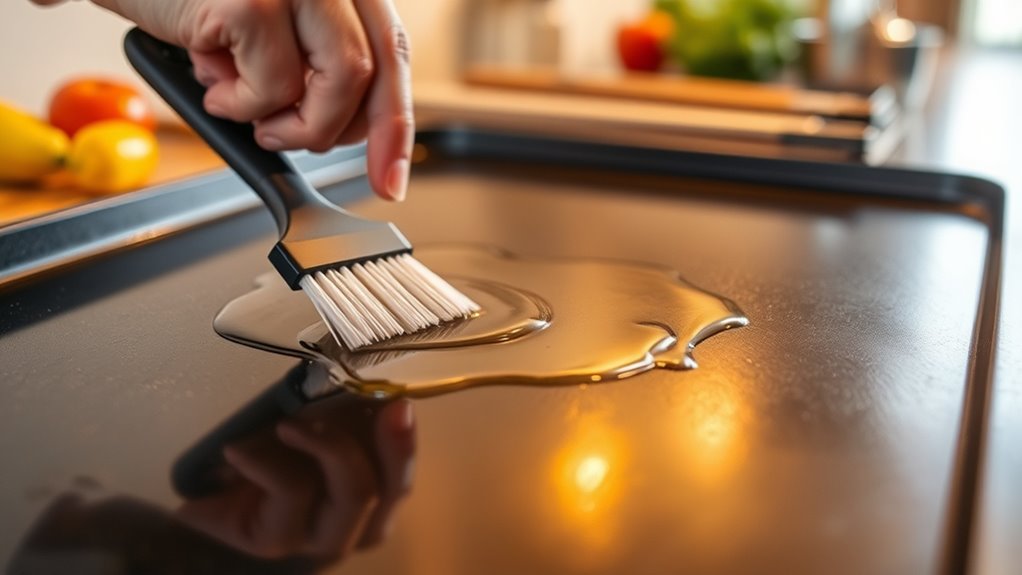
Although it might seem like a chore, you should season your Blackstone griddle regularly to keep its surface non-stick and rust-free. How often depends on how much you use it. If you cook daily, seasoning once a week keeps the surface protected and performing well.
For occasional use, a thorough seasoning every few months usually suffices. You should also season it whenever you notice food starting to stick or see any signs of rust. Skipping this step can lead to uneven cooking and damage over time.
How to Properly Season Your Blackstone Griddle
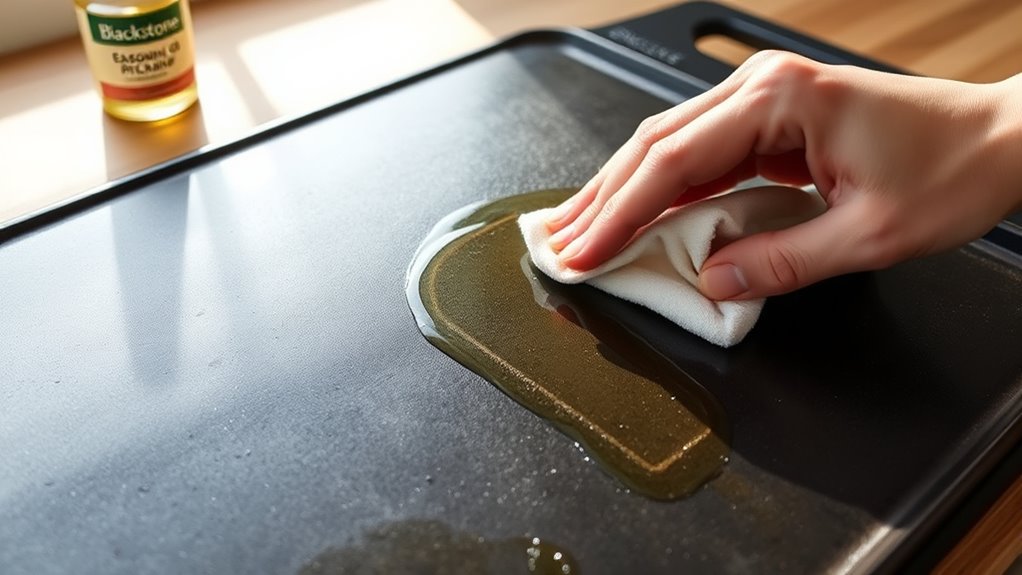
Before you start cooking, you need to properly season your Blackstone griddle to create a durable, non-stick surface. Begin by cleaning the griddle with warm, soapy water and drying it completely. Next, preheat the griddle on high until it starts to smoke slightly.
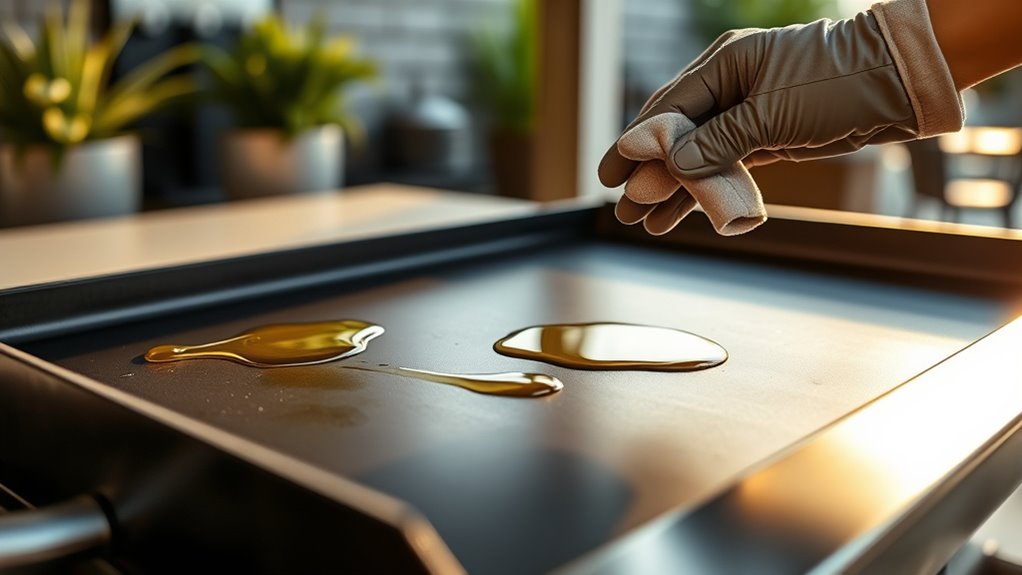
Apply a thin, even layer of cooking oil with a high smoke point—like flaxseed or canola oil—using a paper towel or cloth. Spread the oil across the entire surface, including edges. Let the griddle heat for about 30 minutes, allowing the oil to polymerize and bond to the metal.
Afterward, turn off the heat and let it cool naturally. Repeat this process two to three times for a strong initial seasoning that will protect your griddle and improve cooking performance.
Why Seasoning Your Blackstone Griddle Matters
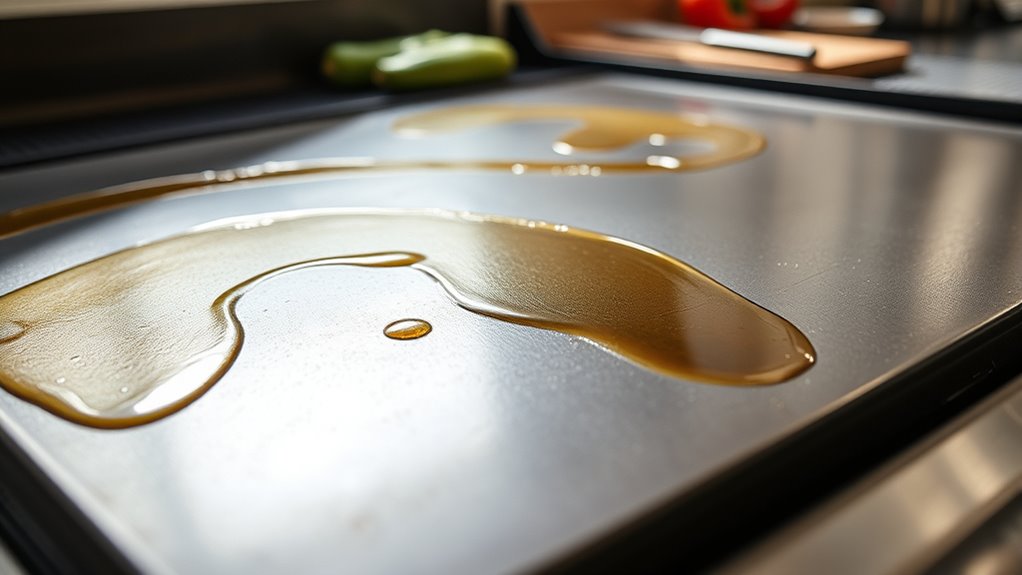
You want to season your Blackstone griddle to prevent rust from forming and to protect the surface. A well-seasoned griddle creates a natural non-stick coating that makes cooking easier.
Taking this step guarantees your griddle lasts longer and performs better every time you use it.
Preventing Rust Formation
Since moisture is the biggest enemy of your Blackstone griddle, seasoning creates a protective layer that keeps rust from forming. When you properly season the griddle, you’re fundamentally coating the metal surface with a thin layer of polymerized oil. This layer acts as a shield, preventing water and humidity from coming into direct contact with the bare metal.
Without seasoning, your griddle is vulnerable to oxidation, which leads to rust. Rust not only damages the surface but also shortens the lifespan of your griddle. By regularly seasoning, you maintain this barrier, ensuring your griddle stays rust-free even after exposure to moisture during cooking or cleaning.
Enhancing Cooking Surface
Although seasoning primarily protects your Blackstone griddle from rust, it also substantially improves the cooking surface by creating a naturally non-stick layer. When you properly season your griddle, oil polymerizes and bonds to the metal, filling microscopic pores and smoothing out imperfections. This means your food won’t stick as much, making cooking and cleanup easier.
You’ll notice better browning and more even heat distribution, which enhances flavor and texture. Skipping seasoning can lead to uneven cooking spots and frustrating sticking problems. By maintaining a well-seasoned surface, you guarantee consistent performance every time you fire up your griddle.
Signs Your Blackstone Griddle Needs Reseasoning
You’ll know it’s time to reseason your Blackstone griddle when you start seeing visible rust spots on the surface. If your food begins sticking more than usual, that’s another clear sign.
Addressing these issues quickly will keep your griddle performing at its best.
Visible Rust Spots
Even a small patch of visible rust on your Blackstone griddle signals it’s time to reseason. Rust forms when moisture sits on the griddle’s surface, breaking down the protective seasoning layer. If you spot any rust, don’t wait—scrape it off gently with a metal spatula or use steel wool to remove it.
After cleaning, heat the griddle thoroughly to evaporate any remaining moisture. Then, apply a thin layer of cooking oil evenly across the surface to rebuild that essential non-stick coating. Reseasoning restores the griddle’s durability and prevents further rusting.
Ignoring rust spots can lead to more extensive damage, affecting your cooking experience. Keep an eye out for these rust patches, and reseason promptly to maintain your Blackstone’s performance and lifespan.
Food Sticking Often
Why does your food keep sticking to the Blackstone griddle? If your griddle isn’t properly seasoned, the surface loses its non-stick qualities. This often happens when the seasoning layer wears off or is uneven.
When food sticks frequently, it’s a clear sign your griddle needs reseasoning to restore that smooth, protective coating.
Here’s how to recognize and address this issue:
| Signs of Food Sticking | What It Means |
|---|---|
| Food tears or sticks | Seasoning is worn or uneven |
| Difficulty flipping food | Surface lacks proper oil layer |
| Food residue remains | Protective layer compromised |
To fix this, clean the griddle thoroughly, then apply a thin layer of oil and heat it until it polymerizes, rebuilding the seasoning for a non-stick surface.
What Happens When You Skip Seasoning Your Griddle
If you skip seasoning your Blackstone griddle, food is more likely to stick and burn, making cooking frustrating. Without a proper seasoning layer, your griddle’s surface becomes vulnerable to rust and uneven heat distribution. This not only ruins your meals but also shortens the lifespan of your griddle.
Skipping seasoning causes food to stick, rust to form, and shortens your Blackstone griddle’s lifespan.
Here’s what you might face when you neglect seasoning:
- Stubborn food residue that’s tough to clean, wasting your time and patience
- Rust spots that degrade the cooking surface and affect food safety
- Uneven cooking temperatures leading to inconsistent, disappointing results
Skipping seasoning turns your griddle from a reliable cooking tool into a constant source of hassle. Regular seasoning keeps your griddle smooth, durable, and ready for perfect meals every time.
Blackstone Griddle Seasoning Tips for Different Use Frequencies
Since your cooking frequency affects how your Blackstone griddle wears, you’ll want to adapt your seasoning routine accordingly. If you use your griddle daily, apply a light coat of oil after each cook to maintain the seasoning layer and prevent rust.
For weekly use, a thorough seasoning every few cooks keeps the surface nonstick and protected. If you only cook monthly, reseason the griddle fully before each use to rebuild any lost protective layers.
Regardless of frequency, always wipe off food residue promptly and avoid harsh scrubbing that can strip seasoning. Tailoring your seasoning approach to how often you cook ensures your Blackstone griddle stays durable, performs well, and provides a reliable nonstick surface for every meal.
Cleaning Your Blackstone Griddle Without Stripping Seasoning
Although cleaning your Blackstone griddle is essential, you’ll want to avoid harsh methods that strip away the seasoning. Use gentle tools like a plastic scraper or a soft-bristle brush to remove food residue without damaging the seasoned surface. Avoid abrasive cleaners or steel wool that can wear down the protective layer.
Instead, wipe the griddle down with a warm, damp cloth after cooking, then apply a thin coat of oil to keep it protected.
To keep your griddle in great shape, remember to:
- Treat the seasoning like a delicate shield, protecting your investment
- Clean right after use to prevent buildup that’s tough to remove
- Use minimal water to avoid rust and preserve the seasoning
This careful cleaning routine helps your griddle perform better and last longer.
Fixing Common Blackstone Griddle Seasoning Problems
When you notice uneven seasoning or sticky spots on your Blackstone griddle, it’s important to act quickly to restore its non-stick surface. Start by heating the griddle until it’s hot, then apply a thin layer of high-smoke-point oil like flaxseed or canola. Use a paper towel to spread the oil evenly, avoiding thick layers that cause stickiness.
If you see rust, scrub it gently with a non-abrasive pad, wipe clean, then reseason that area. For stubborn sticky patches, heat the surface and wipe with a small amount of salt to lift residue. Always finish by wiping excess oil off once it cools.
Frequently Asked Questions
Can I Use Cooking Sprays on My Blackstone Griddle?
You can use cooking sprays on your Blackstone griddle, but it’s better to use oils like vegetable or flaxseed oil. Sprays might leave residue and cause uneven seasoning, so choose oils for a smoother, longer-lasting surface.
What Type of Oil Is Best for Seasoning a Blackstone Griddle?
You’ll want to use flaxseed oil—because who doesn’t love paying extra for fancy birdseed oil? Seriously though, it polymerizes well, giving your griddle a durable, non-stick coating.
Vegetable or canola oil works fine too!
How Do Weather Conditions Affect Seasoning My Griddle?
Weather affects your griddle’s seasoning by impacting oil polymerization; high humidity can slow drying, while cold temperatures may cause uneven seasoning.
You’ll want to season in dry, warm conditions for the best, most durable coating.
Can I Store My Blackstone Griddle Outdoors Without Seasoning?
Like leaving Excalibur in the stone, you shouldn’t store your Blackstone griddle outdoors without seasoning.
You’ll want to season it well first; otherwise, rust and weather will claim it before you do.
Does Seasoning Affect the Taste of Food Cooked on the Griddle?
Yes, seasoning does affect your food’s taste by creating a natural non-stick surface that enhances flavor and prevents sticking. It also adds a subtle, smoky richness that improves with each use, making your meals tastier.
Conclusion
Now that you know how essential seasoning is, you might be wondering—do you really have to season your Blackstone griddle every single time? The answer isn’t as simple as you think. Missing this step could lead to frustrating problems, but overdoing it might waste your time.
Ready to reveal the secret balance that keeps your griddle performing perfectly? Stay tuned, because mastering this will change the way you cook forever. Proper Blackstone griddle seasoning not only protects the surface but also enhances cooking performance and longevity.