How Does Cast Iron Cookware Work?
Cast iron cookware works by evenly absorbing and holding heat, making it ideal for consistent cooking without hot spots. This type of cookware is favored for its durability and versatility, perfect for searing, baking, and frying.
When seasoned properly, cast iron develops a natural non-stick surface that improves with use.
Seasoning not only protects the pan against rust but also enhances the flavor of your food over time. This durable coating makes cooking simpler and more enjoyable.
Proper care and regular seasoning ensure your cast iron remains reliable for many years.
By understanding how cast iron cookware works, you can learn to choose the right piece, maintain it properly, and get the best cooking results. Keep exploring to unlock the full potential of this timeless kitchen essential.
Key Takeaways
- Cast iron absorbs and retains heat evenly, ensuring consistent cooking temperatures and preventing hot spots.
- Seasoning creates a non-stick, rust-resistant surface by chemically bonding polymerized oil to the pan’s iron.
- The durable seasoning enhances flavor over time and protects the cookware from moisture and corrosion.
- Cast iron’s heavy, dense material allows versatile cooking methods like searing, frying, baking, and roasting.
- Proper maintenance, including regular seasoning and gentle cleaning, preserves the pan’s performance and longevity.
What Makes Cast Iron Different From Other Cookware?
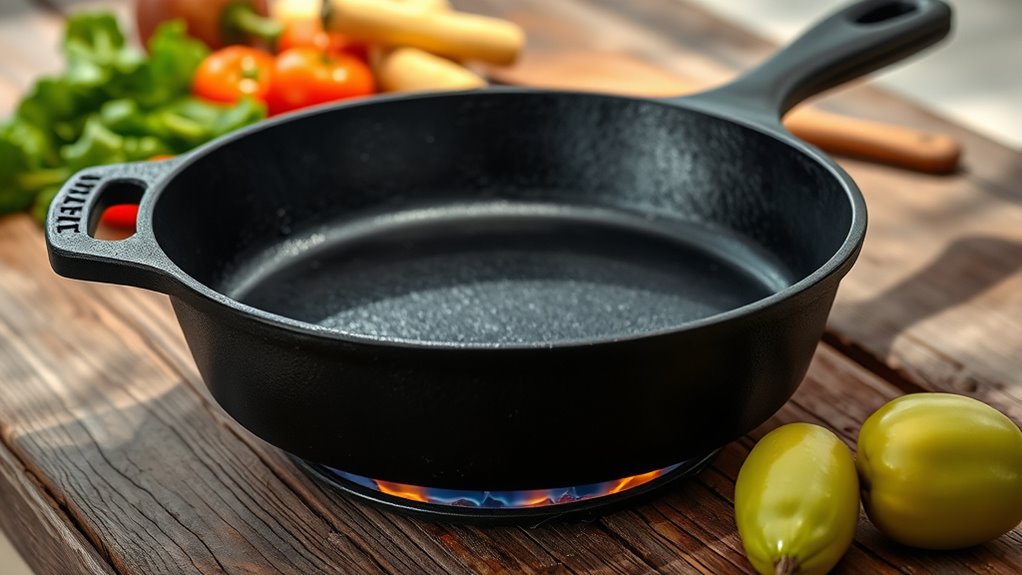
Although many cookware options exist, cast iron stands out because of its unique material and heat retention properties. When you pick up a cast iron pan, you’ll notice its heavy weight and solid feel, unlike lighter aluminum or stainless steel pans. This material—an iron-carbon alloy—makes cast iron incredibly durable.
You can sear, bake, fry, or roast with one pan, and it’ll last for generations if cared for properly. Unlike nonstick or ceramic cookware, cast iron can handle very high temperatures without damage. Plus, it naturally develops a seasoning layer that improves its nonstick qualities over time.
When you use cast iron, you’re investing in versatility, longevity, and a distinct cooking experience that’s hard to match with other cookware types.
How Does Cast Iron Hold and Distribute Heat So Well?
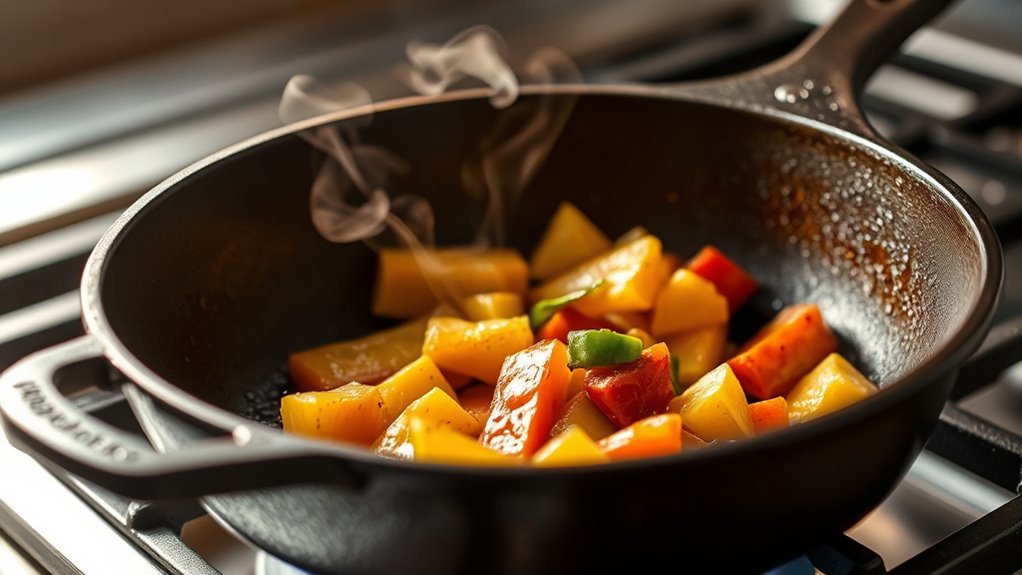
You’ll notice cast iron holds heat longer than most cookware, thanks to its dense material. This means it distributes heat evenly across the surface, preventing hot spots.
Understanding these properties helps you cook meals more consistently every time.
Heat Retention Properties
When you heat cast iron cookware, its dense material absorbs and holds heat evenly, allowing it to maintain a steady temperature for a long time. This means once your pan is hot, it stays hot even when you add cooler food. You won’t experience sudden temperature drops that can happen with thinner pans.
This steady heat retention lets you cook food more consistently and prevents burning or uneven cooking. It also means you can lower the heat after preheating, saving energy while keeping your food cooking at the right pace. Whether you’re searing meat or simmering sauces, cast iron’s heat retention gives you better control over your cooking process.
It helps you achieve great results every time.
Even Heat Distribution
Heat retention in cast iron sets the stage for even heat distribution, making sure every part of your cookware heats up uniformly. Because cast iron is dense and thick, it absorbs heat slowly and holds onto it tightly. This means once your pan is hot, the entire surface maintains a consistent temperature without hot spots.
When you cook, the heat spreads evenly from the center to the edges, so your food cooks uniformly. You won’t find cold patches where food sticks or burns unevenly. This reliable heat distribution lets you sear, sauté, or simmer with confidence.
In short, cast iron’s ability to hold and distribute heat well gives you better control over cooking, resulting in consistent, delicious results every time.
Why Is Seasoning the Secret to Great Cast Iron Cooking?
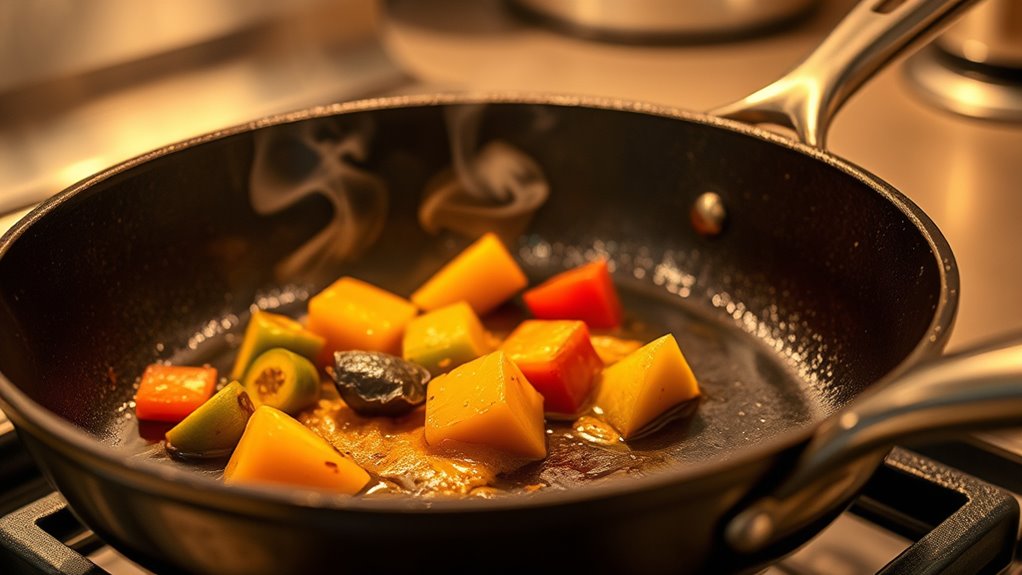
You’ll find that seasoning your cast iron creates a natural non-stick surface, making cooking and cleanup easier. It also helps build rich flavors in your dishes while protecting the pan from rust.
Mastering seasoning is key to getting the most out of your cast iron cookware.
Creating Non-Stick Surface
Why does seasoning make such a difference in cast iron cooking? Because it creates the non-stick surface you rely on. When you season your pan, you’re baking oil into its pores, forming a hard, slick layer called polymerized oil.
This layer fills the cast iron’s tiny imperfections, smoothing the surface and preventing food from sticking. Each time you cook with oil, you add more polymerized layers, improving that non-stick quality. Without seasoning, your cast iron is rough and sticky, making cleanup a hassle and cooking frustrating.
Enhancing Flavor Development
Although seasoning primarily creates a non-stick surface, it also plays an essential role in enhancing the flavors of your food. When you cook with a well-seasoned cast iron pan, the layers of polymerized oil develop over time, imparting a subtle, rich depth to your dishes. This seasoned coating absorbs and retains the flavors from your cooking, creating a unique taste profile that improves with each use.
You’ll notice that foods sear evenly and develop a beautiful crust, intensifying savory notes. Plus, the seasoning helps distribute heat consistently, which prevents burning and ensures balanced flavor development. By maintaining your cast iron’s seasoning, you’re not just protecting the pan—you’re actively boosting the taste and complexity of every meal you prepare.
Preventing Rust Formation
How does seasoning keep your cast iron cookware in top shape? Seasoning creates a protective layer that prevents moisture from reaching the metal, stopping rust before it starts. When you properly season your pan, you’re fundamentally building a natural shield made of polymerized oil.
This barrier not only prevents rust but also enhances cooking performance over time. To keep your cast iron rust-free:
- Regularly apply a thin coat of oil after cleaning to maintain the seasoning.
- Avoid soaking your pan in water or leaving it wet, which invites rust.
- Re-season immediately if you notice any dull spots or rust forming.
How Does Seasoning Create a Protective Layer on Cast Iron?
When you season cast iron, you’re fundamentally bonding a layer of polymerized oil to the pan’s surface. This process happens when oil heats past its smoke point, breaking down and transforming into a hard, plastic-like coating. This coating fills in the pan’s microscopic pores, creating a smooth, non-stick surface that protects the iron from moisture and air, preventing rust.
Each seasoning layer builds upon the last, strengthening this protective barrier. You don’t just coat the pan; you chemically alter the oil so it fuses with the iron itself. This durable layer withstands high temperatures and repeated use, making your cast iron both resilient and easy to clean.
Seasoning is essential—it’s what turns bare iron into reliable cookware.
How Does Cast Iron Cookware Enhance Food Flavor?
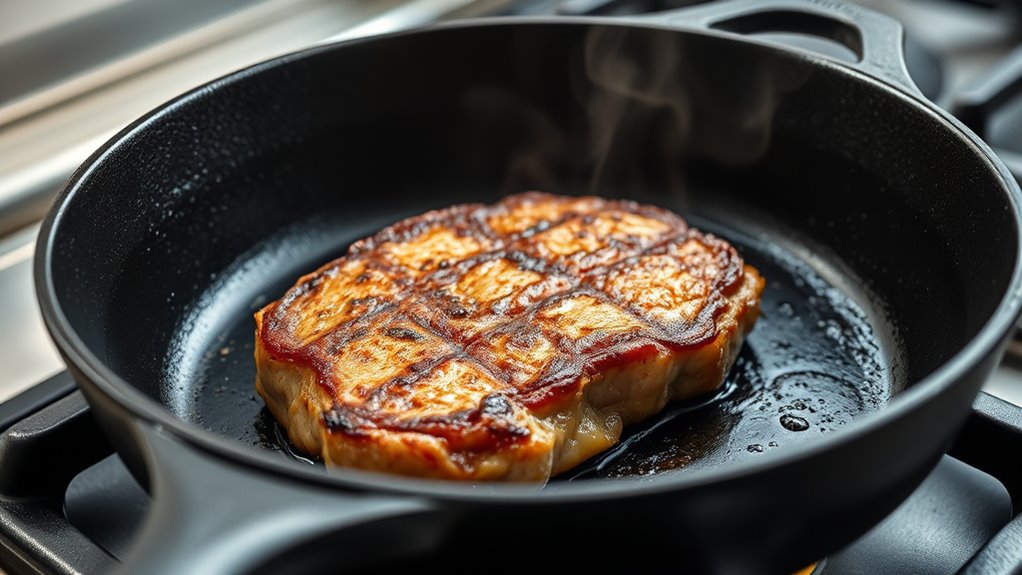
Because cast iron retains and distributes heat evenly, it helps you achieve a perfect sear and enhances the natural flavors of your food. When you cook with cast iron, the intense, consistent heat caramelizes the surface of your ingredients, locking in juices and creating rich, complex tastes.
Additionally, the seasoning layer on the pan absorbs and imparts subtle flavor nuances over time, making your dishes even more delicious.
Here’s how cast iron enhances flavor:
- Promotes Maillard reaction: Produces savory browning and depth in meats and vegetables.
- Builds flavor with seasoning: Adds a unique, seasoned taste you won’t get with other cookware.
- Retains heat consistently: Avoids hot spots, ensuring even cooking and better flavor development.
What Are the Best Ways to Heat and Use Cast Iron?
Although cast iron is incredibly durable, heating it properly guarantees you get the best cooking results and preserve its seasoning. Start by warming your pan gradually over medium heat rather than blasting it with high heat instantly. This helps distribute heat evenly and prevents warping.
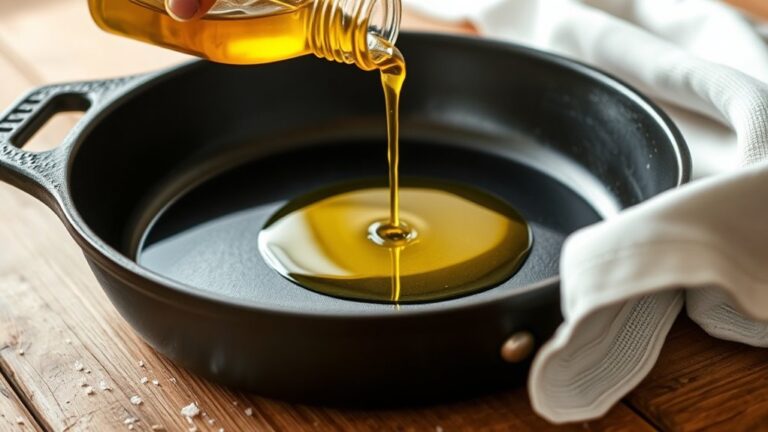
Once hot, add oil to create a slick surface, which enhances non-stick performance. When cooking, avoid acidic foods initially as they can damage the seasoning. Use your cast iron on various heat sources—stovetop, oven, or even campfire—but always preheat it first.
After cooking, let it cool naturally before cleaning. By heating and using cast iron thoughtfully, you’ll enjoy even cooking, robust flavors, and a long-lasting pan that improves with every meal.
How Do You Maintain and Re-Season Cast Iron Cookware?
To keep your cast iron cookware performing at its best, you need to clean and re-season it regularly. After each use, avoid soap; instead, scrub with a brush or coarse salt and rinse with hot water. Dry it thoroughly to prevent rust.
Clean cast iron without soap using a brush or coarse salt, rinse with hot water, and dry thoroughly to prevent rust.
When you notice food sticking or dullness, it’s time to re-season.
Here’s how you can maintain and re-season your cast iron:
- Apply a thin layer of vegetable oil or flaxseed oil all over the surface.
- Place the cookware upside down in an oven preheated to 450°F (230°C).
- Bake for one hour, then let it cool inside the oven.
Following these steps ensures a smooth, non-stick surface and protects your pan for years.
What Common Mistakes Damage Cast Iron Cookware?
Maintaining and re-seasoning your cast iron cookware keeps it in great shape, but certain habits can still harm your pan. For example, don’t soak your pan in water or put it in the dishwasher, as prolonged exposure to moisture causes rust. Avoid cooking acidic foods like tomatoes too often, especially in a newer pan, since acid can break down the seasoning.
Also, don’t use harsh soaps or steel wool, which strip away the protective layer. Overheating an empty pan can warp or damage it, so always preheat gradually. Finally, skipping regular oiling after cleaning leaves your pan vulnerable to rust and food sticking.
How Do You Choose the Right Cast Iron Pan for Your Kitchen?
Choosing the right cast iron pan means thinking about the size and shape that fit your cooking needs. You’ll also want to decide between pre-seasoned pans or raw ones that you season yourself.
Don’t forget to check how comfortable the handle feels and how secure your grip will be while cooking.
Pan Size And Shape
When you pick a cast iron pan, size and shape make a big difference in how you’ll use it. Choosing the right pan guarantees efficient cooking and fits your kitchen needs. A smaller pan, like an 8-inch skillet, is perfect for single servings or frying eggs.
Larger pans, around 12 inches, handle family meals and searing bigger cuts of meat. The shape matters too—deep pans work well for frying and stews, while shallow pans excel at sautéing and browning.
Consider these factors when selecting your pan:
- Cooking style: Do you mostly fry, sear, or stew?
- Portion size: Will you cook for one or several?
- Storage space: Can you accommodate larger, heavier pans?
Pick wisely to get the most from your cast iron cookware.
Pre-Seasoned Vs. Raw
Although both pre-seasoned and raw cast iron pans offer great cooking performance, deciding which one suits your kitchen depends on how much time and effort you want to invest upfront. Pre-seasoned pans come ready to use, with a factory-applied seasoning that provides a natural non-stick surface. This means you can start cooking right away without extra prep.
On the other hand, raw cast iron pans require you to season them yourself, which takes time but lets you build a personalized, durable coating over multiple uses. If you enjoy hands-on care and want a pan that improves with age, raw might be your pick.
But if convenience and immediate use appeal to you, pre-seasoned is a practical choice. Either way, both pans will deliver excellent results once properly maintained.
Handle Comfort And Grip
Because you’ll be handling your cast iron pan frequently, comfort and grip play a crucial role in your cooking experience. You want a handle that feels secure and easy to hold, even when the pan is hot and heavy.
Look for handles with ergonomic shapes that fit your hand comfortably and provide balance.
Consider these key points when choosing the right handle:
- Material: Some handles stay cooler or offer better grip with silicone covers.
- Size and shape: A wider handle can give you more control, while a longer one keeps your hand farther from heat.
- Weight distribution: Well-balanced pans reduce wrist strain and improve maneuverability.
Choosing a comfortable handle lets you cook confidently and safely every time.
Why Is Cast Iron a Versatile Tool for Different Cooking Styles?
Since cast iron distributes heat evenly and retains it exceptionally well, you can use it for a wide range of cooking styles—from searing steaks to baking cornbread. This versatility means you can switch effortlessly between stovetop and oven, handling frying, roasting, sautéing, and even slow-cooking. The heavy material creates a stable cooking temperature, so your food cooks uniformly without hot spots.
Plus, once seasoned, cast iron develops a natural non-stick surface, making it ideal for delicate foods like eggs or fish. Its durability lets you use high heat without warping or damage, perfect for achieving that coveted crispy crust. Whether you’re simmering a stew or baking a pizza, cast iron adapts to your cooking needs, making it an indispensable tool in your kitchen.
Frequently Asked Questions
Can Cast Iron Cookware Be Used on Induction Cooktops?
Yes, you can use cast iron cookware on induction cooktops. It works great because cast iron is magnetic, allowing it to heat efficiently.
Just be careful not to scratch your cooktop’s surface while cooking.
Is Cast Iron Safe for Cooking Acidic Foods?
Yes, you can cook acidic foods in cast iron, but don’t leave them too long. Acid can react with the iron, affecting flavor and seasoning. Use well-seasoned pans and avoid prolonged exposure for best results.
How Heavy Is Cast Iron Compared to Other Pans?
Cast iron’s considerable weight crushes competitors, carrying more mass than aluminum or stainless steel pans. You’ll feel its solid strength in your hands, making it sturdy but sometimes strenuous to lift during cooking.
Its heaviness contributes to excellent heat retention and even cooking, but it can be a challenge for those with limited strength. Compared to lighter materials, cast iron demands a bit more effort to handle.
Despite the weight, many cooks appreciate the durability and performance benefits that come with it.
Can Cast Iron Be Used in the Microwave?
You can’t use cast iron in the microwave because it’s metal, which causes sparks and damages both the cookware and the microwave.
Stick to using cast iron on stovetops, ovens, or grills instead for safe cooking.
Does Cast Iron Cookware Contain Any Harmful Chemicals?
You won’t find harmful chemicals in cast iron cookware; it’s 100% natural metal. In fact, properly seasoned cast iron can add small amounts of iron to your food, benefiting those who need a dietary boost.
Conclusion
When you hold a well-seasoned cast iron pan, you’re not just gripping cookware—you’re connecting with a culinary legacy. Its steady heat hugs your food like a warm embrace, while the seasoning creates a smooth, protective dance beneath every sizzle. With care, your cast iron becomes a trusted kitchen companion, ready to transform simple ingredients into flavorful masterpieces.
Embrace its versatility, and watch your cooking come alive with every meal you create. Cast iron cookware offers exceptional heat retention and even cooking, making it ideal for searing, frying, and baking. Its natural non-stick surface improves with use, enhancing flavor and texture.
By understanding how cast iron cookware works, you can elevate your culinary skills and enjoy durable, long-lasting kitchen tools. Incorporating cast iron into your cooking routine ensures consistent results and adds a rich depth to your dishes. Embrace the benefits of cast iron cookware to unlock your kitchen’s full potential.