
How to Smoke Ribs on Pellet Grill
To smoke ribs on a pellet grill, start by selecting ribs with good marbling for flavor and tenderness. Trim excess fat and remove the silver membrane to ensure even cooking and better smoke penetration. Applying a dry rub evenly enhances the taste and creates a delicious crust.
Set your pellet grill to 225°F using flavor-rich wood pellets like hickory or apple for that classic smoky aroma. Smoke the ribs low and slow, maintaining consistent temperature for several hours.
Halfway through the process, wrap the ribs to lock in moisture and keep them juicy.
Check for tenderness by bending the ribs and pulling the meat back from the bone. Apply barbecue sauce only near the end to prevent burning and caramelize the glaze perfectly.
Follow these basics, and you’ll uncover even more tips for perfect ribs every time.
Key Takeaways
- Choose fresh ribs, trim excess fat, and remove the silver skin membrane for better flavor absorption before seasoning.
- Apply a dry rub evenly, let ribs rest for at least 30 minutes or refrigerate overnight for deeper flavor penetration.
- Preheat the pellet grill to 225°F, use wood pellets like hickory or applewood, and maintain steady airflow and temperature.
- Smoke ribs low and slow, wrap them in foil halfway through to retain moisture and tenderize using the “Texas Crutch” method.
- Apply sauce during the last 30-45 minutes of smoking, reapplying every 10-15 minutes, and let ribs rest briefly before serving.
Choosing the Best Ribs for Smoking on a Pellet Grill
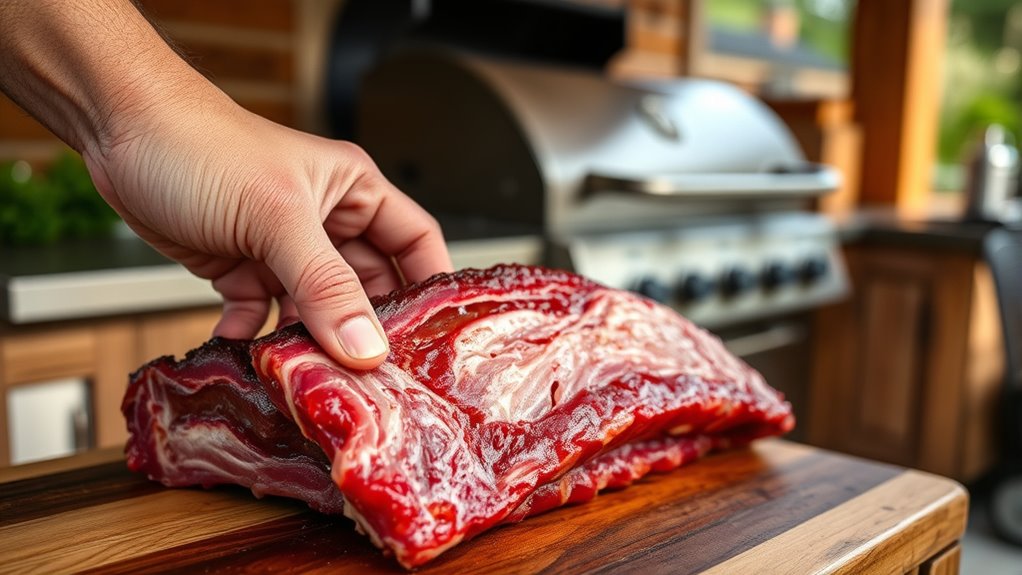
When choosing the best ribs for smoking on a pellet grill, you’ll want to take into account both the cut and quality of the meat. Baby back ribs are a popular choice because they’re tender and cook relatively quickly, but spare ribs offer more flavor due to their higher fat content. Look for ribs with a good amount of marbling; this fat will render during cooking, keeping the meat juicy.
Fresh ribs are preferable, but if you pick frozen, thaw them properly before smoking. Avoid ribs with excessive discoloration or a strong odor, as these indicate poor quality. Choosing ribs with consistent thickness ensures even cooking on your pellet grill.
Preparing Your Ribs: Trimming and Removing the Membrane
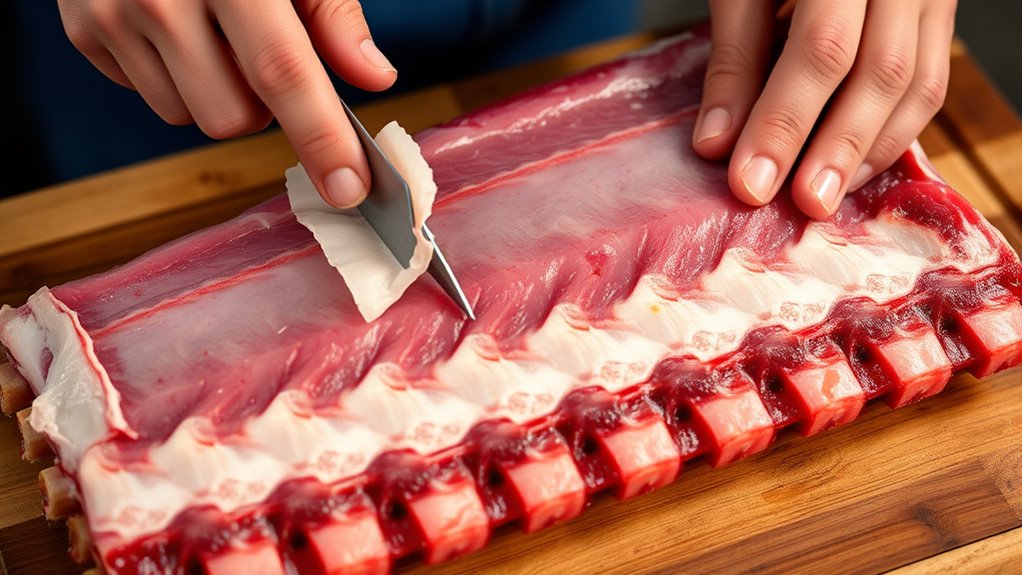
Selecting quality ribs is just the start; getting them ready properly makes all the difference in flavor and texture. Begin by trimming excess fat and any loose bits of meat to ensure even cooking. Use a sharp knife to carefully remove the silver skin membrane on the bone side—it’s tough and prevents seasoning from penetrating.
Slide a butter knife under the membrane to loosen it, then grab it with a paper towel and peel it off in one smooth motion. This step helps your rub and smoke flavor reach deeper into the ribs. After trimming and membrane removal, pat the ribs dry with paper towels.
Your ribs are now primed to absorb seasoning and smoke, setting the stage for a tender, flavorful result.
How to Set Your Pellet Grill for Smoking Ribs
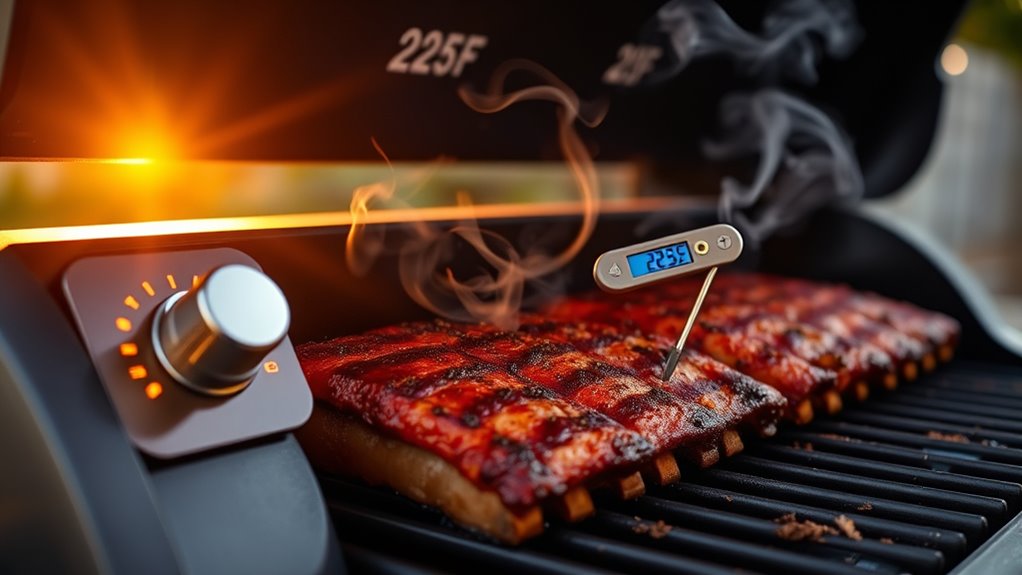
Although pellet grills offer convenience, setting them correctly is essential for perfect ribs. Start by choosing the right temperature—225°F is ideal for low and slow smoking. Next, select a wood pellet flavor that complements ribs, like hickory or applewood, to enhance the taste without overpowering it.
Make sure your grill’s drip tray is in place to catch juices and prevent flare-ups. Set your grill to smoke or low smoke mode if available; this helps infuse that classic smoky flavor. Position the grill grates properly to allow even heat circulation, ensuring your ribs cook uniformly.
Finally, adjust the vents as needed for proper airflow, which maintains consistent temperature throughout the cooking process. Proper settings lay the foundation for tender, flavorful ribs.
Preheating Your Pellet Grill for Smoking Ribs
Before you place your ribs on the grill, you’ll want to preheat your pellet grill properly to guarantee even cooking and maximum smoke infusion. Start by setting the temperature to 225°F, allowing the grill to reach this steady heat. This process takes about 10-15 minutes, giving the pellets time to ignite and produce consistent smoke.
Keep the lid closed during preheating to maintain temperature stability. Use the table below to guide your preheat routine:
| Step | Action | Time |
|---|---|---|
| 1 | Set temperature to 225°F | Immediate |
| 2 | Close the lid | Immediate |
| 3 | Wait for temperature to stabilize | 10-15 minutes |
| 4 | Check smoke output | Ongoing |
| 5 | Ready to place ribs | After stable temp |
This guarantees your ribs smoke perfectly from the start.
Applying a Dry Rub for Maximum Flavor
You’ll want to pick spices that complement the natural flavor of your ribs without overpowering them. Apply the rub evenly and press it into the meat to make sure it sticks well.
Letting the ribs sit with the rub for at least 30 minutes helps the flavors soak in before you start smoking.
Choosing The Right Spices
How do you choose the perfect spices to enhance your ribs on a pellet grill? Start by balancing sweet, savory, and spicy flavors to complement the smoky taste. Consider what profile you want—bold and spicy or mild and sweet.
Here are five essential spices to get you started:
- Paprika for a smoky, slightly sweet base
- Brown sugar to add caramelized sweetness
- Garlic powder for depth and aroma
- Black pepper for heat and sharpness
- Chili powder to introduce a subtle kick
Experiment with ratios to find your ideal blend. Quality matters, so use fresh, finely ground spices for better flavor absorption. Remember, the right spice mix sets the foundation for mouthwatering ribs before you even fire up your pellet grill.
Proper Rub Application Techniques
Although selecting the right spices is essential, applying your dry rub correctly guarantees those flavors penetrate the meat deeply. Start by patting your ribs dry with paper towels to remove excess moisture, which helps the rub stick better. Generously sprinkle the rub over the entire surface, then use your hands to massage it firmly into the meat.
Don’t be shy—apply enough pressure to make sure the rub adheres without tearing the meat. Cover every nook and cranny, including the edges and the bone side. For an even coating, consider applying the rub in stages, letting it settle slightly before adding more.
This method maximizes flavor without overpowering the ribs. Proper rub application sets the foundation for a delicious smoked rib experience.
Timing For Flavor Absorption
Since the rub needs time to penetrate the meat, applying it well before cooking makes a big difference in flavor. You want those spices to soak into every fiber, enhancing the ribs beyond just the surface.
Ideally, apply your dry rub at least an hour before smoking, but overnight is even better if you have the time.
Here’s how to optimize timing for flavor absorption:
- Apply rub evenly over the ribs.
- Wrap ribs in plastic wrap or place in a sealed container.
- Refrigerate to let flavors meld.
- Remove ribs 30 minutes before cooking to reach room temperature.
- Avoid rinsing off the rub before smoking.
The 3-2-1 Method for Smoking Ribs on a Pellet Grill
When you want tender, flavorful ribs on your pellet grill, the 3-2-1 method offers a reliable approach. Start by smoking the ribs unwrapped for 3 hours at about 225°F. This gives the smoke time to infuse the meat’s surface.
Next, cook the ribs for 2 hours at the same temperature, but this time you’ll want to prepare for the next step—though keep them uncovered to maintain the smoke exposure.
Finally, finish by cooking the ribs for 1 hour, which helps tenderize the meat and develop a nice bark. This method balances smoke, heat, and time to transform your ribs into a juicy, flavorful meal every time. Stick to these intervals, and you’ll nail the texture and taste.
Wrapping Ribs With Foil: When and How to Do It
You’ll want to wrap your ribs with foil at just the right time to lock in moisture and speed up cooking. Choosing heavy-duty foil helps prevent leaks and keeps the ribs tender. Wrapping not only preserves juiciness but also lets you add flavors for a delicious finish.
Timing The Foil Wrap
Although the exact timing can vary based on your pellet grill and rib type, wrapping ribs in foil generally happens after they’ve developed a good bark and absorbed smoke for about two to three hours. This step locks in moisture and helps tenderize the meat.
To get the timing right, watch for:
- A deep, caramelized bark forming on the ribs
- Smoke ring development indicating sufficient smoke absorption
- Meat pulling back slightly from the bone ends
- Internal temperature nearing 150°F to 160°F
- Ribs feeling firm but not stiff when you press them
Wrapping too early can soften the bark, while waiting too long might dry out the ribs. Keep these signs in mind, and you’ll know exactly when to wrap for tender, juicy ribs every time.
Choosing The Right Foil
Since the foil plays a crucial role in locking in moisture and tenderizing your ribs, choosing the right type can make all the difference. Opt for heavy-duty aluminum foil—it’s thicker and less likely to tear during the wrapping and cooking process. Standard foil might rip easily, causing juices to leak and drying out your ribs.
You’ll want a wide enough sheet to completely wrap your ribs with some overlap, guaranteeing a tight seal. If you prefer, you can double-wrap using regular foil to strengthen the barrier. Avoid using foil with coatings or non-stick layers, as these can affect heat transfer and potentially alter flavor.
Picking the right foil guarantees your ribs stay juicy and tender during the critical wrapping phase on your pellet grill.
Benefits Of Foil Wrapping
When you wrap ribs in foil during smoking, you lock in moisture and speed up the tenderizing process. This method, often called the “Texas Crutch,” helps you achieve tender, juicy ribs faster without sacrificing flavor. Wrapping also traps heat evenly, preventing the ribs from drying out during long cooks.
You’ll notice a more consistent texture and enhanced bark formation once unwrapped and finished on the grill. Use foil wrapping strategically, usually after a few hours of smoking, to balance smoke absorption and tenderness.
Here’s why you should consider foil wrapping:
- Retains moisture for juicy ribs
- Accelerates the cooking process
- Prevents drying or crust burning
- Helps tenderize tough meat fibers
- Enhances flavor infusion when adding liquids inside foil
Master this technique to elevate your smoked ribs on a pellet grill.
How to Check When Your Ribs Are Done
To know your ribs are perfectly smoked, you’ll need to rely on a few key indicators beyond just time. First, check the meat’s tenderness by gently picking up the ribs with tongs and giving them a slight bounce. If the meat cracks or bends easily but doesn’t fall apart, it’s a good sign.
Next, look for the meat pulling back from the bones—about a quarter-inch gap indicates doneness. You can also use a toothpick or skewer to test tenderness; it should slide in with little resistance. Avoid relying solely on a thermometer since ribs are best judged by texture and appearance.
Trust these cues to confirm your ribs are tender, juicy, and ready to enjoy straight off your pellet grill.
When and How to Add Sauce on a Pellet Grill
You’ll want to add sauce during the last 30 minutes of smoking to avoid burning it. Picking a sauce that complements your rub and smoke flavor makes a big difference.
Use a brush or mop to apply it evenly and build layers of flavor without overpowering the ribs.
Optimal Timing For Saucing
Although saucing ribs might seem straightforward, applying it at the right time on a pellet grill can make all the difference in flavor and texture. You want to avoid soggy ribs or burnt sugar from early application. Here’s when and how to sauce for the best results:
- Apply sauce during the last 30 minutes of cooking to let it caramelize without burning.
- Use a brush to evenly coat ribs, ensuring full coverage.
- Reapply sauce every 10 minutes in those final stages for layered flavor.
- Avoid saucing too early; sugars can burn and create bitterness.
- Let ribs rest briefly after saucing to let the sauce set and flavors meld.
Timing your saucing right helps you achieve ribs that are tender, flavorful, and perfectly glazed.
Choosing The Right Sauce
When selecting a sauce for your ribs on a pellet grill, the key lies in balancing flavors that complement the smoky profile without overpowering it. You’ll want a sauce with enough sweetness, acidity, or spice to enhance the meat’s natural flavor. Traditional tomato-based barbecue sauces work well, but you can also try vinegar or mustard-based sauces depending on your taste.
Consider the intensity of your smoke and the seasoning on the ribs to pick a sauce that harmonizes rather than competes. Remember, thicker sauces might need careful timing to avoid burning. Also, keep in mind that a lighter sauce can be brushed on earlier, while richer, bolder sauces are best added toward the end of cooking to preserve their character and prevent flare-ups.
Applying Sauce Techniques
Since applying sauce at the right time can make or break your ribs, understanding when and how to add it on a pellet grill is vital. You’ll want to wait until the ribs have developed a nice bark, usually about 45 minutes before they finish cooking. This timing lets the sauce caramelize without burning.
Here’s how to apply sauce effectively:
- Use a brush or mop for even coverage
- Apply thin coats to prevent sogginess
- Reapply every 15 minutes during the last 45 minutes
- Avoid saucing too early to preserve bark formation
- Let ribs rest a few minutes after saucing to set the glaze
Following these tips ensures your ribs have that perfect balance of smoky flavor and saucy goodness.
Resting and Serving Your Smoked Ribs for Best Texture
After smoking your ribs to perfection, you’ll want to let them rest before serving to guarantee the juices redistribute evenly. Wrap the ribs loosely in foil and let them sit for about 10 to 15 minutes. This step helps the meat relax, making it tender and juicy when you cut into it.
Avoid skipping this crucial phase because cutting ribs right away causes the flavorful juices to seep out.
When ready to serve, slice between the bones with a sharp knife to maintain clean cuts. Arrange the ribs on a platter, and consider adding extra sauce on the side for guests who want more. Resting ensures every bite delivers the smoky, tender texture you worked hard to achieve on your pellet grill.
Common Mistakes to Avoid When Smoking Ribs
Although smoking ribs can seem straightforward, many pitmasters fall into common pitfalls that compromise flavor and texture. To get perfect ribs every time, avoid these mistakes:
- Ignoring the membrane: Leaving it on makes ribs tough and less flavorful.
- Smoking at inconsistent temperatures: Fluctuations cause uneven cooking and dryness.
- Skipping the pre-seasoning: Without a proper rub, ribs lack depth in taste.
- Opening the grill too often: This lets heat and smoke escape, extending cook time.
- Not allowing enough resting time: Cutting ribs too soon releases juices, leading to dryness.
Frequently Asked Questions
Can I Use Wood Chips Instead of Pellets for Smoking Ribs?
You can’t use wood chips instead of pellets in a pellet grill because it’s designed specifically for pellets. Using chips might clog or damage the auger and hopper, so stick to pellets for safe, consistent smoking results.
How Long Can Smoked Ribs Be Stored in the Refrigerator?
You can store smoked ribs in the refrigerator for 3 to 4 days.
Make sure to wrap them tightly in foil or place them in an airtight container to keep them juicy and flavorful.
What Is the Best Side Dish to Serve With Smoked Ribs?
The best side dish for smoked ribs is coleslaw; it’s like a cool breeze on a hot day—refreshing and crunchy. You’ll love how its tangy crunch balances the rich, smoky flavor of your ribs perfectly.
Coleslaw adds a crisp texture that complements the tenderness of the meat. Its slight acidity cuts through the richness, making each bite more enjoyable.
This classic pairing never goes out of style and brings a vibrant touch to your meal. It’s simple, delicious, and always a crowd-pleaser.
Can I Smoke Ribs on a Pellet Grill in Cold Weather?
Yes, you can smoke ribs on a pellet grill in cold weather. Just make sure to keep the grill lid closed, monitor the temperature closely, and use a grill blanket or windbreak to maintain consistent heat for perfect ribs.
How Do I Clean My Pellet Grill After Smoking Ribs?
Cleaning your pellet grill after smoking ribs is like wiping the canvas clean for your next masterpiece. Scrape the grates, empty the ash pot, and wipe down surfaces with warm soapy water to keep it ready and fresh.
Conclusion
Smoking ribs on a pellet grill is an art you’ll master with practice, patience, and passion. You’ll choose the best ribs, prep them right, and let the grill do its magic at the perfect temperature. Remember, timing is key—rub, smoke, sauce, and rest all play their part.
So fire up that pellet grill, savor the sizzle, and enjoy ribs that melt in your mouth every single time. Smoke, savor, and repeat! With the right technique, smoking ribs on a pellet grill delivers tender, flavorful results that will impress every time.