How to Do Titanium Cutting Boards Without Scratches
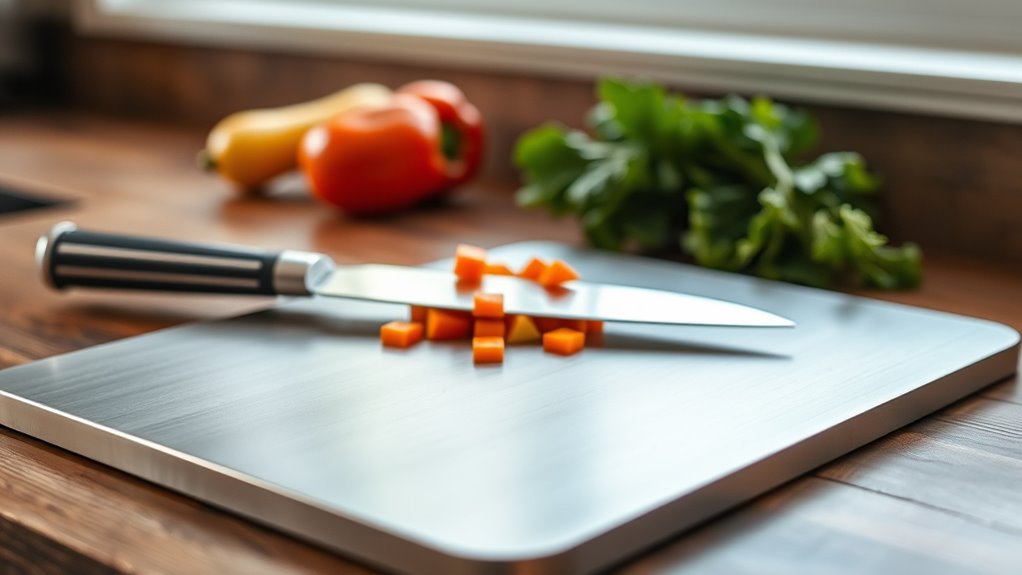
To keep your titanium cutting board scratch-free and in top condition, it’s essential to use the right tools and techniques. Choosing high-quality, smooth-edged knives is the first step in preventing damage. Cutting with steady, controlled motions without twisting the blade helps maintain the board’s sleek surface.
Store your board upright or hang it to avoid unnecessary surface pressure that can cause scratches. For extra protection, use silicone or rubber mats underneath during use.
Clean your titanium cutting board gently with soft cloths and mild soap, steering clear of abrasive materials that could mar the surface.
With proper care and mindful use, your board will stay durable and hygienic. Explore more tips to extend its life and keep it looking like new.
Key Takeaways
- Use high-quality knives with smooth, straight edges to minimize surface scratching on titanium cutting boards.
- Cut with steady, controlled downward pressure, avoiding dragging or twisting motions that cause scratches.
- Clean boards regularly with soft sponges and mild, non-abrasive cleaners to prevent abrasion and maintain surface integrity.
- Store cutting boards upright or hung with protective covers to avoid contact with sharp objects and surface pressure.
- Use silicone or rubber mats beneath boards during use to absorb impact and protect against scratches.
Why Titanium Boards Scratch and How to Prevent It
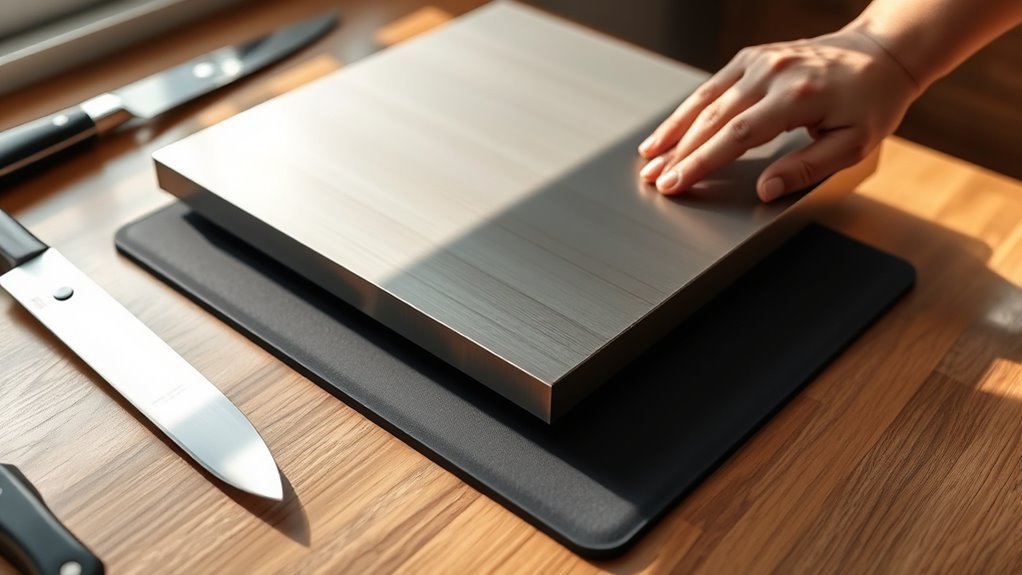
Although titanium is known for its strength and durability, your cutting board can still develop scratches over time. These scratches happen because knives, especially those with hard edges, create tiny grooves when you cut. Even though titanium resists damage better than many materials, repeated contact with sharp blades eventually leaves marks.
To prevent scratches, you need to be mindful of how you use your board. Avoid cutting with excessive force and keep the blade angle consistent. Also, regularly clean your board to remove any particles that could cause abrasion.
Using proper cutting techniques and caring for your board properly can *considerably* reduce scratching, helping your titanium cutting surface maintain its sleek look and functionality for longer.
Choose the Right Knives for Your Titanium Board
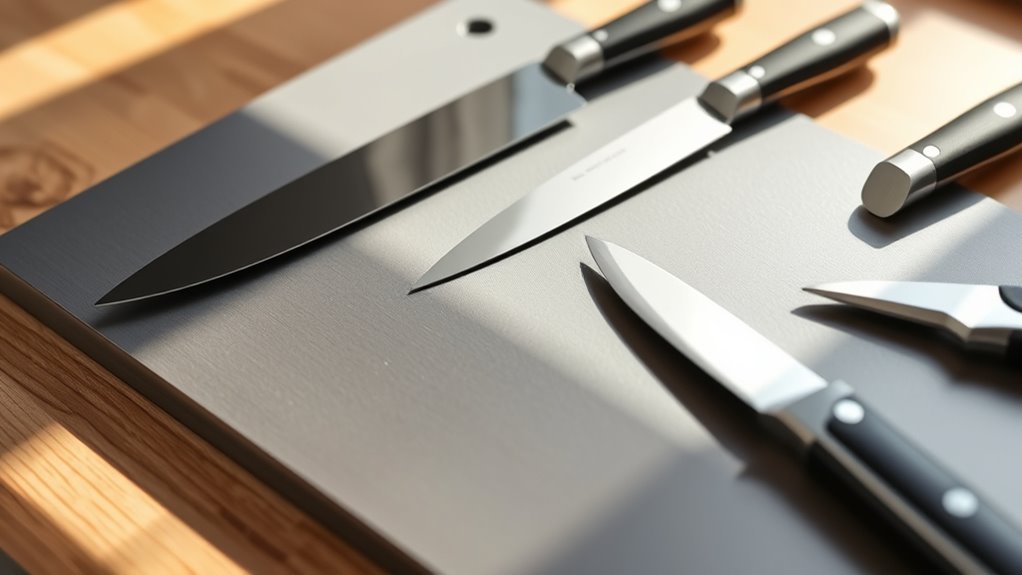
When you choose the right knives for your titanium cutting board, you minimize wear and keep its surface looking pristine. Titanium is tough, but using the wrong knives can still cause scratches or dull both the board and blade. Opt for knives that glide smoothly and reduce friction.
Here are three tips to help you pick the best knives:
- Use high-quality stainless steel knives: They maintain sharp edges without damaging the board.
- Avoid serrated blades: Their rough edges can scratch the titanium surface.
- Choose knives with smooth, straight edges: They cut cleanly and protect your board’s finish.
Cut Safely to Avoid Scratches on Titanium Surfaces
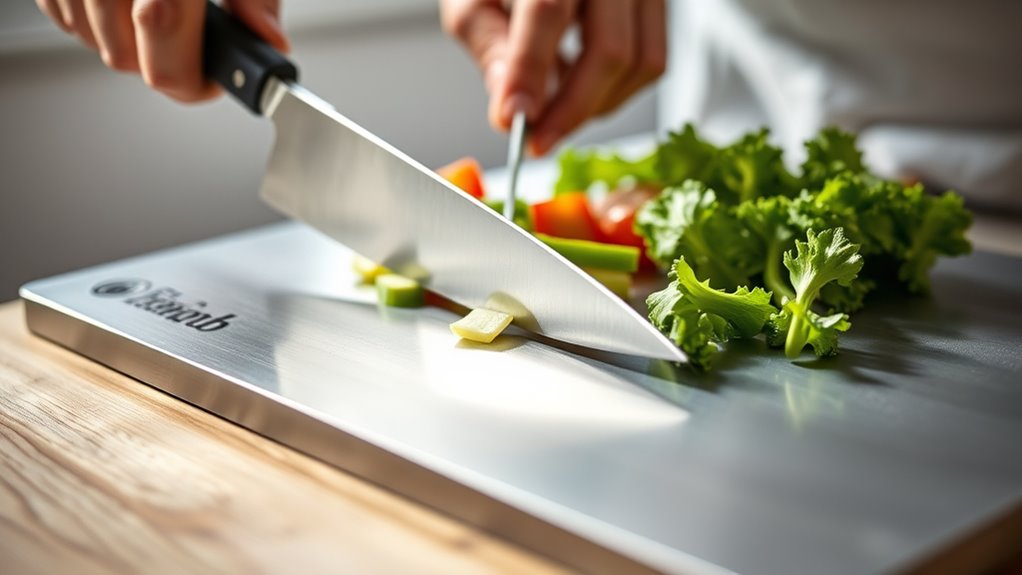
While titanium is a durable material, you still need to cut with care to prevent scratches on its surface. Always use a steady hand and avoid twisting your knife while cutting. Apply even pressure and slice straight down rather than dragging the blade across the board.
This minimizes surface abrasion and keeps your titanium looking pristine. Avoid cutting on the edges or corners of the board, as these areas are more prone to damage. Also, don’t use overly sharp or serrated knives that can dig into the surface.
Instead, focus on controlled, smooth motions. By cutting safely and mindfully, you’ll protect your titanium cutting board from unnecessary marks and maintain its sleek, scratch-free appearance for years to come.
Clean Titanium Boards Without Scratching Them
You’ll want to clean your titanium board gently to keep its surface scratch-free. Use soft cloths or sponges paired with mild, non-abrasive cleaners to avoid damage. Avoid harsh scrubbers or rough materials that can leave marks on the board.
Gentle Cleaning Techniques
Although titanium cutting boards are highly durable, you should still handle them with care during cleaning to prevent scratches. Using gentle techniques guarantees your board stays smooth and scratch-free. Avoid abrasive scrubbing or harsh motions that can damage the surface.
Instead, focus on careful, deliberate actions.
Here are some gentle cleaning techniques to follow:
- Use a soft sponge or cloth to wipe away food residue instead of rough scrubbers.
- Rinse your board with warm water and mild soap, letting the solution loosen debris naturally.
- Pat dry with a microfiber towel to avoid abrasive rubbing and water spots.
Safe Cleaning Materials
Because titanium cutting boards require special care, choosing the right cleaning materials is essential to prevent scratches. You should always use non-abrasive sponges or soft microfiber cloths when cleaning your board. Avoid steel wool, rough scrub brushes, or scouring pads, as these can easily damage the surface.
Mild dish soap combined with warm water works perfectly to break down food residue without harming the titanium. If you want to disinfect, opt for a diluted vinegar solution instead of harsh chemical cleaners that might degrade the finish. Also, steer clear of bleach or ammonia-based products since they can dull the board’s surface.
Use Protective Mats and Covers to Shield Your Board
You can protect your titanium cutting board by using mats made from silicone, rubber, or foam to absorb impact and prevent scratches. Board covers offer an extra layer of defense, keeping your surface safe when not in use.
Choosing the right mat or cover helps extend your board’s lifespan and maintain its sleek finish.
Types Of Protective Mats
When you want to keep your titanium cutting board scratch-free, choosing the right protective mat is essential. The right mat not only cushions your board but also prevents damage from knives and other utensils. Here are three popular types to consider:
- Silicone Mats: Flexible and non-slip, these mats absorb impact and are easy to clean.
- Rubber Mats: Durable and thick, they offer excellent grip and protect against deeper scratches.
- Foam Mats: Lightweight and soft, foam mats provide a gentle barrier, ideal for preventing minor abrasions.
Each type offers unique benefits depending on your kitchen needs. Make sure your mat fits your board size well and stays securely in place during use to maximize protection. Choosing wisely can extend your board’s lifespan significantly.
Benefits Of Board Covers
Protective mats do a great job cushioning your titanium cutting board during use, but adding a board cover takes protection a step further. Board covers shield your cutting surface from accidental scratches, dents, and stains when the board isn’t in use. They also block dust and kitchen debris, keeping your board clean and ready for the next task.
Using a cover helps maintain the board’s sleek appearance, preventing dull spots and surface wear that can happen over time. Plus, covers make stacking easier if you store multiple boards, reducing the risk of damage. With a durable, easy-to-clean cover, you extend your titanium board’s lifespan while keeping it looking pristine.
Repair Minor Scratches on Titanium Cutting Boards
Although titanium cutting boards are highly durable, minor scratches can still appear with regular use. Don’t worry—you can easily repair these small blemishes to keep your board looking great. Start by cleaning the surface thoroughly with mild soap and water, then dry it completely.
Next, gently buff the scratched area using one of these methods:
- Use a fine-grit sandpaper (around 400-600 grit) in a circular motion.
- Apply a metal polishing compound with a soft cloth to smooth out scratches.
For stubborn marks, try a titanium-specific scratch remover following the product’s instructions. Afterward, rinse and dry the board well. Regular maintenance will help minimize scratches and maintain the board’s sleek finish.
Know When to Replace Your Titanium Cutting Board
Even the toughest titanium cutting boards will wear down over time, and you’ll need to know the signs that indicate it’s time for a replacement. If you notice deep grooves or scratches that can’t be smoothed out, it’s a clear signal. These imperfections can harbor bacteria, making your board unsafe.
Also, if the surface starts to warp or bend, it won’t provide a stable cutting area, increasing the risk of accidents. Discoloration or corrosion spots are other red flags, as they suggest the coating or surface is compromised. Don’t ignore persistent odors that linger despite cleaning, since they point to material degradation.
When any of these issues appear, replacing your titanium cutting board guarantees hygiene, safety, and peak performance in your kitchen.
Store Titanium Boards Properly to Avoid Damage
Once you’ve recognized when your titanium cutting board needs replacing, you’ll want to make sure it lasts as long as possible in the future. Proper storage plays a key role in preventing damage and scratches. Avoid stacking heavy items on top of your titanium board, as this can cause dents or warping.
Keep it in a dry area to prevent moisture buildup, which might lead to corrosion over time. Also, store it away from sharp objects that could scratch its surface.
Here are some tips to store your titanium cutting board properly:
- Store upright or hang it on a hook to avoid pressure on the surface.
- Use a protective cloth or sleeve to shield it from scratches.
- Keep it in a cool, dry place away from direct sunlight or humidity.
Compare Titanium to Other Cutting Board Materials
When choosing a cutting board, you’ll find that titanium offers unique benefits compared to more common materials like wood, plastic, or bamboo. Titanium is incredibly durable and resistant to scratches, unlike wood or bamboo, which can scar easily. It’s also non-porous, so it won’t harbor bacteria like wood or plastic might.
However, titanium boards can be pricier and heavier.
| Material | Durability | Maintenance |
|---|---|---|
| Titanium | Very high, scratch-resistant | Low, easy to clean |
| Wood | Moderate, can dent | Requires oiling |
| Plastic | Low, scratches easily | Dishwasher safe |
| Bamboo | Moderate, can crack | Needs regular care |
Titanium’s toughness and hygiene make it a smart choice if you want longevity without the hassle.
Frequently Asked Questions
Can Titanium Cutting Boards Be Used for Hot Food Preparation?
Yes, you can use titanium cutting boards for hot food preparation. They handle heat well and won’t warp or melt.
Just be careful with extreme temperatures to avoid damaging the surface or affecting its finish over time.
Are Titanium Cutting Boards Dishwasher Safe?
Titanium cutting boards aren’t dishwasher safe because harsh detergents and high heat can damage their surface. You should hand wash them with mild soap and warm water to keep them in great condition and avoid scratches.
Do Titanium Cutting Boards Affect Knife Sharpness?
Like a gentle dance, titanium cutting boards won’t dull your knives quickly. You won’t notice significant wear since titanium’s hardness balances blade safety, letting you cut confidently without worrying about sharpening your knives more often than usual.
What Is the Weight Comparison of Titanium Boards to Wood Boards?
You’ll find titanium cutting boards are considerably lighter than wood boards, making them easier to handle and transport. Their lightweight design doesn’t sacrifice durability, so you get strength without the heavy bulk of traditional wood.
Are Titanium Cutting Boards Environmentally Friendly?
Yes, titanium cutting boards are environmentally friendly since they’re durable and long-lasting, reducing waste. You won’t need to replace them often, and titanium is recyclable, making it a smart, sustainable choice for your kitchen.
Conclusion
Taking care of your titanium cutting board is like guarding a treasure chest—handle it with the right knives, clean it gently, and protect it with mats. By cutting safely and storing it properly, you’ll keep scratches at bay and your board shining like new.
Remember, even the strongest surfaces need a little love. When minor scratches appear, repair them promptly or know when it’s time to replace your trusty titanium companion.
Following these steps will help you maintain your titanium cutting board without scratches, ensuring its durability and sleek appearance for years to come.