7 Reasons Walnut Is Good for Cutting Boards
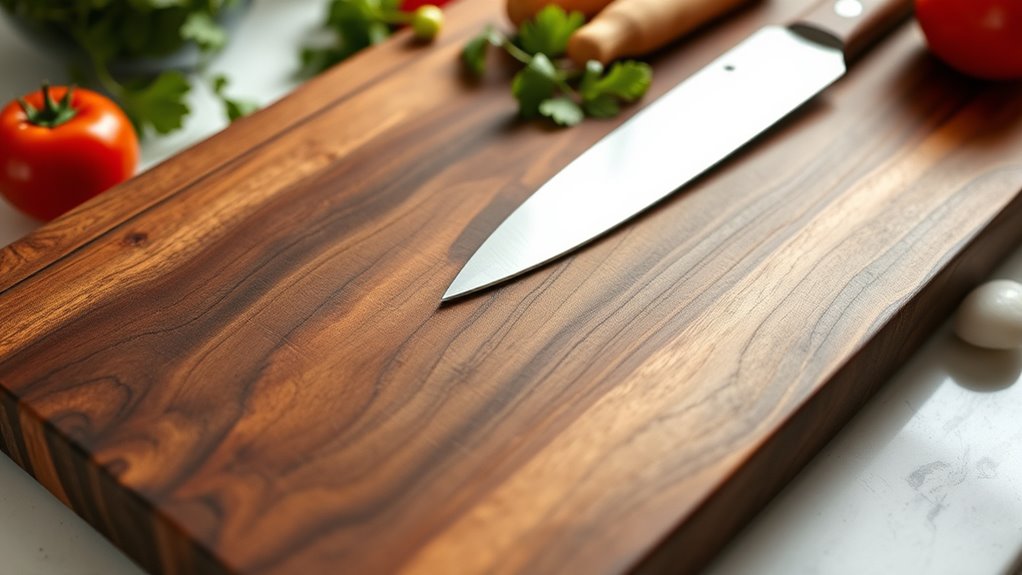
You’ll love walnut cutting boards because they’re durable and crafted from premium, kiln-dried wood that resists warping and cracking. These boards feature a tight grain structure that prevents moisture damage, making them an excellent choice for kitchen use.
Walnut cutting boards also naturally fight bacteria with their antimicrobial properties, ensuring a hygienic surface.
Their elegant dark color adds warmth and style to your kitchen, making them both functional and attractive. Plus, food-safe finishes protect the wood and keep it safe for daily use.
If you want to know how to care for your board and why walnut stands out, keep exploring these benefits further.
Key Takeaways
- Walnut’s tight grain and density resist warping and cracking, ensuring a stable, long-lasting cutting board.
- Natural antimicrobial compounds in walnut inhibit bacterial growth and help maintain a hygienic surface.
- Its durability and strength resist scratches and dents without dulling knives, providing reliable daily use.
- Food-safe finishes like mineral oil protect walnut from moisture, stains, and enhance its rich color.
- Walnut’s rich dark color and warm patina add elegant aesthetic appeal to any kitchen décor.
Why Walnut’s Durability Is Perfect for Cutting Boards
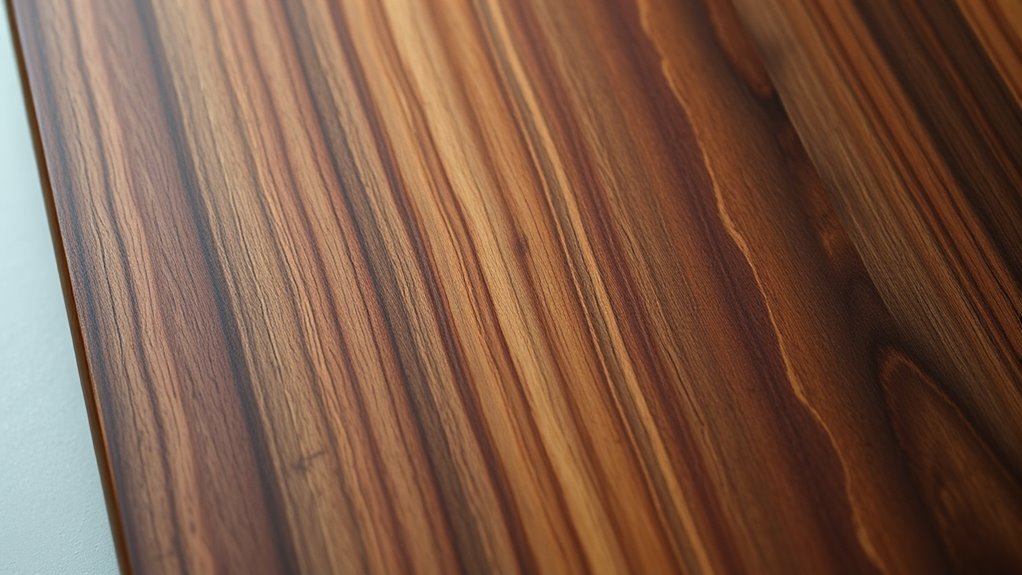
Because walnut wood combines strength with a fine grain, it’s an ideal choice for cutting boards that need to withstand daily use. When you pick a walnut cutting board, you’re choosing a surface that resists scratches and dents better than many other woods. This means your board will keep looking good even after countless meal preps.
Walnut’s natural hardness offers durability without being too harsh on your knives, so you won’t dull blades quickly. Plus, its resilience helps prevent deep cuts that can harbor bacteria, keeping your kitchen safer. You’ll appreciate how walnut balances toughness with a smooth finish, making your cutting board both reliable and pleasant to work on every day.
How Walnut’s Tight Grain Prevents Cutting Board Warping
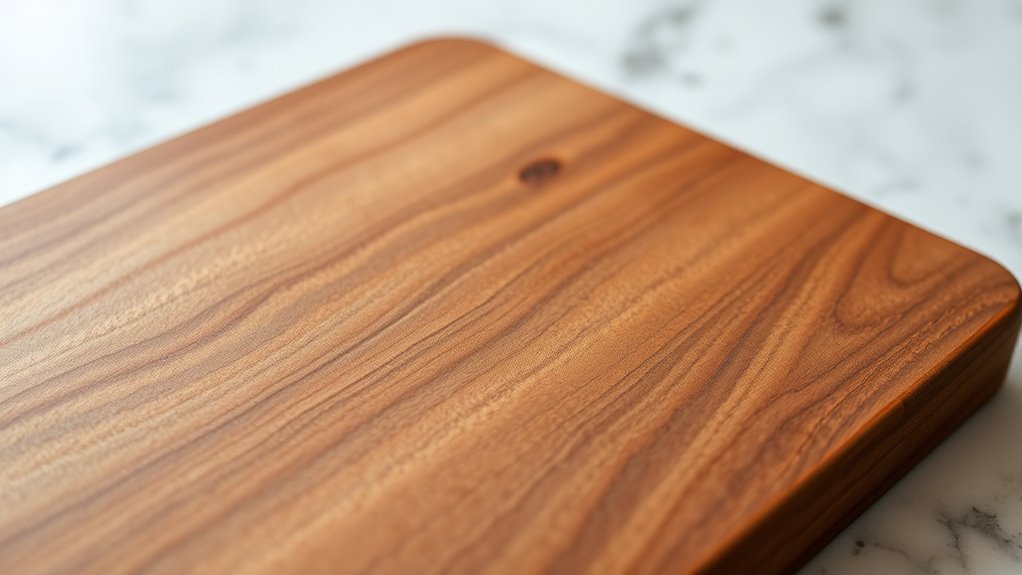
When you choose a walnut cutting board, you benefit from its tight grain structure, which considerably reduces the chances of warping over time. This dense grain pattern limits the wood’s ability to absorb moisture unevenly, a common cause of warping in cutting boards. Because walnut fibers are closely packed, they maintain stability even when exposed to humidity changes or frequent washing.
You won’t have to worry about your board twisting or bending as it ages, keeping its flat surface intact. This means your cutting board stays reliable for precise food preparation. Plus, the tight grain makes it less prone to cracking, extending its lifespan.
Choosing walnut ensures your cutting board remains functional and visually appealing, resisting common warping issues other woods face.
The Antimicrobial Benefits of Walnut Cutting Boards

You’ll appreciate that walnut cutting boards naturally resist bacteria thanks to their antimicrobial properties. This helps keep harmful germs from growing, making your food prep safer.
Choosing walnut means you’re investing in a cleaner, healthier kitchen surface.
Natural Antimicrobial Properties
How does walnut naturally help keep your cutting board cleaner? Walnut contains natural compounds like juglone and tannins, which have antimicrobial properties. These substances inhibit the growth of certain bacteria and fungi on the wood’s surface.
When you use a walnut cutting board, these compounds create an environment less hospitable to microbes compared to other woods. This means your board stays cleaner between uses without harsh chemicals. Additionally, walnut’s dense grain limits moisture absorption, reducing the chances for bacteria to thrive.
While it’s still essential to clean your board properly, choosing walnut gives you an extra natural defense. So, you get a cutting surface that not only looks great but also helps maintain better hygiene in your kitchen naturally.
Inhibiting Bacterial Growth
Because walnut contains natural antimicrobial compounds, it actively inhibits bacterial growth on your cutting board. When you use a walnut board, these compounds work to reduce the presence of harmful bacteria, making it a safer surface for food prep. Unlike some other woods, walnut’s dense grain limits bacteria from penetrating deeply, so germs remain on the surface where cleaning is easier.
You’ll find that walnut cutting boards resist odors and stains caused by bacteria, helping your board stay fresher longer. This means you can trust walnut to provide a cleaner workspace without relying solely on harsh chemicals. Choosing walnut helps you naturally keep bacteria in check, enhancing your kitchen’s hygiene with minimal extra effort.
Maintaining Food Safety
Building on walnut’s natural ability to inhibit bacterial growth, maintaining food safety becomes much simpler when you use a walnut cutting board. Walnut contains natural antimicrobial properties that help reduce harmful bacteria on its surface, keeping your food preparation area cleaner. When you cut raw meat or vegetables, these properties work to minimize cross-contamination risks.
You’ll find walnut boards less prone to retaining odors or stains compared to plastic alternatives. However, to maximize food safety, you should clean your walnut board properly after each use—wash with warm, soapy water and dry it immediately. Regularly oiling the board also helps maintain its protective barrier.
How to Care for and Maintain Your Walnut Cutting Board
Although walnut cutting boards are durable and beautiful, they require regular care to keep them in top condition. After each use, wash your board with warm, soapy water and dry it immediately to prevent warping or cracking. Avoid soaking it or putting it in the dishwasher, as excess moisture can damage the wood.
Every few weeks, apply a food-safe mineral oil or beeswax conditioner to maintain the wood’s moisture and prevent drying out. Rub the oil in with a clean cloth, let it soak overnight, then wipe off any excess. Also, avoid cutting on the same spot repeatedly to prevent uneven wear.
With these simple steps, your walnut cutting board will stay functional and stunning for years.
Why Walnut’s Dark Color Adds Elegance to Your Kitchen
You’ll notice how walnut’s rich dark color instantly enhances your kitchen decor. It brings a timeless sophistication that complements both modern and classic styles.
Choosing walnut means adding a touch of elegance that lasts.
Rich Hue Enhances Decor
When you choose a walnut cutting board, its deep, rich color instantly elevates your kitchen’s aesthetic. This natural darkness adds warmth and depth, making your space feel inviting and stylish. Walnut’s hue contrasts beautifully with lighter countertops and cabinetry, creating a balanced visual appeal you’ll appreciate every day.
Plus, its color can complement a wide range of kitchen designs, from rustic to modern.
Here’s how walnut’s rich hue enhances your kitchen decor:
- Adds a sophisticated, earthy tone
- Highlights the natural wood grain patterns
- Creates contrast with stainless steel appliances
- Pairs well with both cool and warm color schemes
- Maintains its beauty without fading over time
With walnut, your cutting board becomes a functional art piece.
Timeless Sophistication Appeal
Because walnut’s dark color exudes a natural elegance, it instantly adds a timeless sophistication to your kitchen. You’ll notice how its deep, rich tones create a striking contrast against lighter countertops or cabinets, making your cutting board a standout piece. Walnut’s subtle grain patterns contribute to a refined look without overpowering your existing decor.
This wood ages gracefully, developing a warm patina that enhances its beauty over time. When you choose walnut, you’re not just selecting a functional tool—you’re bringing in an element that elevates your kitchen’s aesthetic. Its classic appeal fits both modern and traditional styles, ensuring your space feels inviting and stylish for years.
Walnut cutting boards truly blend practicality with enduring elegance.
Walnut vs. Other Woods: Which Cutting Board Is Best?
Although many woods can make durable cutting boards, walnut stands out for its unique combination of hardness, grain tightness, and natural antibacterial properties. When comparing walnut to other popular woods like maple, bamboo, cherry, and teak, you’ll notice some clear advantages.
Here’s why walnut often wins:
- Softer than maple, it’s gentler on knives, extending their sharpness.
- Its tight grain resists deep cuts, reducing bacteria buildup.
- Naturally rich in oils, it repels moisture better than bamboo.
- Darker color hides stains and wear more effectively than cherry.
- Unlike teak, walnut is sustainably harvested in many regions, making it eco-friendly.
Choosing walnut means you get durability, hygiene, and style—all in one cutting board.
Key Features to Consider When Choosing a Walnut Cutting Board
Since walnut cutting boards come in various styles and qualities, you’ll want to focus on key features like wood grade, thickness, and finish to guarantee you pick one that fits your kitchen needs and lasts for years.
Start by checking the wood grade; select boards made from premium, kiln-dried walnut for durability. Thickness matters too—thicker boards resist warping and provide a sturdy surface.
Finally, the finish should be food-safe and water-resistant, like mineral oil or beeswax, to protect the wood and maintain its rich color.
| Feature | What to Look For | Why It Matters |
|---|---|---|
| Wood Grade | Premium, kiln-dried | Ensures durability and longevity |
| Thickness | At least 1.5 inches | Prevents warping and adds stability |
| Finish | Food-safe oil or wax | Protects wood and enhances appearance |
Frequently Asked Questions
Can Walnut Cutting Boards Be Used for Serving Food?
Yes, you can use walnut cutting boards for serving food. They’re sturdy, look elegant, and won’t easily stain or absorb odors.
Just make sure to clean and oil them regularly to keep them in great shape.
Are Walnut Cutting Boards Safe for People With Nut Allergies?
You shouldn’t use walnut cutting boards if you have a nut allergy, as they can cause allergic reactions. Even though the wood is sealed, tiny nut proteins might still be present and trigger symptoms.
How Heavy Are Typical Walnut Cutting Boards?
Typical walnut cutting boards weigh between 3 to 7 pounds, depending on size and thickness. You’ll find smaller ones lighter and easier to handle, while larger boards feel solid and sturdy but still manageable in your kitchen.
Can Walnut Cutting Boards Be Customized With Engravings?
You can absolutely customize walnut cutting boards with engravings. Imagine your favorite quote or family name etched beautifully into the rich, dark wood, turning a simple kitchen tool into a treasured, personalized keepsake you’ll love displaying.
Do Walnut Cutting Boards Retain Food Odors?
No, walnut cutting boards don’t retain food odors much. Their dense wood structure resists absorbing smells, so you won’t find lingering scents after use.
Just clean them properly, and they’ll stay fresh for your next meal prep.
Conclusion
When you hold a walnut cutting board, you’re embracing strength and beauty in your hands. Its rich, dark grain whispers durability, while its smooth surface resists warping and keeps bacteria at bay. Caring for it is simple, ensuring your kitchen stays elegant and functional.
Compared to other woods, walnut stands tall—offering timeless charm and reliability. Its natural resistance to moisture and scratches makes it ideal for daily use. The wood’s fine texture also provides a gentle cutting surface that preserves your knives.
Choose walnut, and watch your kitchen transform into a warm, inviting space where every meal begins with style. Walnut cutting boards combine durability, beauty, and hygiene, making them a top choice for any kitchen. Experience the unmatched quality and elegance that walnut brings to your culinary space.