Are Bamboo Cutting Boards Dishwasher Safe?
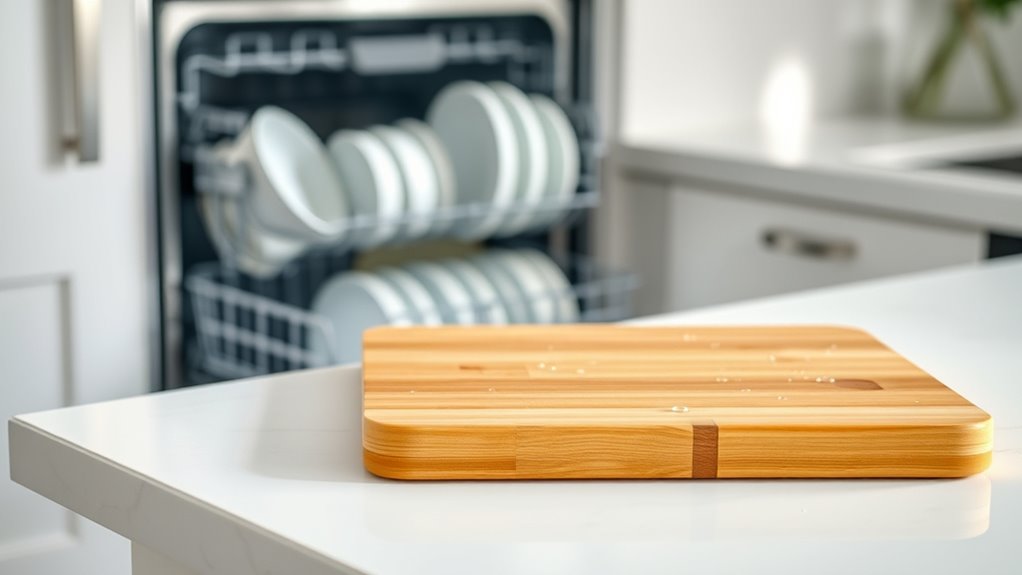
You shouldn’t put your bamboo cutting board in the dishwasher because the heat and water pressure can weaken the fibers, causing warping, cracking, or splitting. Bamboo cutting boards are not dishwasher safe, as repeated exposure to high temperatures and moisture damages their structure. This can lead to a shorter lifespan and compromised performance.
Repeated dishwasher use damages its surface and can lead to rough texture and bacterial buildup. Instead, wash it by hand with warm, soapy water, dry it immediately, and oil it regularly for longer life. Stick with gentle cleaning to keep your board in great shape—there’s more to learn about proper care ahead.
Key Takeaways
- Bamboo cutting boards are not dishwasher safe due to high heat and water pressure causing warping and cracking.
- Repeated dishwasher use weakens bamboo fibers, leading to splits and surface damage.
- Proper cleaning involves hand washing with warm, soapy water and immediate drying to prevent moisture damage.
- Avoid soaking or submerging bamboo boards in water to prevent swelling and bacterial growth.
- Disinfect periodically with vinegar or lemon juice and regularly oil the board to maintain hygiene and durability.
Are Bamboo Cutting Boards Dishwasher Safe?

Although bamboo cutting boards are popular for their durability and eco-friendliness, you shouldn’t put them in the dishwasher. The high heat and intense water pressure can cause your board to warp or crack over time. Bamboo is a natural material that absorbs moisture, so repeated exposure to hot water and harsh detergents can weaken its fibers.
Instead, you should hand wash your bamboo board with warm, soapy water and dry it immediately. This helps maintain its strength and appearance. You’ll also want to avoid soaking it, as prolonged water contact can cause swelling and damage.
What Happens If You Regularly Wash Bamboo Boards in the Dishwasher?
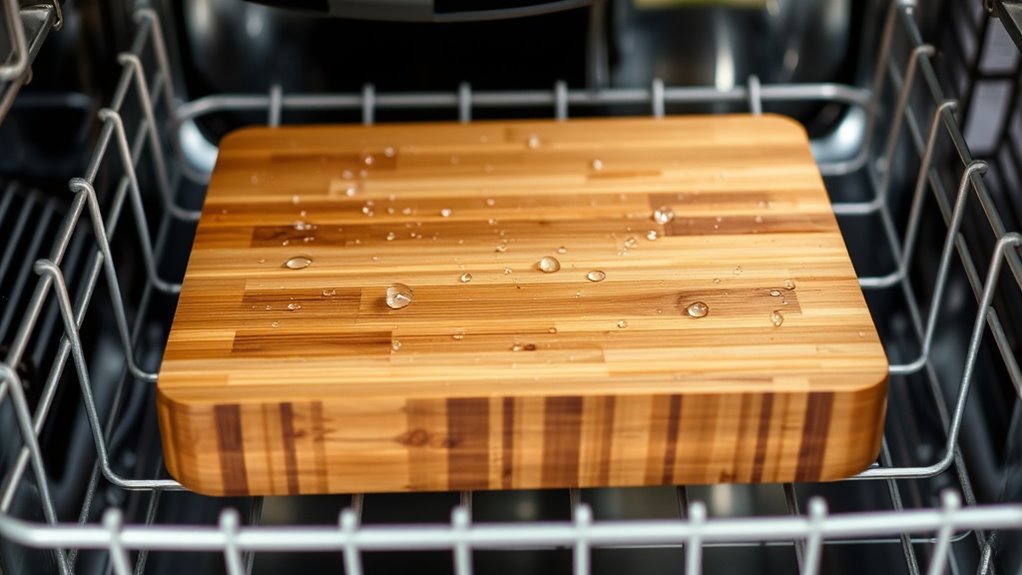
If you regularly wash your bamboo cutting board in the dishwasher, you’ll likely notice it warping, cracking, or splitting over time. The high heat and intense water pressure strip away natural oils, causing bamboo fibers to dry out and weaken. This damages the board’s durability and shortens its lifespan.
| Effect | Cause | Result |
|---|---|---|
| Warping | Heat & moisture changes | Board bends or twists |
| Cracking | Loss of oils | Surface develops splits |
| Splitting | Fiber weakening | Board breaks apart |
| Surface roughness | Abrasive cleaning | Uneven texture, harder to clean |
| Color fading | Harsh detergent | Board looks dull or stained |
To keep your bamboo board intact, avoid dishwasher use to prevent these issues.
Why Bamboo Cutting Boards Need Gentle Cleaning Methods
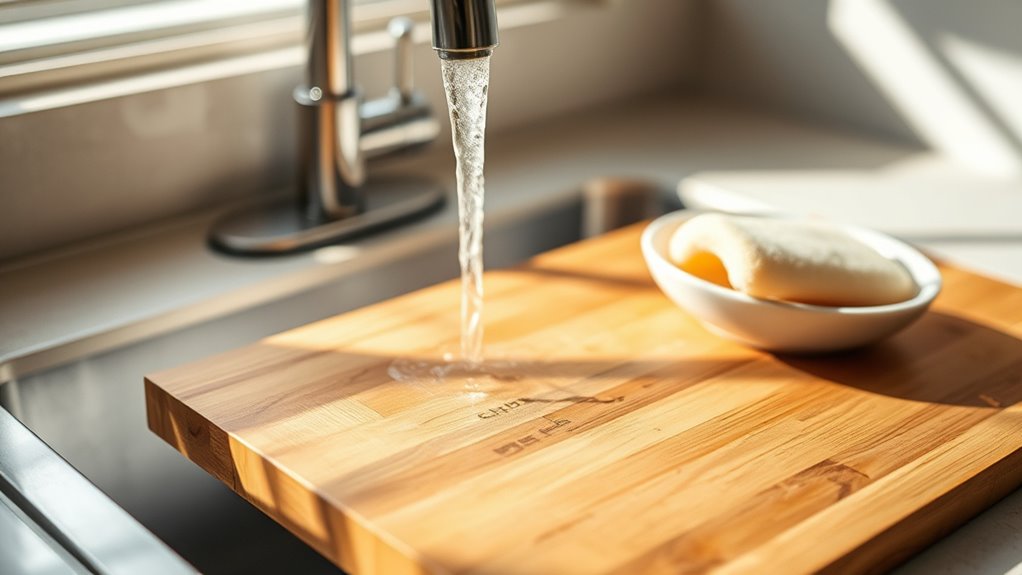
Because bamboo is a natural material with delicate fibers, you need to clean your cutting board gently to maintain its strength and appearance. Harsh scrubbing or soaking it in water for long periods can cause the fibers to swell, crack, or warp. Using mild soap and warm water with a soft sponge helps remove food residue without damaging the surface.
Avoid abrasive cleaners or steel wool, which can scratch and weaken the board. After washing, dry your bamboo cutting board immediately with a towel to prevent moisture absorption that leads to splitting. By handling it with care during cleaning, you’ll keep your bamboo board durable, hygienic, and looking great for years to come.
Gentle cleaning preserves its natural beauty and functionality.
How Bamboo Cutting Boards Compare to Other Cutting Board Materials in Dishwasher Safety
Taking care when cleaning your bamboo cutting board helps maintain its quality, but you might wonder how it stacks up against other materials when it comes to dishwasher safety. Unlike plastic or stainless steel boards that often withstand dishwasher cycles without warping or cracking, bamboo is more sensitive to heat and moisture.
Wood cutting boards, similar to bamboo, usually don’t hold up well in dishwashers either because the heat can cause splitting and drying. Plastic boards offer convenience since you can toss them in the dishwasher safely, but they may get knife marks faster.
Bamboo’s natural fibers and eco-friendliness make it popular, but its vulnerability to dishwasher damage means you’ll want to avoid that option if you want your board to last longer.
How to Properly Clean Bamboo Cutting Boards by Hand
To keep your bamboo cutting board in great shape, you’ll want to clean it gently by hand using mild soap and warm water. Avoid soaking it, then dry it thoroughly to prevent warping or cracking.
Regular maintenance, like oiling, will also help extend its life and keep it looking fresh.
Gentle Cleaning Techniques
Although bamboo cutting boards are durable, cleaning them gently by hand helps preserve their quality and longevity. Start by rinsing your board with warm water immediately after use to remove food particles. Use a mild dish soap and a soft sponge or cloth—avoid abrasive scrubbers that can damage the bamboo surface.
Gently scrub in the direction of the grain to prevent scratches. For tougher stains or odors, sprinkle coarse salt or baking soda on the board, then scrub lightly with a lemon half. Rinse thoroughly with warm water to remove any residue.
Avoid soaking your board or using harsh chemicals, as these can cause warping or cracking. By following these gentle cleaning techniques, you’ll keep your bamboo cutting board in great shape for years to come.
Drying And Maintenance
Once you’ve washed your bamboo cutting board, drying it properly is essential to prevent warping and cracking. Pat it dry immediately with a clean towel, then stand it upright or place it on a drying rack to allow air circulation on all sides. Avoid laying it flat, as trapped moisture can cause damage.
Never use a dishwasher or submerge your board in water for long periods. To maintain your board’s quality, regularly apply food-safe mineral oil or bamboo conditioner. This helps keep the wood hydrated and less prone to splitting.
Wipe off any excess oil and let it absorb overnight. With proper drying and regular maintenance, your bamboo cutting board will stay durable and attractive for years to come.
Cleaning Products Safe for Bamboo Cutting Boards
When cleaning your bamboo cutting board, choose gentle soaps that won’t damage the surface. Steer clear of harsh chemicals that can weaken the bamboo or leave harmful residues.
You can also try natural alternatives like vinegar or baking soda for a safe, effective clean.
Gentle Soap Recommendations
Because bamboo cutting boards require gentle care, choosing the right soap is essential to maintain their durability and appearance. You should opt for mild dish soaps with natural ingredients that won’t strip the board’s oils or cause cracking. Look for biodegradable, plant-based soaps free from dyes and strong fragrances.
These soaps clean effectively without compromising the bamboo’s integrity. When washing, use a soft sponge or cloth to apply the soap, avoiding abrasive scrubbers that can damage the surface. After rinsing thoroughly with warm water, dry your board immediately to prevent moisture absorption.
Avoid Harsh Chemicals
Harsh chemicals can quickly damage your bamboo cutting board by stripping away its natural oils and causing the surface to crack or discolor. To keep your board in great shape, avoid bleach, ammonia, and strong detergents. These substances break down the bamboo fibers and weaken the board’s structure, leading to premature wear.
Instead, choose mild dish soaps free from harsh additives. Even when using gentle soaps, rinse your board thoroughly to remove any residue that might harm the surface over time. Remember, protecting your bamboo cutting board means steering clear of abrasive cleaners and scrubbing pads, which can also scratch and degrade the wood.
Natural Cleaning Alternatives
Although bamboo cutting boards require gentle care, you can still keep them clean using natural alternatives that won’t damage the wood. Start with a simple mixture of mild dish soap and warm water for everyday cleaning. For deeper cleaning, sprinkle coarse salt over the board and rub it with half a lemon—this helps remove stains and odors naturally.
You can also use white vinegar diluted with water as a safe disinfectant. After cleaning, always dry your board thoroughly to prevent moisture damage. Avoid bleach, harsh detergents, or abrasive scrubbers that can harm the bamboo surface.
How to Dry Bamboo Cutting Boards to Prevent Warping and Cracking
When you finish washing your bamboo cutting board, drying it properly is key to maintaining its shape and durability. If you leave it wet or let it air-dry flat, it can warp or crack over time. Here’s how to dry it right:
- Wipe off excess water immediately with a clean towel.
- Stand the board upright or lean it against a wall to allow air circulation.
- Avoid stacking or placing it flat on damp surfaces.
- Keep it away from direct heat sources like radiators or sunlight.
- Let it dry completely before storing to prevent moisture buildup.
Signs Your Bamboo Cutting Board Is Damaged by Cleaning Mistakes
Proper drying helps keep your bamboo cutting board in good shape, but mistakes during cleaning can still cause damage. You might notice cracks or splits developing, especially if you soak it in water or expose it to the dishwasher’s heat. Warping is another common sign—your board may no longer lie flat on the countertop.
If your board feels rough or has splinters, it’s a clear indication that harsh scrubbing or abrasive cleaners have worn down its surface. Discoloration, such as dark spots or uneven patches, can also signal damage from improper cleaning methods or leftover moisture. Catching these signs early helps you avoid bacterial buildup and extends your board’s usability.
If you spot these issues, adjust your cleaning routine promptly to protect your bamboo cutting board.
Key Tips to Extend Your Bamboo Cutting Board’s Lifespan
To keep your bamboo cutting board in great shape, you’ll want to follow proper cleaning techniques and treat it regularly with oil. Avoid letting it sit in water or exposing it to excess moisture, which can cause damage.
These simple steps will help your board last much longer.
Proper Cleaning Techniques
Although bamboo cutting boards are sturdy, how you clean them greatly affects their durability. To keep your board in top shape, avoid the dishwasher, as excessive heat and water can cause warping or cracking.
Instead, follow these proper cleaning techniques:
- Wash with warm, soapy water immediately after use.
- Use a soft sponge or cloth to avoid scratching the surface.
- Rinse thoroughly and dry with a clean towel right away.
- Avoid soaking your board in water to prevent swelling.
- Disinfect occasionally with a vinegar solution or lemon juice.
Regular Oil Treatment
When you regularly oil your bamboo cutting board, you help maintain its moisture balance and prevent it from drying out or cracking. Applying food-grade mineral oil every few weeks creates a protective barrier that keeps the bamboo resilient and less prone to damage. Make sure the board is clean and dry before oiling.
Use a soft cloth or paper towel to rub the oil evenly across the surface, including the edges. Let it soak in for a few hours or overnight, then wipe off any excess. This simple step not only extends your board’s lifespan but also enhances its natural appearance.
Regular oil treatment keeps your bamboo cutting board in top shape, ensuring it stays durable and safe for all your food prep needs.
Avoid Excess Moisture
Keeping your bamboo cutting board well-oiled helps protect it, but managing moisture is just as important to preserving its quality. Excess water can cause the board to warp, crack, or develop mildew. To avoid these issues, you should handle moisture carefully.
Here’s how to keep your bamboo cutting board dry and in great shape:
- Dry it immediately after washing with a clean towel.
- Avoid soaking the board in water for long periods.
- Store it upright to allow air circulation on all sides.
- Never put your bamboo cutting board in the dishwasher.
- Use a well-ventilated area for drying to prevent dampness buildup.
When and How to Oil Your Bamboo Cutting Board
Since bamboo cutting boards can dry out and crack over time, you should oil them regularly to maintain their durability and appearance. Aim to oil your board once a month or whenever it starts looking dull or dry. Use food-grade mineral oil or a specialized bamboo board oil—avoid vegetable oils, as they can go rancid.
Start with a clean, dry board. Apply a generous amount of oil with a clean cloth or paper towel, rubbing it in the direction of the grain. Let the oil soak in for a few hours or overnight.
Wipe off any excess oil before using the board again. Regular oiling helps prevent moisture absorption, reduces cracking, and keeps your bamboo cutting board looking fresh and functional for years.
Best Ways to Keep Bamboo Cutting Boards Hygienic Without a Dishwasher
Although bamboo cutting boards aren’t dishwasher safe, you can still keep them hygienic with proper hand washing and maintenance. To guarantee your board stays clean and bacteria-free, follow these simple steps.
- Wash your board immediately after use with hot, soapy water.
- Scrub both sides thoroughly, then rinse well.
- Dry your board upright or on a rack to air dry completely.
- Occasionally disinfect by wiping with white vinegar or a lemon and salt mixture.
- Avoid soaking the board or leaving it in standing water to prevent warping and cracking.
Summary: Caring for Your Bamboo Cutting Board to Keep It Dishwasher Safe
Even though bamboo cutting boards aren’t designed to survive the dishwasher, you can extend their lifespan and maintain hygiene by following proper care routines. Always hand wash your board with warm, soapy water immediately after use, then dry it thoroughly. Avoid soaking it or leaving it wet, as moisture causes warping and cracking.
Regularly oil your board with food-safe mineral oil to keep it hydrated and prevent splitting. Sanitize it occasionally using a vinegar solution or diluted bleach to eliminate bacteria safely. Store your board in a dry, well-ventilated area to avoid mold growth.
Frequently Asked Questions
Can Bamboo Cutting Boards Be Used for Cutting Raw Meat?
You can use bamboo cutting boards for raw meat, but you’ll need to clean them thoroughly afterward to avoid bacteria buildup.
Always wash them with hot soapy water and dry completely to keep them safe and durable.
Are Bamboo Cutting Boards Safe for Use With Knives?
You can definitely use knives on bamboo cutting boards—they’re sturdy enough to handle your blade without falling apart like a medieval scroll. Just avoid super sharp or serrated knives to keep both board and blade in good shape.
How Heavy Are Bamboo Cutting Boards Compared to Plastic Ones?
You’ll find bamboo cutting boards heavier than plastic ones because bamboo is denser and sturdier. While plastic boards feel light and easy to handle, bamboo offers more stability but adds some weight to your kitchen tasks.
Do Bamboo Cutting Boards Have Natural Antibacterial Properties?
They say, “prevention is better than cure,” and you’d be glad to know bamboo cutting boards do have natural antibacterial properties.
You can trust them to resist bacteria growth better than many other materials, keeping your kitchen safer.
Can Bamboo Cutting Boards Be Customized or Engraved?
Yes, you can customize or engrave bamboo cutting boards easily. They take engraving well, letting you add names, logos, or designs for a personal touch.
Just make sure to use the right tools for clean results.
Conclusion
You might picture your bamboo cutting board, smooth and sturdy after a gentle hand wash, versus the warped, cracked mess left by a harsh dishwasher cycle. Choosing careful cleaning over convenience keeps your board strong and safe.
By washing it by hand, oiling it regularly, and avoiding the dishwasher’s heat, you’ll preserve its natural beauty and durability.
In the end, patience and care turn your bamboo board into a lasting kitchen companion, not a disposable chore. Remember, bamboo cutting boards are not dishwasher safe, and proper maintenance is key to their longevity.