
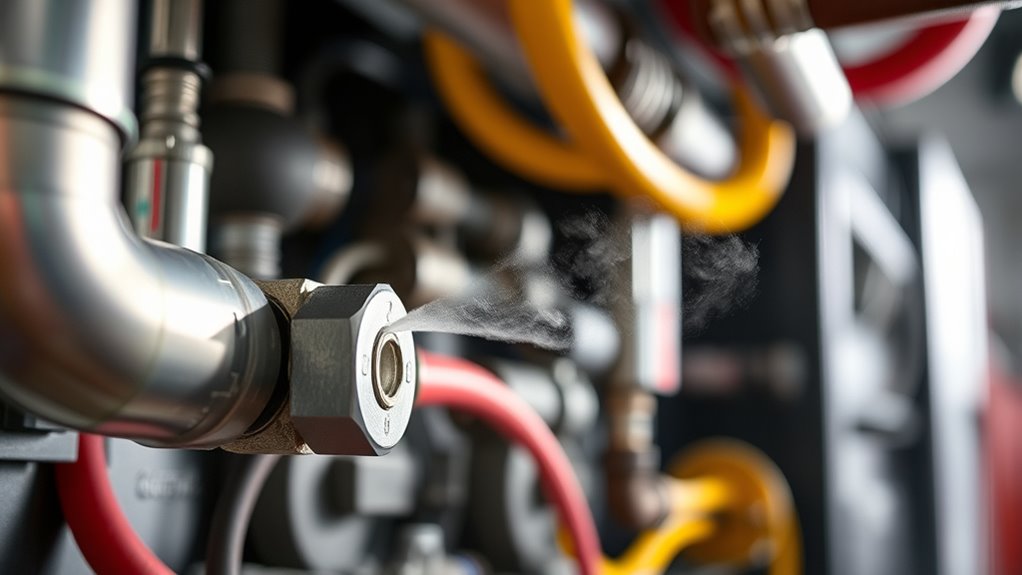
How Do Refrigerant Blends Leak From a System?
You’ll find refrigerant blends leaking mainly through weak seals, faulty connections, and imperfect installation like loose fittings or worn O-rings. These leaks often occur because of over-tightening or poor brazing, which can cause cracks that let gas escape.
Since blends contain various gases, leaks can alter their mix and make detection tricky. Understanding why leaks happen is crucial for maintaining system efficiency.
Knowing how to spot leaks and the best ways to fix or prevent loss can save time and costs. There’s plenty more to explore about refrigerant blend leaks, including common causes and effective repair methods.
Key Takeaways
- Refrigerant blends leak primarily at connection fittings, valve cores, compressor seals, brazed joints, and gasket or O-ring locations. Installation errors like improper tightening, faulty brazing, or damaged seals increase leak risks. Different gases in blends escape unevenly, complicating leak detection and altering blend composition.
- Leaks reduce system efficiency, increase compressor strain, and pose environmental and safety hazards. Regular maintenance, proper seal installation, and pressure monitoring help prevent and detect refrigerant blend leaks.
What Are Refrigerant Blends and How Do They Differ From Single Refrigerants
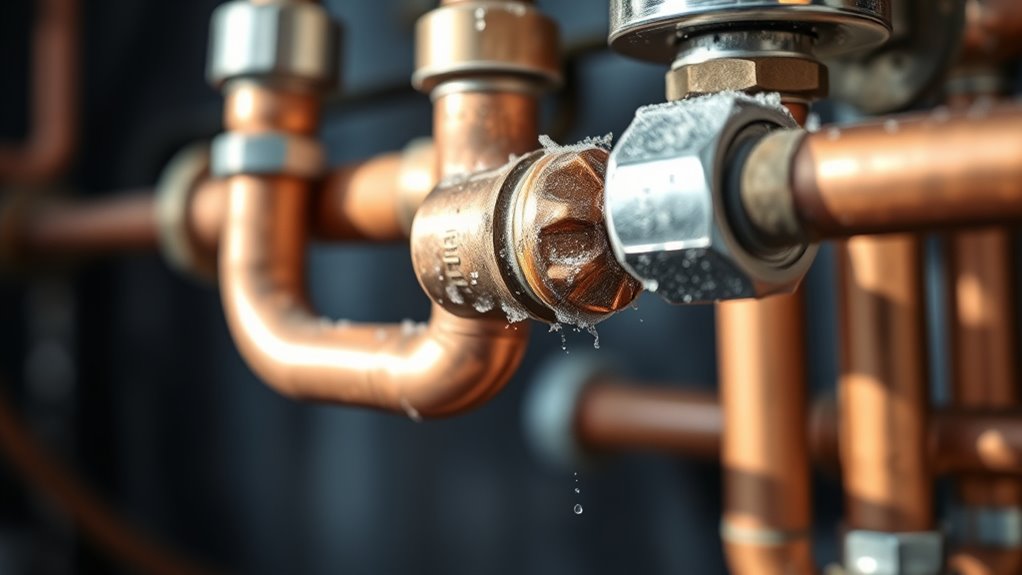
Although you might be familiar with single refrigerants, refrigerant blends combine two or more refrigerants to achieve specific performance characteristics. You’ll find these blends tailored to optimize pressure, temperature, and efficiency for different applications. Unlike single refrigerants, which have fixed properties, blends balance the strengths of each component to improve overall system performance and environmental impact.
When you use blends, you get better control over cooling capacity and energy usage. However, blends can behave differently under varying conditions, affecting how they circulate and sometimes how they leak. Understanding these differences helps you handle, maintain, and troubleshoot your system more effectively.
Common Leak Points in Refrigerant Blend Systems
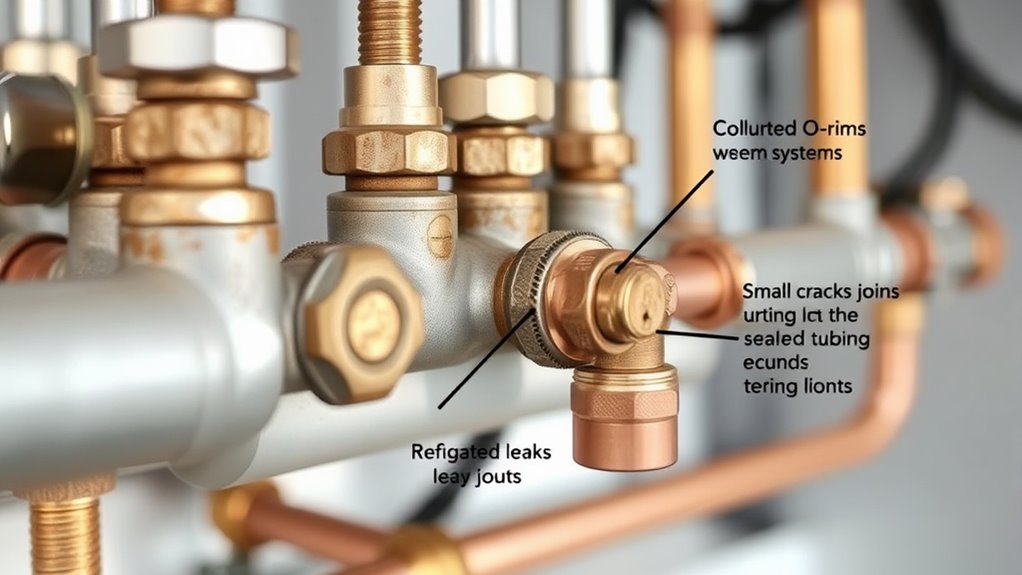
Since refrigerant blends behave differently than single refrigerants, you need to be aware of where leaks are most likely to occur in these systems. These blend-specific leak points can impact system efficiency and environmental safety.
Refrigerant blends require special attention to leak points for optimal efficiency and environmental protection.
- Connection Fittings and Joints: These are common weak spots where different metals or materials meet, increasing the chance of small leaks.
- Valve Cores and Schrader Valves: Frequent servicing can wear these parts, making them prone to leaks, especially under pressure changes.
- Compressor Seals: The seals around compressors endure continuous stress and temperature fluctuations, which can cause refrigerant blends to escape over time.
How Installation Mistakes Cause Refrigerant Blend Leaks
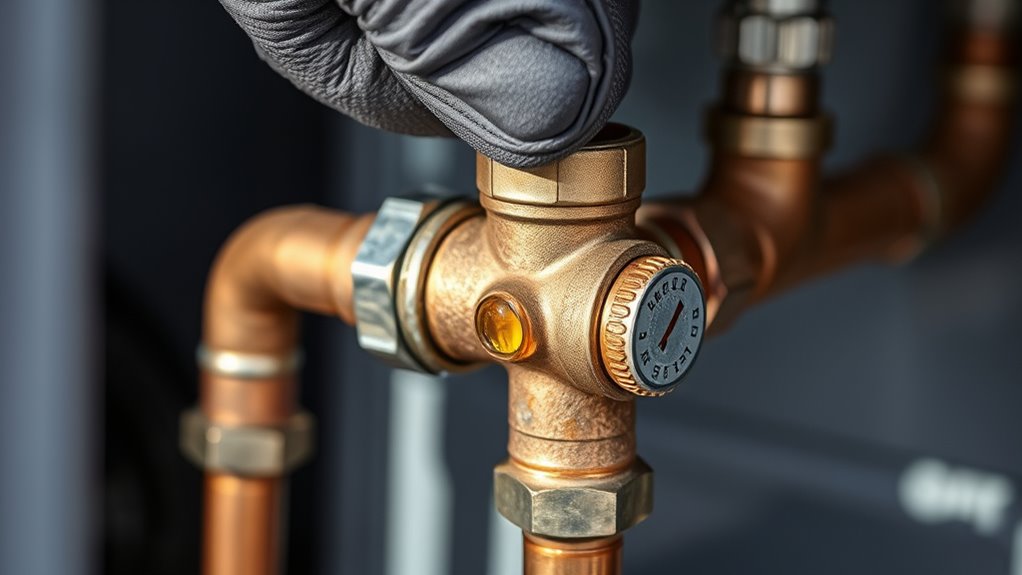
When you install refrigerant blend systems incorrectly, leaks often develop quickly and reduce system performance. If you fail to tighten fittings properly, tiny gaps can let refrigerant escape. Over-tightening, on the other hand, risks damaging seals and threads, creating new leak points.
Using incompatible or worn-out tools can scratch or deform connection surfaces, compromising their seal integrity. Skipping proper evacuation allows moisture or air inside, which can corrode components and cause leaks over time. You also need to guarantee all joints are correctly brazed or soldered without cracks or voids.
Neglecting to inspect and replace faulty gaskets or O-rings during installation sets the stage for leaks. By paying close attention to these details, you can avoid premature refrigerant loss and maintain system efficiency.
Why Finding Refrigerant Blend Leaks Is Hard
Because refrigerant blends consist of multiple gases, detecting leaks can be tricky for you. Each gas behaves differently, which complicates the process of pinpointing where the leak occurs. You might find yourself confused by inconsistent results from common detection tools.
Here’s why it’s so challenging:
- Varied Detection Sensitivity: Some leak detectors respond better to certain gases in the blend, missing others entirely.
- Gas Separation: When a leak happens, lighter gases escape faster, altering the blend’s composition and making detection unreliable.
- Equipment Calibration: You must frequently recalibrate your tools for specific blends, or you risk inaccurate readings.
Understanding these factors helps you approach refrigerant blend leaks with better strategies and patience.
What Happens When Refrigerant Blends Leak
How does a refrigerant blend leak impact your system’s performance and safety? When refrigerant blends leak, your system loses cooling efficiency, leading to higher energy use and potential compressor damage.
Additionally, leaks can unbalance the blend’s composition, reducing its effectiveness and causing uneven pressures. You also face safety risks like increased flammability or toxicity, depending on the blend.
Plus, environmental harm results from escaping refrigerants contributing to ozone depletion or global warming.
| Impact Area | Effect |
|---|---|
| Performance | Reduced cooling capacity and efficiency |
| System Health | Compressor strain and possible failure |
| Safety | Increased risk of fire or health hazards |
| Environment | Contribution to ozone depletion & GWP |
Best Tools and Techniques to Detect Refrigerant Blend Leaks
Detecting refrigerant blend leaks quickly helps you maintain system performance and safety while minimizing environmental impact.
To catch leaks effectively, you need the right tools and techniques tailored for blends, as they can behave differently than single-component refrigerants.
- Electronic Leak Detectors: Use detectors calibrated for blends; they sense trace amounts with high sensitivity and pinpoint leaks quickly.
- Ultraviolet (UV) Dye: Introduce UV dye into the system; leaks glow under UV light, making visual inspection straightforward.
- Bubble Solution: Apply a soap-based bubble solution to joints and suspected areas; bubbles form at leak points, offering a simple, cost-effective check.
How to Repair and Seal Refrigerant Blend Leaks
Now that you know how to detect refrigerant blend leaks, it’s time to focus on fixing them. You’ll need to choose the right sealant and follow a clear repair process to guarantee the leak is properly sealed.
Let’s walk through the best methods and materials to get your system running smoothly again.
Leak Detection Methods
Since refrigerant blends can leak from various components, pinpointing the exact source quickly is crucial to prevent system damage and environmental harm. You’ll want to use reliable detection methods to find leaks efficiently.
Here are three effective techniques:
- Electronic Leak Detectors – These devices sense refrigerant gases in the air, alerting you to the leak location with high sensitivity.
- Ultraviolet (UV) Dye – Adding UV dye to the system lets you spot leaks under UV light, making even small leaks visible.
- Soap Bubble Test – Applying a soap solution to suspected areas produces bubbles if refrigerant is escaping, confirming the leak spot.
Using these methods helps you address leaks promptly and maintain system integrity.
Effective Sealant Types
Although repairing refrigerant blend leaks can be challenging, choosing the right sealant makes the process much more effective. You’ll want to use sealants designed specifically for HVAC systems, such as anaerobic sealants that cure in the absence of air. These work well on threaded connections and small cracks.
For larger leaks or damaged components, epoxy-based sealants offer strong, durable bonds. Additionally, silicone-based sealants provide flexibility and resistance to temperature changes, making them ideal for seals exposed to vibration. Avoid general-purpose adhesives, as they often break down when exposed to refrigerants.
Selecting a sealant compatible with the refrigerant blend and system materials guarantees a longer-lasting repair and prevents further leaks. Always check manufacturer recommendations to match the sealant to your system’s specific needs.
Step-by-Step Repair Process
Before you start repairing refrigerant blend leaks, gather all necessary tools and materials, including the appropriate sealant, leak detector, and safety equipment. Follow these steps to effectively seal the leak:
- Locate the Leak: Use your leak detector to precisely identify the leak’s source in the system.
- Prepare the Area: Clean the affected area thoroughly to ensure proper adhesion of the sealant.
- Apply Sealant: Carefully apply the recommended sealant according to the manufacturer’s instructions, ensuring full coverage of the leak.
After sealing, monitor the system under normal operating conditions to confirm the repair’s success. Always wear safety gear during the entire process, and if the leak persists, consult a professional technician.
This step-by-step approach helps maintain system efficiency and prevents further refrigerant loss.
How to Prevent Leaks and Keep Refrigerant Blend Systems Efficient
You can prevent leaks and keep your refrigerant blend system running efficiently by scheduling regular maintenance checks and ensuring seals are properly installed. Always monitor system pressure to catch issues early before they become costly.
Taking these steps helps maintain performance and extend your system’s lifespan.
Regular Maintenance Checks
When you perform regular maintenance checks on refrigerant blend systems, you catch potential leaks early and keep the system running efficiently. These checks are essential to avoid costly repairs and environmental harm.
Focus on these key steps:
- Inspect connections and joints for any signs of wear, corrosion, or damage that could cause leaks.
- Use leak detection tools such as electronic detectors or UV dyes to identify even the smallest leaks quickly.
- Monitor system pressure and performance regularly to spot anomalies indicating a leak or inefficiency.
Proper Seal Installation
Regular maintenance checks help spot leaks early, but preventing leaks starts with how you install seals in refrigerant blend systems. When installing seals, always choose materials compatible with the refrigerant blend to avoid chemical degradation. Make certain sealing surfaces are clean and free from dirt or oil, as contaminants can compromise the seal’s effectiveness.
Use the correct torque specifications to avoid over-tightening, which can damage seals, or under-tightening, which can allow leaks. Inspect seals for any signs of wear or imperfections before installation. Finally, verify seals fit precisely without gaps or misalignments.
Monitor System Pressure
How often do you check your system’s pressure? Monitoring this regularly is essential to prevent leaks and keep your refrigerant blend system efficient. Pressure fluctuations can signal leaks, blockages, or other issues that compromise performance.
To stay on top of it, follow these steps:
- Use accurate gauges: Invest in reliable pressure gauges suitable for your specific refrigerant blend.
- Establish a routine: Check system pressure at consistent intervals—daily or weekly, depending on system usage.
- Record and compare readings: Keep a log of pressure data to spot trends or sudden changes indicating possible leaks.
Frequently Asked Questions
Are Refrigerant Blends Environmentally Safer Than Single Refrigerants?
You’ll find refrigerant blends often reduce environmental impact compared to single refrigerants, but they’re not always safer. You should check specific blend compositions and regulations to verify they meet environmental safety standards in your application.
How Do Refrigerant Blends Impact System Energy Consumption?
You’ll find refrigerant blends can improve your system’s energy efficiency by optimizing thermodynamic properties, but improper blends or leaks may increase consumption.
Choosing the right blend guarantees better performance and lower energy costs for your system.
Can Refrigerant Blends Be Recycled or Reused After Leaks?
Yes, you can recycle and reuse refrigerant blends after leaks, but you’ll need proper recovery equipment and testing to guarantee purity.
Contaminated blends might require reprocessing or disposal to meet safety and environmental standards.
What Regulations Govern the Use of Refrigerant Blends?
You follow EPA rules, you follow SNAP listings, you follow local laws.
You must handle refrigerant blends carefully, report leaks promptly, and guarantee proper disposal.
These regulations protect the environment and keep your system compliant.
Do Refrigerant Blends Affect System Cooling Capacity?
Yes, refrigerant blends can affect your system’s cooling capacity. Their unique properties might improve efficiency or cause slight performance changes.
You’ll need to verify compatibility and proper charge to maintain ideal cooling.
Conclusion
When you think about refrigerant blends leaking, remember that even a tiny leak—just the size of a pinhole—can release up to 10% of the system’s refrigerant annually. That’s like losing a small balloon’s worth of gas every year without noticing.
By understanding common leak points, using the right tools, and following proper installation and maintenance, you can keep your system efficient and avoid costly, invisible losses.
Proper leak detection and timely repair are essential to maintain system performance. Preventing leaks helps protect your equipment and the environment. Always prioritize leak prevention, detection, and repair when working with refrigerant blends.