How to Remove Rust From Cast Iron Skillet
If your cast iron skillet has rust, removing it properly is essential to restore its cooking performance and longevity. Rust can develop from moisture exposure, but with the right steps, you can bring your skillet back to life. Using common household items and a bit of effort, you can effectively remove rust from a cast iron skillet and keep it in great condition for years.
Start by scrubbing the rust with steel wool or a stiff brush, using some coarse salt to help lift the rust.
For stubborn rust spots, soak the skillet in white vinegar for up to eight hours, then scrub again.
After scrubbing, rinse the skillet thoroughly and dry it immediately.
Use the stove or oven on low heat to remove any remaining moisture.
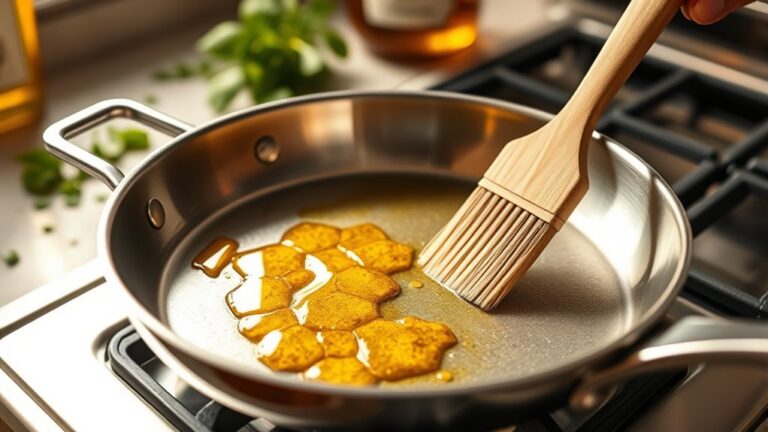
Once dry, apply a thin layer of oil to the skillet and heat it to re-season the surface.
Keep following these steps regularly, and you’ll soon have a smooth, rust-free skillet ready for cooking.
Key Takeaways
- Scrub rust spots with steel wool or a stiff nylon brush, using coarse salt as a mild abrasive for better cleaning.
- Soak the skillet in white vinegar for up to 8 hours to loosen heavy rust patches before scrubbing.
- Rinse thoroughly and dry immediately with a cloth, then heat on the stove or in the oven at 200°F for 10-15 minutes.
- Apply a thin layer of cooking oil after drying to re-season and protect the skillet from future rust.
- Store the skillet in a dry, ventilated area, avoiding moisture buildup to prevent rust from recurring.
How to Spot Rust on Your Cast Iron Skillet
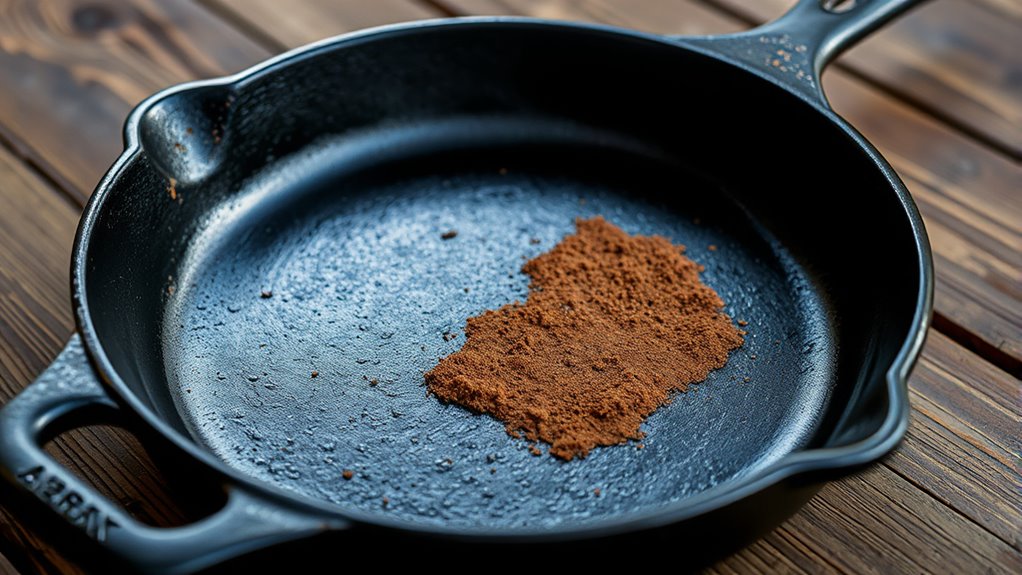
Although cast iron skillets are known for their durability, they can still develop rust if not properly cared for. You’ll want to regularly inspect your skillet’s surface for any signs of discoloration or texture changes. Rust usually appears as reddish-brown patches that feel rough or flaky when you run your fingers over them.
These spots can vary in size, showing up in small clusters or covering larger areas. Pay close attention to the edges, handle, and any crevices, where moisture often lingers. If you notice any dull, powdery, or uneven patches instead of the skillet’s usual smooth, black finish, that’s a clear indicator rust has started forming.
Catching rust early makes it easier for you to restore your skillet’s quality and prevent further damage.
Why Rust Forms on Cast Iron Skillets
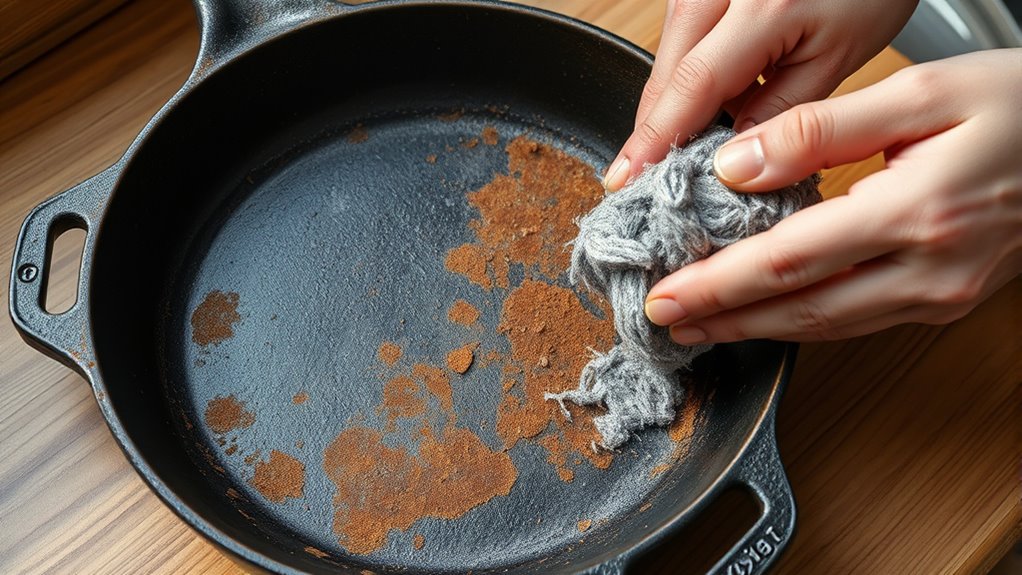
When moisture and oxygen come into contact with your cast iron skillet, rust starts to form as a natural chemical reaction. This happens because cast iron contains iron atoms that react with oxygen and water, creating iron oxide—better known as rust.
If you leave your skillet wet or store it in a humid environment, rust can develop quickly. Scratches or worn seasoning expose bare metal, making it easier for rust to take hold.
Here’s a quick look at why rust forms:
| Factor | Effect on Cast Iron | Prevention Tip |
|---|---|---|
| Moisture | Accelerates rust formation | Dry skillet thoroughly |
| Oxygen | Reacts with iron | Store in dry, ventilated area |
| Damaged Seasoning | Exposes metal surface | Regularly re-season skillet |
Understanding these helps you protect your skillet effectively.
Tools and Supplies Needed to Remove Rust
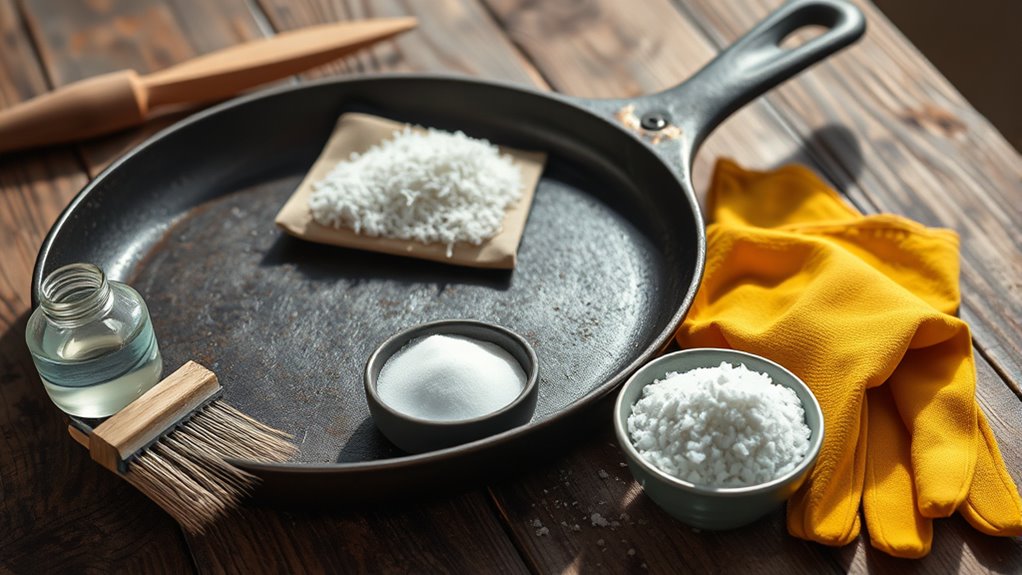
Knowing why rust forms helps you understand what tools and supplies you’ll need to remove it effectively. To tackle rust on your cast iron skillet, gather a few essentials: steel wool or a stiff nylon brush for scrubbing, coarse salt as a mild abrasive, and white vinegar to break down heavy rust.
Have some mild dish soap on hand for cleaning afterward. You’ll also need clean water for rinsing and a dry cloth or paper towels to thoroughly dry the skillet.
Finally, keep some cooking oil ready for re-seasoning after rust removal. These tools and supplies work together to restore your skillet’s surface, preparing it for the next steps in rust removal and seasoning, ensuring it stays rust-free and ready for cooking.
How to Remove Surface Rust by Scrubbing
Since surface rust is usually light and easy to tackle, you can start by scrubbing your cast iron skillet with steel wool or a stiff nylon brush. Begin by rinsing the skillet with warm water to loosen any debris. Then, scrub the rusty spots firmly but carefully, focusing on areas where rust is visible.
Avoid soaking the skillet during this step to prevent further rusting. Keep scrubbing until the rust flakes off and the bare metal appears. Once you’ve removed the surface rust, rinse the skillet thoroughly and dry it completely with a clean towel or by heating it briefly on the stove.
This method effectively handles minor rust and prepares your skillet for seasoning or further care.
How to Use Vinegar Soaks to Remove Stubborn Rust
If scrubbing alone doesn’t fully remove the rust, vinegar soaks can help break down stubborn patches. Start by mixing equal parts white vinegar and water in a container large enough to submerge your skillet. Soak the skillet for up to 8 hours, but check it periodically to avoid damaging the cast iron.
After soaking, scrub the skillet with a stiff brush or steel wool to lift the loosened rust.
Keep these tips in mind:
- Don’t soak for more than 8 hours to prevent weakening the iron.
- Rinse thoroughly with water immediately after soaking.
- Dry the skillet completely and apply a thin layer of oil to prevent new rust.
This method lets you tackle tough rust spots effectively and safely.
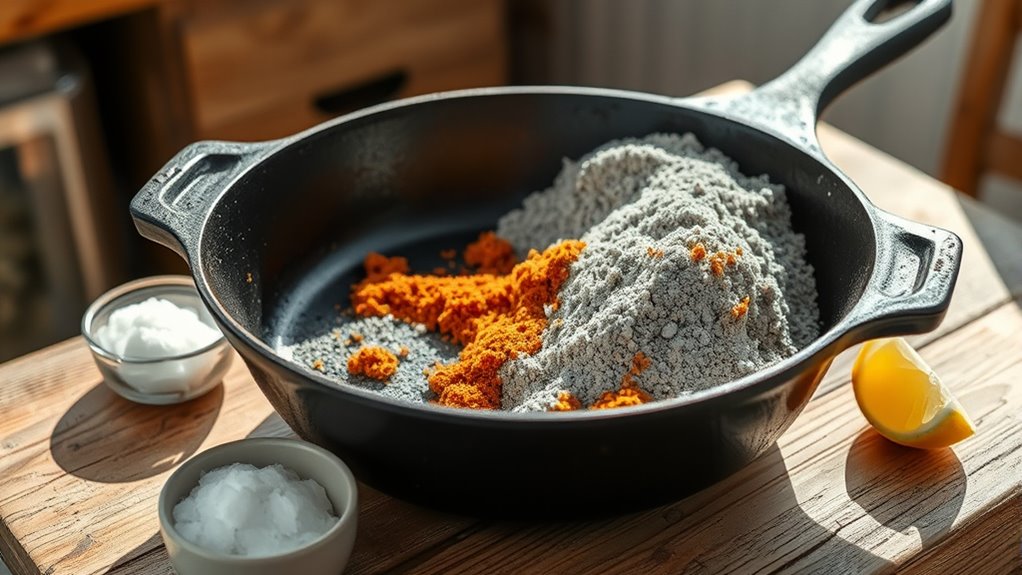
Removing Rust With Baking Soda and Salt
When vinegar soaks aren’t your preferred method, you can turn to baking soda and salt to remove rust from your cast iron skillet. Start by making a thick paste with equal parts baking soda and salt mixed with a little water. Apply this paste generously over the rusted areas.
Let it sit for about 30 minutes to loosen the rust. Then, use a scrub brush or a non-metallic scrub pad to scrub away the rust gently. The abrasive nature of salt combined with baking soda’s mild alkalinity helps break down rust without damaging the skillet.
Rinse it thoroughly with warm water and dry it immediately to prevent new rust from forming. Finally, apply a thin layer of oil to restore the skillet’s protective seasoning.
When and How to Use Steel Wool for Rust Removal
Although steel wool can be highly effective at removing rust from a cast iron skillet, you should use it carefully to avoid damaging the surface. Use steel wool when rust is stubborn and won’t come off with gentler methods like baking soda or salt. Choose fine or extra-fine steel wool to minimize scratching.
Here’s how to use steel wool properly:
- Wet the skillet and steel wool to reduce abrasion.
- Gently scrub in circular motions, focusing on rusty spots.
- Rinse frequently to check progress and avoid over-scrubbing.
How to Dry Your Skillet to Prevent Rust Returning
Since moisture is the main cause of rust, you need to dry your cast iron skillet thoroughly right after washing it. Start by wiping it with a clean, dry cloth or paper towel.
Then, place the skillet on low heat for a few minutes to evaporate any remaining moisture. Don’t skip this step, as even small amounts of water can cause rust to return quickly.
Here’s a quick guide to drying your skillet effectively:
| Drying Method | Duration | Tips |
|---|---|---|
| Wiping with cloth | 1-2 minutes | Use lint-free cloth |
| Heating on stove | 3-5 minutes | Low to medium heat |
| Oven drying | 10-15 minutes | Set oven to 200°F (93°C) |
Following these steps prevents rust and keeps your skillet ready for use.
How to Season Your Cast Iron Skillet After Rust Removal
Now that your skillet is rust-free and dry, it’s time to season it properly. Start by prepping the surface, then apply a thin, even layer of oil all over.
Finally, bake the skillet to create a strong, non-stick coating that’ll protect it from future rust.
Preparing The Skillet Surface
Once you’ve removed the rust, it’s crucial to prepare the skillet surface properly before seasoning. This step guarantees the oil bonds well, creating a durable, non-stick layer. Start by thoroughly cleaning the skillet with warm water and mild soap to remove any residual rust particles and dirt.
Next, dry it completely—moisture left on the surface can cause new rust. Use a clean cloth or paper towel, and consider heating the skillet on low heat to evaporate any remaining water. Finally, smooth out the surface by lightly sanding with fine steel wool or a non-abrasive scrubber to remove any rough spots or leftover rust traces.
This preps the skillet for an even, long-lasting seasoning.
- Clean thoroughly with soap and water
- Dry completely, using heat if needed
- Lightly sand to smooth the surface
Applying Oil Evenly
Applying oil evenly is key to building a strong, non-stick seasoning on your cast iron skillet. After removing rust and drying the skillet thoroughly, pour a small amount of oil onto the surface.
Use a cloth or paper towel to spread the oil in thin, uniform layers, covering every inch, including the sides and handle. Avoid pooling or thick spots, which can cause uneven seasoning.
Here’s a quick guide:
| Step | Tool Used | Tip |
|---|---|---|
| Apply Oil | Paper Towel | Use a small amount |
| Spread Thinly | Cloth | Cover all surfaces |
| Remove Excess | Clean Towel | Wipe until barely shiny |
This method guarantees your skillet is ready for the next seasoning step without sticky residue.
Baking To Harden
After spreading the oil evenly over your skillet, the next step is to bake it to harden the seasoning. This process creates a durable, non-stick coating by polymerizing the oil onto the cast iron surface. Preheat your oven to 450°F (230°C), place the skillet upside down on the oven rack, and put a foil-lined tray underneath to catch any drips.
Bake it for one hour, then turn off the oven and let the skillet cool inside to room temperature. This slow cooling helps the seasoning bond better.
Remember these tips:
- Use oils with a high smoke point, like flaxseed or vegetable oil.
- Avoid overheating to prevent damage.
- Repeat the baking process several times for a stronger coating.
This guarantees your skillet stays rust-free and cooking-ready.
Tips for Maintaining Your Skillet’s Non-Stick Surface
To keep your cast iron skillet’s non-stick surface in top shape, you’ll want to season it properly and avoid harsh detergents when cleaning. Make sure to apply a thin layer of oil regularly to protect the seasoning.
These simple steps will help maintain its smooth, reliable cooking surface.
Proper Seasoning Techniques
Although seasoning your cast iron skillet may seem straightforward, mastering proper techniques guarantees you maintain its prized non-stick surface. Start by applying a thin, even layer of oil—flaxseed, vegetable, or canola work well—over the entire skillet, including the handle. Next, heat it upside down in the oven at 450°F for an hour, placing foil underneath to catch drips.
Let it cool completely before storing.
Remember these key points for effective seasoning:
- Use a thin layer of oil to avoid sticky buildup.
- Season regularly, especially after rust removal or deep cleaning.
- Always cool the skillet naturally to allow the oil to polymerize properly.
Following these steps will keep your skillet smooth, rust-free, and ready for cooking.
Cleaning Without Harsh Detergents
When you clean your cast iron skillet without harsh detergents, you protect its natural seasoning and maintain a reliable non-stick surface. Instead of soap, use hot water and a stiff brush or non-metal scrubber to remove food residue. If stuck-on bits persist, simmer water in the skillet for a few minutes to loosen them.
Avoid soaking your skillet, as prolonged exposure to water can cause rust. After cleaning, dry it thoroughly with a towel or on low heat to eliminate moisture. Steering clear of harsh detergents preserves the oil layer that builds the skillet’s seasoning.
Regular Oil Application
Since cast iron skillets rely on a seasoned surface for their non-stick properties, regularly applying oil is essential to keep that layer intact and prevent rust. After each use and cleaning, make sure your skillet is completely dry before applying a thin coat of oil.
This simple step seals the skillet’s surface, maintaining its seasoning and protecting it from moisture.
Here are some tips for oil application:
- Use a high-smoke point oil like flaxseed, vegetable, or canola oil.
- Apply a small amount using a cloth or paper towel, spreading it evenly.
- Heat the skillet briefly on the stove to bond the oil to the surface, then let it cool.
Best Ways to Store Your Cast Iron Skillet to Avoid Rust
Where you store your cast iron skillet can make all the difference in preventing rust. Always keep it in a dry, well-ventilated area to avoid moisture buildup. If you stack your skillet with other cookware, place a paper towel or cloth between them to absorb any humidity and protect the seasoning.
Avoid storing it with the lid tightly sealed, as trapped moisture encourages rust. After cleaning and oiling, let your skillet cool completely before storing to prevent condensation inside. If you live in a humid climate, consider adding a silica gel packet where you store your skillet to keep moisture at bay.
Frequently Asked Questions
Can Rust Removal Damage My Cast Iron Skillet?
Rust removal won’t damage your cast iron skillet if you’re careful. Avoid harsh abrasives or chemicals; instead, gently scrub with steel wool and re-season afterward to protect the surface and keep your skillet in great shape.
Is It Safe to Cook Immediately After Rust Removal?
Think of your skillet as a phoenix; you can cook immediately after removing rust, but only once you’ve seasoned it properly.
This rebirth creates a safe, non-stick surface, protecting your food and skillet alike.
How Often Should I Season My Skillet to Prevent Rust?
You should season your skillet every few uses or whenever food starts sticking or it looks dull. Regular seasoning builds a strong, non-stick layer, preventing rust and keeping your cast iron in great shape over time.
Can I Use Commercial Rust Removers on Cast Iron?
You absolutely can’t douse your cast iron in commercial rust removers—they’re like acid rain for your skillet! Instead, stick to gentle scrubbing with steel wool and seasoning; your pan deserves care, not chemical torture.
Does Cooking Acidic Food Cause Rust on Cast Iron?
Yes, cooking acidic food can cause rust on your cast iron skillet if it’s not properly seasoned or dried. Acid breaks down the seasoning layer, exposing the iron to moisture and air, which leads to rust.
Conclusion
Removing rust from your cast iron skillet might seem tough, but it’s easier than you think—just like rediscovering an old friend you thought you’d lost. By scrubbing, soaking, drying, and seasoning, you’re not only restoring your skillet but also preserving memories in every meal you cook.
Keep it well-maintained and stored properly, and it’ll serve you faithfully for years. Sometimes, a little effort brings back something truly priceless. Regular care and proper seasoning are key to preventing rust and ensuring your cast iron skillet stays in great condition.