Are Glass Cutting Boards Bad for Knives?
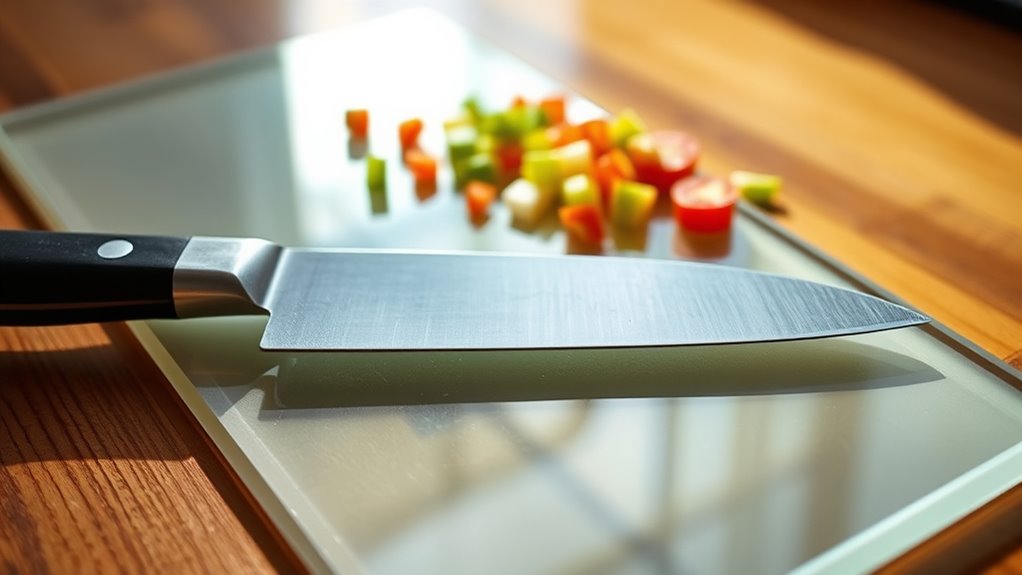
Yes, glass cutting boards are generally bad for your knives because their hard, unyielding surface quickly dulls blades and causes tiny chips or cracks along the edge.
Unlike softer wood or plastic boards, glass doesn’t absorb impact, so your knives grind directly against a tough material. This harsh contact shortens their lifespan and requires more frequent sharpening.
If you want to keep your knives sharp longer and understand why certain surfaces matter, it’s important to consider cutting board choices carefully.
Exploring the differences between materials like wood, plastic, and glass can help you make informed decisions. Proper maintenance also plays a key role in preserving your knives’ performance.
Key Takeaways
- Glass cutting boards dull knives faster due to their hard, unyielding surface that causes microscopic chips and edge damage.
- Unlike wood or plastic, glass offers no impact absorption, increasing blade wear and shortening knife lifespan.
- Ceramic knives are especially prone to chipping or cracking when used on glass cutting boards.
- Glass boards are hygienic and durable but require more frequent sharpening to maintain knife sharpness.
- For better knife preservation, softer surfaces like hardwood or plastic cutting boards are recommended over glass.
Effects of Glass Cutting Boards on Knife Sharpness
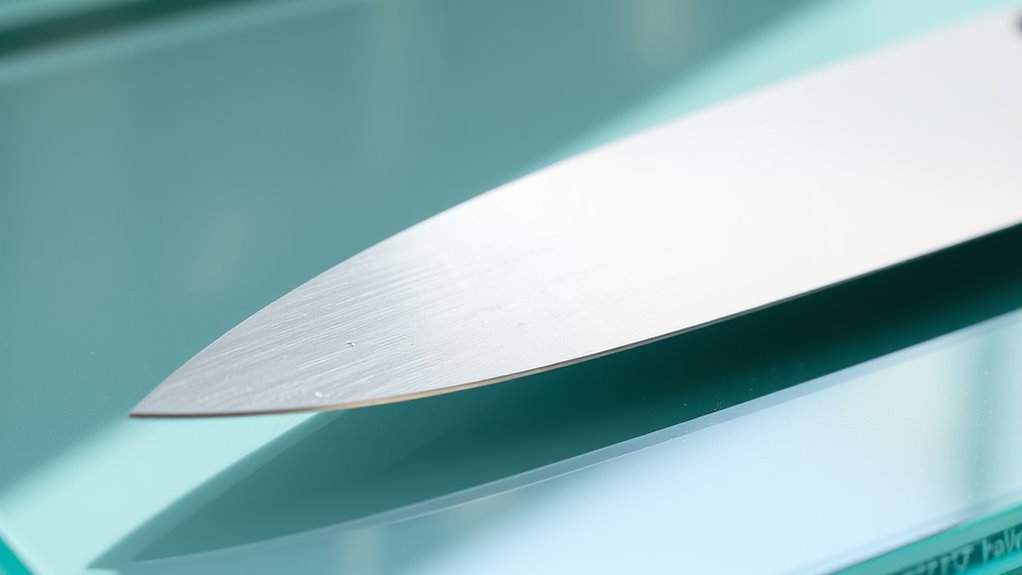
Although glass cutting boards look sleek and are easy to clean, they can quickly dull your knives. When you use your knife on a glass surface, the blade’s edge wears down faster because glass doesn’t give or absorb impact like softer boards. You might notice your knives losing their sharpness sooner, requiring more frequent sharpening.
This happens because the hard glass forces the blade’s edge to grind against a tough, unyielding surface, which chips away at the metal. While glass boards are hygienic and stain-resistant, they don’t protect your knives the way wood or plastic do. If you want your knives to stay sharper longer, you’ll need to be mindful about the cutting surface you use, since glass boards aren’t the best option for preserving blade sharpness.
Why Glass Boards Dull Knives Faster Than Wood or Plastic
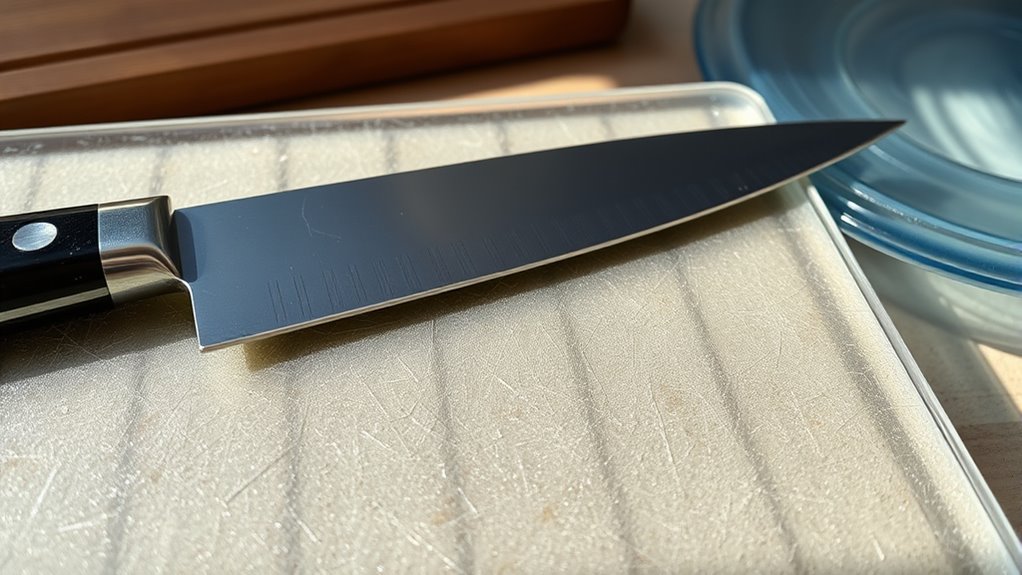
When you cut on a glass board, you’re working against a surface much harder than wood or plastic. This hardness causes your knife’s edge to wear down faster with each slice.
Understanding how this edge wears can help you protect your knives better.
Hardness Comparison Impact
Because glass cutting boards are much harder than knife blades, they cause your knives to dull faster than wood or plastic boards do. When you cut on glass, your knife’s edge repeatedly hits a very solid, unyielding surface. Unlike softer wood or plastic, glass doesn’t absorb any impact, so your blade takes the full force, accelerating wear.
Wood and plastic have some give, cushioning your knife and preserving its sharpness longer. Since glass is rigid and abrasive, it grinds down the metal edge more quickly with every slice. If you want to keep your knives sharp, you’ll need to sharpen them more often after using glass boards, or better yet, choose softer surfaces that protect your blades from unnecessary damage.
Edge Wear Mechanism
The hardness difference between glass cutting boards and knife blades sets the stage for how the blade edge wears down over time. When you slice on glass, the blade’s fine edge hits a surface much harder than itself. This causes tiny chips and microscopic fractures along the edge, which quickly dull the knife.
Unlike wood or plastic, which have some give and are softer than steel, glass doesn’t absorb the impact. Instead, it grinds against the blade’s edge, accelerating wear. You’ll notice your knife losing sharpness faster, requiring more frequent honing or sharpening.
Science Behind Blade Dulling on Glass Surfaces
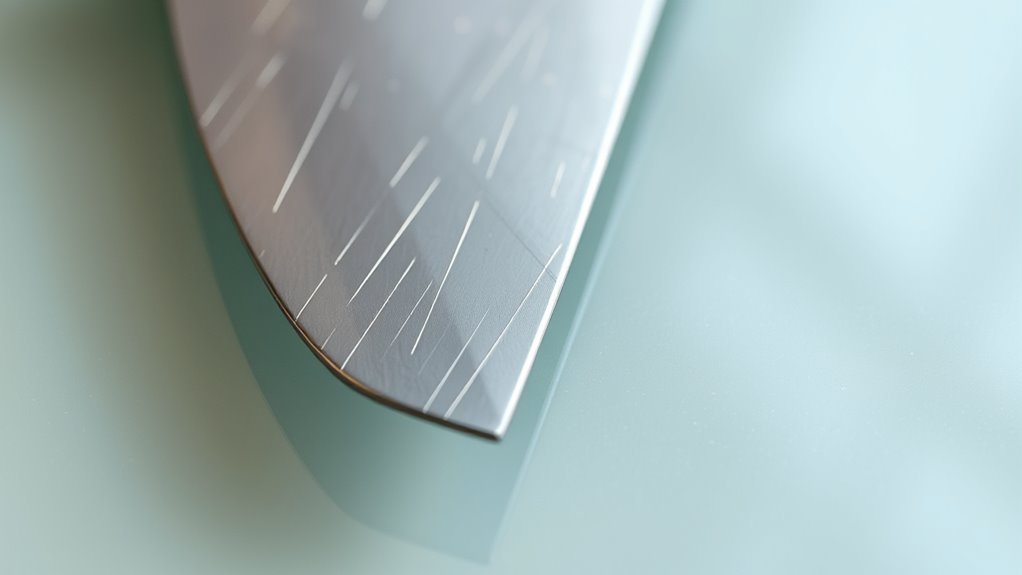
Although glass cutting boards might seem convenient, they can quickly wear down your knives due to their hard, unforgiving surface. When you cut on glass, the blade’s edge encounters a material much harder than wood or plastic. This hardness causes microscopic chips and scratches along the blade’s edge every time you slice.
These tiny imperfections accumulate, dulling your knife faster than softer surfaces would. Unlike softer cutting boards, glass doesn’t absorb impact or allow the blade to slightly sink in, so the full force pushes directly against the steel edge. Over time, the repeated edge trauma shortens the lifespan of your knife’s sharpness, forcing you to sharpen more often.
Understanding this science helps you make better choices for preserving your knives.
Comparing Knife Damage: Glass vs. Wood vs. Plastic
When you use different cutting boards, the hardness and surface texture affect how quickly your knives dull. Glass boards are tough on edges, while wood and plastic offer gentler surfaces that help maintain sharpness longer.
Let’s compare how each material impacts your knife’s longevity.
Hardness Impact On Blades
Since glass cutting boards are much harder than wood or plastic, they tend to dull your knives faster. When you cut on glass, the blade’s edge encounters a tough surface that causes microscopic chips and dulling. In contrast, wood and plastic offer a softer cutting surface, allowing your knife’s edge to stay sharper longer.
Wood fibers and plastic slightly give way under pressure, reducing wear on the blade. You might notice your knives needing more frequent sharpening after using glass boards, while wood and plastic help preserve the blade’s integrity. If you want to protect your knives, choosing softer cutting boards can make a significant difference in maintaining their sharpness and prolonging their lifespan.
Surface Texture Differences
You’ve probably noticed that knife damage varies depending on the cutting board surface. Glass boards have a smooth but very hard texture that doesn’t give way when your knife strikes. This causes your blade to dull quickly because the edge hits a tough, unyielding surface.
Wood boards, on the other hand, have a softer, fibrous texture that absorbs some impact, letting your knife glide while reducing edge wear. Plastic boards fall somewhere in between; they’re firmer than wood but still offer some give, helping preserve your blade better than glass. When you choose a cutting board, consider how its surface texture will affect your knives.
A softer, slightly textured board reduces damage, while hard, slick surfaces like glass accelerate dulling.
Longevity Of Knife Edges
Although glass cutting boards may look sleek and modern, they can seriously shorten the lifespan of your knife edges. Glass is extremely hard and unforgiving, causing your knife to dull quickly with every cut.
In contrast, wood cutting boards offer a softer surface that absorbs some impact, helping your edges stay sharp longer. Plastic boards fall somewhere in between—they’re gentler than glass but not as kind as wood.
If you want to preserve your knife’s edge, avoid glass and opt for wood or high-quality plastic. These materials reduce the need for frequent sharpening, saving you time and maintaining performance.
Signs Your Knife Is Dull From Using Glass Boards
If your knife struggles to slice through tomatoes or feels rough against your skin, it might be dull from using a glass cutting board. Glass boards don’t absorb impact, so the sharp edge of your knife repeatedly hits a hard surface, wearing it down faster.
You’ll notice your knife requires more force, and cuts become uneven or jagged.
| Signs | What It Means |
|---|---|
| Difficulty slicing soft foods | Edge has dulled and lost sharpness |
| Rough or snagging cuts | Small chips or nicks on the blade |
| Increased cutting effort | Edge has become blunt and inefficient |
Recognizing these signs early helps you know when it’s time to sharpen your knife or switch to a gentler cutting surface.
Which Knives Are Most Affected by Glass Cutting Boards?
You’ll notice that high-carbon steel knives dull faster when used on glass cutting boards because the hard surface wears down their edges quickly. Ceramic knives, on the other hand, are fragile and can chip or crack easily against glass.
Knowing which knives are most affected helps you choose the right tools and protect your blades.
High-Carbon Steel Vulnerability
When you use a glass cutting board, high-carbon steel knives face a greater risk of damage because their blades are harder but less flexible. This hardness makes them prone to chipping or dulling quickly when they strike the unforgiving surface. You’ll notice these knives lose their sharp edge faster compared to those used on softer surfaces.
Specifically, high-carbon steel knives are vulnerable due to their brittle nature, which doesn’t absorb impact well. The fine edges chip easily against hard materials. They also have a reduced ability to maintain sharpness after repeated contact with glass.
If you rely on high-carbon steel knives, it’s best to avoid glass boards to preserve their lifespan and cutting performance. Choosing a softer cutting surface will keep your blades sharper longer.
Ceramic Knife Fragility
Why do ceramic knives struggle on glass cutting boards? When you use a ceramic knife on a glass surface, the hard, unforgiving nature of the board puts your blade at serious risk. Ceramic blades are incredibly sharp but also brittle, so they chip or crack easily when they hit something hard.
Unlike metal knives that flex slightly, ceramic knives don’t bend, making them more vulnerable to damage from the rigid glass. If you want to keep your ceramic knife in top shape, avoid glass cutting boards altogether. Instead, opt for softer surfaces like wood or plastic, which cushion the blade and reduce the chance of chipping.
Using the right cutting board will help you preserve your ceramic knife’s edge and extend its lifespan.
Do Tempered Glass Boards Protect Knife Edges?
Although tempered glass boards may seem sturdy and durable, they don’t protect your knife edges as well as softer cutting surfaces do. When you cut on tempered glass, the hardness of the surface causes your knife’s edge to dull faster. The glass offers no “give,” so your blade encounters more resistance, leading to quicker wear.
Tempered glass boards may look durable but actually dull your knives faster due to their hard, unforgiving surface.
Here’s why tempered glass boards fall short in protecting knife edges:
- Hard surface causes immediate edge dulling
- Lack of cushioning increases blade stress
- Smooth but unyielding surface doesn’t absorb impact
If you want your knives to stay sharp longer, you’ll find that softer boards like wood or plastic provide better protection by reducing edge wear.
Tips to Protect Knives When Using Glass Cutting Boards
Since glass cutting boards can dull your knives faster, you’ll want to take extra care to maintain your blades. First, avoid chopping hard items like bones or frozen foods on glass, as this speeds up dulling. Use lighter cutting motions instead of forceful chops to reduce blade impact.
Regularly hone your knives to realign edges and schedule professional sharpening more often than usual. Consider placing a thin silicone mat or flexible plastic sheet on the glass surface to soften contact without losing the board’s stability. Always wash and dry knives promptly to prevent corrosion, which worsens dullness.
When to Choose Glass Cutting Boards Despite Knife Risks
Even though glass cutting boards can dull your knives faster, you might choose them for their durability, ease of cleaning, and resistance to stains and odors. If you prioritize hygiene and low maintenance, glass boards are a smart pick.
They’re ideal when:
- You’re preparing raw meat or fish, where thorough cleaning is crucial to avoid cross-contamination.
- You need a stylish, modern look in your kitchen that’s easy to wipe down.
- You want a surface that won’t absorb strong smells or colors from ingredients like garlic or beets.
Just remember, using your knives on glass means sharpening them more often. But if these benefits outweigh the extra upkeep, glass boards can fit well into your cooking routine.
Best Cutting Board Materials to Protect Knife Edges
If you want to keep your knives sharp longer, choosing the right cutting board material is essential. Wood and plastic boards are top choices because they’re gentle on edges. Wood, especially hardwoods like maple or walnut, naturally absorbs impact, reducing blade dullness.
Plastic boards are also forgiving, plus they’re easy to clean and affordable. Bamboo is another option, but it’s a bit harder and can dull knives faster than traditional wood. Avoid glass, ceramic, or stone boards if you want to preserve your knife’s sharpness—they’re too hard and cause chips or dulling.
Ultimately, pick a board that balances durability and softness to protect your blades without sacrificing hygiene or convenience. This simple choice makes a big difference in your knives’ lifespan.
Maintaining Knives When Using Glass Boards
Although glass cutting boards are popular for their sleek look and easy cleaning, you’ll need to take extra care to maintain your knives when using them. The hard surface can dull blades quickly, so focus on proper upkeep to extend your knife’s life.
Here are key tips to maintain your knives with glass boards:
- Sharpen regularly: Use a whetstone or professional service more often to counteract dulling.
- Hand wash knives: Avoid dishwasher damage and dry immediately to prevent rust.
- Store properly: Use a knife block or magnetic strip to protect edges from unnecessary contact.
Stylish, Knife-Safe Alternatives to Glass Cutting Boards
While glass cutting boards offer a sleek appearance, they can wear down your knives quickly. Luckily, you have stylish, knife-safe alternatives that protect your blades without sacrificing looks. Wood, bamboo, and plastic boards provide gentler surfaces that extend your knife’s lifespan.
Each option varies in maintenance, durability, and design, so you can pick what fits your kitchen style and routine best.
| Material | Durability | Style Options |
|---|---|---|
| Wood | High, needs oiling | Classic, rustic |
| Bamboo | Medium, eco-friendly | Modern, natural |
| Plastic | Medium, dishwasher safe | Colorful, versatile |
| Composite | High, low maintenance | Sleek, contemporary |
| Silicone | Low, flexible | Bright, playful |
Choose based on your needs to keep knives sharp and kitchens beautiful.
Frequently Asked Questions
Are Glass Cutting Boards Dishwasher Safe?
Yes, glass cutting boards are dishwasher safe. You can easily place them in your dishwasher without worry.
Just be careful when handling them, as they can be slippery or prone to chipping if dropped.
Can Glass Boards Cause Food Contamination?
Though the plague of food contamination isn’t as feared today, you should know glass boards can harbor bacteria in scratches.
How Heavy Are Typical Glass Cutting Boards?
Typical glass cutting boards weigh between 3 to 7 pounds. You’ll find lighter ones easier to handle, but heavier boards offer more stability when you’re chopping or slicing in the kitchen.
Do Glass Cutting Boards Break Easily?
Glass cutting boards can shatter with an impact force as low as 20 pounds. So yes, they break easily if dropped or hit hard. You’ll want to handle them carefully to avoid accidents in your kitchen.
Are Glass Cutting Boards Easy to Clean?
Yes, glass cutting boards are easy to clean because their smooth, non-porous surface resists stains and odors. You can quickly wash them by hand or pop them in the dishwasher without worrying about bacteria buildup.
Conclusion
Using a glass cutting board is like walking barefoot on sharp stones—your knife’s edge will wear down faster, just as your feet would ache sooner. While glass may look sleek and clean, it’s tough on your blades.
If you want your knives to last, choose softer surfaces like wood or plastic, which act like gentle grass beneath your feet. Protect your tools wisely, so they stay sharp and ready for every culinary journey.
In conclusion, glass cutting boards are bad for knives because they dull blades quickly. For the best knife care, opt for wood or plastic cutting boards to maintain sharpness and prolong the life of your kitchen tools.