Do Bamboo Cutting Boards Need to Be Oiled?
Yes, you should oil your bamboo cutting board regularly to keep it in great condition. Bamboo cutting boards need to be oiled to prevent drying out, cracking, and warping over time.
Oiling helps maintain the board’s durability and hygiene by locking in moisture and creating a protective barrier against water, bacteria, and odors.
Typically, you’ll want to oil it every 3-4 weeks or whenever it looks dry or rough. Proper care extends your board’s life and keeps it safe for food prep.
Keep going to discover the best oils to use and how to oil it correctly.
Key Takeaways
- Bamboo cutting boards need regular oiling to prevent drying, cracking, warping, and splitting by locking in moisture. Oiling creates a protective barrier against water, bacteria, mold, and odors, maintaining hygiene and board integrity. It is recommended to oil bamboo boards every 3-4 weeks or when signs of dryness appear.
- Use food-safe mineral oil or tung oil; avoid cooking oils to prevent spoilage and rancidity. Neglecting oiling leads to brittleness, cracks, bacterial buildup, and dulling of the board’s natural finish.
Do Bamboo Cutting Boards Need Oiling?
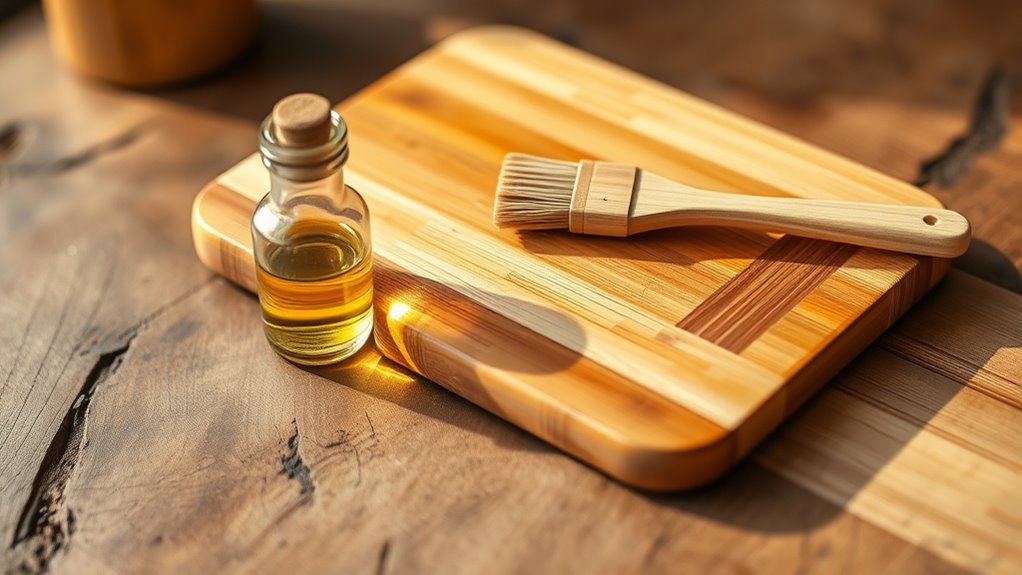
Although bamboo is naturally durable and resistant to moisture, you still need to oil your bamboo cutting board regularly to keep it in the best condition. Oiling prevents the board from drying out, cracking, or warping over time. When you apply oil, you create a protective barrier that repels water and reduces the chances of bacteria soaking into the surface.
Without this regular care, your cutting board may develop rough spots or lose its smooth finish. You don’t have to oil it daily, but doing so once a month or whenever the board looks dry will maintain its strength and appearance. By making oiling part of your routine, you extend the life of your bamboo cutting board and keep it safe for food prep.
What Makes Bamboo Cutting Boards Different From Other Woods
When you choose a bamboo cutting board, you’re picking a material that grows and behaves differently than traditional hardwoods. Bamboo is actually a fast-growing grass, not wood, which makes it more sustainable and renewable. Its fibers are tightly woven and naturally dense, giving it impressive strength and resistance to knife marks.
Unlike hardwoods, bamboo doesn’t have pores that easily absorb moisture, so it tends to resist bacteria buildup better. However, bamboo is also harder and less forgiving on your knives, so you might notice them dulling quicker. Plus, bamboo’s natural silica content adds durability but can affect how it reacts to moisture and temperature changes.
These unique traits make bamboo cutting boards stand out from other woods in both performance and care needs.
Why You Should Oil Your Bamboo Cutting Board
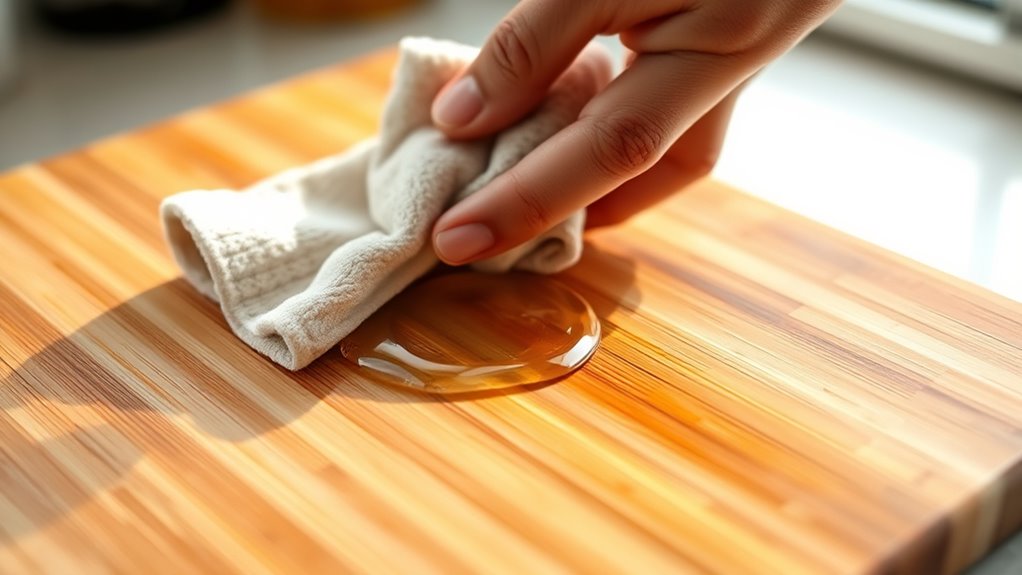
You should oil your bamboo cutting board regularly to prevent cracks and splits that can damage its surface. Oiling also helps maintain hygiene by sealing the wood and reducing moisture absorption.
Keeping your board well-oiled guarantees it stays durable and safe for food prep.
Preventing Cracks And Splits
Since bamboo is a natural material, it tends to dry out and crack over time without proper care. When your cutting board dries, it becomes brittle, leading to splits that shorten its lifespan. Oiling your bamboo cutting board regularly locks in moisture and keeps the fibers flexible, preventing damage.
Here’s why you should oil to prevent cracks and splits:
- Creates a protective barrier against moisture loss
- Maintains the board’s strength and durability
- Reduces the risk of warping caused by drying out
Maintaining Board Hygiene
Oiling your bamboo cutting board not only prevents cracks and splits but also plays a key role in keeping it hygienic. When you oil the board, you create a protective barrier that resists moisture and bacteria buildup. This prevents food particles and liquids from seeping into the wood, reducing the risk of mold and unpleasant odors.
Regular oiling also keeps the surface smooth, making it easier to clean and sanitize.
| Benefit | Explanation | Result |
|---|---|---|
| Moisture Barrier | Prevents water absorption | Less bacterial growth |
| Surface Protection | Creates a smooth, sealed surface | Easier cleaning |
| Longevity | Maintains wood integrity | Board lasts longer |
Keep your bamboo board oiled to maintain cleanliness and ensure safe food prep.
How Often to Oil Your Bamboo Cutting Board
How often should you oil your bamboo cutting board to keep it in top shape? Generally, you should oil it every 3 to 4 weeks. Regular oiling prevents the board from drying out, cracking, or absorbing moisture, which can lead to warping and bacterial growth.
However, the frequency depends on how often you use and wash the board.
Consider these factors when deciding how often to oil:
- Usage intensity: More frequent use calls for more frequent oiling.
- Cleaning frequency: If you wash it after every use, oiling might be needed sooner.
- Environment: Dry or humid climates affect how quickly your board absorbs or loses moisture.
How to Tell When Your Bamboo Board Needs Oiling
You’ll know your bamboo board needs oiling when it starts looking dry or rough to the touch. A simple water absorption test can help—just drop a few drops of water on the surface and see if it soaks in quickly.
If the water disappears fast, it’s time to re-oil and protect your board.
Signs Of Dryness
Wondering when your bamboo cutting board needs a fresh coat of oil? Dryness shows up in a few clear ways, signaling it’s time to re-oil. You’ll notice these signs if you pay close attention:
- Dull Appearance: Your board loses its natural shine and looks lifeless.
- Cracks or Splitting: Small cracks or splits may appear on the surface, indicating the wood is drying out.
- Rough Texture: The surface feels rough or slightly raised instead of smooth to the touch.
When you spot any of these signs, don’t wait—applying oil will restore moisture, protect against damage, and keep your board looking great. Regularly checking for dryness helps extend your bamboo cutting board’s lifespan and maintain its performance.
Water Absorption Test
Although dryness can often be spotted visually, performing a simple water absorption test gives you a quick and reliable way to tell when your bamboo cutting board needs oiling. Just pour a few drops of water onto the surface and watch closely. If the water beads up and sits on top, your board’s finish is still protecting it well.
But if the water soaks in quickly and darkens the wood, it’s a clear sign your board is drying out and needs oiling. This test helps you maintain your board’s durability and prevent cracking or warping. Try it regularly, especially after cleaning, so you can keep your bamboo cutting board in top shape with timely oiling.
Best Oils for Bamboo Cutting Boards: Is Mineral Oil Safe?
Choosing the right oil for your bamboo cutting board is essential to keep it durable and food-safe. Mineral oil is a popular choice because it’s food-safe, odorless, and doesn’t go rancid. It penetrates the bamboo, preventing cracks and warping while maintaining the board’s natural look.
However, you can also consider other oils depending on your preferences.
Here are some of the best oils for bamboo cutting boards:
- Mineral Oil: Safe, affordable, and widely available; ideal for regular maintenance.
- Food-Grade Tung Oil: Provides a harder finish, water-resistant but takes longer to dry.
- Beeswax Blends: Often combined with mineral oil for added protection and a smooth finish.
Avoid cooking oils like olive or vegetable oil since they can spoil and cause odors.
How to Clean Your Bamboo Cutting Board Before Oiling
Before you oil your bamboo cutting board, you need to clean it thoroughly to remove any food residues and bacteria. Start by rinsing the board under warm water to wash away loose debris. Then, scrub it with a mild dish soap and a soft sponge or brush, focusing on any grooves or cuts where food particles can hide.
Avoid soaking the board to prevent warping. After scrubbing, rinse it well to remove all soap traces. Next, disinfect the surface by wiping it down with a solution of one part white vinegar to four parts water, which naturally kills bacteria.
Finally, dry your board completely with a clean towel or let it air dry upright. Only once it’s fully dry should you proceed to oil your bamboo cutting board.
How to Oil Your Bamboo Cutting Board
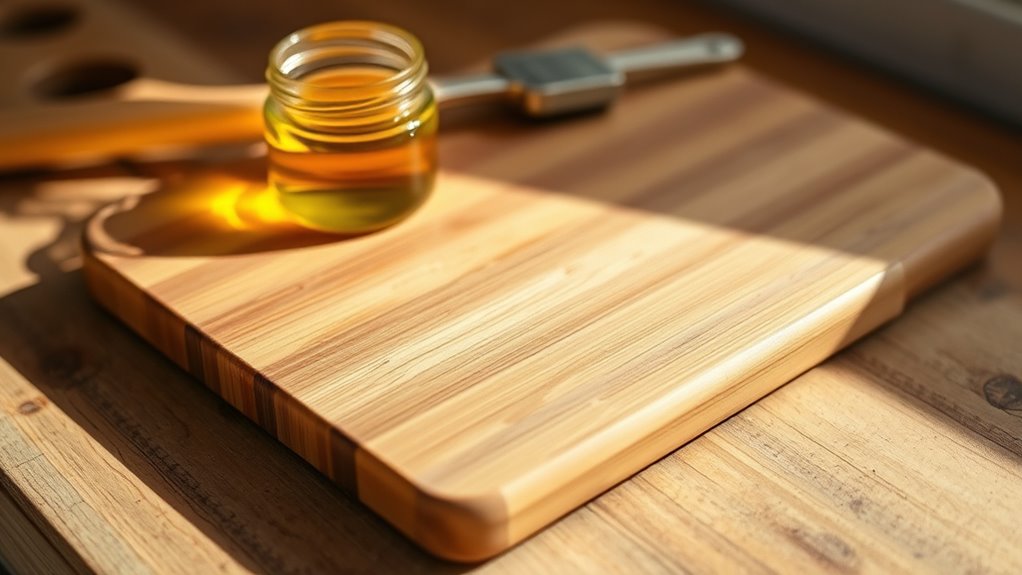
Once your bamboo cutting board is completely dry, you can start applying oil to keep it conditioned and protected. Use a clean, soft cloth or paper towel to spread a generous amount of food-safe mineral oil evenly across the surface. Rub the oil in gently, ensuring it penetrates the bamboo fibers.
Let the board sit for at least a few hours or overnight to absorb the oil fully. After that, wipe off any excess oil with a dry cloth.
Here’s a quick summary to help you oil your bamboo cutting board effectively:
- Apply food-safe mineral oil evenly with a soft cloth
- Allow the oil to soak in for several hours or overnight
- Wipe off any excess oil before using or storing the board
This routine keeps your board durable and moisture-resistant.
Common Bamboo Board Oiling Mistakes to Avoid
If you skip important steps or use the wrong products, you can damage your bamboo cutting board instead of protecting it. First, don’t use vegetable or olive oils—they can go rancid and leave unpleasant odors. Instead, choose food-safe mineral oil or specially formulated cutting board oils.
Avoid applying too much oil at once; it won’t absorb properly and can create a sticky surface. Make sure your board is clean and completely dry before oiling to prevent trapping moisture, which can cause warping or mold. Don’t neglect regular oiling—doing it sporadically won’t maintain the board’s durability.
Ultimately, avoid using wax-based products unless they’re designed for bamboo boards, as they can build up and affect the texture. Stick to these tips to keep your board in top shape.
What Happens If You Skip Oiling Your Bamboo Board
Although bamboo is naturally durable, skipping oiling can quickly lead to dryness and cracking that compromise your board’s integrity. When you don’t oil your bamboo cutting board regularly, it loses essential moisture, making the surface brittle and prone to splitting. This not only shortens the board’s lifespan but also creates gaps and cracks where bacteria can hide, posing hygiene risks.
Additionally, an un-oiled board tends to absorb more water and food odors, making it harder to clean and maintain.
Here’s what you can expect if you skip oiling:
- Surface cracks and splits that weaken the board’s structure
- Increased risk of bacterial buildup in dry, damaged areas
- Fading and dulling of the board’s natural color and finish
Oiling protects your board from these issues and keeps it functional longer.
Tips to Keep Your Bamboo Cutting Board Looking New
Neglecting to oil your bamboo cutting board can cause damage, but regular care helps maintain its appearance and durability. To keep your board looking new, oil it monthly with food-safe mineral oil. Apply a generous coat, let it soak for a few hours, then wipe off excess.
Always hand wash your board with mild soap and warm water—never soak or put it in the dishwasher. After washing, dry it immediately to prevent warping. Use both sides to avoid uneven wear and avoid cutting on one spot repeatedly.
Occasionally, sprinkle coarse salt and rub with a lemon half to remove stains and odors. Following these simple steps will extend your board’s life and keep it looking fresh and polished.
Frequently Asked Questions
Can Bamboo Cutting Boards Be Used for Raw Meat?
You can use bamboo cutting boards for raw meat, but you should clean them thoroughly right after. Bamboo’s dense surface resists bacteria, yet proper washing and drying prevents contamination and keeps your board safe for future use.
Are Bamboo Cutting Boards Dishwasher Safe?
You shouldn’t put bamboo cutting boards in the dishwasher since over 90% of bamboo boards warp or crack from heat and water exposure.
Instead, hand wash them with mild soap and dry immediately to keep them lasting longer.
How Do Bamboo Cutting Boards Compare to Plastic Ones?
You’ll find bamboo cutting boards are more durable and eco-friendly than plastic ones. They resist knife marks better and don’t absorb odors, but plastic boards can be dishwasher safe, making cleanup easier for you.
Can Bamboo Cutting Boards Be Used for Hot Pots?
You shouldn’t use bamboo cutting boards for hot pots because the heat can cause warping or cracking. Instead, use trivets or heat-resistant pads to protect your board and keep it in good shape.
Do Bamboo Boards Dull Knives Faster Than Other Materials?
Think of bamboo as a gentle river guiding your knife’s edge—no, bamboo boards don’t dull knives faster than other materials. You’ll find they’re relatively hard but still kind enough to keep blades sharp longer.
Conclusion
Oiling your bamboo cutting board is like giving it a protective hug—it keeps the wood strong, prevents cracking, and stops bacteria from sneaking in.
If you want your board to last and stay looking fresh, don’t skip this simple step. Regular oiling not only maintains its beauty but also makes your food prep safer and easier.
Treat your bamboo board right, and it’ll serve you faithfully for years to come. Proper maintenance like oiling is essential for bamboo cutting boards to stay durable and hygienic.