
What Is Induction Compatible Cookware?
Induction compatible cookware is essential for use with your induction cooktop. It requires a magnetic base made of ferrous metals, such as cast iron or certain stainless steels, to work efficiently. You can easily test this compatibility by seeing if a magnet sticks to the bottom of the cookware.
These ferrous metals generate heat directly through magnetic fields, making cooking faster and more energy-efficient compared to traditional cookware.
Avoid non-magnetic materials like aluminum or glass unless they feature a special magnetic layer designed for induction cooking.
Keep reading to discover how to choose the best induction cookware, maintain it properly, and get the most out of your induction cooking experience.
Key Takeaways
- Induction compatible cookware has a magnetic base made from ferrous metals like cast iron or magnetic stainless steel.
- A magnet sticks to the cookware bottom, confirming compatibility with induction cooktops.
- Cookware made of non-magnetic materials like aluminum or glass is incompatible unless it has a magnetic layer.
- Popular induction cookware materials include cast iron, magnetic stainless steel, carbon steel, and multi-ply designs with magnetic cores.
- Induction cookware heats efficiently by generating heat directly inside the pan through magnetic induction.
What Is Induction Compatible Cookware?

What makes cookware compatible with induction cooktops? It all comes down to the material. For your cookware to work on an induction cooktop, it needs to have a magnetic base.
That means pots and pans made from ferrous metals like cast iron or certain types of stainless steel will work perfectly. If you want to check your existing cookware, just try sticking a magnet to the bottom. If it holds firmly, you’re good to go.
Non-magnetic materials such as aluminum, copper, or glass won’t work unless they have a special magnetic layer added. So, when you shop for induction cookware, look for labels indicating induction compatibility or magnetic bases to verify your pots and pans will heat efficiently on your induction stove.
How Does Induction Cooking Work With Induction Cookware?
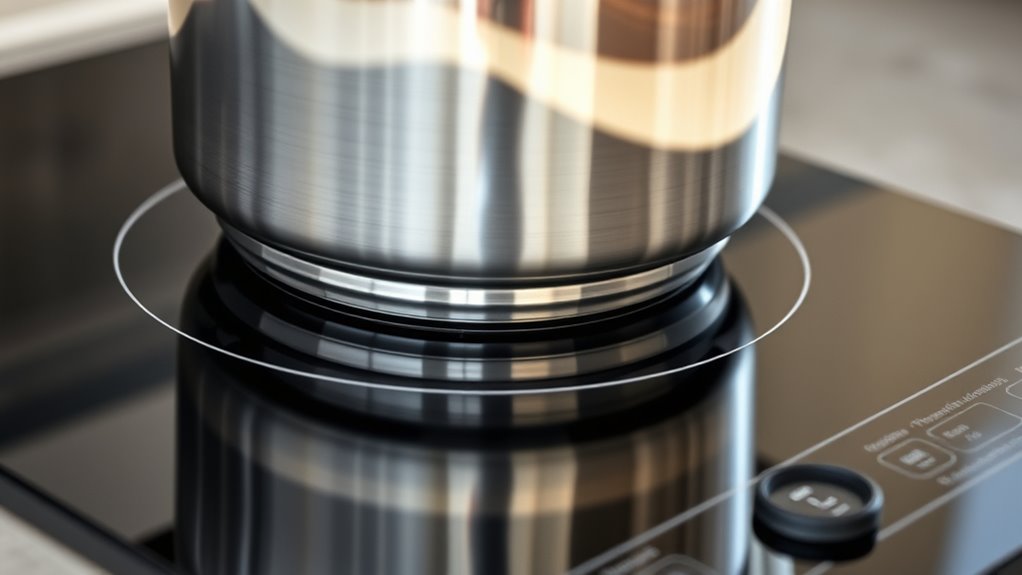
Because induction cooktops generate heat through magnetic fields, your cookware plays a crucial role in the cooking process. When you place induction-compatible cookware on the cooktop, the magnetic field induces electric currents in the cookware’s base. These currents create resistance, which then produces heat directly in the cookware itself, not on the cooktop surface.
This method heats your food quickly and efficiently.
Here’s how induction cooking works with your cookware:
- Magnetic field activates only cookware with ferrous material
- Heat is generated inside the cookware, not the burner
- Cooktop surface stays relatively cool
- Precise temperature control through rapid heating and cooling
- Energy-efficient cooking with minimal heat loss
Understanding this interaction guarantees you choose the right pots and pans for your induction stove.
Which Materials Work Best on Induction Stoves?
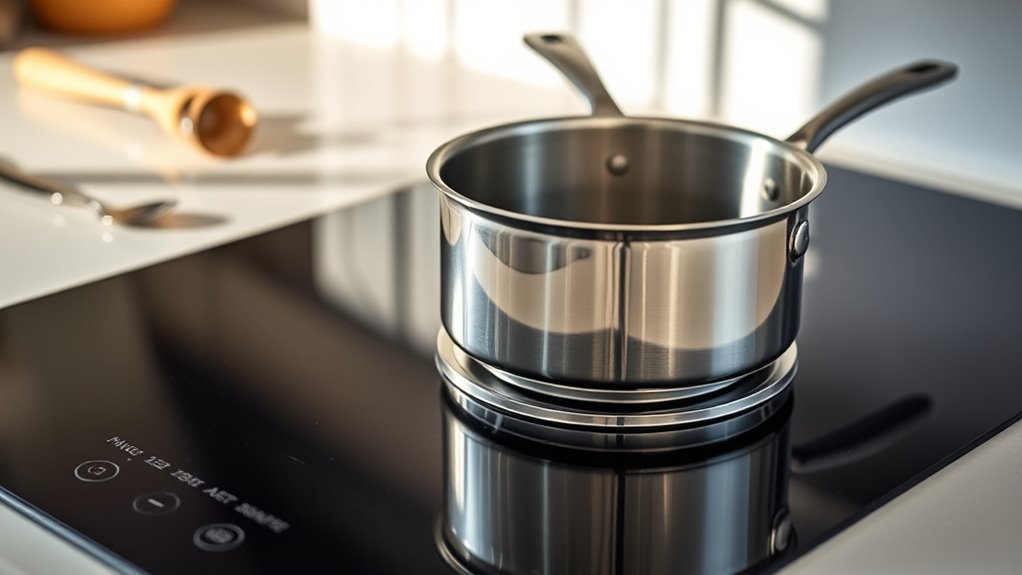
You’ll want to choose cookware made from magnetic metals since they work best with induction stoves. Non-magnetic materials like aluminum or glass often struggle to heat properly without a special base.
Understanding these differences helps you pick the right pots and pans for your induction cooktop.
Magnetic Metals Compatibility
How do you know if your cookware will work on an induction stove? The key is magnetic metals, which are essential for induction compatibility. Induction stoves use magnetic fields to heat pots and pans directly, so only cookware made from magnetic materials will work efficiently.
Here are the best metals for induction cooking:
- Cast iron: naturally magnetic and excellent heat retention
- Magnetic stainless steel: look for grades like 18/0, not 18/10
- Carbon steel: magnetic and heats quickly, like cast iron
- Enameled cast iron: combines ease of cleaning with induction compatibility
- Some multi-ply cookware: if the base layer is magnetic steel
If your cookware sticks to a magnet, it’s induction-ready. This simple test helps you avoid buying incompatible pots and pans.
Non-Magnetic Material Challenges
Why do some cookware materials struggle on induction stoves? It’s because induction relies on magnetic fields to generate heat directly in the cookware. Non-magnetic materials like aluminum, copper, and glass don’t respond to these fields, so they won’t heat up properly on induction cooktops.
If you use non-magnetic cookware, you’ll find it either heats very slowly or not at all. To solve this, manufacturers often add a magnetic stainless steel layer to the base of non-magnetic pans, making them induction-compatible.
If you’re unsure whether your cookware works, try a magnet test—if a magnet sticks firmly to the base, it’ll work on induction. Otherwise, you’ll want to stick with magnetic materials like cast iron or certain stainless steels for the best results.
How to Test If Your Cookware Works on Induction
Although induction cooking has gained popularity for its efficiency, not all cookware is compatible with it. You can quickly test if your cookware works on induction using a simple magnet. Here’s how:
- Grab a small magnet from your fridge or toolkit.
- Place the magnet flat against the bottom of your cookware.
- If the magnet sticks firmly, your cookware is induction-compatible.
- If it barely sticks or falls off, the cookware won’t work on an induction stove.
- Test multiple spots on the base for consistency.
This method works because induction stoves require magnetic materials to generate heat. Remember, cookware with stainless steel, cast iron, or magnetic-grade materials usually pass the test, while aluminum or copper won’t unless they have a magnetic base layer.
This quick check saves you from purchasing incompatible cookware.
What Cookware Should You Avoid on Induction Stoves?
You’ll want to avoid cookware that isn’t magnetic, like some aluminum or copper pots, since they won’t heat properly on induction stoves. Glass and ceramic cookware also won’t work because they lack the magnetic properties needed.
Knowing which materials don’t work helps you pick the right pots and pans for your induction cooktop.
Non-Magnetic Cookware Issues
Certain types of cookware won’t work on induction stoves because they lack the magnetic properties needed to generate heat. If your cookware doesn’t contain ferromagnetic materials, the induction cooktop won’t recognize it, leaving you frustrated.
You’ll want to avoid these common non-magnetic options:
- Glass or ceramic pots and pans
- Pure aluminum cookware without a magnetic base
- Copper cookware without a magnetic layer
- Non-stick pans with no magnetic plate
- Some stainless steel cookware that isn’t magnetic
Before buying, test your cookware with a magnet. If it sticks, it’ll work on your induction stove. If it doesn’t, the cooktop won’t heat the pan, wasting your time and energy.
Sticking to magnetic cookware assures efficient and safe cooking every time.
Aluminum And Copper Limits
Magnetic properties play a key role in whether cookware works on induction stoves, which brings us to the challenges with aluminum and copper pots and pans. Both metals are excellent heat conductors but lack the magnetic qualities induction cooking requires. If you try using pure aluminum or copper cookware, the stove won’t detect them, so they won’t heat up.
To prevent this, look for aluminum or copper pans with a magnetic stainless steel base or layer. These hybrid designs ensure compatibility without sacrificing performance. Steer clear of cookware made entirely from these metals unless explicitly labeled induction-compatible.
Otherwise, you’ll waste time and energy, and your stove won’t perform as expected. Always check the manufacturer’s specifications before buying cookware for your induction cooktop.
Glass And Ceramic Restrictions
Although glass and ceramic cookware often look attractive and promise even heating, they don’t work well with induction stoves because they lack the necessary magnetic properties. Since induction relies on magnetic fields to generate heat, these materials simply won’t heat up on their own.
Using glass or ceramic cookware on an induction stove means your burner won’t activate, leaving you frustrated and hungry.
Here are some cookware types you should avoid on induction stoves:
- Pure glass pots and pans
- Ceramic bakeware without a metal base
- Pyrex dishes
- Glass casserole dishes
- Stoneware without a magnetic layer
If you want to use glass or ceramic, look for pieces with a magnetic stainless steel base designed specifically for induction compatibility.
Common Types of Induction Cookware Explained
When you choose induction cookware, you’ll find a variety of materials designed to work efficiently with induction cooktops. Stainless steel is popular because it’s durable and often has a magnetic base, making it induction-ready. Cast iron is another common choice; it heats evenly and retains heat well, though it’s heavier to handle.
Some cookware combines layers—like a stainless steel exterior with an aluminum core—to improve heat distribution while staying induction-compatible. Magnetic-grade carbon steel also works great, especially for stir-frying and searing. Avoid cookware made entirely from non-magnetic materials like pure aluminum, copper, or glass unless they have a special magnetic base.
Knowing these types helps you pick the right pots and pans that maximize your induction cooktop’s performance.
Why Induction Cookware Saves Energy and Cooks Faster
You’ll notice that induction cookware heats your food quickly because it transfers heat directly to the pan. This efficient process cuts down cooking time and lowers the energy you use.
Let’s explore how this makes your kitchen more energy-friendly and faster.
Efficient Heat Transfer
Because induction cookware uses magnetic fields to directly heat the pot or pan, it transfers energy much more efficiently than traditional methods. You’ll notice less wasted heat since the cooktop itself stays cool, and the energy goes straight into your food. This means your kitchen stays cooler, and you use less electricity overall.
The precise control over heat also reduces energy loss, making your cooking more effective.
Here’s why induction cookware excels at heat transfer:
- Magnetic fields generate heat inside the cookware, not on the cooktop surface
- Minimal heat loss to the surrounding air
- Faster temperature adjustments for precise cooking
- Even heat distribution across the cooking surface
- Less residual heat means safer, more energy-conscious cooking
This efficiency saves energy while maintaining excellent cooking performance.
Reduced Cooking Time
Although traditional cooktops rely on indirect heat, induction cookware heats your pots and pans almost instantly, cutting down cooking time considerably. When you use induction-compatible cookware, the magnetic field directly generates heat within the cookware itself, so it reaches cooking temperature much faster than gas or electric stoves. This rapid heating means you don’t have to wait long for water to boil or food to sear, letting you prepare meals quicker.
Plus, induction cooktops respond immediately to temperature adjustments, giving you precise control that helps prevent overcooking. By reducing the time your food spends on the heat, induction cookware not only speeds up your cooking process but also preserves flavors and nutrients better, making your overall kitchen experience more efficient and enjoyable.
Lower Energy Consumption
Not only does induction cookware speed up your cooking time, but it also uses energy more efficiently than traditional methods. Because induction directly heats the cookware instead of the cooktop, less energy is wasted. This means you’ll save on electricity bills while enjoying faster meal prep.
Induction cookware’s magnetic properties ensure heat goes exactly where you want it, minimizing energy loss. Plus, the precise temperature control means you won’t overcook or waste energy maintaining heat.
Here’s why induction cookware reduces energy consumption:
- Direct heating of the cookware reduces wasted heat
- Faster heating times lower overall energy use
- Precise temperature control avoids overheating
- Cookware retains heat better, needing less power
- Efficient energy transfer means less electricity consumption
You’ll appreciate how induction cookware combines speed with energy savings.
Benefits of Using Induction Cookware in Your Kitchen
When you switch to induction cookware, you’ll notice faster heating times and greater energy efficiency compared to traditional methods. This means you can cook meals quicker while saving on your energy bills. Induction cookware also offers precise temperature control, allowing you to avoid overcooking or burning your food.
Plus, the smooth, flat surface of induction cooktops makes cleaning up spills easier since the cooktop itself stays cooler.
| Benefit | Description | Why It Matters |
|---|---|---|
| Faster Heating | Heats cookware quickly | Saves cooking time |
| Energy Efficient | Uses less electricity | Cuts energy costs |
| Easy to Clean | Cooktop stays cool | Simplifies cleanup |
How to Choose the Right Induction Cookware for You
Since induction cooking requires specific cookware materials, you’ll want to choose pots and pans that work efficiently with your cooktop. Start by checking if the cookware is magnetic—this guarantees compatibility. Consider the cookware’s material; stainless steel with a magnetic base or cast iron works best.
Size matters too: pick pieces that fit your burner zones for even heating. Don’t forget about weight; heavier cookware often means better heat retention but can be harder to handle. In the end, look for flat-bottomed designs to maintain proper contact with the induction surface.
Here’s what to focus on when choosing induction cookware:
- Magnetic material for compatibility
- Appropriate size for burner zones
- Durable, quality construction
- Comfortable handles and lids
- Flat, smooth bottoms for even heat transfer
Which Induction Cookware Brands Are Worth It?
Several top brands stand out when you’re looking for reliable induction cookware that combines performance and durability. All-Clad offers professional-grade stainless steel sets with excellent heat distribution. If you want something more budget-friendly without sacrificing quality, Cuisinart delivers solid options that work well on induction cooktops.
Le Creuset is perfect if you prefer enameled cast iron that heats evenly and lasts for years. For nonstick enthusiasts, T-fal and Calphalon provide durable, induction-compatible cookware with easy food release. You’ll also find that brands like Scanpan and Tramontina balance affordability with high-quality materials.
When choosing, consider your cooking style and budget, but these brands consistently earn top marks. Investing in any of them means you’re getting cookware that performs efficiently on induction surfaces and stands the test of time.
Maintaining Induction Cookware for Best Performance
To keep your induction cookware performing at its best, you’ll need to clean and care for it properly after each use. Avoid abrasive cleaners that can scratch the surface, and never put your cookware in the dishwasher unless the manufacturer says it’s safe. Dry your pots and pans thoroughly to prevent water spots and rust, especially on magnetic bases.
Proper care and gentle cleaning keep your induction cookware in top condition and prevent damage over time.
Store them carefully to avoid dents or warping. Regularly check the base for flatness to guarantee even heat distribution.
Here are key tips to maintain your induction cookware:
- Clean with a soft sponge and mild detergent
- Avoid sudden temperature changes to prevent warping
- Dry immediately after washing
- Use wooden or silicone utensils to protect surfaces
- Store cookware with care to avoid scratches and dents
Where to Buy Reliable Induction Cookware
Where can you find induction cookware that combines quality with reliability? Start by checking reputable kitchenware stores, both online and in person. Retailers like Williams Sonoma, Sur La Table, and Bed Bath & Beyond offer trusted brands with verified induction compatibility.
Online marketplaces such as Amazon provide a wide selection, but make sure to read user reviews and confirm the product specifications. Specialty cookware brands like All-Clad, Le Creuset, and T-fal are known for durable induction-friendly sets. Additionally, visiting manufacturer websites directly guarantees you get authentic products with warranties.
Avoid buying from unknown sellers or discount outlets where quality might be compromised. By focusing on established retailers and verified brands, you’ll invest in induction cookware that performs well and lasts long.
Frequently Asked Questions
Can Induction Cookware Be Used on Gas or Electric Stoves?
Yes, you can use induction cookware on gas or electric stoves. It works just like regular pots and pans, so you don’t have to worry about compatibility when switching between different stovetops.
Is Induction Cookware Safe for Dishwasher Cleaning?
Yes, you can usually clean induction cookware in the dishwasher, but you shouldn’t always. Check the manufacturer’s instructions, since some coatings or materials might get damaged.
Hand washing often keeps your cookware in better shape longer.
Does Induction Cooking Affect the Flavor of Food?
You won’t find a secret flavor potion in induction cooking—it doesn’t affect your food’s taste. Just like a trusty 19th-century cast iron, it heats evenly, preserving your dish’s natural flavors without any weird metallic hints.
Can Induction Cookware Damage Induction Cooktops?
No, induction cookware won’t damage your induction cooktop if used properly. Just avoid dragging heavy pans across the surface, and keep the bottom clean to prevent scratches.
Handle your cooktop gently to keep it safe and efficient.
Are Induction-Compatible Lids Different From Regular Cookware Lids?
No, induction-compatible lids aren’t different from regular cookware lids. You can use any lid that fits well, since lids don’t affect induction heating—they mainly help trap heat and moisture regardless of the cooktop type.
Conclusion
Now that you know what induction compatible cookware is, you’re ready to transform your cooking experience. With the right materials and a simple magnet test, you can easily find pots and pans that work like magic on your induction stove.
Choosing quality brands and maintaining your cookware will keep your kitchen running smoother than a rocket ship. So, get out there and cook smarter—you’ll wonder how you ever lived without induction compatible cookware!
Embracing induction compatible cookware means faster heating, better energy efficiency, and safer cooking. Upgrade your kitchen today and enjoy all the benefits that induction compatible cookware has to offer.