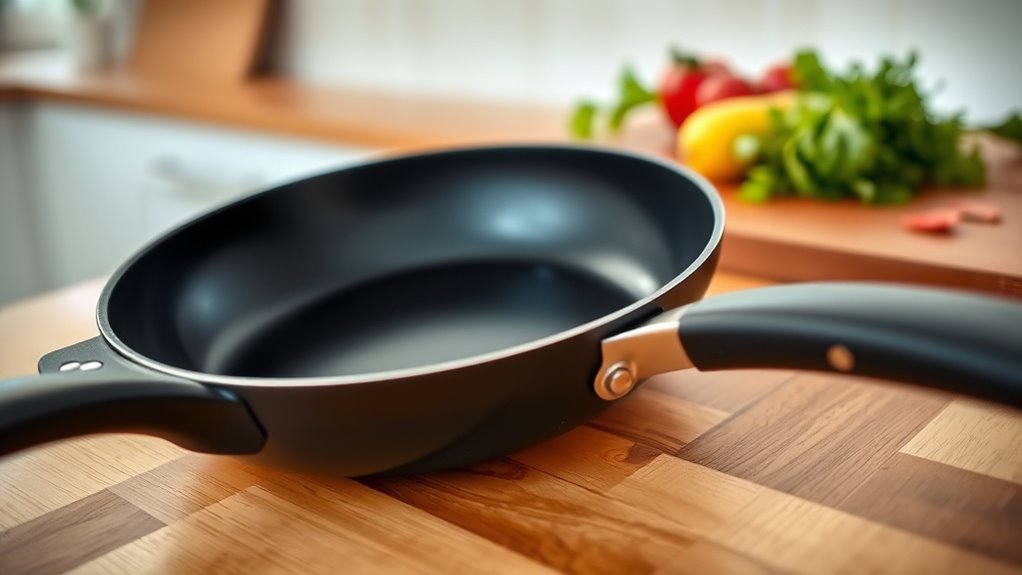
What Is a Frying Pan
A frying pan is an essential kitchen tool designed for cooking food evenly by distributing heat across its flat, wide surface. This makes it perfect for searing, browning, and sautéing a variety of ingredients.
Frying pans come in different materials such as cast iron, stainless steel, and aluminum, each influencing heat retention and maintenance in unique ways.
Nonstick pans offer convenience by making cooking and cleanup easier. On the other hand, stainless steel pans provide better performance for advanced cooking techniques.
The size, shape, and handle design of a frying pan also impact how your food cooks and ensure your safety.
Keep exploring to discover more tips on choosing the right pan and caring for it properly.
Key Takeaways
- A frying pan is a flat-bottomed cookware used for frying, searing, and browning foods evenly.
- It typically has shallow sides and a long handle for easy flipping and stirring.
- Common materials include cast iron, stainless steel, and aluminum, each affecting heat retention and maintenance.
- Frying pans can be nonstick or stainless steel, chosen based on cooking needs and ease of use.
- Proper preheating, oil use, and maintenance prevent food from sticking and extend pan lifespan.
What Is a Frying Pan and How Does It Work
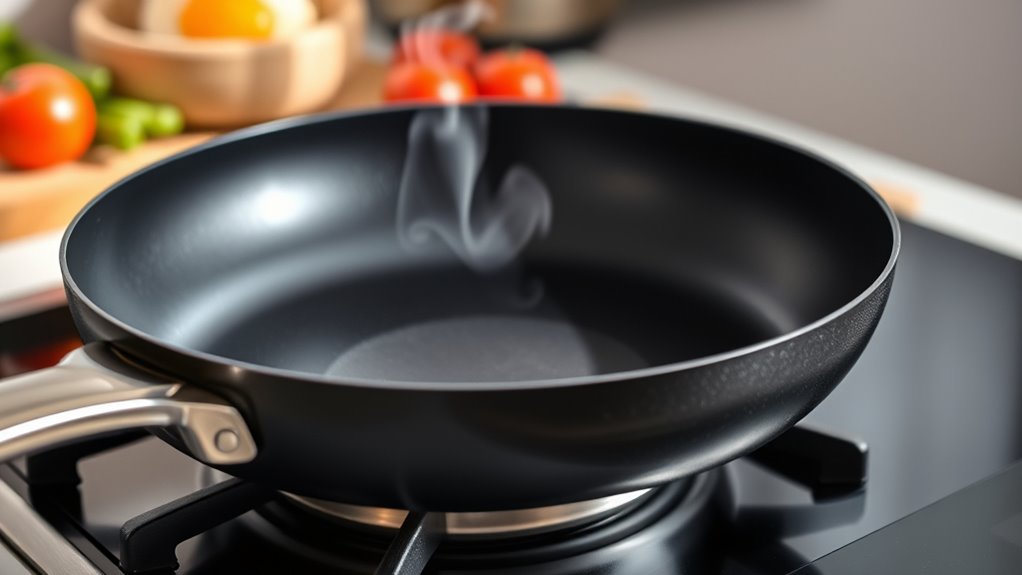
How does a frying pan work to cook your food evenly and quickly? When you place it on heat, the pan absorbs and distributes warmth across its surface. This even heat distribution guarantees your food cooks uniformly without hot spots burning certain areas.
The flat, wide base maximizes contact with your stove, allowing heat to transfer efficiently. You’ll notice the shallow sides make it easy to flip or stir food, promoting thorough cooking. As the pan heats up, it also helps evaporate moisture from your ingredients, giving you that perfect sear or crispiness.
Different Materials Used to Make Frying Pans
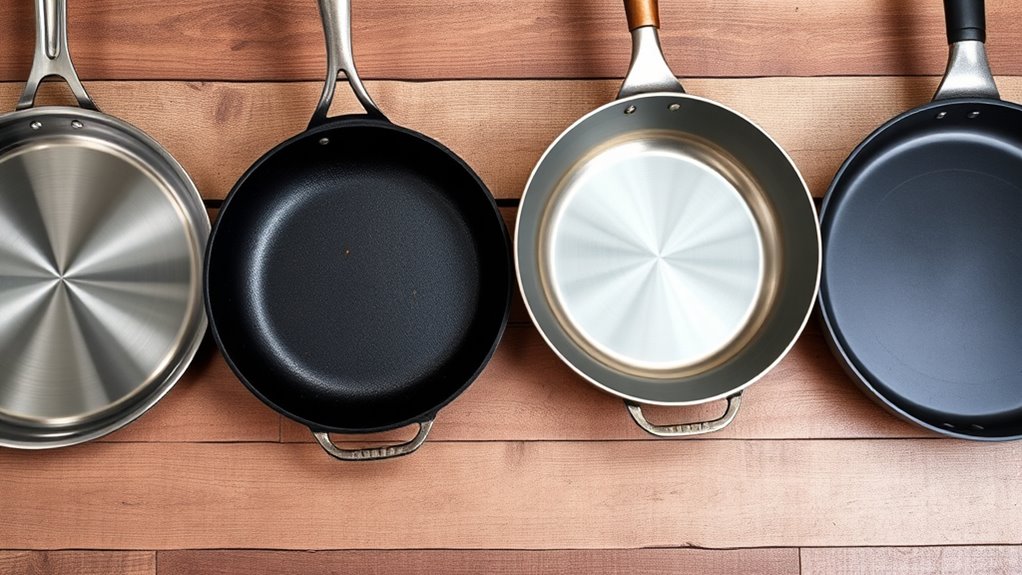
Although frying pans might look similar at first glance, they come in various materials that each affect cooking performance and maintenance differently. Choosing the right material can influence how evenly your food cooks and how long your pan lasts.
Here’s a quick overview to help you decide:
| Material | Heat Conductivity | Maintenance |
|---|---|---|
| Cast Iron | Excellent, retains heat | Requires seasoning |
| Stainless Steel | Moderate, durable | Easy to clean, dishwasher safe |
| Aluminum | Excellent, lightweight | Prone to warping |
Each material offers unique benefits, so consider your cooking style and how much upkeep you’re willing to do before picking your frying pan. This will ensure you get the best results every time.
Nonstick vs. Stainless Steel Frying Pans: Pros and Cons
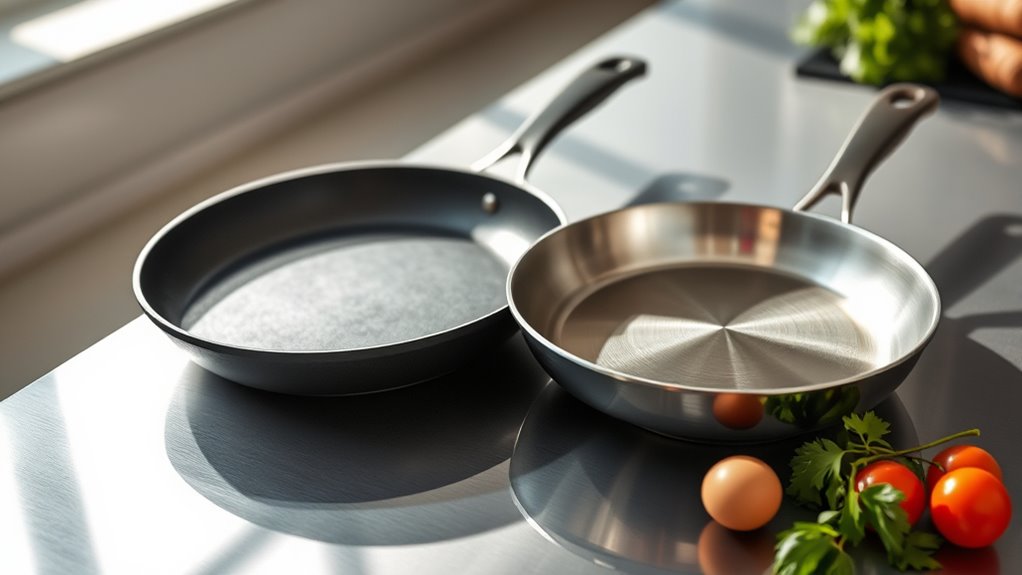
You’ll find nonstick frying pans make cooking and cleanup easier thanks to their smooth, coated surface. On the other hand, stainless steel pans offer durability and better heat retention for searing and browning.
Let’s compare the pros and cons of each to help you choose the right one for your kitchen.
Nonstick Pan Advantages
Why choose a nonstick pan over stainless steel? Nonstick pans make cooking and cleanup much easier. You won’t need much oil or butter, so your meals can be healthier.
Foods slide right off, preventing sticking and burning, which is great for delicate items like eggs or fish. Plus, you save time washing up since food residue wipes away effortlessly.
Nonstick pans also heat quickly and evenly, helping you cook efficiently. They’re perfect when you want hassle-free cooking without worrying about food sticking or scrubbing stubborn bits.
If you value convenience and easy maintenance, a nonstick pan is a smart choice. Just remember to use gentle utensils to protect the coating and extend the pan’s lifespan.
Stainless Steel Benefits
How does a stainless steel frying pan compare to a nonstick one when it comes to cooking performance and durability? Stainless steel pans excel in heat retention and even cooking, giving you great control when searing meats or sautéing vegetables. Unlike nonstick pans, they can handle higher temperatures without warping or releasing harmful chemicals.
You’ll appreciate their durability—they resist scratches and last for years with proper care. While food might stick more initially, mastering the right heat and oil technique helps prevent that. Stainless steel pans also develop a natural, flavorful fond that enhances sauces and deglazing.
If you want a versatile, long-lasting pan that improves with use, stainless steel offers clear benefits over nonstick alternatives, especially for serious home cooks who value performance and longevity.
How Frying Pan Size and Shape Affect Cooking
When you choose a frying pan, its size directly affects how evenly it heats your food. A larger diameter spreads heat more, while smaller pans concentrate it.
Plus, the pan’s shape influences how your ingredients cook and move as you stir or flip.
Pan Diameter and Heat
Although you might not notice it at first, the diameter and shape of your frying pan play an essential role in how evenly and quickly your food cooks. A larger pan exposes more surface area to heat, which helps spread the heat evenly but also requires more energy to reach the right temperature. If the pan is too big for your burner, you’ll get hot spots near the center while the edges stay cooler.
Conversely, a smaller pan concentrates heat, cooking food faster but risking burning if you’re not careful. Matching the pan size to your burner ensures efficient heat transfer and consistent cooking. Keep in mind that the material and thickness of the pan also affect how heat distributes, but diameter remains key in temperature control.
Shape Impact on Food
Why does the shape of your frying pan matter as much as its size? Because it directly influences how your food cooks. The shape determines heat distribution, cooking surface area, and how ingredients move while you cook.
A deeper pan may trap steam, affecting crispiness, while a wide, shallow pan allows for faster evaporation and browning.
Consider these points:
- Heat Distribution – Round pans heat evenly; irregular shapes might create hot spots.
- Cooking Surface – Larger flat areas let you cook more items simultaneously.
- Food Movement – Sloped sides make flipping easier; straight sides keep food contained.
- Moisture Control – Deep pans retain moisture, shallow pans promote evaporation.
Choosing the right shape helps you control texture, flavor, and cooking efficiency.
Choosing the Right Frying Pan for Your Cooking Style
Selecting the right frying pan can transform your cooking experience by matching the pan’s material, size, and coating to your preferred cooking techniques. If you love searing meats, a heavy cast iron pan retains heat well.
For quick sautéing, a lightweight aluminum pan heats up fast. Nonstick pans are perfect for delicate foods like eggs or pancakes.
| Material | Best For | Care Tips |
|---|---|---|
| Cast Iron | Searing, frying | Season regularly |
| Aluminum | Quick cooking | Avoid high heat |
| Nonstick | Eggs, pancakes | Use gentle utensils |
| Stainless Steel | Browning, deglazing | Hand wash recommended |
Choose wisely to enhance your results and match your cooking style perfectly.
Frying Pan Handle Designs: Comfort and Safety
You want a frying pan handle that feels comfortable and stays cool while you cook. Look for ergonomic shapes that fit your hand, heat-resistant materials that keep things safe, and grips that won’t slip.
These features make a big difference in both comfort and safety.
Ergonomic Handle Shapes
Although a frying pan’s performance depends largely on its material and shape, the handle plays a crucial role in how comfortable and safe it feels during use. Ergonomic handle shapes are designed to fit naturally in your hand, reducing strain and improving control. When choosing a frying pan, consider these key features:
- Contoured grips that match the curve of your fingers for a secure hold.
- Slightly angled handles to keep your wrist in a neutral position.
- Textured surfaces that prevent slipping, even when your hands are wet or greasy.
- Balanced weight distribution so the pan feels stable, minimizing effort during cooking.
These design elements help you cook confidently and comfortably for longer periods without discomfort or risk.
Heat-Resistant Materials
When handling a hot frying pan, the material of the handle can make all the difference between comfort and injury. You want a handle made from heat-resistant materials like silicone, Bakelite, or stainless steel with insulating properties. These materials prevent the handle from becoming too hot to touch, so you won’t need a potholder or glove every time you cook.
Silicone handles offer a soft, cool grip, while Bakelite is lightweight and durable. Stainless steel handles often feature hollow or double-wall construction to reduce heat transfer. Choosing a pan with these heat-resistant handles keeps you safe and comfortable, letting you focus on cooking without worrying about burns.
Always check the handle material before buying to guarantee it suits your cooking style and safety needs.
Secure Grip Features
Handles made from heat-resistant materials are just one part of ensuring safety and comfort in the kitchen. When you choose a frying pan, secure grip features play a vital role in preventing accidents and improving control.
Look for these design elements:
- Ergonomic Shape: Contours that fit your hand reduce strain and enhance handling.
- Textured Surface: Non-slip grips keep your hold firm, even with wet hands.
- Riveted or Seamless Attachment: Strong connections between handle and pan avoid wobbling or detachment.
- Balanced Weight Distribution: A well-balanced handle makes lifting and maneuvering easier and safer.
Essential Cooking Techniques for Frying Pans
How do you master the essential cooking techniques for frying pans to make the most of your meals? First, preheat your pan over medium heat to ensure even cooking. Avoid rushing this step; a properly heated pan helps achieve the perfect sear.
Next, add a small amount of oil or butter to coat the surface lightly. When cooking, resist overcrowding the pan—give each ingredient enough space to brown nicely. Use tongs or a spatula to turn food gently, allowing each side to cook thoroughly without breaking apart.
Finally, adjust the heat as needed to prevent burning or undercooking. By following these steps, you’ll harness your frying pan’s full potential and elevate your everyday cooking.
How to Prevent Food From Sticking in Your Frying Pan
Although sticking can be frustrating, you can prevent food from clinging to your frying pan by properly preparing and using it.
Here’s how to keep your cooking smooth and hassle-free:
- Preheat the pan: Heat your frying pan on medium before adding oil or food. This creates a barrier that reduces sticking.
- Use enough oil or fat: Add a thin, even layer of oil, butter, or cooking spray to coat the surface.
- Avoid overcrowding: Give each piece of food room to cook evenly. Crowding traps moisture, causing sticking.
- Don’t flip too soon: Let food develop a natural crust before turning it, which makes release easier.
Caring for Your Frying Pan to Extend Its Lifespan
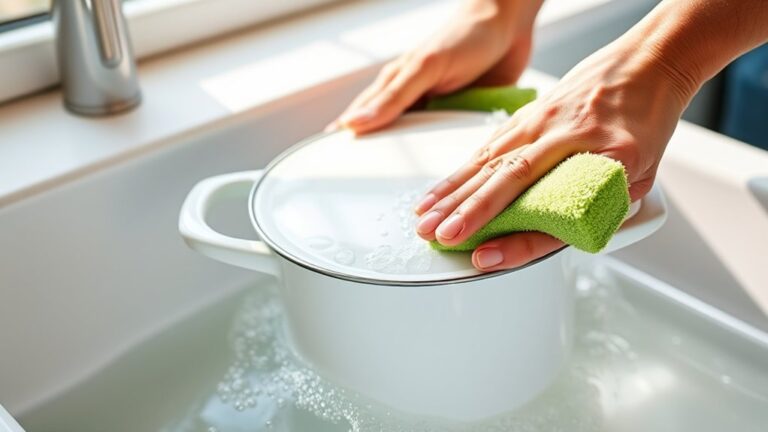
To keep your frying pan performing well over time, you need to care for it properly after each use. Clean it gently with warm, soapy water and a soft sponge; avoid abrasive scrubbers that damage the surface. Dry it completely to prevent rust, especially if it’s cast iron.
Season cast iron pans regularly to maintain their non-stick layer. Store pans in a dry place and avoid stacking heavy items on top to preserve their shape.
| Pan Type | Cleaning Method | Maintenance Tip |
|---|---|---|
| Non-stick | Soft sponge, mild soap | Avoid metal utensils |
| Cast iron | Hand wash, no soap | Season regularly |
| Stainless | Dishwasher safe | Polish occasionally |
| Carbon steel | Hand wash, dry thoroughly | Oil after use to prevent rust |
When to Replace Your Frying Pan: Signs to Watch For
Even with proper care, your frying pan won’t last forever, and knowing when to replace it can save you frustration in the kitchen.
Keep an eye out for these signs:
- Scratched or peeling non-stick coating – This affects cooking performance and may release harmful chemicals.
- Warped base – If your pan no longer sits flat, it won’t heat evenly, causing uneven cooking.
- Rust spots – Rust can contaminate food and weaken the pan’s structure.
- Loose or damaged handle – This is a safety hazard and makes the pan difficult to use.
If you notice any of these issues, it’s time to invest in a new frying pan to guarantee safe and effective cooking.
Top Frying Pan Brands and Models to Consider
When choosing a frying pan, you want one that matches your cooking style and lasts through frequent use. Brands like All-Clad offer durable stainless steel pans perfect for searing and browning, while T-fal provides affordable nonstick options that make cooking and cleaning easier.
If you prefer cast iron, Lodge is a trusted name with pre-seasoned pans that build flavor over time. For eco-conscious cooks, GreenPan’s ceramic-coated pans offer a non-toxic, nonstick surface. You might also consider Calphalon for versatile, oven-safe models.
Each brand brings unique features, so think about what matters most—whether it’s heat retention, nonstick performance, or ease of maintenance. By choosing from these reputable brands, you’ll find a frying pan that suits your kitchen and cooking needs perfectly.
Tips for Using Your Frying Pan Safely and Effectively
Although frying pans are versatile kitchen tools, using them safely and effectively requires some key practices. To get the best results and avoid accidents, follow these tips:
- Preheat Properly: Always heat your pan before adding oil or food to ensure even cooking and prevent sticking.
- Use Appropriate Utensils: Choose wooden or silicone tools to protect nonstick surfaces from scratches.
- Monitor Heat Levels: Avoid overheating, which can damage the pan’s coating and release harmful fumes.
- Handle with Care: Use oven mitts or pot holders when moving hot pans to prevent burns.
Frequently Asked Questions
Can Frying Pans Be Used on Induction Cooktops?
Yes, you can use frying pans on induction cooktops, but they need to be made of magnetic materials like cast iron or stainless steel.
If your pan isn’t magnetic, the cooktop won’t heat it properly.
Are Frying Pans Dishwasher Safe?
Dishwashers aren’t always frying pans’ best friends; they can strip nonstick coatings like a storm peeling paint. You’ll want to hand wash most pans to keep them shiny and performing like new for longer.
What Is the History of Frying Pans?
You’ll find frying pans date back to ancient times, evolving from simple clay and stone to cast iron in the Middle Ages. Over centuries, they’ve adapted to materials like aluminum and nonstick coatings you use today.
Can You Use a Frying Pan in the Oven?
Yes, you can use a frying pan in the oven if it’s oven-safe. Check the manufacturer’s instructions, especially for handles or non-stick coatings, as some materials might not withstand high oven temperatures safely.
Always ensure your frying pan is labeled as oven-safe before placing it inside. If the pan has plastic or wooden handles, it may not be suitable for oven use.
Non-stick coatings can also have temperature limits, so be cautious. Using a frying pan not designed for the oven could damage the pan or pose safety risks.
How Do Frying Pans Differ From Sauté Pans?
Think of frying pans as your quick sprint, while sauté pans are a steady marathon. You’ll notice frying pans have sloped sides for flipping, and sauté pans have straight sides, perfect for tossing and simmering without spills.
Conclusion
Now that you know the ins and outs of frying pans, you can choose the perfect one for your kitchen. Did you know that 85% of home cooks prefer nonstick pans for their ease of use and quick cleanup? Whether you go for nonstick or stainless steel, pick a size and material that suits your style.
With proper care, your frying pan will last for years, making every meal a delicious success! Remember, selecting the right frying pan enhances your cooking experience and helps you create tasty dishes with ease. Invest in a quality frying pan to enjoy durability, versatility, and excellent heat distribution in your kitchen.