
How to Clean Enamel Cookware
To clean your enamel cookware effectively, start by soaking it in warm, soapy water to loosen any food residue. Using gentle cleaning methods is key to preserving the cookware’s glossy finish and preventing scratches. A soft sponge or nylon brush works best for scrubbing without damaging the surface.
For stubborn stains, sprinkle baking soda directly onto the cookware. Then, add a bit of vinegar to create a fizzing reaction that helps lift grime. After the fizz subsides, wipe the area lightly to remove any remaining residue.
Avoid abrasive tools like steel wool and sudden temperature changes, as these can harm the enamel coating.
Once cleaned, dry your cookware thoroughly with a soft towel. Store it carefully in a safe place to prevent chips and cracks.
Keep following for more tips on preserving and restoring your beautiful enamel cookware.
Key Takeaways
- Soak enamel cookware in warm, soapy water and clean gently with a soft sponge or cloth to remove everyday dirt.
- Use baking soda and mild scrubbing in circular motions to tackle stubborn stains without damaging the enamel.
- For burnt-on food, simmer warm soapy water in the pan for 10-15 minutes, then cool and scrub gently with a nylon scrubber.
- Avoid abrasive tools and harsh chemicals; use soft sponges, microfiber cloths, and plastic or silicone scrapers instead.
- Thoroughly dry cookware with a soft towel after washing to prevent rust and maintain the enamel finish.
Why Enamel Cookware Needs Special Cleaning
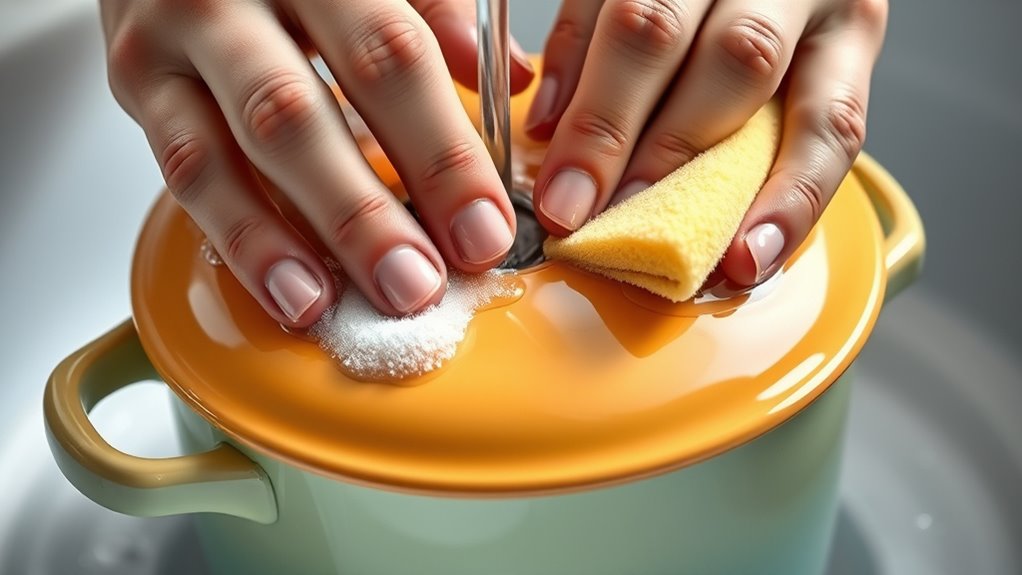
Because enamel cookware has a delicate coating, you need to clean it carefully to avoid chipping or dulling the surface. This coating protects the metal underneath and gives the cookware its smooth, glossy finish. If you use harsh scrubbing tools or abrasive cleaners, you risk damaging that finish, which can lead to rust or stains.
Unlike stainless steel or cast iron, enamel isn’t designed to handle aggressive cleaning methods. You’ll also want to avoid sudden temperature changes when washing, as thermal shock can weaken the enamel. By understanding why enamel requires special care, you’ll ensure your cookware stays beautiful and functional for years.
Proper cleaning preserves both appearance and performance, making your cooking experience more enjoyable.
How To Prevent Chipping And Scratches On Enamel Cookware
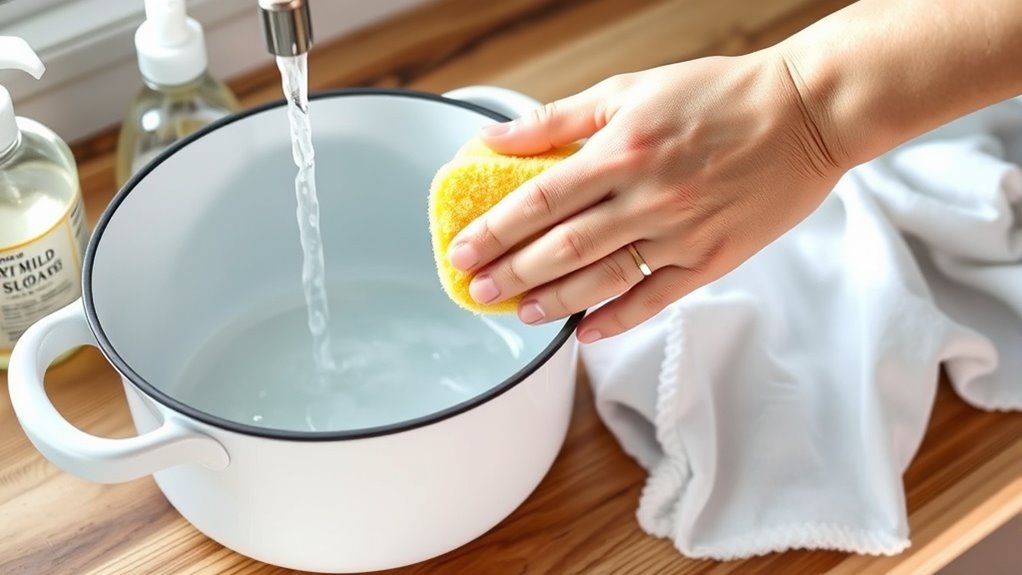
To keep your enamel cookware looking great, always use non-abrasive tools when cooking and cleaning. Avoid metal utensils that can scratch the surface, and handle your pots and pans gently to prevent chipping.
Taking these simple steps will extend the life of your cookware.
Use Non-Abrasive Tools
A key step in keeping your enamel cookware looking pristine is choosing the right cleaning tools. Using non-abrasive tools prevents scratches and chipping that can damage the enamel surface. Avoid anything that’s too rough or sharp, as it can wear down the protective coating over time.
Instead, opt for gentle cleaning aids that effectively remove residue without harm.
Consider these non-abrasive options:
- Soft sponges or microfiber cloths
- Nylon scrubbers designed for delicate surfaces
- Silicone brushes for stubborn spots
- Wooden or plastic utensils when scraping residue
Handle With Care
While enamel cookware is durable, it can chip or scratch if you’re not careful during everyday use. To prevent damage, always handle your pots and pans gently. Avoid dropping or banging them against hard surfaces, like countertops or sinks.
When stacking cookware, place a soft cloth or paper towel between pieces to protect the enamel finish. Use wooden, silicone, or plastic utensils to minimize scratching while cooking. Also, avoid exposing your cookware to sudden temperature changes, such as placing a hot pan under cold water, which can weaken the enamel and cause cracks.
Simple Steps To Remove Everyday Dirt From Enamel Cookware
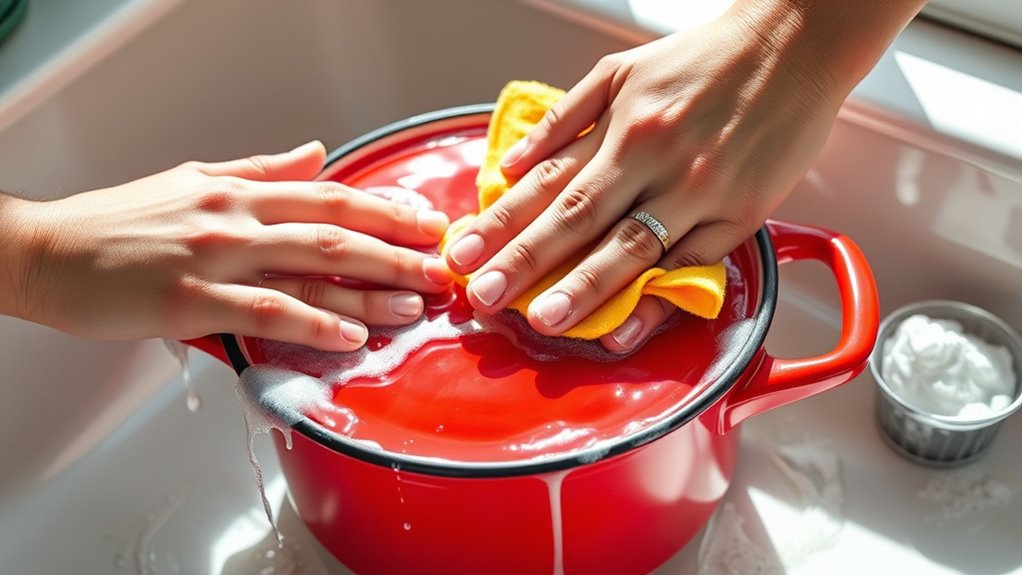
You’ll want to use gentle cleaning techniques to keep your enamel cookware looking great without causing damage. Tackling common stains with simple household ingredients can make a big difference.
Let’s go over easy steps you can follow to remove everyday dirt effectively.
Gentle Cleaning Techniques
Although enamel cookware is durable, it still requires careful cleaning to maintain its glossy finish. You want to avoid harsh scrubbing or abrasive cleaners that can damage the surface. Instead, use gentle techniques to keep your cookware looking new.
Start by soaking the cookware in warm, soapy water to loosen dirt. Use a soft sponge or cloth to wipe away grime without scratching enamel. Rinse thoroughly to remove soap residue, then dry with a soft towel to prevent water spots.
Here are some gentle cleaning tips:
- Avoid steel wool or metal scrubbers.
- Use mild dish soap instead of strong detergents.
- Clean promptly after use to prevent buildup.
- Use a nylon brush for tricky spots.
These simple steps help preserve your enamel cookware’s shine and longevity.
Common Stain Removal
How do you tackle common stains on enamel cookware without damaging its surface? Start by soaking the cookware in warm, soapy water for 15-20 minutes to loosen dirt. Use a soft sponge or cloth to gently scrub away residue.
For stubborn stains, sprinkle baking soda directly onto the damp surface, then scrub lightly in circular motions. Avoid abrasive pads that can scratch the enamel. If stains persist, create a paste with equal parts baking soda and water, apply it to the stain, and let it sit for 30 minutes before rinsing.
You can also use a diluted vinegar solution to break down mineral deposits. Always rinse thoroughly and dry your cookware to prevent water spots and maintain its shine. This routine keeps your enamel cookware looking fresh without harm.
How To Remove Burnt-On Food From Enamel Pots And Pans
When burnt-on food sticks stubbornly to your enamel pots and pans, tackling the residue quickly can save you a lot of scrubbing later. Start by filling the cookware with warm water and a few drops of dish soap, then let it soak for about an hour. This softens the debris and makes removal easier.
Soak enamel cookware in warm, soapy water for an hour to soften stubborn burnt-on food before scrubbing.
Next, use a soft nylon scrubber to gently lift the burnt bits without scratching the enamel surface. For tougher spots, simmer water in the pot for 10-15 minutes to loosen residue. Remember:
- Avoid metal scrubbers to protect the enamel
- Don’t use harsh chemicals that can damage the finish
- Always cool cookware before cleaning to prevent cracking
- Rinse thoroughly to remove all soap and residue after cleaning
These steps help maintain your enamel cookware’s appearance and functionality.
Using Baking Soda And Vinegar Safely To Clean Enamel Cookware
Since baking soda and vinegar are natural and gentle cleaners, you can use them safely to tackle stains and odors on your enamel cookware. Start by sprinkling a generous layer of baking soda over the stained areas. Then, pour a small amount of white vinegar onto the baking soda.
The mixture will fizz, helping to lift grime without scratching the enamel surface. Let it sit for 10-15 minutes before gently scrubbing with a soft cloth or sponge. Rinse thoroughly with warm water to remove any residue.
Avoid using harsh scrubbing pads or excessive force, as this can damage the enamel finish. By using baking soda and vinegar carefully, you maintain your cookware’s shine and cleanliness without risking any harm to its coating.
The Best Tools For Cleaning Enamel Cookware
Although enamel cookware is durable, choosing the right cleaning tools makes a big difference in preserving its finish. You want to avoid anything that scratches or dulls the enamel surface. Instead, opt for gentle but effective tools that get the job done without damage.
Choosing gentle cleaning tools is key to preserving the finish of your durable enamel cookware.
Here are the best tools to keep your enamel cookware spotless:
- Soft sponges or non-abrasive scrubbers for everyday cleaning
- Nylon brushes to reach crevices without scratching
- Microfiber cloths for drying and polishing to maintain shine
- Plastic or silicone scrapers to remove stuck-on food gently
Using these tools guarantees you clean thoroughly while keeping your enamel cookware looking great for years to come. Avoid steel wool or harsh scrubbers that can chip or wear down the enamel coating.
How To Treat Tough Stains Without Damaging Enamel
If you’ve noticed stubborn stains on your enamel cookware, don’t worry—you can remove them effectively without causing damage. Start by making a paste with baking soda and water, then gently scrub with a soft sponge. Avoid harsh abrasives that can scratch the enamel.
For tougher stains, fill the cookware with warm water and add a few tablespoons of white vinegar. Let it soak for 15-20 minutes before rinsing.
| Stain Type | Recommended Treatment |
|---|---|
| Burnt-on food | Baking soda paste + soft sponge |
| Mineral deposits | Vinegar soak |
| Discoloration | Gentle scrubbing + mild detergent |
Using these methods, you’ll keep your enamel cookware clean and intact.
How To Dry And Store Enamel Cookware Properly
When you finish cleaning your enamel cookware, drying it thoroughly is essential to prevent rust and preserve its finish. Use a soft towel or cloth to wipe away all moisture, paying close attention to edges and handles where water can hide. Air drying is also helpful, but avoid stacking the cookware while it’s damp.
Thoroughly dry enamel cookware with a soft cloth, focusing on edges and handles to prevent rust and preserve finish.
To store your enamel cookware properly:
- Keep lids off or slightly ajar to allow air circulation.
- Store pieces individually or place paper towels between stacked items to prevent scratches.
- Choose a dry, cool cabinet away from direct sunlight.
- Avoid overcrowding to reduce the risk of chipping or damage.
Proper drying and storage will extend your cookware’s life and keep it looking great.
When To Use Professional Cleaners For Enamel Cookware
Because enamel cookware is durable, you can handle most cleaning yourself, but certain stains and damage require professional cleaners. If you notice deep stains, chips, or cracks in the enamel, it’s best to seek expert help to prevent further damage.
Professionals have specialized tools and cleaners to restore your cookware safely.
| When to Use Professional Cleaners | Reason |
|---|---|
| Deep Stains & Discoloration | Experts remove tough marks without damage |
| Chips or Cracks in Enamel | Prevents worsening and potential rust |
| Persistent Odors | Professionals can eliminate odors thoroughly |
| Restoring Shine & Finish | Restores cookware to like-new condition |
Use professional services to extend your cookware’s life and keep it looking great.
Frequently Asked Questions
Can Enamel Cookware Be Cleaned in a Dishwasher?
Yes, you can clean enamel cookware in a dishwasher, but it’s better to hand wash it to preserve the finish. Dishwashers can cause chipping or dulling over time, so gentle cleaning keeps your cookware looking great.
Hand washing helps maintain the vibrant look and extends the life of your enamel cookware. Avoid using abrasive scrubbers or harsh detergents. Instead, opt for a soft sponge and mild soap for best results.
Is It Safe to Use Metal Utensils With Enamel Cookware?
You shouldn’t use metal utensils with enamel cookware since 70% of enamel damage comes from scratching.
Instead, use wooden or silicone tools to keep your cookware looking new and avoid chipping or damaging the enamel coating.
How Long Does Enamel Cookware Typically Last?
Enamel cookware typically lasts 10 to 15 years if you take good care of it. You’ll want to avoid harsh impacts and extreme temperature changes to keep the enamel intact and your cookware looking great.
Can Enamel Cookware Be Used on Induction Stovetops?
Yes, you can use enamel cookware on induction stovetops as long as the base contains magnetic material, like cast iron or stainless steel.
Check your cookware’s bottom to guarantee it’s induction-compatible before cooking.
Are Enamel Coatings Safe for Cooking Acidic Foods?
Yes, enamel coatings are safe for cooking acidic foods because they create a non-reactive surface. You won’t have to worry about metal leaching or altering flavors, so go ahead and cook tomatoes or citrus confidently.
Conclusion
Taking good care of your enamel cookware not only keeps it looking beautiful but can extend its life considerably—studies show proper maintenance can increase cookware lifespan by up to 50%. By preventing chips, using gentle cleaning tools, and tackling stains carefully, you’ll enjoy your pots and pans longer.
Remember, drying and storing them properly is key to avoiding damage. When in doubt, don’t hesitate to seek professional cleaning for stubborn grime. Your enamel deserves the best!
In conclusion, regular cleaning, careful handling, and proper maintenance are essential for preserving your enamel cookware. Following these enamel cookware cleaning tips will help maintain its appearance and durability for years to come.