How to Make Cranberry Juice in a Blender in 7 Easy Steps
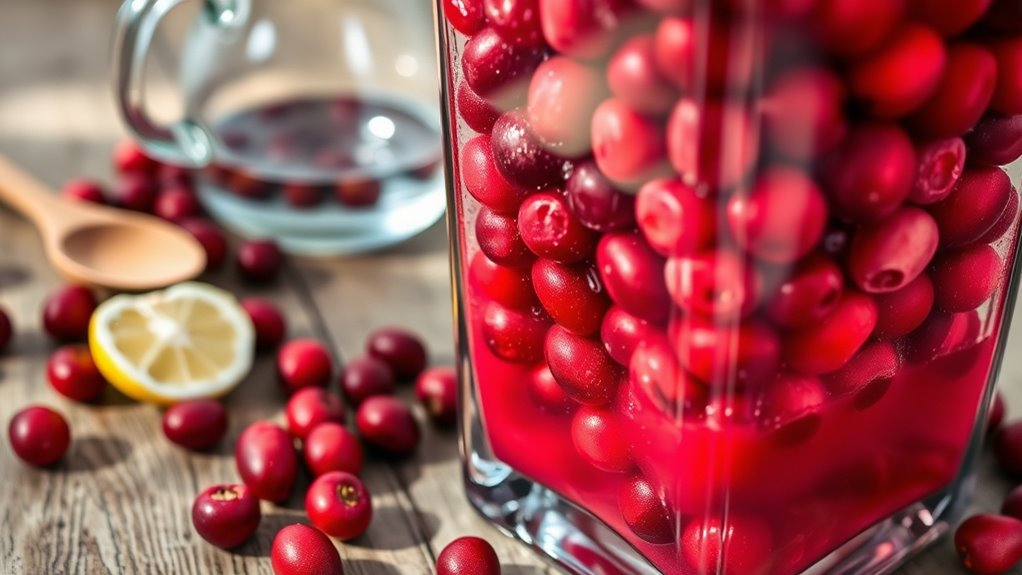
To make cranberry juice in a blender, start by gathering fresh or frozen cranberries and rinsing them well. Using a blender to make cranberry juice is a quick and easy way to enjoy this tart and nutritious drink at home.
Add the berries to your blender with water and a sweetener like honey or sugar to balance the flavor.
Blend the mixture until smooth, then strain it to remove pulp and seeds for a clear juice.
Taste your cranberry juice and adjust the sweetness or tartness as needed.
Finally, store the juice in the fridge to keep it fresh.
This simple method guarantees fresh, flavorful cranberry juice every time. You’ll also discover easy tips to perfect your homemade cranberry drink with minimal effort.
Key Takeaways
- Rinse and select 2 cups of fresh or frozen cranberries, removing any stems or damaged berries.
- Combine cranberries, 1 cup water, and 1-2 tablespoons sweetener in a blender for smooth blending.
- Blend on high for 1-2 minutes, scraping sides to ensure an even, pulp-free mixture.
- Strain the blended mixture through a fine mesh or cheesecloth to remove seeds and pulp.
- Taste and adjust sweetness or tartness, then refrigerate in an airtight container for up to 7 days.
Gather Cranberries and Ingredients
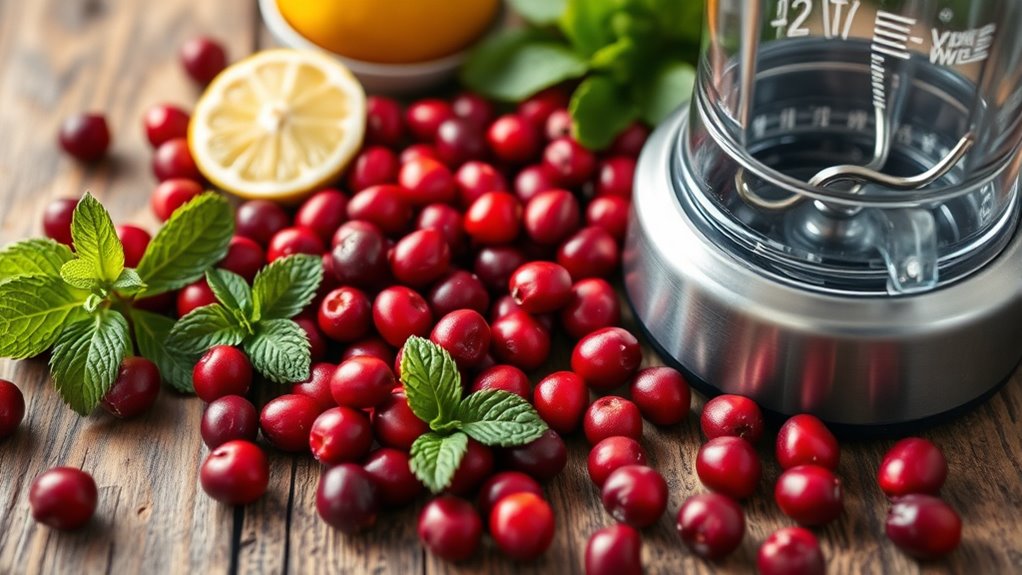
Before you start blending, make sure you have fresh or frozen cranberries on hand. You’ll need about two cups for a good batch of juice. Next, gather your sweetener—sugar, honey, or a sugar substitute works fine, depending on your taste.
Have water ready as well; it helps thin out the juice and makes blending easier. If you like a hint of citrus, grab a lemon or lime for some fresh juice or zest. Optional extras like ginger or mint can add a unique twist, so decide if you want those before you begin.
Finally, prepare your blender and a strainer or cheesecloth if you prefer smoother juice. With everything ready, you’ll breeze through the blending process efficiently.
Prepare Cranberries for Cranberry Juice
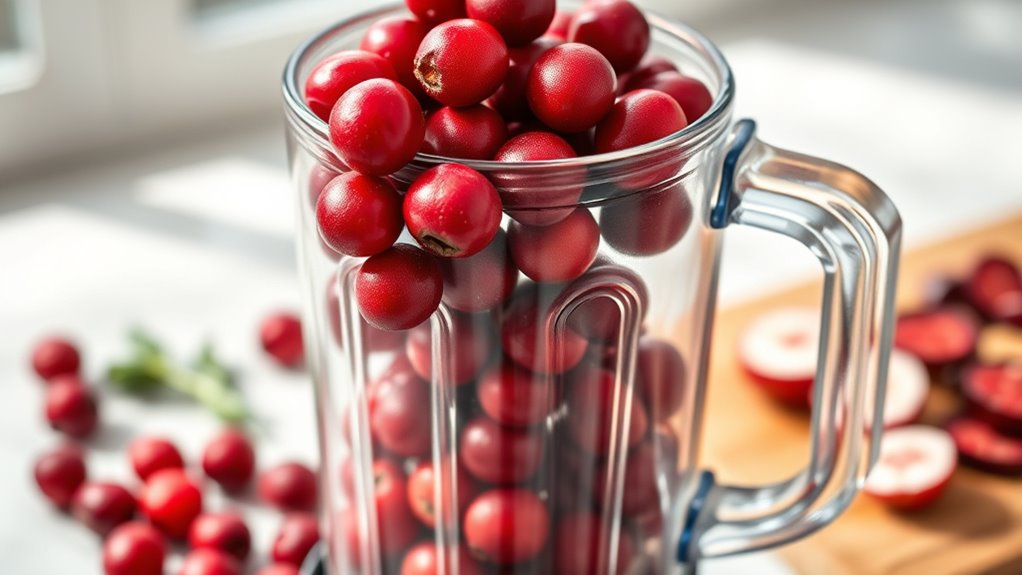
Start by picking fresh, firm cranberries to guarantee the best flavor. Give them a good rinse under cold water to remove any dirt or residue. Don’t forget to take out any stems or damaged berries before blending.
Selecting Fresh Cranberries
When choosing cranberries for your juice, focus on firm, plump berries that have a deep red color. Avoid berries that look shriveled, dull, or have soft spots, as these indicate age or spoilage. Fresh cranberries should feel heavy for their size and have a taut skin.
You can gently squeeze a few; fresh ones will bounce back without bruising. If you’re buying from a bulk bin, pick through carefully to remove any debris or damaged berries. Also, opt for cranberries that are consistent in size to ensure even blending.
Selecting the freshest cranberries guarantees your juice will have that vibrant taste and natural tartness you’re aiming for in your homemade blend.
Washing Cranberries Thoroughly
After selecting fresh, firm cranberries, you’ll want to give them a thorough wash to remove any dirt, pesticides, or debris. Place the cranberries in a large colander or fine mesh strainer. Rinse them under cold running water, gently tossing them with your hands to guarantee all surfaces get cleaned.
Avoid soaking the berries for too long, as they can absorb water and become mushy, which affects the juice’s flavor and texture. Once rinsed, spread the cranberries on a clean kitchen towel or paper towels and pat them dry. Proper washing not only improves the taste but also assures your juice is safe and fresh.
Taking this simple step prepares your cranberries perfectly for the next stages of juicing.
Removing Stems And Debris
Although washing removes most dirt, you’ll still need to pick out any stems, leaves, or other debris clinging to the cranberries. This step assures your juice tastes fresh and avoids unwanted textures. Grab a clean bowl and gently sort through the berries by hand.
Look for anything that doesn’t belong or could affect the flavor. Pay special attention to:
- Stems and small twigs that might have stuck during harvesting
- Leaves or bits of plant material mixed in with the berries
- Any damaged or shriveled cranberries that could alter the juice’s quality
Taking a few extra minutes here guarantees a cleaner blend and a smoother juice. Once you’ve removed all unwanted parts, your cranberries will be perfectly prepped for the blender.
Add Water and Sweeteners to Balance Tartness
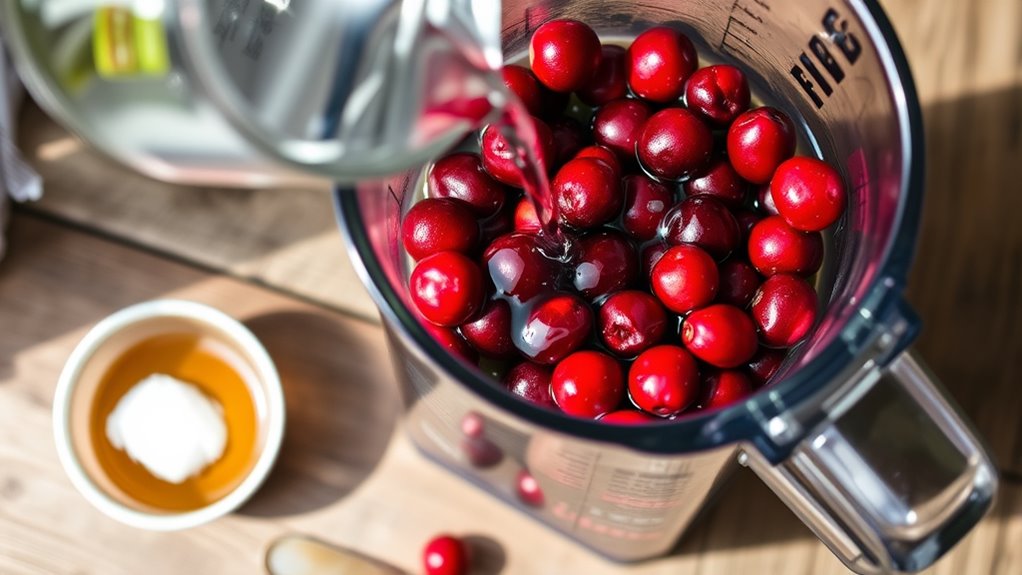
Since cranberry juice can be quite tart on its own, you’ll want to add water and sweeteners to create a balanced flavor. Start by pouring in a cup of cold water for every cup of cranberries you’ve prepped. This dilutes the sharpness and helps the blender work smoothly.
Next, add your preferred sweetener—sugar, honey, or maple syrup all work well. Begin with one to two tablespoons, then adjust to taste. Remember, you can always add more later, so start conservatively.
Stir or gently shake the mixture to let the sweetener dissolve evenly. Balancing the tartness with water and sweeteners guarantees your cranberry juice tastes fresh and pleasant, making it enjoyable whether served chilled or used in recipes.
Blend Cranberries Until Smooth
Make sure you use fresh cranberries for the best flavor and nutrients. Blend them until the mixture is completely smooth, without any chunks left.
This will give you a rich, consistent juice that’s easy to strain or enjoy as is.
Choosing Fresh Cranberries
Where can you find the best cranberries for your juice? Start by heading to local farmers’ markets or well-stocked grocery stores, where fresh, seasonal cranberries are plentiful. When choosing your berries, focus on these key points:
- Color and Firmness: Pick cranberries that are bright red and firm to the touch; avoid soft or shriveled ones.
- Size and Shape: Opt for plump, round berries without bruises or blemishes for the freshest flavor.
- Packaging: Choose cranberries stored in breathable containers to prevent moisture buildup, which can spoil the fruit.
Selecting fresh cranberries ensures your juice has that vibrant, tart flavor and natural sweetness. Freshness directly impacts the quality of your blend, so take a moment to inspect the berries carefully before you blend them.
Achieving Smooth Texture
Although cranberries are naturally tart and firm, blending them thoroughly is essential to release a smooth, drinkable texture for your juice. Start by adding your fresh cranberries and a bit of water to the blender. Blend on high speed for about one to two minutes.
Stop occasionally to scrape down the sides, ensuring all pieces are broken down evenly. If the mixture still feels gritty or chunky, blend for another 30 seconds. Straining the juice through a fine mesh sieve or cheesecloth afterward helps remove any remaining pulp, giving you a silky finish.
Strain Juice to Remove Pulp and Seeds
Once you’ve blended the cranberries, you’ll want to strain the juice to remove any pulp and seeds. This step guarantees a smooth, clear liquid free of unwanted textures. To do this effectively, use a fine mesh strainer or cheesecloth.
Pour the blended mixture slowly, allowing the juice to separate naturally. Gently press the pulp with a spoon to extract as much liquid as possible without forcing solids through.
Consider these tips for straining your cranberry juice:
- Use a bowl to catch the juice beneath the strainer for easy transfer.
- Rinse the strainer occasionally to prevent clogging.
- Avoid pressing too hard to keep bitterness from the seeds out of your juice.
Straining refines your juice, making it enjoyable and visually appealing.
Taste and Adjust Cranberry Juice Flavor
Before serving, you’ll want to taste your cranberry juice to see if it needs any adjustments. Cranberries have a naturally tart flavor, so you might find the juice too sharp. If that’s the case, try adding a little sweetener like honey, sugar, or agave syrup.
Add it gradually, tasting as you go, until it reaches your preferred balance. If the juice feels too strong or concentrated, dilute it with a splash of water or another juice, like apple or orange, to mellow the tartness. You can also squeeze in a bit of fresh lemon or lime juice to brighten the flavor.
Adjusting the taste guarantees your cranberry juice is perfectly suited to your palate before you enjoy it.
Store Your Homemade Cranberry Juice Properly
To keep your homemade cranberry juice fresh and flavorful, store it in a clean, airtight container and refrigerate it promptly. This prevents oxidation and slows down bacterial growth, preserving the juice’s vibrant taste and nutrients. Glass bottles or jars work best because they don’t absorb odors or flavors.
Here are some tips for storing your juice properly:
- Label the container with the date to track freshness.
- Keep the juice refrigerated at or below 40°F (4°C).
- Consume the juice within 5 to 7 days for ideal quality.
Avoid leaving the juice at room temperature for extended periods, as it can spoil quickly. By following these simple steps, you’ll enjoy your homemade cranberry juice at its best every time.
Frequently Asked Questions
Can I Use Frozen Cranberries Instead of Fresh Ones?
Yes, you can use frozen cranberries instead of fresh ones. They’ll blend just fine, but you might want to thaw them slightly or add a bit more liquid to help everything mix smoothly and get that perfect juice consistency.
Is Cranberry Juice Good for Urinary Tract Health?
You might think cranberry juice’s only talent is staining your shirt, but yes, it’s good for urinary tract health. Its compounds help prevent bacteria from sticking, so you’ll thank it during those pesky infections.
How Long Does Homemade Cranberry Juice Last in the Fridge?
You can keep homemade cranberry juice in the fridge for about 3 to 5 days.
Make sure to store it in an airtight container and give it a good shake before drinking to keep it fresh.
Can I Make Cranberry Juice Without a Blender?
You don’t need a blender—like a painter who’s lost their brush, you can still create by mashing cranberries with a fork or using a juicer.
This hands-on approach yields fresh juice, just a bit more effort.
What Are the Nutritional Benefits of Cranberry Juice?
You’ll get antioxidants, vitamin C, and fiber from cranberry juice, which can boost your immune system and support urinary tract health. It’s also low in calories, helping you stay hydrated and refreshed without added sugars.
Conclusion
Making cranberry juice in your blender is as simple as painting a vibrant canvas—each step adding a splash of flavor and color. Just like an artist balances shades, you’ll balance tartness with sweetness to create a perfect blend.
Remember, even the smallest adjustments can turn your juice into a masterpiece. So, follow these easy steps, and soon you’ll enjoy a revitalizing, homemade drink that’s both healthy and delicious—your kitchen, your art studio!
By mastering how to make cranberry juice in a blender, you not only create a refreshing beverage but also embrace a nutritious lifestyle. This easy method ensures you get fresh cranberry juice quickly, making it a perfect addition to your daily routine. Enjoy the benefits of homemade cranberry juice today!