How Long to Cook London Broil in Oven
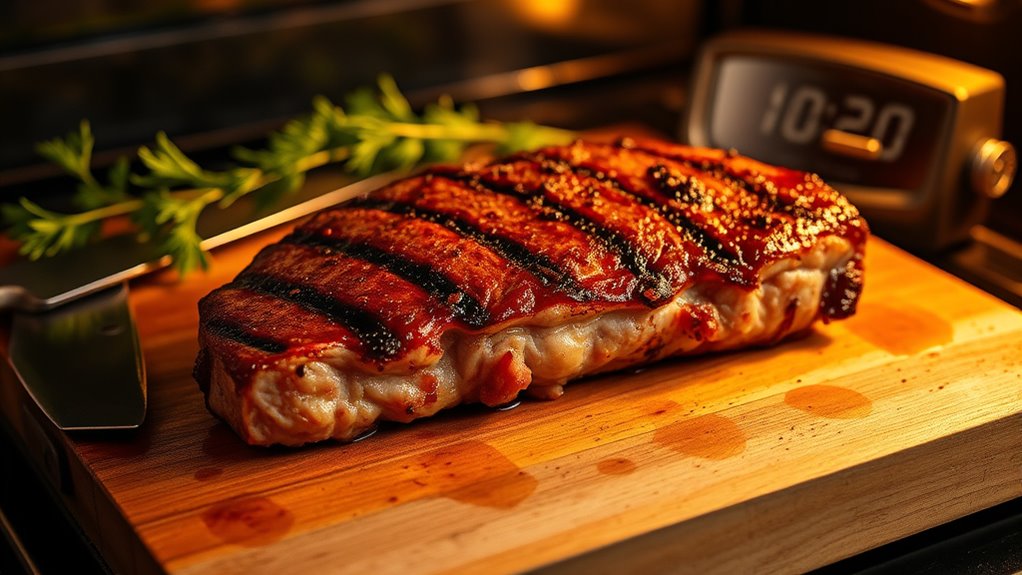
You’ll want to cook your London broil in the oven for 4 to 10 minutes per side depending on thickness and your desired doneness—rare at 125°F, medium around 135°F, and well-done above 155°F.
Aim for oven temps between 375°F and 450°F for the best balance of sear and juiciness.
Don’t forget to let it rest for 5-10 minutes to lock in flavor.
Keep going to discover tips on marinating, monitoring temperature, and avoiding common mistakes.
Key Takeaways
- Cook London broil at 400°F for 6-8 minutes per side for a 1-inch thick cut.
- Increase cooking time by 3-4 minutes per side for each additional half-inch thickness.
- Use a meat thermometer to check internal temperature: 130°F for rare, 140°F for medium.
- Let meat rest for 5-10 minutes after cooking to retain juices and improve flavor.
- Marinate London broil overnight for tenderness and pat dry before cooking for proper sear.
How Long to Cook London Broil for Rare, Medium, and Well-Done
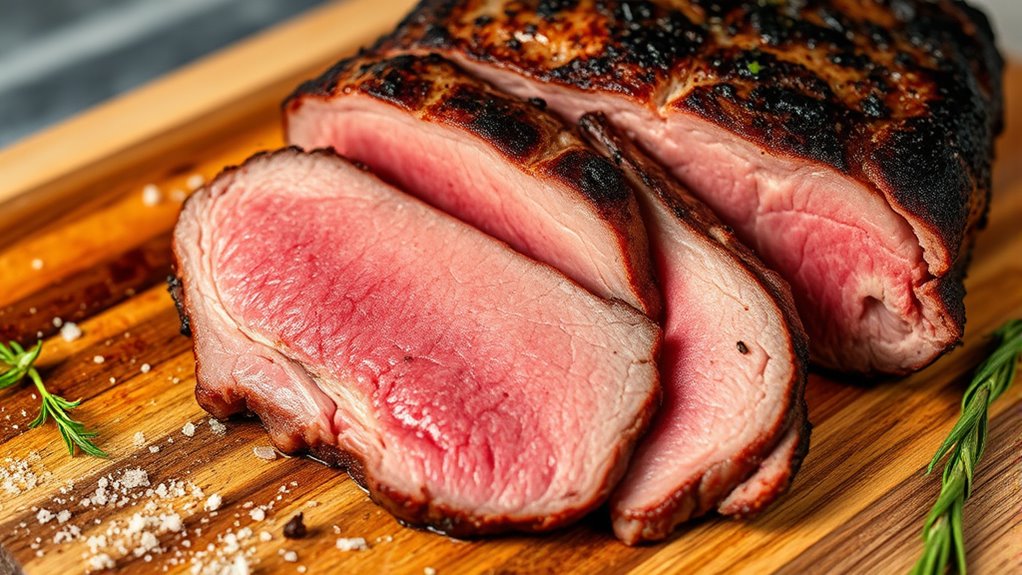
When you’re cooking London Broil, the key is timing it right to get your preferred doneness. For rare, cook the meat for about 4 to 5 minutes per side, aiming for an internal temperature of 125°F (52°C).
If you want it medium, extend the cooking time to roughly 6 to 7 minutes per side, reaching 135°F (57°C). For well-done, plan on 8 to 10 minutes per side, or until the internal temperature hits 155°F (68°C) or higher.
Always use a meat thermometer to check the temperature accurately. Remember, resting the meat for 5 to 10 minutes after cooking helps redistribute juices, ensuring a tender and flavorful London Broil no matter your preferred doneness.
What Oven Temperature Works Best for London Broil
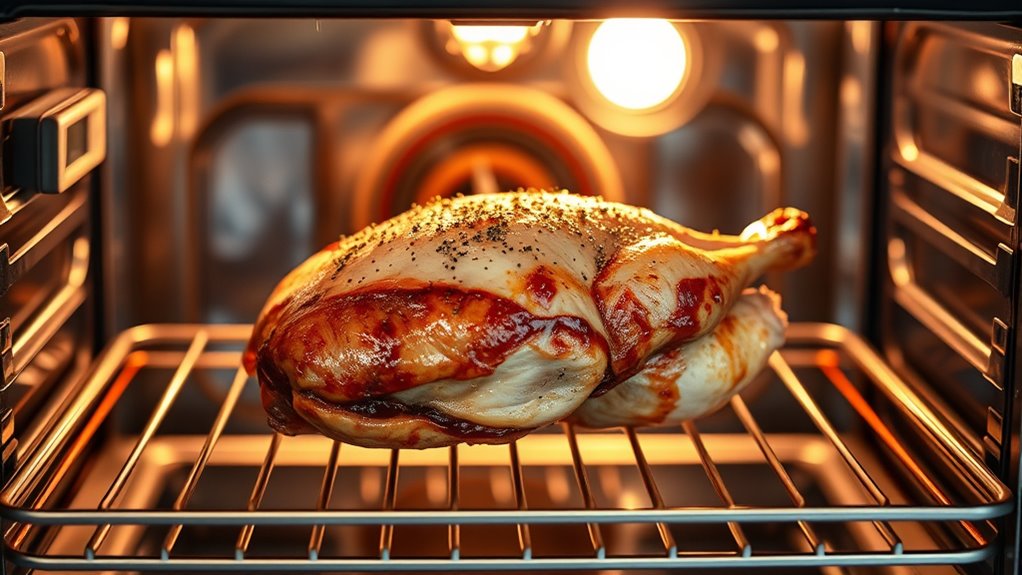
You’ll want to set your oven to the ideal temperature range, usually between 375°F and 450°F, to get the best results with London broil. Choosing high heat will give you a nice sear and a juicy center, while lower heat can make the meat more tender but takes longer.
Understanding how temperature affects texture helps you cook your London broil just the way you like it.
Ideal Temperature Range
Although London broil is a versatile cut, cooking it at the right oven temperature is key to achieving a tender, flavorful result. You’ll want to aim for an ideal temperature range between 375°F and 425°F. This range allows the meat to cook evenly, developing a nice crust while keeping the inside juicy.
Temperatures below 375°F may cause the broil to cook too slowly, risking toughness, while going above 425°F can dry it out quickly. Sticking within this range helps you control the cooking process better and guarantees the meat doesn’t overcook. By setting your oven within these limits, you’ll get a beautifully cooked London broil with balanced flavor and texture every time.
High vs. Low Heat
Deciding between high and low heat for cooking London broil depends on the texture and doneness you want. If you want a quicker cook with a nicely seared crust, high heat—around 425°F to 450°F—works best. It locks in juices while developing a flavorful exterior.
However, you’ll need to watch it closely to avoid overcooking. On the other hand, low heat, about 275°F to 300°F, allows for more even cooking throughout the meat. This method takes longer but reduces the risk of drying out the London broil.
You’ll want to adjust cooking times accordingly. Ultimately, choosing the right temperature depends on your schedule and preference for a faster sear or a more gentle, controlled cook.
Temperature Impact on Texture
When cooking London broil, the oven temperature you choose directly shapes the meat’s texture and juiciness. You want a balance that tenderizes without drying out the beef. Here’s what works best:
- High heat (425°F to 450°F): Quickly sears the outside, locking in juices and creating a flavorful crust. Best for thinner cuts.
- Moderate heat (350°F to 375°F): Cooks evenly, preserving tenderness while reducing the risk of overcooking. Ideal for thicker pieces.
- Low heat (275°F to 300°F): Slowly breaks down connective tissue, making the meat very tender but with less crust formation.
Choosing the right temperature depends on thickness and desired doneness. For most London broils, moderate to high heat offers the perfect texture and juiciness balance.
How Thickness Affects London Broil Cooking Time
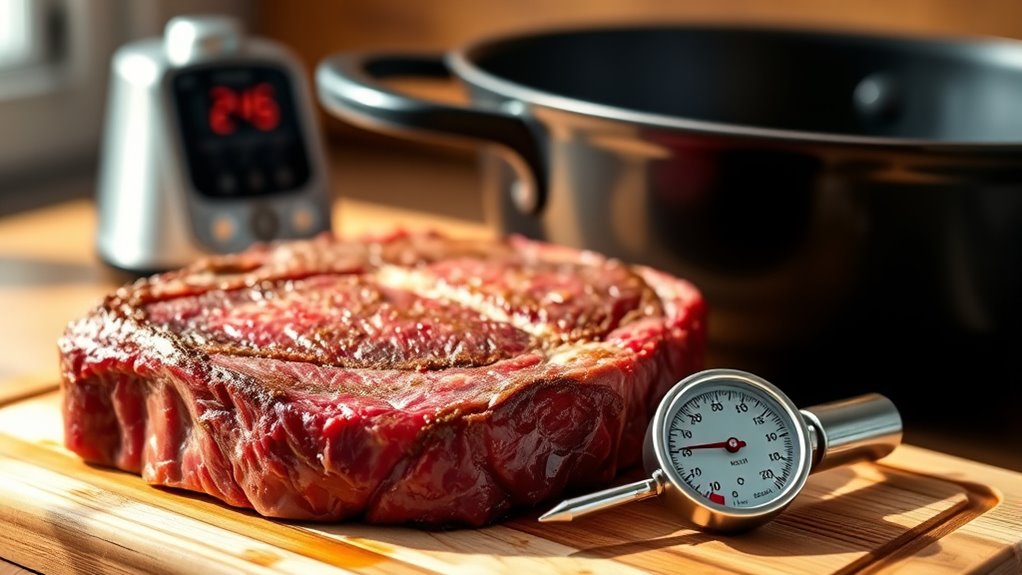
The thickness of your London broil directly impacts how long it needs to cook in the oven. Thinner cuts will cook faster, while thicker pieces require more time and sometimes a temperature adjustment.
You’ll want to tailor your oven settings to match the size of your meat for the best results.
Thickness And Cooking Time
Because the thickness of your London broil directly influences how long it needs to cook, you’ll want to measure it carefully before starting. Thicker cuts require longer cooking times to reach your desired doneness, while thinner ones cook faster and risk drying out if overcooked.
Here’s what to keep in mind:
- A 1-inch thick London broil typically takes about 6-8 minutes per side at 400°F.
- For every additional half-inch of thickness, add roughly 3-4 minutes per side.
- Always use a meat thermometer to check internal temperature for accuracy.
Thin Cuts Versus Thick
Measuring thickness helps you estimate cooking time, but understanding how thin and thick cuts behave differently in the oven can improve your results even more. Thin London broil cuts, usually under an inch thick, cook quickly and need close attention to avoid overcooking and drying out. You’ll want to watch the oven closely and aim for a shorter cooking time, often just a few minutes per side for a tender, juicy finish.
Thick cuts, on the other hand, take longer to cook through evenly. They benefit from a slower, more controlled cook to allow the heat to penetrate without burning the exterior. When you know your cut’s thickness, you can adjust your cooking approach accordingly for the best texture and flavor.
Adjusting Oven Temperature
Although thicker cuts of London broil need more time to cook, you can expedite the process by adjusting your oven temperature carefully. When you increase the temperature slightly, the meat cooks faster, but be cautious—not to overdo it, or you risk drying out the beef.
Here’s how thickness influences your temperature settings:
- For cuts under 1 inch, set the oven at 425°F for a quick roast.
- For 1 to 1.5 inches, maintain 400°F to ensure even cooking.
- For thicker than 1.5 inches, lower to 350°F and cook longer to avoid toughness.
Should You Marinate London Broil Before Cooking?
Marinating London broil before cooking can greatly enhance its flavor and tenderness. Since this cut tends to be lean and a bit tough, a marinade helps break down muscle fibers, making the meat juicier and easier to chew. You’ll want to choose a marinade with acidic ingredients like vinegar, lemon juice, or wine combined with oil and seasonings.
Aim to marinate your London broil for at least 4 hours, but overnight is ideal for maximum flavor absorption. Remember to marinate in the refrigerator, not at room temperature, to keep it safe. When you’re ready, remove the meat from the marinade and pat it dry before cooking to guarantee a nice sear and even cooking throughout.
How to Use a Meat Thermometer for London Broil Doneness
Once your London broil is properly marinated and ready for cooking, using a meat thermometer helps you achieve the perfect level of doneness without guesswork. Insert the thermometer into the thickest part of the meat, avoiding bone or fat. Monitor the temperature closely as the roast cooks to prevent overcooking.
Keep these tips in mind when utilizing your meat thermometer:
- Aim for 130°F for medium-rare, 140°F for medium, and 150°F for medium-well.
- Remove the meat from the oven a few degrees below your target since it will continue to cook while resting.
- Clean your thermometer probe after each use to maintain accuracy and hygiene.
This method guarantees your London broil turns out juicy and cooked exactly how you like.
Adjust Cooking Times for Different Oven Types
Because ovens vary in heat distribution and cooking efficiency, you’ll need to adjust your London broil’s cooking time accordingly. Conventional ovens tend to cook more evenly but can take longer, so plan for the standard cooking time or add a few minutes if your oven runs cool.
Convection ovens circulate hot air, speeding up cooking; reduce your cooking time by about 25% or lower the temperature by 25°F to prevent overcooking. If you’re using older or less reliable ovens, keep a close eye on the meat; temperatures may fluctuate, so check doneness sooner than expected.
Always use a meat thermometer to confirm the internal temperature, ensuring your London broil is cooked perfectly regardless of your oven type.
How to Broil London Broil Instead of Baking It
If you want to broil London broil instead of baking it, set your oven to the broil setting, usually around 500°F. Keep a close eye on the cooking time, typically 4-6 minutes per side, to avoid overcooking.
To guarantee even cooking, flip the meat halfway through and position it about 4-6 inches from the heat source.
Broiling Temperature Settings
When you choose to broil your London broil, setting the right temperature is essential to achieving a perfectly seared exterior and a juicy interior. Most ovens have a broil setting that ranges from low to high, typically between 500°F and 550°F.
For ideal results, you’ll want to preheat your broiler on high to get intense, direct heat. Position the oven rack about 4-6 inches from the heating element to avoid burning. Use a broiler pan to allow fat to drip away, preventing flare-ups.
Cooking Time Guidelines
Although broiling London broil requires close attention, you can achieve a flavorful, tender result with the right timing. Start by preheating your broiler to high and placing the meat about 4-6 inches from the heat source. For a 1 to 1.5-pound London broil, broil each side for about 4-6 minutes for medium-rare.
If you prefer medium, increase the time to 6-8 minutes per side. Keep in mind that thinner cuts will cook faster, so adjust accordingly. Use a meat thermometer to check doneness: 130°F for medium-rare, 140°F for medium.
After broiling, let the meat rest for 5-10 minutes to allow juices to redistribute. Following these guidelines will help you avoid overcooking while ensuring a juicy, delicious London broil every time.
Tips For Even Cooking
Because broiling exposes the meat to direct high heat, you’ll want to take specific steps to guarantee your London broil cooks evenly without drying out. First, position the oven rack about 4-6 inches from the broiler element to avoid burning the surface while keeping the inside juicy.
Next, flip the meat halfway through cooking to ensure both sides get equal exposure to the heat. Finally, use a meat thermometer to monitor the internal temperature closely, aiming for 130°F (54°C) for medium-rare.
- Preheat your broiler and oven rack position
- Flip meat at the midpoint of cooking
- Use a meat thermometer for precise doneness
Following these tips helps you achieve a perfectly broiled London broil every time.
Avoid These Common Mistakes That Overcook Your London Broil
If you want to enjoy a tender, juicy London Broil, you need to steer clear of a few common mistakes that cause overcooking. First, don’t cook at too high a temperature—this dries out the meat. Avoid skipping the marinade; it helps tenderize.
Also, resist the urge to leave it in the oven too long. Use a meat thermometer to check doneness precisely.
| Mistake | Effect | How to Avoid |
|---|---|---|
| High oven temperature | Dry, tough meat | Cook at moderate heat (350°F) |
| Skipping marinade | Less tender, bland flavor | Marinate for at least 4 hours |
| Overcooking | Loss of juiciness | Use a meat thermometer |
| Not flipping the meat | Uneven cooking | Flip halfway through cooking |
| Ignoring resting time | Juices escape immediately | Rest before slicing |
Tips for Resting London Broil After Cooking
Once your London Broil comes out of the oven, you’ll want to let it rest for at least 10 minutes before slicing. Resting allows the juices to redistribute, making your meat juicier and more flavorful. Don’t skip this step, or you’ll lose those delicious juices when you cut into the steak.
To rest your London Broil properly:
- Tent it loosely with aluminum foil to keep it warm without steaming.
- Place it on a warm plate or cutting board to avoid chilling.
- Avoid pressing down or cutting too soon, which lets the juices escape.
Following these tips ensures your London Broil stays tender and moist, giving you the best eating experience.
Easy Side Dishes to Serve With London Broil
Though London Broil stands out as a flavorful main dish, pairing it with the right sides can elevate your entire meal. You can keep it simple with roasted vegetables like asparagus, carrots, or Brussels sprouts, which add color and nutrition. A fresh green salad tossed with a tangy vinaigrette balances the richness of the meat.
For something heartier, try garlic mashed potatoes or creamy polenta to soak up the flavorful juices. If you want a lighter option, steamed green beans or sautéed spinach work perfectly. Don’t forget a crusty bread or dinner rolls to complete the plate.
These easy sides are quick to prepare and complement London Broil’s robust taste without overpowering it, making your dinner both satisfying and well-rounded.
Frequently Asked Questions
What Cut of Beef Is Best for London Broil?
You’ll want to choose flank steak or top round for London broil. These cuts are lean, flavorful, and respond well to marinating and high-heat cooking, giving you a tender, juicy result when prepared properly.
Can London Broil Be Cooked on a Grill Instead of an Oven?
Grilling London Broil adds a smoky kiss that an oven just can’t match. Just marinate, preheat your grill to medium-high, and cook about 4-6 minutes per side for juicy, flavorful results.
How Should London Broil Be Sliced for Serving?
You should slice London broil thinly against the grain to keep it tender and easy to chew.
Cutting across the fibers breaks them up, making each bite more flavorful and less tough for your guests to enjoy.
Is London Broil Gluten-Free?
London broil itself is gluten-free, like a clean canvas ready for your flavor brush. Just watch out for marinades or sauces with soy sauce or wheat—those can sneak gluten in, so always check the labels before you cook.
How Long Can Leftover London Broil Be Stored in the Fridge?
You can store leftover London broil in the fridge for 3 to 4 days. Make sure to keep it in an airtight container to maintain freshness and prevent it from absorbing other odors in your fridge.
Conclusion
Now that you know how long to cook your London Broil and the best oven temps, you’re ready to impress like a dinner guest from the Roaring Twenties. Remember, marinating and using a meat thermometer are key to nailing that perfect doneness. Don’t rush resting—it lets the juices settle just right.
With these tips, your London Broil will be the star of any meal, paired perfectly with your favorite sides. Happy cooking! Mastering how long to cook London Broil in the oven ensures a tender, flavorful result every time.