How to Pan Fry Sausage Links
To pan fry sausage links perfectly, start by selecting fresh sausages with natural casings to enhance flavor and texture. Bringing the sausages to room temperature before cooking ensures even heat distribution and better results.
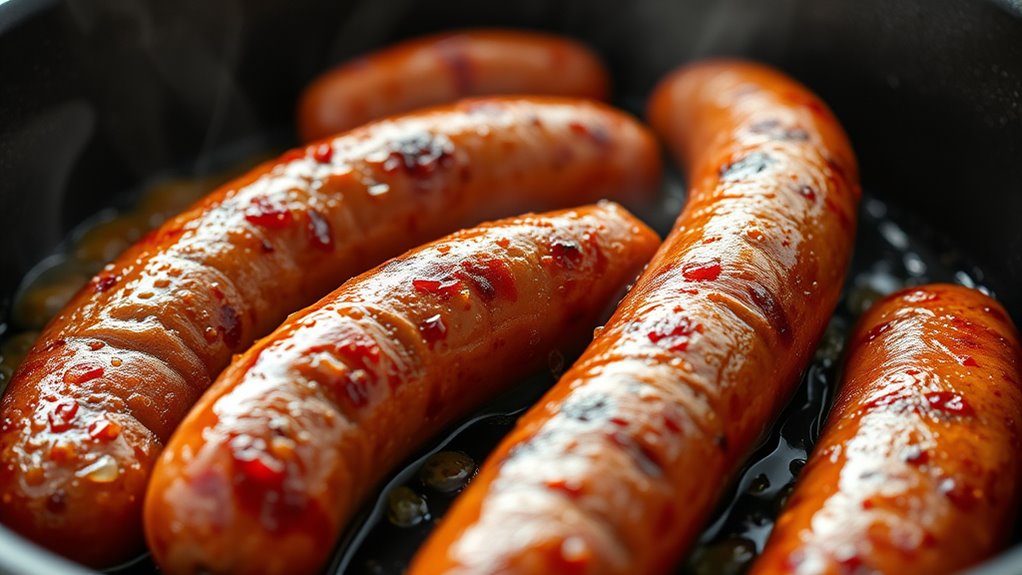
Pan frying sausage links is a simple yet effective method to achieve a crispy exterior while keeping the inside juicy and tender.
Preheat a non-stick or cast iron skillet over medium heat. Place the sausages evenly in the pan, making sure not to overcrowd them.
Cook the sausages slowly, turning every few minutes for 12-15 minutes until they are browned and cooked through.
Avoid piercing the casings to keep the juices locked inside. Use tongs to handle the sausages safely and wipe up any grease spills promptly.
Follow these basics, and you’ll uncover even more tips for perfect, flavorful sausage links.
Key Takeaways
- Choose fresh sausages with 20-30% fat and natural casings for juiciness and crisping, avoiding pre-cooked or smoked links.
- Preheat a non-stick or cast iron skillet over medium heat and avoid overcrowding the pan for even cooking.
- Cook sausages slowly over medium to medium-low heat, turning every few minutes for 12-15 minutes to brown evenly.
- Use tongs to turn sausages gently without piercing casings, and check doneness by clear juices or internal temperature.
- Let sausages rest briefly after cooking to redistribute juices, enhancing flavor and texture before serving.
Picking the Best Sausage Links to Fry
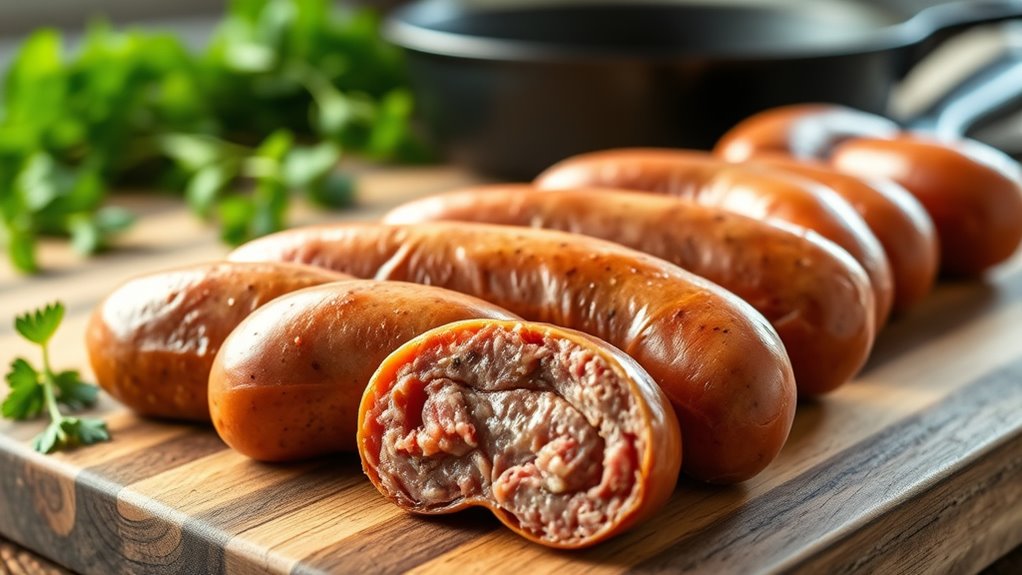
Although there are many types of sausage links available, choosing the right one sets the foundation for a great pan-fried meal. You want to pick sausages with a good fat content, around 20-30%, so they stay juicy and flavorful when cooked. Fresh sausages, like Italian or bratwurst, work well because they brown nicely and don’t dry out quickly.
Avoid pre-cooked or fully smoked links since they require less frying and won’t develop that perfect crust. Also, consider the casing—natural casings tend to crisp better than synthetic. Finally, check the seasoning; mild sausages are versatile, while spicy or herb-infused options add an extra kick.
Picking thoughtfully guarantees your pan-fried sausages come out tender, tasty, and beautifully browned every time.
Preparing Sausage Links for Pan Frying
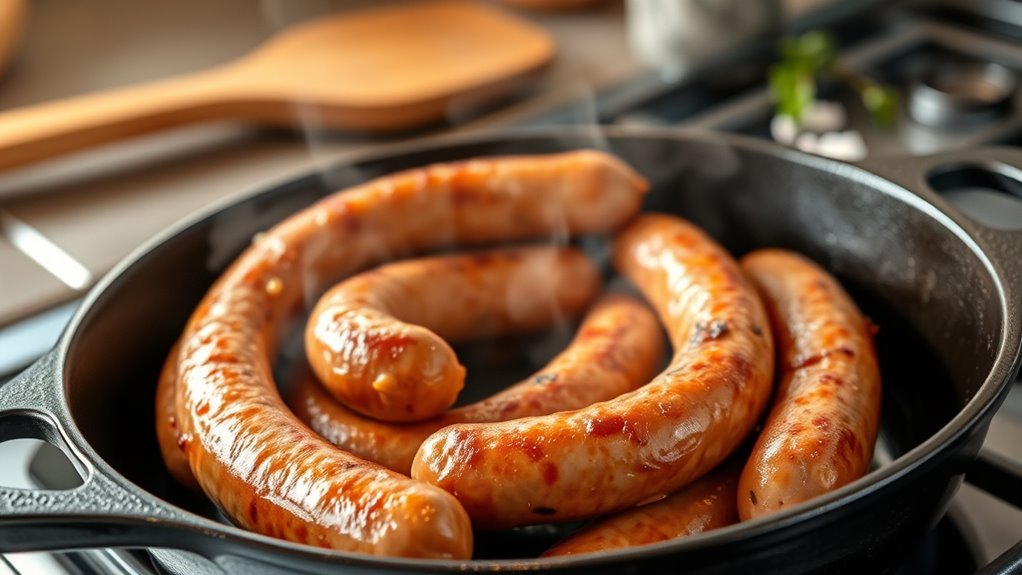
Before you start frying, make sure your sausage links are fresh and high-quality for the best flavor. You’ll want to prepare them by bringing them to room temperature and patting them dry to guarantee even cooking.
Also, gather essential tools like a skillet, tongs, and a thermometer to make the process smooth and safe.
Selecting Quality Sausage Links
When choosing sausage links for pan frying, you want to focus on freshness and quality to guarantee the best flavor and texture. Look for sausages with a firm, plump appearance and avoid any with discoloration or an off smell. Check the packaging date to verify they’re as fresh as possible.
Opt for sausages made from high-quality meats without excessive fillers or artificial additives, as these impact taste and cooking results. If possible, choose links with natural casings—they tend to crisp up nicely when pan fried. Also, consider the fat content; sausages with moderate fat provide juiciness without excessive grease.
Preparing Sausages Before Cooking
Since proper preparation affects how evenly your sausage links cook, you’ll want to handle them carefully before they hit the pan. First, take the sausages out of the fridge and let them sit at room temperature for about 10-15 minutes. This helps them cook more evenly inside.
Next, pat the links dry with a paper towel to remove any excess moisture, which prevents splattering and helps achieve a nice, even browning. If the links are stuck together, gently separate them to ensure each one cooks properly. Avoid piercing the sausages before cooking; keeping the casing intact helps retain their juices and flavor.
Once prepped, you’re ready to move on to the cooking process with confidence and great results.
Essential Kitchen Tools Needed
Although pan frying sausage links is straightforward, having the right kitchen tools makes the process smoother and your results better.
You’ll want tools that help you cook evenly, handle the sausages safely, and clean up easily afterward.
Here’s a quick look at the essentials:
| Tool | Purpose |
|---|---|
| Non-stick skillet | Prevents sticking, cooks evenly |
| Tongs | Turns sausages without piercing |
| Meat thermometer | Checks internal temperature |
| Spatula | Helps flip and adjust sausages |
| Paper towels | Absorbs excess grease |
With these tools, you’ll pan fry sausage links efficiently and safely, ensuring juicy, well-cooked results every time.
Heating Your Skillet for Perfect Sausage
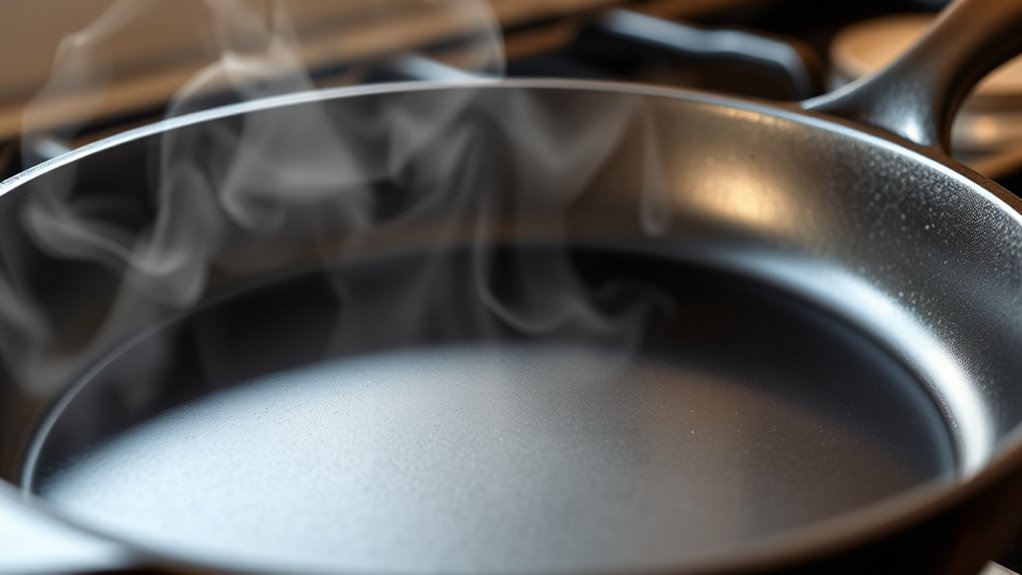
You’ll want to start by choosing the right skillet—cast iron or nonstick works best for even heat distribution. Next, preheat your pan over medium heat to guarantee your sausage cooks evenly without burning. Getting the temperature just right is key to a perfect sear and juicy interior.
Choosing The Right Skillet
How do you choose the perfect skillet for pan frying sausage links? Picking the right skillet makes all the difference in cooking evenly and achieving that crispy, golden exterior.
Here’s what to consider:
- Material: Cast iron holds heat well and distributes it evenly, ideal for consistent cooking. Non-stick pans offer easy cleanup but might not brown sausages as nicely.
- Size: Use a skillet that fits your sausage links without crowding. Overcrowding traps moisture, preventing a crisp finish.
- Weight: A heavier skillet retains heat better, ensuring steady cooking temperature once heated.
Choose wisely to get that perfect sear and juicy inside every time you pan fry your sausage links!
Optimal Heat Settings
When heating your skillet for sausage links, controlling the heat is key to locking in flavor and achieving that perfect crispy skin. Start by preheating your pan over medium heat. This setting allows the sausages to cook evenly without burning the exterior.
Avoid high heat—it might brown the outside too fast while leaving the inside undercooked. If you notice the sausages browning too quickly, lower the heat slightly. Conversely, if they’re not sizzling gently, increase the heat a little.
Medium-low heat works well for a slower, thorough cook, helping the fat render properly and the skin to crisp up nicely. Remember, patience with controlled heat gives you juicy, flavorful sausages every time.
How to Pan Fry Sausage Links Step-by-Step
Wondering how to get perfectly cooked sausage links with a crispy exterior and juicy interior? Follow these simple steps to pan fry sausage links flawlessly.
- Preheat your pan over medium heat, then add the sausage links. Make sure they’re evenly spaced to cook uniformly.
- Cook the sausages slowly, turning them every few minutes. This helps brown all sides and prevents burning. It usually takes about 12-15 minutes depending on thickness.
- Check for doneness by cutting into one link; the juices should run clear, and the inside should no longer be pink. Once cooked through, remove from the pan and let them rest briefly before serving.
This method guarantees your sausage links are cooked evenly and taste delicious every time.
Tips for Crispy Skin and Juicy Sausage
Now that you know how to cook sausage links evenly, focus on achieving that perfect balance between crispy skin and juicy interior. Start by heating your pan over medium heat and adding a small amount of oil to prevent sticking. Don’t rush the process—cook the sausages slowly so the skin can crisp without burning.
Turn them regularly to guarantee even browning on all sides. To lock in juices, avoid piercing the sausages with a fork while cooking. Once the skin looks golden and slightly blistered, reduce the heat slightly to finish cooking through without drying them out.
Rest the sausages for a few minutes after frying; this helps redistribute the juices, keeping every bite flavorful and moist.
Checking When Sausage Links Are Fully Cooked
Although sausage links may look browned and crispy on the outside, you can’t rely on appearance alone to guarantee they’re fully cooked. To be sure, use these three simple methods:
- Use a Meat Thermometer: Insert it into the thickest part of the sausage. The internal temperature should reach 160°F (71°C) for pork or beef sausages and 165°F (74°C) for poultry sausages.
- Check the Juices: Pierce a sausage with a fork or knife; the juices should run clear, not pink or red.
- Cut and Inspect: Slice a link in half. The inside should be firm, opaque, and free of any pink or raw spots.
Preventing Splatter and Mess When Pan Frying
Since sausage links release hot fat as they cook, you’ll want to take steps to prevent splatter and keep your stovetop clean. Start by using a deep skillet or pan with high sides to contain the grease. Place a splatter screen over the pan; it lets steam escape while blocking most of the fat from flying out.
Keep the heat at medium or medium-low to reduce aggressive splattering. Avoid overcrowding the pan, as sausages need space for even cooking and less mess. When turning the links, use tongs gently to prevent sudden spurts of hot fat.
Finally, wipe up any grease spills promptly to avoid buildup and maintain a safe cooking area. These steps will keep your kitchen cleaner and safer.
Common Pan Frying Mistakes to Avoid
When pan frying sausage links, you’ll want to steer clear of common mistakes that can affect both flavor and texture. Avoid these pitfalls to ensure perfectly cooked sausages every time.
- Overcrowding the Pan – Putting too many links in at once lowers the pan’s temperature, causing uneven cooking and soggy skin. Cook in batches if needed.
- Cooking on Too High Heat – High heat can burn the outside while leaving the inside undercooked. Use medium or medium-low heat for even browning.
- Skipping Turning or Moving – Let sausages sit too long without turning, and they’ll burn on one side. Turn them regularly for a consistent golden crust.
Creative Serving Ideas for Pan Fried Sausage Links
Avoiding common pan frying mistakes sets you up for perfectly cooked sausage links, but the experience doesn’t have to stop there. Get creative by slicing them into bite-sized pieces and tossing them into a breakfast hash with potatoes and peppers. You can also skewer the sausages with veggies for a quick, tasty kebab.
For a twist, slice them lengthwise and add to a breakfast sandwich with eggs and cheese on a toasted English muffin. If you want something heartier, serve them over creamy polenta or alongside sautéed greens. Don’t forget to pair sausage links with your favorite dipping sauces, like honey mustard or spicy ketchup, to add extra flavor.
These simple ideas transform pan fried sausages into versatile, satisfying meals any time of day.
Frequently Asked Questions
Can I Freeze Cooked Sausage Links for Later Use?
Yes, you can freeze cooked sausage links for later use. Just let them cool completely, wrap them tightly in foil or plastic wrap, and store in an airtight container or freezer bag to keep them fresh and tasty.
Are Sausage Links Gluten-Free or Suitable for Specific Diets?
You’ll find many sausage links gluten-free, but always check labels since some contain fillers or seasonings with gluten. If you’re on a specific diet, look for allergen info or opt for brands catering to your needs.
How Long Can Cooked Sausage Links Be Safely Stored in the Fridge?
You can keep cooked sausage links in your fridge for about 3 to 4 days—longer, and they might start plotting a rebellion in your leftovers.
What Are the Health Benefits and Risks of Eating Sausage Links?
You get protein and some essential nutrients from sausage links, but they’re often high in saturated fat, sodium, and preservatives, which can increase heart disease risk.
Enjoy them occasionally and balance with healthier foods to stay safe.
Can I Pan Fry Vegetarian or Plant-Based Sausage Links the Same Way?
You can treat plant-based sausage links like little suns, heating them gently in your pan. Just watch the heat—too high might scorch their delicate nature.
Cook evenly, enjoy the sizzle, and savor every bite!
Conclusion
Now that you know how to pan fry sausage links perfectly, you’re ready to enjoy a delicious, juicy meal anytime. Did you know that over 60% of home cooks say sausage is their go-to comfort food? With these simple steps, you’ll avoid common mistakes and serve up crispy, flavorful links every time.
So, heat that skillet, get frying, and make your kitchen smell irresistible—your taste buds will thank you! Mastering how to pan fry sausage links ensures you get that perfect crispy outside and juicy inside. Enjoy the satisfaction of a well-cooked sausage link for breakfast, lunch, or dinner.