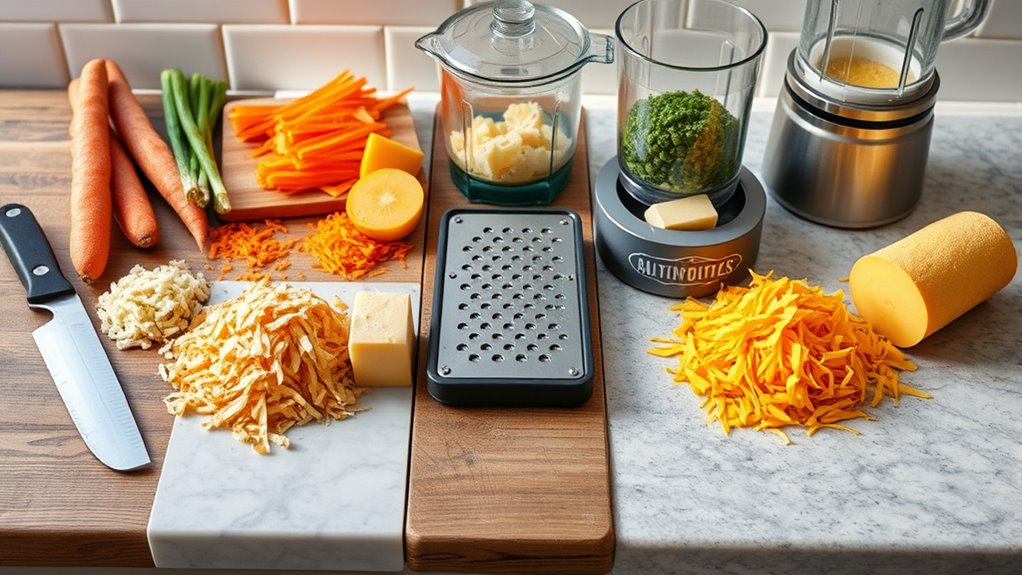
How to Grate Without a Grater Using 7 Easy Methods
You can grate without a grater by using a food processor or blender to shred ingredients quickly and evenly. These kitchen tools make it easy to achieve a grated texture without the traditional tool.
A sharp knife helps you mince finely, offering another great alternative for grating.
A microplane or citrus zester works well for small amounts and delicate ingredients.
A vegetable peeler can create thin strips that mimic grated food in many recipes.
For softer foods, a fork or spoon can effectively smash them to the desired consistency.
In a pinch, fine sandpaper or DIY scrapers can do the job safely.
With a little practice, you’ll find simple ways to master each method and grate without a grater whenever needed.
Key Takeaways
- Use a food processor with a shredding blade for uniform grating of large quantities quickly and efficiently.
- Mince ingredients finely with a sharp knife by slicing thin strips and chopping repeatedly for a grated texture.
- Employ a microplane or citrus zester to finely grate small amounts of garlic, ginger, or citrus zest with precision.
- Create thin vegetable strips using a peeler, then stack and slice into matchsticks to mimic grated pieces.
- In emergencies, rub food against fine-grit sandpaper or sharpened metal scrapers cautiously to produce grated texture.
Use a Food Processor to Shred Ingredients Quickly
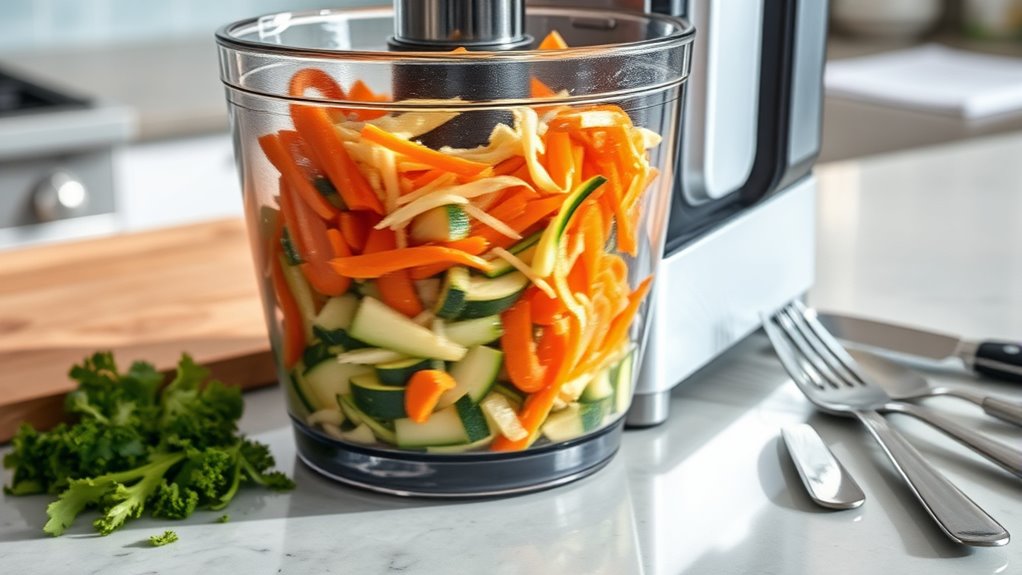
Although you might not have a grater on hand, you can easily shred ingredients using a food processor. Just attach the shredding blade, and you’re ready to go. Cut your vegetables or cheese into chunks that fit the feed tube, then turn on the processor.
It quickly shreds your ingredients into uniform pieces, saving you time and effort. Make sure to pulse gently if you want more control over the texture. Avoid overfilling the bowl, as this can cause uneven shredding or jams.
After you’re done, disconnect the blade carefully—it’s sharp. Cleaning is straightforward; most food processor parts are dishwasher safe. Using this tool is perfect when you need to shred large quantities or want a consistent texture without the hassle of manual grating.
Use a Blender or Immersion Blender to Shred Ingredients
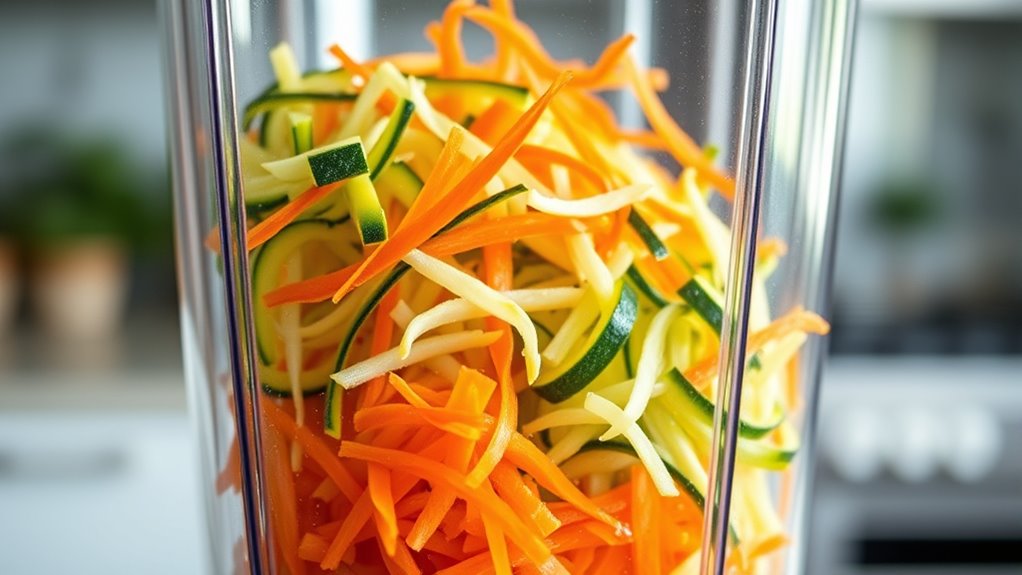
When you don’t have a grater or food processor, a blender or immersion blender can quickly shred ingredients with minimal effort.
Just chop your ingredient into small chunks and pulse the blender in short bursts to avoid over-processing.
An immersion blender works best when you use a tall container to keep ingredients contained.
Here’s a quick guide to shredding with these tools:
| Ingredient | Tip for Best Results |
|---|---|
| Carrots | Cut into 1-inch pieces |
| Cheese | Chill before blending |
| Cabbage | Use a narrow container |
| Cooked Potatoes | Pulse gently to avoid mush |
With this method, you’ll save time and still get evenly shredded ingredients for your recipes.
Use a Knife to Grate by Finely Mincing Ingredients
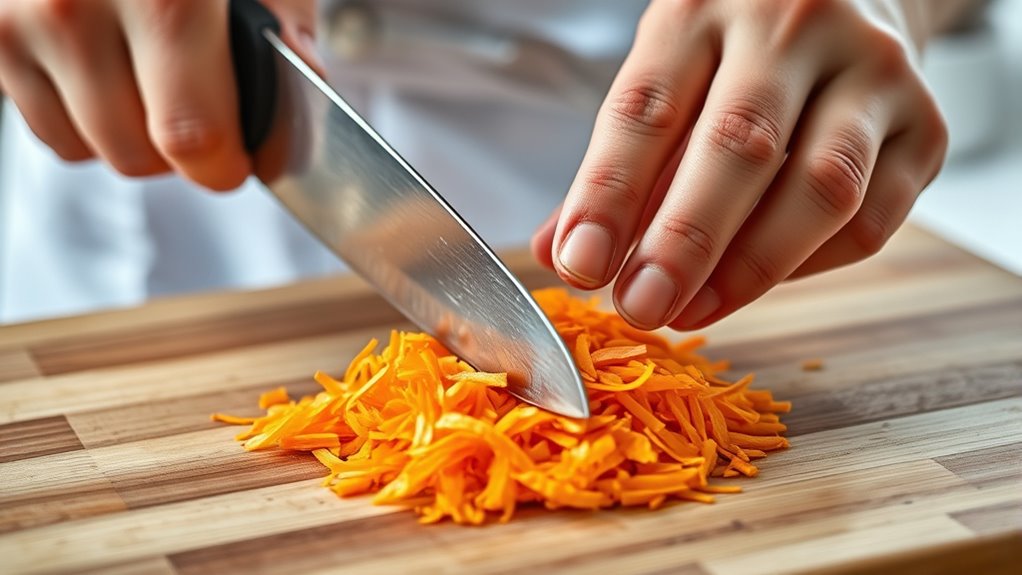
Choose a sharp, sturdy knife to make mincing easier and safer. Focus on small, controlled cuts to break down your ingredients finely.
With the right technique, you’ll mimic the texture of grated food without a grater.
Knife Selection Tips
Since finely mincing ingredients requires control and precision, selecting the right knife is essential for grating without a grater. Choose a sharp chef’s knife or a paring knife with a sturdy, pointed tip for better maneuverability. A knife with a comfortable handle helps you maintain a steady grip, reducing the risk of slips.
Avoid using dull knives, as they make mincing harder and increase injury chances. The blade length should suit the ingredient size; longer blades work well for larger vegetables, while shorter blades offer more control with small items like garlic or ginger. Keep your knife well-maintained by regularly sharpening and honing the blade.
With the right knife, you’ll mince efficiently, creating fine, uniform pieces that mimic grated results.
Mincing Technique Guide
Mastering your knife skills lets you finely mince ingredients to mimic grated textures perfectly. Start by peeling your ingredient, then slice it into thin, even strips. Stack these strips and cut them repeatedly into tiny pieces.
Keep your knife tip on the board and use a rocking motion to speed up mincing while maintaining control. Use a sharp chef’s knife for clean cuts, reducing bruising or crushing. To achieve a finer texture, gather the minced pieces and chop through them again.
This method works great for hard items like carrots or softer ones like garlic. With practice, you’ll get consistent, small pieces that blend seamlessly into your dishes, delivering the same effect as grating without needing extra tools.
Use a Microplane or Citrus Zester for Small Quantities
If you only need a small amount of zest, a microplane or citrus zester is your best bet. These tools give you fine, flavorful shreds without much effort.
Make sure to use light pressure to avoid grating too deep into the fruit’s bitter pith.
Best Tools For Zesting
When you need just a small amount of zest, reaching for a microplane or citrus zester makes the task quick and easy. A microplane offers fine, even strips of zest, perfect for adding intense flavor without bitterness. It’s designed with sharp, tiny blades that efficiently grate the outer peel without digging into the pith.
A citrus zester, on the other hand, creates longer, thin ribbons of zest, which can be ideal for garnishing or infusing drinks. Both tools fit comfortably in your hand, giving you control and precision. Choose a stainless steel option for durability and easy cleaning.
Whether you’re zesting lemons, limes, or oranges, these tools help you get the job done neatly, saving time and avoiding waste.
Tips For Small Quantities
How do you handle zesting just a small amount without making a mess? When you only need a pinch of zest, reach for a microplane or citrus zester. These tools give you control and precision, preventing waste and keeping your workspace tidy.
They’re perfect for extracting just the flavorful outer layer without digging into the bitter white pith.
Here’s a quick comparison to help you choose:
| Tool Type | Best For |
|---|---|
| Microplane | Fine zest, garlic, ginger |
| Citrus Zester | Thin, long strips of zest |
| Knife | Larger zest pieces |
| Box Grater | Bulk zest, coarser texture |
| Vegetable Peeler | Wide strips for garnish |
For small quantities, the microplane’s sharp blades make zesting effortless and mess-free.
Use a Vegetable Peeler to Make Thin Strips
Although a vegetable peeler isn’t designed for grating, you can easily create thin, delicate strips from vegetables like carrots or zucchini by running the peeler along their surface. Hold the vegetable firmly and peel away from your body to maintain control and avoid injury.
These thin strips work great for salads, garnishes, or quick sautés. If you need smaller pieces, stack a few strips and slice them into matchsticks. Keep in mind, this method won’t produce fine shreds like a grater, but it’s perfect when you want texture and presentation.
Make sure your peeler is sharp to avoid squishing the vegetable. With just a bit of patience, you’ll have evenly cut strips without needing extra tools.
Use a Fork or Spoon to Smash and Scrape Softer Foods
If you don’t have a grater handy, you can easily break down softer foods like ripe avocados, cooked potatoes, or bananas by smashing them with a fork or spoon. Start by placing the food on a sturdy plate or cutting board. Use the fork’s tines or the spoon’s edge to press down firmly, mashing and scraping the food into smaller pieces.
Keep rotating and smashing until you reach a texture similar to grated food. This method works well for recipes needing a soft, shredded consistency, like mashed potatoes or avocado spreads. Remember to clean your utensils thoroughly afterward, as soft foods tend to stick more.
With a little effort, you’ll get the job done without needing a grater at all.
Use Sandpaper or a DIY Scraper as a Last-Resort Grater
When you’ve exhausted all other options, you can turn to sandpaper or a DIY scraper to grate tougher foods. Choose fine-grit sandpaper to avoid damaging your food or creating large, uneven pieces. Secure the sandpaper on a flat surface, then gently rub the food against it in one direction.
For a DIY scraper, sharpen a clean metal edge carefully, like a butter knife or a small piece of sheet metal, ensuring it’s safe to handle. Hold the food firmly and scrape it downwards, collecting the shredded bits. Always work slowly and cautiously to prevent injury.
Clean your tools thoroughly before and after use. This method isn’t ideal for delicate foods but works well when you need a quick, last-resort grating solution.
Frequently Asked Questions
Can I Grate Frozen Foods Without a Grater?
You can grate frozen foods without a grater by thawing them slightly, then using a sharp knife to finely chop or shred. Alternatively, a food processor can quickly break them down into smaller pieces for your recipe.
This method helps achieve a texture similar to grating. Just be careful when handling the knife to avoid injury.
If you don’t have a food processor, a box grater can sometimes be improvised from other kitchen tools. However, the knife and food processor methods are generally safer and more effective.
How Do I Clean Kitchen Tools After Grating Without a Grater?
Like washing dishes after a family feast, you’ll want to soak your tools in warm, soapy water, then scrub gently with a brush or sponge.
This keeps them clean and ready for your next culinary adventure.
What Foods Are Easiest to Grate Without a Traditional Grater?
You’ll find soft foods like cheese, cooked potatoes, and zucchini easiest to grate without a traditional grater. They break down with a knife or fork, making shredding simple even without specialized tools.
Are There Safety Tips for Grating Without a Grater?
You might worry about cutting yourself, but keep your fingers clear and work slowly. Use a sturdy surface, hold the food firmly, and consider wearing a protective glove to avoid slips.
Safety always comes first!
Can I Use Household Items Other Than Kitchen Tools to Grate?
Yes, you can use items like a clean metal brush or even sandpaper to grate small amounts. Just make sure to clean them thoroughly and be careful to avoid injury while working with these unconventional tools.
Conclusion
Now that you’ve got these seven clever tricks up your sleeve, grating without a grater is as easy as pie. Whether you’re blitzing with a blender or finely mincing with a knife, you can tackle any recipe without missing a beat.
So don’t let the lack of a grater crumble your cooking plans—get creative and turn your kitchen into a flavor factory. Remember, necessity is the mother of invention!
With these easy methods for how to grate without a grater, you’ll never be stuck again. Embrace these simple kitchen hacks and keep your cooking smooth and effortless every time.