How to Pan Fry Plantains
To pan fry plantains perfectly, start by selecting ripe plantains with yellow skin and black spots. Avoid green or overly black ones, as they won’t fry evenly or taste as sweet. Properly choosing ripe plantains is key to achieving the delicious caramelized flavor and soft texture that pan frying brings out.
Peel the plantains by making a shallow slit along the skin, then remove it carefully. Slice the peeled plantains into even ¼-inch pieces to ensure consistent cooking throughout.
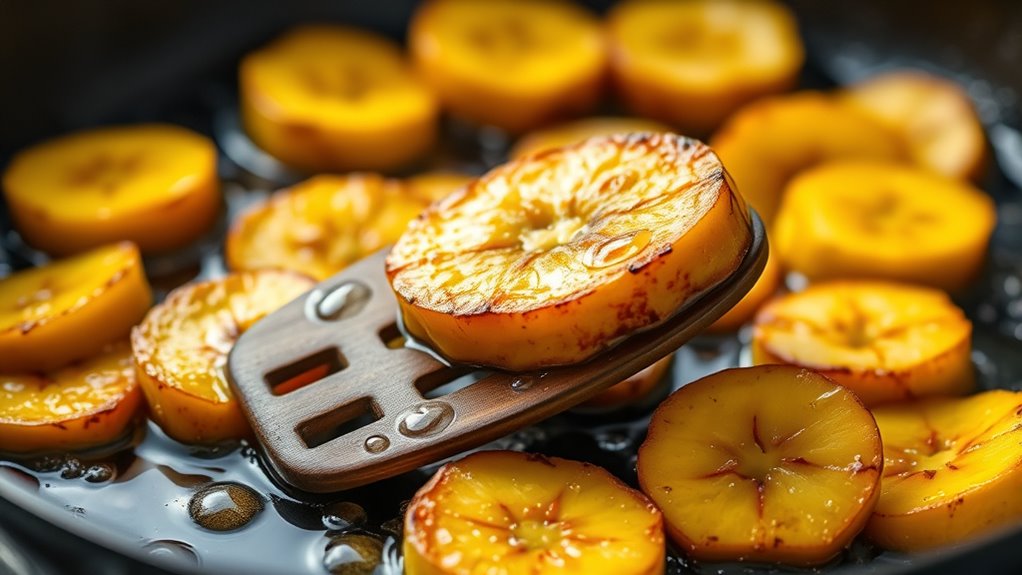
Heat oil in a skillet over medium heat. Fry the plantain slices without crowding the pan to allow even cooking. Cook for 2-3 minutes per side until they turn golden and crispy.
Once done, drain the fried plantains on paper towels to remove excess oil. Season them to your liking with salt, spices, or fresh herbs for added flavor.
Keep reading to discover tips for perfect texture, seasoning ideas, and how to store your fried plantains.
Key Takeaways
- Select ripe plantains with yellow skin and black spots, avoiding green or overly black ones for best sweetness and texture.
- Peel plantains by cutting off ends, making a shallow slit lengthwise, then gently removing the skin.
- Slice plantains evenly into ¼-inch thick diagonal pieces for uniform cooking and optimal caramelization.
- Heat oil in a skillet over medium and fry slices in a single layer for 2-3 minutes per side until golden brown.
- Drain fried plantains on paper towels, rest briefly, and serve warm for crispy, tender results.
How to Choose the Right Plantains for Pan Frying
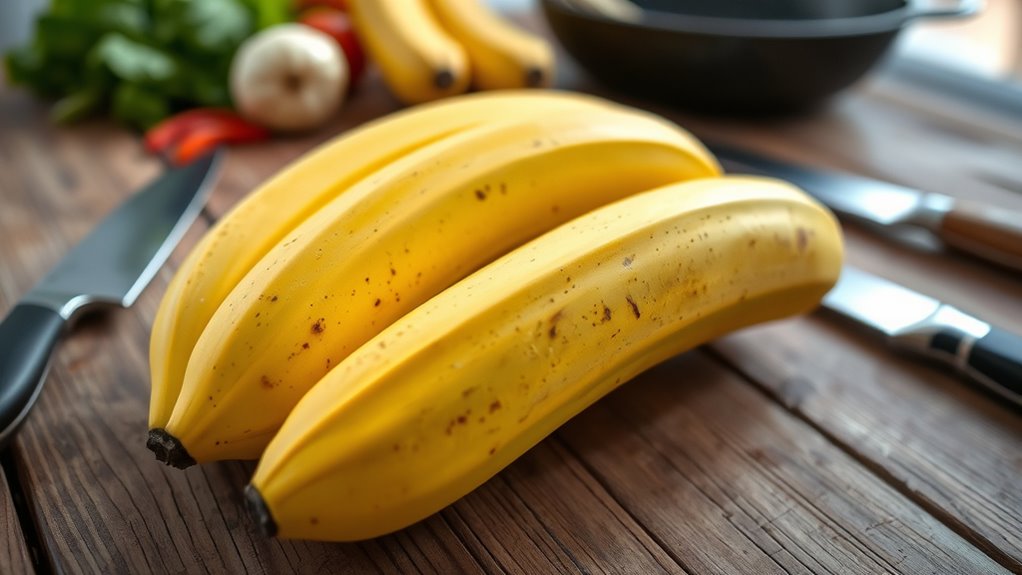
Although you might find plantains in various stages of ripeness, choosing the right ones for pan frying is key to getting the perfect texture and flavor. You want to look for plantains that are mostly yellow with some black spots. These are ripe but firm enough to hold their shape when fried.
Avoid green plantains, as they’re too starchy and won’t caramelize well, resulting in a less sweet taste. Overripe plantains, which are mostly black, can become mushy during frying and might burn quickly. When selecting, gently squeeze the plantain; it should have a slight give but not be overly soft.
Picking plantains at this stage guarantees you get that ideal balance of sweetness and firmness for delicious pan-fried results.
How to Prepare Plantains for Pan Frying
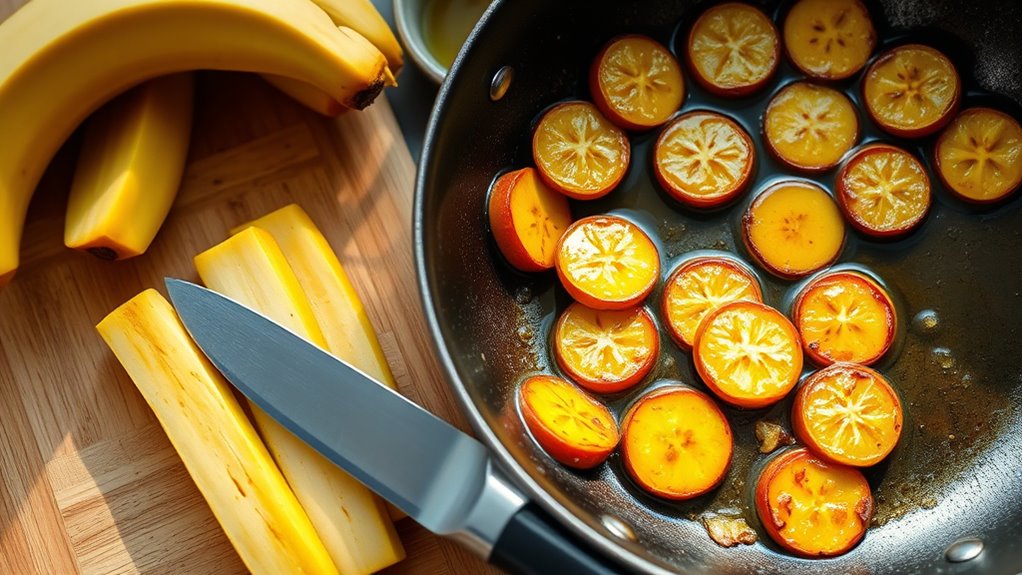
Now that you’ve picked the right plantains, it’s time to prepare them for frying.
You’ll want to make sure they’re ripe, peel them carefully, and slice them just right to get the best results.
Let’s walk through these simple but important steps.
Selecting Ripe Plantains
How do you know when a plantain is perfect for pan frying? Look for plantains that have mostly black or deeply yellow skin with some black spots. These indicate the fruit is ripe and sweet, ideal for frying.
Avoid green plantains—they’re too starchy and firm for this cooking method. Also, check the firmness by gently pressing the skin; it should yield slightly but not be mushy. Overripe plantains with excessive soft spots or leaking juice might fall apart while cooking, so steer clear of those.
Choosing the right ripeness guarantees your pan-fried plantains will caramelize nicely and develop that rich, sweet flavor you want. Keep these tips in mind to pick the best plantains every time you cook.
Peeling Plantains Properly
Once you’ve selected ripe plantains, the next step is to peel them properly to guarantee smooth frying. Start by cutting off both ends of the plantain with a sharp knife. Then, make a shallow slit along the length of the peel, being careful not to cut into the flesh.
Use your fingers to gently pry the peel away from the fruit, working your way down until it’s completely removed. If the peel sticks, don’t force it; instead, use the knife to extend the slit slightly. Removing the peel cleanly prevents bits of tough skin from frying alongside the plantain, which can affect texture and taste.
Once peeled, your plantains are ready for the next step in preparation.
Slicing Techniques for Frying
Before frying, you’ll need to slice your plantains to guarantee even cooking and the perfect texture. First, decide on the thickness—about ¼-inch thick slices work well for crispy edges and a tender center. You can slice them diagonally to increase surface area, which helps achieve a golden crust.
Alternatively, for a softer bite, cut them into rounds or lengthwise strips. Use a sharp knife to make clean cuts and avoid squashing the plantains. If your plantains are underripe, thinner slices will cook faster and caramelize nicely.
For ripe plantains, slightly thicker slices prevent burning. Remember, consistent size ensures they cook evenly, so take your time slicing. Now, you’re ready to move on to pan frying and enjoy delicious plantains!
How to Cut Plantains for Perfect Frying
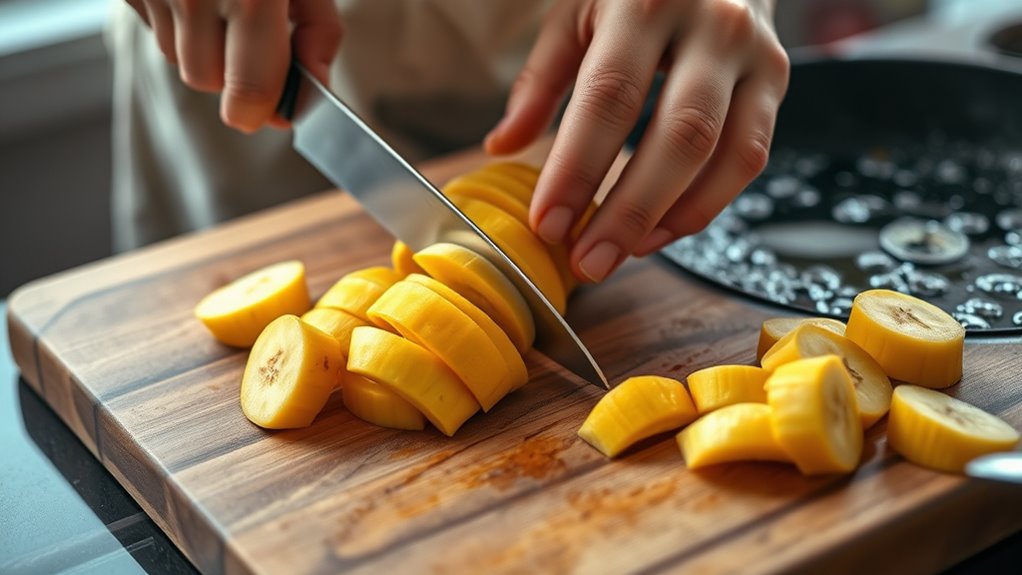
To get the best results, start by choosing ripe plantains with a vibrant yellow or black skin. Next, use the right cutting techniques to create uniform slices that cook evenly.
Keeping your pieces consistent guarantees each fry turns out perfectly golden and tender.
Choosing Ripe Plantains
Although selecting ripe plantains might seem straightforward, choosing the right level of ripeness directly affects the flavor and texture of your fried plantains. Look for plantains with yellow skins that have black spots or streaks—these indicate sweetness and softness ideal for frying. Avoid green plantains if you want sweeter results; they’re starchier and less tender.
Overripe plantains with mostly black skin work too, but they can be mushy and overly sweet. When you pick your plantains, gently press the skin; it should yield slightly without feeling too soft or mushy. This balance ensures your fried plantains will caramelize nicely without falling apart.
Cutting Techniques Explained
Once you’ve picked the perfect plantains, cutting them properly guarantees even cooking and the ideal texture. Start by peeling off the thick skin carefully with a knife or your fingers. Slice off both ends first, then make a shallow cut lengthwise to remove the peel easily.
For pan frying, cut the plantain into diagonal slices about ½ inch thick. This shape increases the surface area, helping them brown nicely. Alternatively, you can cut them into rounds or lengthwise strips, depending on your preference, but keep thickness consistent.
Avoid cutting too thin; thin slices may burn quickly, while thick ones might stay undercooked inside. With these cutting techniques, you’ll prepare your plantains perfectly for that golden, crispy finish you want.
Uniform Slice Importance
Because uniform slices cook evenly, you’ll get perfectly fried plantains with a consistent texture and color. When cutting your plantains, aim for slices about 1/4 inch thick. If some pieces are thicker or thinner, they’ll cook at different rates—thinner ones might burn while thicker ones stay undercooked.
Use a sharp knife and steady your plantain on a cutting board to make clean, even cuts. Consistency not only improves appearance but also guarantees each bite has the right balance of crispy edges and tender centers. Remember, even slices help you control frying time better, preventing waste and enhancing flavor.
Taking the time to cut uniformly makes a noticeable difference in your final dish.
Best Seasonings for Pan Fried Plantains
When you pan fry plantains, choosing the right seasonings can elevate their natural sweetness and create a perfect balance of flavors. Start simple with a pinch of salt to enhance their natural taste. For a hint of warmth, sprinkle cinnamon or nutmeg.
If you prefer a savory twist, try crushed garlic or smoked paprika. A drizzle of honey or a dash of brown sugar adds a caramelized touch that complements the plantain’s sweetness. For a spicy kick, cayenne pepper or chili powder works wonders.
Don’t forget fresh herbs like cilantro or thyme for a bright finish. Experiment with these seasonings to find your favorite combination, but keep it light—you want the plantain’s flavor to shine through, not be overpowered.
Getting Your Pan and Oil Ready for Frying
Before you start frying, make sure your pan is clean and dry to prevent any unwanted splatters. Choose a heavy-bottomed skillet or cast-iron pan for even heat distribution. Pour in enough oil to cover the bottom about a quarter-inch deep—vegetable, canola, or peanut oil work well due to their high smoke points.
Heat the oil over medium heat until it shimmers but doesn’t smoke; this indicates it’s hot enough for frying. To test, drop a small piece of plantain in—if it sizzles immediately, you’re ready. Avoid overheating the oil, as it can burn the plantains or produce harmful fumes.
Maintaining the right temperature guarantees your plantains cook evenly and develop that perfect golden crust. Once your pan and oil are ready, you’re set to start frying.
How to Pan Fry Green Plantains Step-by-Step
Once your oil is hot and shimmering, carefully place the sliced green plantains into the pan in a single layer without crowding. This guarantees even cooking and a nice crisp texture. Fry them on medium heat to avoid burning the outside while leaving the inside undercooked.
You’ll want to flip the plantains once they turn golden brown on one side.
Here’s how to pan fry green plantains step-by-step:
- Fry the slices for about 3-4 minutes on one side until golden.
- Flip each piece using tongs or a spatula.
- Fry the other side for another 3-4 minutes until evenly browned.
- Remove and drain on paper towels to absorb excess oil.
Now, your green plantains will be perfectly crispy and ready to enjoy!
How to Pan Fry Ripe Plantains Step-by-Step
You’ll want to start by choosing plantains that are mostly black or very spotted for the perfect sweetness. Next, peel and slice them carefully to get even pieces for frying.
Finally, follow some key cooking tips to guarantee your ripe plantains turn out golden and caramelized every time.
Selecting Ripe Plantains
How do you know when a plantain is perfectly ripe for pan frying? You want to select plantains that are sweet and soft enough to caramelize but not mushy. Here’s how to pick the best ones:
- Look for yellow skin with plenty of black spots or patches—this indicates ripeness and sweetness.
- Avoid plantains that are completely black or overly soft; they might be too mushy for frying.
- Feel the plantain; it should give slightly when you press it but not feel squishy.
- Pick plantains that are firm yet bend slightly without cracking, signaling they’re ripe but still hold shape during cooking.
Choosing the right plantain ensures your pan-fried dish turns out perfectly sweet and tender every time.
Preparing Plantains Properly
After selecting perfectly ripe plantains, it’s time to prepare them for pan frying. First, cut off both ends of each plantain. Next, make a shallow slit along the length of the peel without cutting into the flesh.
This will make peeling easier. Gently remove the skin by pulling it away from the slit. Once peeled, slice the plantains into even pieces—either diagonal or round slices about half an inch thick.
Even thickness ensures they cook uniformly. If the plantains feel sticky or overly ripe, you can rinse them briefly under cold water and pat dry with a paper towel to prevent excess oil splatter during frying. Now your plantains are ready to hit the pan for frying.
Cooking Techniques and Tips
Once your plantains are sliced and ready, heat a skillet over medium heat and add enough oil to cover the bottom. You want the oil hot but not smoking to guarantee even cooking and prevent burning. Lay the plantain slices flat in the oil without crowding the pan.
Fry them for about 2-3 minutes on each side until they turn golden brown.
Follow these tips to master pan frying ripe plantains:
- Use ripe plantains with yellow skin and black spots for sweetness.
- Don’t flip too often; let each side brown properly.
- Drain cooked plantains on paper towels to remove excess oil.
- Season with a pinch of salt or cinnamon for extra flavor.
With these steps, you’ll get perfectly caramelized, tender plantains every time.
How to Get Crispy Plantains Without Burning Them
To get crispy plantains without burning them, you need to control the heat carefully and keep a close eye on the cooking process. Start by heating your pan over medium heat; too high, and the plantains will burn before crisping. Add just enough oil to coat the bottom of the pan, allowing the plantains to fry evenly.
Place the slices in a single layer without overcrowding—this helps them cook uniformly. Flip them gently after 2-3 minutes when the edges turn golden brown. Adjust the heat as needed to maintain a steady sizzle, not a roar.
Patience is key—cook slowly to develop a crispy exterior while keeping the inside tender. With practice, you’ll master the perfect balance of crispiness without charring.
How to Drain and Serve Pan Fried Plantains
Keeping an eye on the heat and flipping the plantains at the right moment helps you achieve that perfect crispy texture without burning. Once they’re golden and cooked through, it’s time to drain and serve. Proper draining guarantees your plantains stay crispy and not soggy.
Monitor the heat and flip at the right time to get perfectly crispy, golden plantains every time.
Follow these steps:
- Use a slotted spoon or spatula to lift the plantains from the oil carefully.
- Place them on a plate lined with paper towels to absorb excess oil.
- Let them rest for a minute or two to cool slightly and firm up.
- Serve immediately while warm, paired with your favorite dips or sides for the best experience.
This method helps you enjoy perfectly crisp, delicious pan-fried plantains every time.
How to Store and Reheat Leftover Plantains
If you want to enjoy your pan-fried plantains later, proper storage is key to maintaining their texture and flavor. Let them cool completely before placing them in an airtight container or wrapping them tightly with plastic wrap. Store the container in the refrigerator, where the plantains will stay fresh for up to 3 days.
When it’s time to reheat, avoid the microwave if you want to keep them crispy. Instead, heat a skillet over medium heat with a little oil and warm the plantains for 2-3 minutes on each side. This method restores their crisp exterior and soft interior.
If you have a larger batch, you can also reheat them in a preheated oven at 350°F (175°C) for about 10 minutes.
Using Pan Fried Plantains in Sweet and Savory Dishes
Once your pan-fried plantains are perfectly cooked or reheated, you can use them to elevate a variety of dishes. Their sweet, caramelized flavor pairs beautifully with both sweet and savory meals. Here are some ideas to inspire you:
- Top your morning yogurt or oatmeal with diced plantains and a drizzle of honey for a tropical twist.
- Add them to tacos or burritos for a sweet contrast to spicy fillings.
- Serve alongside grilled meats or fish as a delicious, naturally sweet side dish.
- Incorporate them into a salad with black beans, avocado, and a citrus dressing for a revitalizing, hearty meal.
These versatile plantains add texture and flavor, making any dish more exciting.
Common Mistakes When Pan Frying Plantains
Though pan frying plantains seems straightforward, many people make mistakes that affect texture and flavor. One common error is using underripe plantains, which are too starchy and won’t caramelize properly. Make sure your plantains are ripe, with yellow skin and black spots.
Another mistake is overcrowding the pan; this lowers the oil temperature, leading to soggy, unevenly cooked plantains. Cook in batches if needed. Also, don’t skip preheating the oil—cold oil causes sticking and greasy results.
Avoid flipping too often; let each side develop a golden crust before turning. Finally, don’t use the wrong oil—choose one with a high smoke point like vegetable or canola oil to prevent burning. Avoid these pitfalls, and you’ll get perfectly crispy, sweet plantains every time.
Frequently Asked Questions
Can I Pan Fry Plantains Without Oil?
You can pan fry plantains without oil, but they might stick and won’t get as crispy. Try using a non-stick pan or a little water to prevent burning, but oil really helps with texture and flavor.
Are Plantains Gluten-Free?
Yes, you’re safe, you’re smart, and you’re gluten-free when eating plantains. Since plantains are naturally gluten-free fruits, you don’t have to worry about gluten sneaking in during cooking or preparation.
Enjoy them confidently!
How Long Do Plantains Take to Ripen Naturally?
Plantains usually take about 4 to 7 days to ripen naturally at room temperature.
You’ll know they’re ready when their skin turns yellow with black spots, becoming softer and sweeter for cooking or eating.
Can I Use Frozen Plantains for Pan Frying?
Can you pan fry frozen plantains? Absolutely, but you’ll want to thaw them first to avoid sogginess.
Once thawed, pat them dry, then fry in hot oil until golden and crispy for the best texture and flavor.
What Are the Nutritional Benefits of Plantains?
You’ll get plenty of fiber, vitamins A and C, plus potassium from plantains. They boost digestion, support your immune system, and help regulate blood pressure.
Plus, they provide steady energy thanks to their complex carbs.
Conclusion
Now that you’ve got the hang of pan frying plantains, you’re ready to turn up the heat and impress your taste buds. Remember, practice makes perfect, so don’t be afraid to experiment with seasonings and cuts until you find your sweet spot.
With a little patience, you’ll have golden, crispy plantains that steal the show every time—truly the icing on the cake for any meal. Mastering how to pan fry plantains opens the door to delicious, versatile snacks and side dishes.
Happy frying, and enjoy the rich, sweet flavors of perfectly cooked plantains every time!