
How Long to Cook T Bone Steak in Frying Pan
Cooking a T-bone steak in a frying pan is a quick and delicious way to enjoy this classic cut. You’ll want to cook your T-bone steak for about 2 to 3 minutes per side for rare, 4 minutes per side for medium, and 5 to 6 minutes per side if you prefer well-done.
Using a hot cast iron pan on medium-high heat ensures a great sear and locks in flavor.
Flip the steak just once when the edges brown to get that perfect crust. Don’t forget to let it rest for a few minutes after cooking to keep it juicy and tender.
Keep going, and you’ll find tips to perfect every step.
Key Takeaways
- Cook a 1.5–2 inch T-bone steak for 2–3 minutes per side for rare, 4 minutes per side for medium, and 5–6 minutes per side for well-done.
- Use medium-high heat with a preheated cast iron or stainless steel pan to achieve a good sear and even cooking.
- Flip the steak only once when the edges brown and a crust forms to maintain juices and ensure balanced doneness.
- Insert an instant-read thermometer into the thickest part, avoiding bone, to check doneness: 120–125°F rare, 130–135°F medium-rare, 140–145°F medium.
- Rest the steak covered loosely with foil for 5–10 minutes after cooking to allow juices to redistribute and improve tenderness.
Choosing the Right T-Bone Steak Thickness
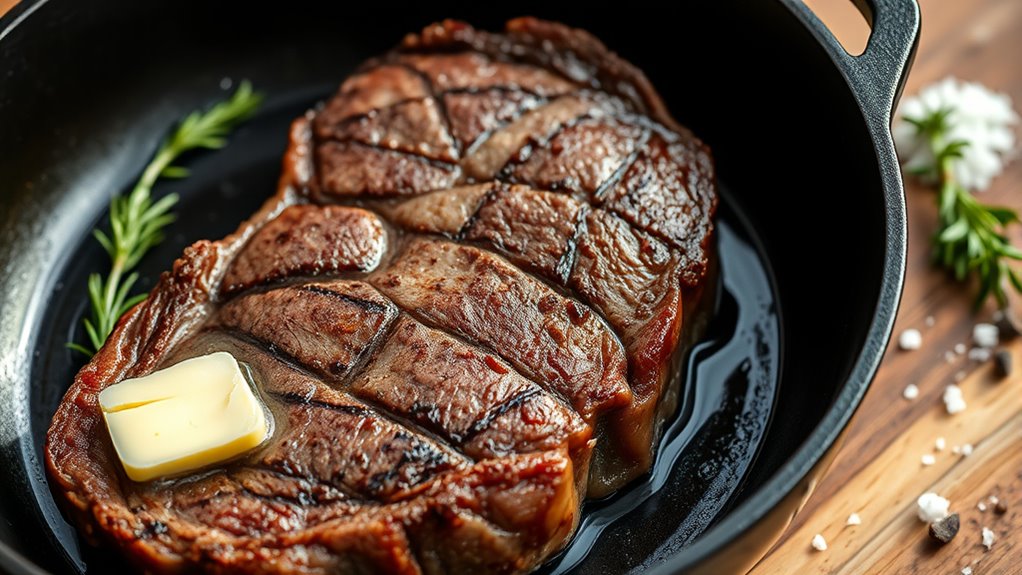
When choosing the right thickness for your T-bone steak, you’ll want to take into account how it affects cooking time and tenderness. Thicker steaks, around 1.5 to 2 inches, usually stay juicy and tender when cooked properly but require more time on the pan. Thinner cuts, about 1 inch or less, cook faster but run the risk of drying out if overcooked.
If you prefer a rare or medium-rare steak, thicker cuts give you more control without burning the outside. On the other hand, thinner steaks are great if you’re short on time but need to watch the heat carefully. Picking the right thickness helps you achieve your ideal doneness and texture without guesswork or disappointment.
Best Pan and Heat for Cooking T-Bone Steak

You’ll want to use a heavy pan like cast iron or stainless steel to get the best sear on your T-bone steak. Make sure your pan is hot before adding the steak to lock in those juices.
Cooking over medium-high heat gives you the right balance between a crispy crust and a tender inside.
Ideal Pan Materials
Although many pans can handle a T-bone steak, choosing the right material makes a big difference in how evenly your steak cooks and develops a perfect crust. Cast iron is a top choice because it holds and distributes heat evenly, giving your steak a consistent sear. Stainless steel pans also work well, especially if they have a thick base to prevent hot spots.
Avoid lightweight aluminum pans since they heat unevenly and may cause your steak to cook inconsistently. Non-stick pans aren’t ideal for searing because they can’t handle very high heat without damaging the coating. Ultimately, you want a pan that can maintain steady, high heat to create that delicious crust while cooking your T-bone steak evenly from edge to edge.
Optimal Heat Settings
To achieve the perfect sear on your T-bone steak, set your pan to medium-high heat so it gets hot enough to create a flavorful crust without burning. Cast iron and stainless steel pans work best because they retain and distribute heat evenly. Avoid too high heat; it can char the outside while leaving the inside undercooked.
Adjust the heat slightly if you notice excessive smoke or uneven cooking.
| Heat Setting | Pan Type | Outcome |
|---|---|---|
| Medium-high | Cast Iron | Even sear, juicy interior |
| Medium-high | Stainless Steel | Quick crust, good heat control |
| High | Non-stick | Risky: may burn coating |
| Medium | Any Pan | Slower cook, less crust |
Use this guide to balance heat and pan choice for ideal results.
How Long to Cook T-Bone Steak for Rare, Medium, and Well-Done

When cooking a T-bone steak in a frying pan, the duration depends on how you like your steak cooked—rare, medium, or well-done. For rare, cook the steak about 2 to 3 minutes per side until the internal temperature reaches 125°F (52°C).
If you prefer medium, aim for 4 minutes per side, reaching 135°F (57°C). For well-done, cook it 5 to 6 minutes per side, achieving 160°F (71°C) or higher. Remember, these times vary slightly based on steak thickness and pan heat.
Using a meat thermometer ensures accuracy, so you get your desired doneness without overcooking. After cooking, let the steak rest for a few minutes to redistribute juices and enhance flavor before serving.
When to Flip Your T-Bone Steak for Best Results
Flipping your T-bone steak at the right moment guarantees a perfect sear and even cooking throughout. You want to wait until the edges start to brown and the surface develops a rich crust before flipping. Typically, this takes about 3-4 minutes per side on medium-high heat, but it depends on your pan and steak thickness.
Avoid flipping too early; it can tear the crust and cause uneven cooking. Also, don’t flip multiple times—just once will do. When you flip, use tongs to handle the steak gently, preserving the juices inside.
After flipping, let the other side cook undisturbed for the same duration to guarantee a balanced sear and consistent doneness throughout your T-bone steak.
How to Check Steak Doneness With a Meat Thermometer
To check your T-bone steak’s doneness accurately, you’ll need the right type of meat thermometer and know the ideal temperature ranges for each level of doneness.
Make certain to insert the thermometer properly into the thickest part of the steak without touching bone or fat.
This guarantees you get an accurate reading every time.
Thermometer Types Explained
Although you might rely on visual cues, using a meat thermometer is the most accurate way to check your T-bone steak’s doneness. Knowing which thermometer to use can make your cooking experience easier and more precise.
Here are three common types you’ll encounter:
- Instant-read digital thermometers – They give quick, accurate readings and are perfect for checking steak temperature without interrupting cooking.
- Dial or analog thermometers – These are affordable but slower to respond, so you might have to wait a bit for the reading.
- Leave-in probe thermometers – Ideal if you want to monitor your steak’s progress while it cooks, especially for longer cooking times.
Pick the one that suits your style, and you’ll never guess your steak’s doneness again!
Ideal Temperature Ranges
When you use a meat thermometer, you can easily identify the ideal temperature range for your T-bone steak to reach your preferred doneness. This guarantees you cook it perfectly, avoiding under or overcooking.
Checking the internal temperature helps you achieve the exact texture and juiciness you want.
| Doneness | Temperature (°F) | Temperature (°C) |
|---|---|---|
| Rare | 120-125 | 49-52 |
| Medium Rare | 130-135 | 54-57 |
| Medium | 140-145 | 60-63 |
| Well Done | 160+ | 71+ |
Stick to these ranges, and your T-bone steak will come out just right every time you cook it in your frying pan.
How To Insert Properly
Since getting an accurate temperature reading is essential, you’ll want to insert the meat thermometer correctly into your T-bone steak. If you don’t, you risk undercooking or overcooking this delicious cut. Here’s how to do it right:
- Insert the thermometer into the thickest part of the steak, avoiding the bone, which can give a false reading.
- Push it in horizontally to reach the center, ensuring you check the true internal temperature.
- Hold the steak steady while inserting the thermometer to avoid slipping or inaccurate readings.
Tips for Getting a Perfect Seared Crust on Your T-Bone Steak
To get a perfect seared crust on your T-bone steak, you’ll need to focus on high heat and minimal moisture. Start by patting the steak dry with paper towels—excess moisture creates steam, preventing a good sear. Preheat your frying pan until it’s smoking hot before adding oil with a high smoke point, like canola or avocado oil.
Place the steak down firmly and avoid moving it for at least two to three minutes to develop that rich, golden crust. Use tongs to flip the steak gently, searing the other side equally. Don’t overcrowd the pan; give the steak room to crisp.
Ultimately, season just before searing to avoid drawing out moisture prematurely. Following these tips, you’ll achieve a flavorful, beautifully seared crust every time.
How to Rest Your T-Bone Steak for Juicy Results
After you’ve achieved a perfect seared crust on your T-bone steak, the next step is to let it rest properly. Resting lets the juices redistribute, ensuring every bite stays tender and flavorful. Skip this, and those precious juices will spill out the moment you cut into it.
Here’s how to rest your steak for juicy results:
- Remove from heat: Place your steak on a warm plate or cutting board.
- Tent loosely with foil: Cover it lightly to keep warmth without trapping steam.
- Wait patiently: Let it rest for 5-10 minutes depending on thickness.
Common Mistakes When Cooking T-Bone Steak
Even the most experienced cooks can stumble when preparing a T-bone steak, but knowing the common mistakes can help you avoid them. Overcrowding the pan, under-seasoning, or not letting the steak rest are frequent errors that impact flavor and texture.
Here’s a quick guide to keep you on track:
| Mistake | Why to Avoid It |
|---|---|
| Overcrowding the pan | Reduces heat, causing uneven cooking |
| Skipping seasoning | Results in bland steak |
| Flipping too often | Prevents proper crust formation |
| Not resting the steak | Causes juices to escape, drying the meat |
Avoid these pitfalls, and you’ll cook a T-bone steak that’s juicy, flavorful, and perfectly seared every time.
Frequently Asked Questions
Can I Marinate a T-Bone Steak Before Pan Cooking?
Yes, you can marinate a T-bone steak before pan cooking. Marinating adds flavor and tenderizes the meat. Just don’t marinate too long—about 30 minutes to 2 hours works best to avoid overpowering the steak.
What Side Dishes Pair Best With T-Bone Steak?
You’ll want to pair your T-bone steak with classic sides like garlic mashed potatoes, grilled asparagus, or a fresh Caesar salad. Roasted veggies or a creamy mac and cheese also complement the rich, meaty flavors perfectly.
These sides balance the hearty taste of the steak while adding variety to your meal. Consider adding a side of sautéed mushrooms or a baked potato for extra indulgence. A light vinaigrette salad can also provide a refreshing contrast.
How Do I Store Leftover Cooked T-Bone Steak?
You should let your leftover cooked T-bone steak cool, then wrap it tightly in foil or place it in an airtight container.
Store it in the fridge and eat within 3-4 days for best flavor and safety.
Can I Use Olive Oil Instead of Butter for Cooking?
Why not use olive oil instead of butter? You can absolutely do that! Olive oil’s great for high heat and adds a subtle flavor.
Just watch the temperature to prevent burning and keep your steak juicy and tasty.
Is It Safe to Eat T-Bone Steak Rare?
Yes, you can safely eat a rare T-bone steak if it’s from a reputable source and properly handled.
Just make sure the outside is seared well to kill surface bacteria before enjoying it rare inside.
Conclusion
Cooking the perfect T-bone steak takes practice, but remember, “patience is a virtue.” Choose the right thickness, use a hot pan, and time your cooking based on doneness. Flip only once, check with a thermometer, and don’t skip resting—it locks in juices.
Avoid common mistakes like overcrowding the pan or under-seasoning. With these tips, you’ll master a juicy, flavorful steak every time. Your effort will truly pay off!
By following the recommended cooking time for a T-bone steak in a frying pan and using these techniques, you’ll achieve the ideal balance of tenderness and flavor. Mastering how long to cook T-bone steak in frying pan ensures a delicious meal every time.