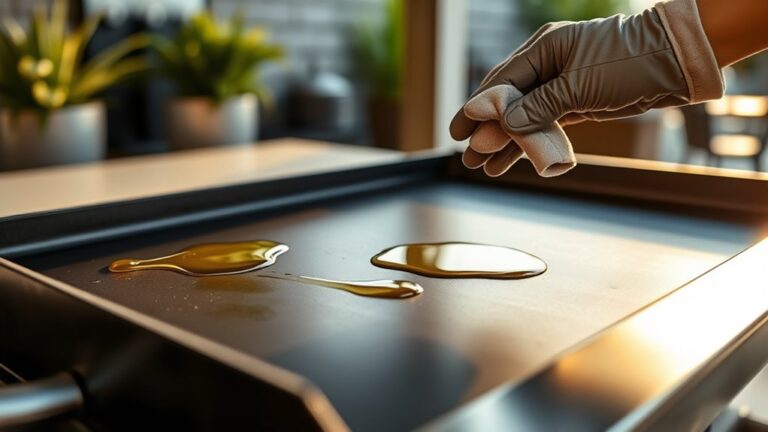

How to Clean Skillet Bottom
To clean your skillet bottom effectively, start by removing any loose debris. Gently tap or brush off crumbs and food particles to prepare the surface. This initial step helps prevent scratching during cleaning.
For light grease, use warm water combined with mild dish soap. If you encounter stubborn stains, apply a baking soda paste to gently lift them away.
Always consider your skillet’s material when choosing a cleaning method.
Avoid using soap on cast iron to preserve its seasoning. Stainless steel and nonstick pans can handle gentle scrubbing without damage.
After cleaning, dry the skillet immediately to prevent rust or other damage.
Keep reading to discover additional tips that protect and maintain your skillet’s finish for long-lasting use.
Key Takeaways
- Remove loose debris by tapping and brushing the skillet bottom before cleaning.
- Use dish soap and warm water for light grease and baking soda paste for tougher stains.
- Avoid harsh chemicals; select cleaning agents based on skillet material and grime severity.
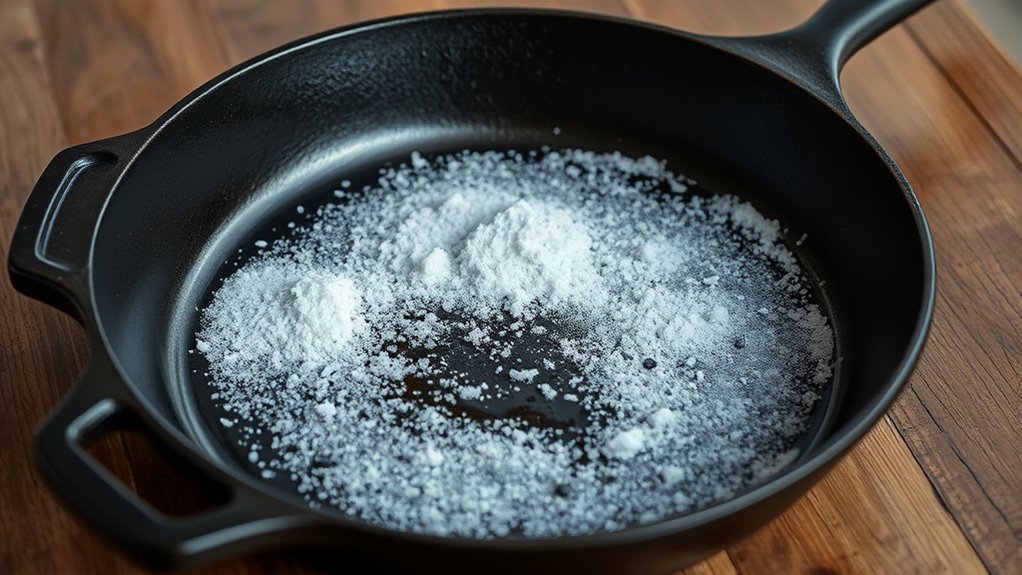
- For cast iron, scrub with coarse salt, dry immediately, and oil to prevent rust.
- Dry skillet thoroughly after cleaning and store in a dry place to prevent damage and buildup.
Reasons to Clean Your Skillet Bottom Regularly
Although it’s easy to overlook, cleaning your skillet bottom regularly helps maintain even heat distribution and prevents stubborn buildup that can damage your cookware. When you keep the bottom clean, your skillet heats more efficiently, which means your food cooks evenly without hot spots.
Plus, removing grime prevents discoloration and corrosion that could shorten your skillet’s lifespan. You’ll also avoid unpleasant odors and smoke caused by burnt residue during cooking. Regular cleaning saves you time later—once grime hardens, it’s tougher to remove.
Why Does Grime Build Up on Your Skillet Bottom?

Grime builds up on your skillet bottom mainly because cooking residue sticks and burns over time. Heat and oil trigger chemical reactions that create stubborn buildup.
Plus, skipping proper cleaning lets grime accumulate faster than you’d expect.
Cooking Residue Accumulation
When you cook, oils, food particles, and heat combine on your skillet’s bottom, creating a stubborn layer of residue. Every time you use your skillet, tiny bits of food and leftover oils stick to the surface. Over time, these particles begin to bake on due to the consistent heat during cooking.
This accumulation builds up, especially if you don’t clean the skillet thoroughly after each use. Even if you rinse it, some residue can remain, gradually forming a tough, dark crust. This grime not only affects the appearance but can also impact your skillet’s performance.
Understanding this buildup helps you realize why regular and proper cleaning is essential to keep your skillet in good shape.
Heat and Oil Reactions
Because heat changes the chemical structure of oils, it causes them to break down and bond with food particles on your skillet’s bottom. When you cook, oils undergo oxidation and polymerization, creating sticky, hardened layers. These layers trap burnt food bits, forming grime that’s tough to remove.
The hotter your skillet gets, the more these reactions accelerate, making buildup more stubborn over time. Even small amounts of leftover oil can turn into a sticky residue after repeated heating. This residue not only darkens but also affects your skillet’s performance, causing uneven heating and sticking.
Understanding these heat and oil reactions helps you realize why regular and proper cleaning is essential to prevent grime from firmly attaching to your skillet’s surface and bottom.
Improper Cleaning Habits
The sticky residue formed by heat and oil reactions can quickly become a stubborn problem if you don’t clean your skillet properly. When you skip regular cleaning or use harsh tools, grime builds up and hardens, making it tougher to remove later.
Ignoring the skillet bottom or washing it inconsistently lets burnt-on grease accumulate, while using abrasive scrubbers can damage your pan’s surface, worsening the problem over time.
| Common Mistakes | Effect on Skillet | Better Approach |
|---|---|---|
| Skipping cleaning | Grime buildup | Clean after each use |
| Using harsh scrubbers | Surface damage | Use soft scrubbers |
| Inconsistent washing | Hardened residue | Regular, thorough wash |
Preparing Your Skillet for Effective Cleaning

Before you start cleaning, make sure to remove any loose debris from the skillet bottom. Next, gather all the cleaning supplies you’ll need, like a scrub brush, mild detergent, and a sponge. Having everything ready will make the process smoother and more effective.
Remove Loose Debris
Start by shaking or gently tapping your skillet to loosen any crumbs, food particles, or debris stuck to the bottom. This simple action helps dislodge loose bits that could interfere with the cleaning process. Turn the skillet upside down over a trash bin or sink to catch falling debris.
Next, use a dry brush or a soft cloth to sweep away remaining loose particles. Avoid using anything abrasive at this stage to prevent scratches. Removing these loose fragments ensures your skillet’s surface is ready for a deeper clean, preventing residue buildup.
Taking this step first saves you time and effort later, making the cleaning process more effective and manageable. Once the skillet is free of loose debris, you’re ready to move on to the next cleaning steps.
Gather Cleaning Supplies
Once you’ve removed loose debris, gather the right cleaning supplies to tackle your skillet’s bottom effectively. You’ll need a stiff brush or non-abrasive scrub pad to avoid scratching the surface. Have some baking soda and white vinegar on hand—these natural cleaners break down grime without harsh chemicals.
Keep a sponge or cloth nearby for wiping away residue. If your skillet is cast iron, prepare some coarse salt, which acts as a gentle abrasive when combined with oil. Also, get a bowl or container to mix cleaning solutions if needed.
Make sure you have gloves to protect your hands from prolonged exposure to cleaning agents. Having everything ready beforehand makes the cleaning process smoother and more efficient, saving you time and effort.
Essential Tools and Materials for Cleaning Skillet Bottoms
Although cleaning the bottom of your skillet might seem straightforward, having the right tools and materials makes the job much easier and more effective. You’ll want a non-abrasive scrubber or sponge to avoid scratching the surface, especially if your skillet has a delicate finish. A soft-bristle brush helps get into grooves or textured areas.
Use microfiber cloths for wiping and polishing afterward. Rubber gloves protect your hands from harsh cleaning agents. A plastic or silicone scraper is perfect for loosening stubborn residue without damaging the skillet.
Additionally, having a basin or sink with warm water ready will help soak and soften grime before scrubbing. These essentials set you up for a smooth, thorough cleaning process without causing damage.
Choosing the Best Cleaner for Your Skillet Bottom
Having the right tools at hand makes tackling your skillet’s bottom much easier, but selecting the best cleaner plays an equally important role in achieving a spotless finish. You want a cleaner that’s strong enough to remove grime yet gentle enough to protect your skillet’s material.
Choosing the right cleaner is key to removing grime while preserving your skillet’s surface.
Here are four types to contemplate:
- Dish Soap – Ideal for light grease and everyday cleaning.
- Baking Soda Paste – Great for stubborn stains without scratching.
- White Vinegar – Effective for mineral deposits and burnt residue.
- Commercial Cookware Cleaner – Designed specifically for tough buildup on cast iron or stainless steel.
Choose based on your skillet’s material and the level of grime to avoid damage and ensure a thorough clean.
Step-by-Step Guide to Removing Light Grime
When you notice light grime building up on your skillet bottom, you can tackle it quickly using simple household ingredients and a few easy steps. First, sprinkle baking soda evenly over the skillet’s bottom. Next, add a few drops of water to form a paste.
Use a soft sponge or cloth to gently scrub in circular motions, loosening the grime without scratching the surface. After scrubbing, rinse the skillet thoroughly with warm water to remove all residue. If any spots remain, repeat the process once more.
Finally, dry the skillet completely with a clean towel to prevent moisture buildup. This straightforward method keeps your skillet bottom looking clean and maintains its cooking performance without harsh chemicals.
Tips to Tackle Stubborn Burnt Residue on Skillet Bottoms
If your skillet bottom has stubborn burnt residue, you’ll need a stronger approach than basic scrubbing. Here are four effective tips to help you tackle that tough grime:
- Soak with baking soda and vinegar: Sprinkle baking soda over the burnt area, then pour vinegar on top. Let it fizz and sit for 15-20 minutes before scrubbing.
- Use a paste of baking soda and water: Apply the paste, let it sit for 30 minutes, then scrub with a non-abrasive scrubber.
- Boil water and dish soap: Fill the skillet with water and add dish soap. Bring to a boil, then let it cool before scrubbing.
- Try a commercial skillet cleaner: For extremely stubborn residue, use a cleaner designed for cookware and follow the instructions carefully.
Cleaning Skillet Bottoms by Material: Cast Iron, Stainless Steel, and Nonstick
Since different skillet materials react uniquely to cleaning methods, you’ll want to tailor your approach for cast iron, stainless steel, and nonstick bottoms to preserve their finish and functionality. For cast iron, avoid soaking or using soap; instead, scrub gently with a stiff brush and coarse salt to remove residue. Dry it immediately and apply a thin layer of oil to prevent rust.
Stainless steel skillet bottoms can handle more aggressive cleaning—use a paste of baking soda and water or a specialized stainless steel cleaner with a non-abrasive sponge. For nonstick pans, avoid harsh scrubbers; wipe the bottom with a soft cloth and mild dish soap to protect the coating. Each material needs care suited to its properties to keep your skillet performing well and looking great.
How to Avoid Damage When Cleaning Your Skillet Bottom
To keep your skillet bottom in great shape, use gentle cleaning tools instead of abrasive scrubbers. Avoid harsh chemicals that can damage the surface and finish.
Be careful to prevent scratches and abrasion by handling your skillet with care during cleaning.
Use Gentle Cleaning Tools
Although it might be tempting to scrub your skillet bottom aggressively, using gentle cleaning tools guarantees you won’t damage its surface. Harsh scrubbing can scratch or wear down the finish, shortening your skillet’s lifespan.
Instead, opt for tools that clean effectively but treat the metal with care.
Here are four gentle cleaning tools you should use:
- Soft sponge or cloth – Ideal for everyday grime without scratching.
- Nylon scrubber – Tough on stuck-on food but safe on most surfaces.
- Wooden or silicone scraper – Helps remove residue without abrasiveness.
- Microfiber towel – Perfect for drying and polishing after cleaning.
Using these tools helps maintain your skillet’s integrity while keeping it spotless.
Avoid Harsh Chemicals
Using gentle tools helps protect your skillet’s surface, but what you clean with matters just as much. You should steer clear of harsh chemicals like bleach, oven cleaners, or strong degreasers. These substances can strip the skillet’s finish, causing discoloration or corrosion.
Instead, opt for mild dish soap and warm water to remove grime effectively without risking damage. If you encounter stubborn spots, try soaking the skillet in soapy water rather than immediately resorting to aggressive products. Natural alternatives like baking soda or vinegar diluted in water can also break down residue safely.
Prevent Scratches and Abrasion
Since your skillet’s bottom often comes into contact with rough surfaces or abrasive scrubbers, you need to be careful when cleaning it to prevent scratches and wear. Scratches not only damage the skillet’s appearance but can also affect its performance over time. To protect your skillet, follow these tips:
- Use non-abrasive scrubbers like soft sponges or nylon brushes instead of steel wool.
- Avoid dragging the skillet across rough surfaces; lift it when moving.
- Clean with gentle motions rather than harsh scrubbing to preserve the finish.
- Dry your skillet immediately after washing to prevent mineral deposits that can cause abrasion.
Maintaining a Clean Skillet Bottom Long Term
To keep your skillet bottom clean over time, you’ll need to adopt a few simple habits that prevent buildup and stains. First, always wipe your skillet bottom after cooking to remove any residue before it hardens. Avoid stacking heavy pots on top of your skillet to prevent scratches that trap dirt.
Use gentle cleaning tools and avoid harsh abrasives that can damage the surface. Periodically, give the bottom a thorough cleaning with a paste made from baking soda and water to lift stubborn marks. Also, store your skillet in a dry place to prevent rust or corrosion.
Frequently Asked Questions
Can Dishwasher Detergent Damage My Skillet Bottom?
Yes, dishwasher detergent can damage your skillet bottom by stripping seasoning or causing discoloration. You should hand wash your skillet gently with mild soap and a soft sponge to keep it in good condition and avoid damage.
How Often Should I Deep Clean My Skillet Bottom?
You should deep clean your skillet bottom every few months or whenever you notice stubborn buildup. Regular quick cleaning works fine, but deep cleaning helps maintain its condition and prevents damage.
This keeps your skillet performing well.
Is It Safe to Use Steel Wool on Nonstick Skillet Bottoms?
You shouldn’t use steel wool on nonstick skillet bottoms because it can scratch and damage the coating.
Instead, use a soft sponge or cloth with mild detergent to keep your skillet safe and effective for cooking.
Can I Use Natural Cleaning Products on Cast Iron Skillet Bottoms?
You can totally use natural cleaning products on cast iron skillet bottoms, just like a medieval blacksmith trusted simple tools. Avoid harsh soaps; instead, opt for coarse salt and a little oil to keep it seasoned and rust-free.
Why Does My Skillet Bottom Discolor After Cleaning?
Your skillet bottom discolors after cleaning because harsh scrubbing or acidic cleaners strip its seasoning layer. Avoid abrasive tools and strong chemicals to protect the surface, keeping it seasoned and preventing uneven discoloration over time.
Conclusion
Keeping your skillet bottom clean isn’t just about looks—it’s about performance and longevity. Imagine the grime as a stubborn shadow, slowly dulling your skillet’s shine and heat efficiency.
But with the right tools and care, you can banish that shadow, restoring your skillet’s gleam and cooking power. Clean regularly, choose the right cleaners, and protect your pans.
You’ll enjoy better meals and a skillet that feels like new every time you cook. By following these simple steps on how to clean skillet bottom, you ensure your cookware remains efficient and durable for years to come.