Do You Put Oil on a Blackstone Griddle Before Cooking
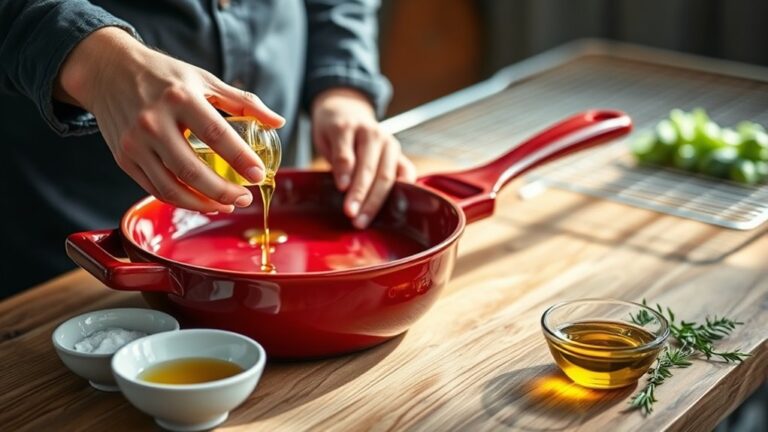
Yes, you should always put a thin layer of oil on your Blackstone griddle before cooking, right after it’s heated to medium-high heat. Applying oil is essential to create a smooth, non-stick surface that prevents your food from sticking and burning.
This simple step also helps maintain the seasoning on your griddle for better performance over time.
Use a high smoke point oil like avocado or canola to ensure it doesn’t burn during cooking. Spread the oil evenly with a paper towel or brush for the best results.
Proper oiling not only enhances cooking outcomes but also protects your griddle from rust.
Keep going to discover how to choose, apply, and care for your griddle oil perfectly. With the right technique, your Blackstone griddle will deliver delicious meals every time.
Key Takeaways
- Yes, apply a thin layer of oil after the griddle reaches medium-high heat, just before adding food, to prevent sticking.
- Use high smoke point oils like avocado, canola, or grapeseed for effective seasoning and cooking.
- Spread 1-2 tablespoons of oil evenly across the griddle surface using a paper towel or silicone brush.
- Reapply oil during cooking as needed to maintain a smooth, non-stick surface and prevent flare-ups.
- Oiling enhances seasoning, improves food release, and helps maintain the griddle’s non-stick performance.
When Should You Put Oil on Your Blackstone Griddle?
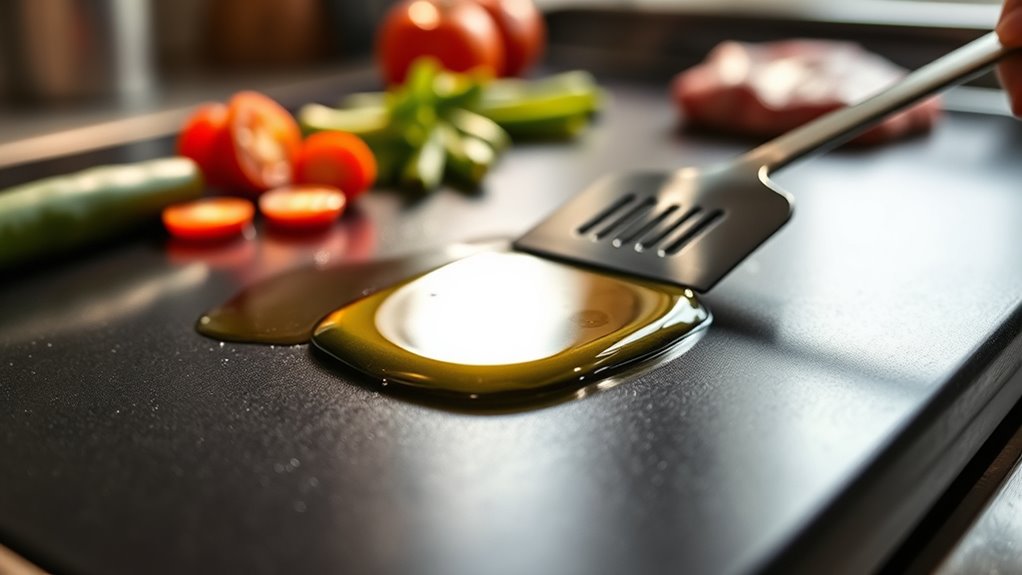
Although you don’t always need to oil your Blackstone griddle before cooking, applying a thin layer of oil at the right time helps prevent food from sticking and guarantees even cooking. You should oil the griddle after it’s fully heated but before you start placing food on it. This timing allows the oil to create an effective non-stick surface without burning.
When the griddle reaches medium-high heat, spread a small amount of oil evenly using a paper towel or brush. Avoid adding oil too early, as it may burn and cause smoke. Also, if you’re cooking foods prone to sticking, like eggs or pancakes, oiling right before cooking is essential for best results.
Proper timing ensures easier cooking and clean-up.
Which Oils Work Best on a Blackstone Griddle?

You’ll want to choose oils with a high smoke point to avoid burning and sticking on your Blackstone griddle. Consider how the oil’s flavor might affect your food, especially if you want a neutral taste or a bit of extra richness.
Plus, picking healthier oils can make your meals better for you without sacrificing performance.
High Smoke Point Oils
Why does the type of oil matter when cooking on a Blackstone griddle? Because you’re working with high heat, choosing an oil with a high smoke point is essential. Oils that smoke too early can ruin your food’s flavor and create harmful compounds.
You want oils like avocado oil, grapeseed oil, or refined peanut oil, which handle heat up to around 400-520°F without breaking down. These oils let you cook efficiently without worrying about burning or smoking excessively. Using high smoke point oils keeps your griddle seasoned and your food tasting great.
Flavor Impact Options
Because oil serves both as a cooking medium and a flavor enhancer, the type you choose can considerably affect your dishes on a Blackstone griddle. If you want a neutral taste that lets your food shine, go with vegetable or canola oil. For a subtle nutty or buttery flavor, try grapeseed or light olive oil.
If you’re cooking breakfast favorites, using avocado oil adds a mild, slightly buttery note without overpowering other ingredients. Sesame oil can introduce a bold, toasted flavor perfect for Asian-inspired dishes, but use it sparingly due to its strong taste.
Ultimately, pick an oil that complements the cuisine you’re preparing while matching the high heat requirements of your Blackstone griddle for the best flavor impact.
Healthier Oil Choices
When cooking on your Blackstone griddle, choosing healthier oils can make a significant difference in both taste and nutrition. Oils with high smoke points like avocado oil and refined olive oil work best because they withstand the griddle’s high heat without breaking down. These oils also offer heart-healthy fats and subtle flavors that won’t overpower your food.
You might also consider grapeseed oil or light coconut oil for their clean taste and good heat tolerance. Avoid oils with low smoke points, such as unrefined flaxseed or extra-virgin olive oil, as they can burn and create unpleasant flavors. By picking oils wisely, you can keep your meals healthier while ensuring your Blackstone griddle performs at its best every time you cook.
How Much Oil Should You Use on Your Blackstone Griddle?
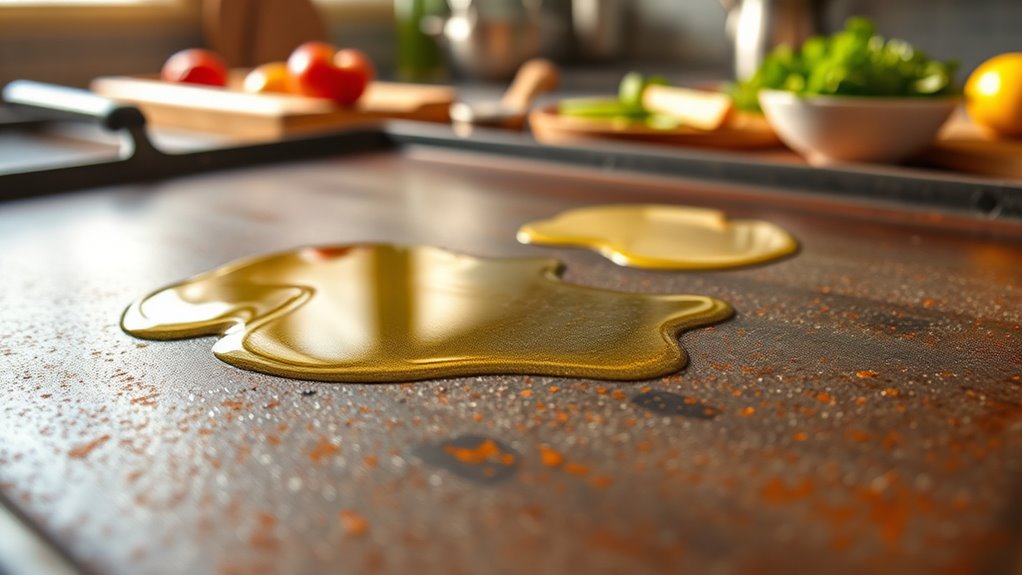
You only need a thin, even layer of oil to coat your Blackstone griddle properly. Too much oil can cause flare-ups and uneven cooking, while too little won’t prevent sticking.
Make sure to spread it evenly using a paper towel or brush for the best results.
Optimal Oil Quantity
Determining the right amount of oil for your Blackstone griddle guarantees even cooking and prevents sticking without causing excess smoke or sogginess. Generally, a thin, even layer of oil—about one to two tablespoons—is enough for a standard 24-inch griddle. You don’t want to drown the surface; too much oil leads to greasy food and flare-ups.
For smaller cooking areas, adjust accordingly, using less oil to avoid pooling. Keep in mind the type of food you’re cooking—lean proteins need slightly more oil, while fatty foods require less. The goal is a light coating that creates a non-stick surface, allowing you to cook efficiently while maintaining flavor and texture.
Measure carefully, and you’ll get consistent, delicious results every time.
Oil Distribution Tips
Getting the right amount of oil down is just the start; spreading it evenly across your Blackstone griddle makes all the difference. Pour a small puddle—about a tablespoon for a full griddle—and use a spatula or paper towel to spread it thinly and uniformly. This guarantees your food cooks evenly and prevents sticking.
Avoid pouring too much oil, as it can pool and cause uneven cooking or flare-ups. If you’re cooking smaller sections, adjust the oil proportionally. After spreading, give the griddle a minute to heat so the oil bonds to the surface, creating a natural non-stick layer.
With practice, you’ll get a feel for the perfect spread, making your cooking smoother and cleanup easier every time.
How Do You Apply Oil Evenly on a Blackstone Griddle?
Although it might seem simple, applying oil evenly on a Blackstone griddle requires a bit of technique to guarantee consistent cooking and prevent sticking. Start by heating the griddle to a medium temperature, which helps the oil spread more easily. Pour a small amount of oil—about a tablespoon—onto the surface.
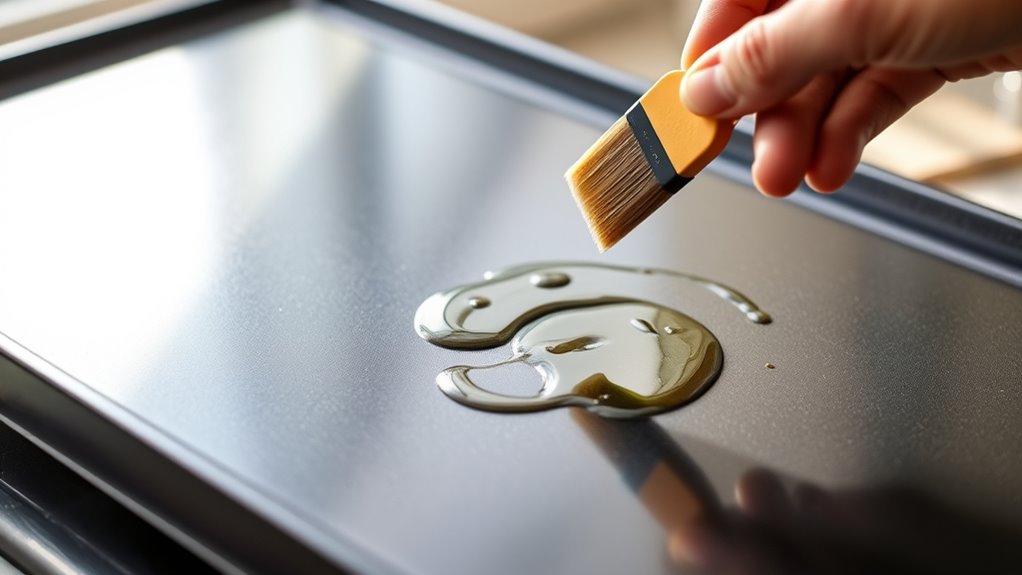
Use a folded paper towel or a silicone basting brush to spread the oil in a thin, even layer. Make sure you cover the entire cooking area, including edges, to avoid hotspots. Avoid pouring too much oil at once; it can pool and cause uneven cooking.
Reapply oil as needed during cooking to maintain a smooth surface. This method guarantees your food cooks evenly without sticking or burning.
Why Does Oil Help Cooking on a Seasoned Blackstone Griddle?
Because a seasoned Blackstone griddle already has a natural non-stick surface, adding oil helps enhance that barrier between your food and the metal. When you apply a thin layer of oil, it fills in any microscopic gaps or imperfections in the seasoning layer, preventing food from sticking. Oil also creates a slick surface, making it easier to slide and flip your ingredients without tearing or breaking them.
Additionally, oil helps distribute heat evenly across the cooking surface, reducing hot spots that can cause uneven cooking or burning. It also adds a subtle flavor and helps achieve that desirable crispy texture on foods like pancakes, eggs, or burgers. Using oil on your seasoned griddle ultimately improves cooking performance and food release.
Should You Oil Your Blackstone Griddle Differently for Various Foods?
You’ll want to adjust how you oil your Blackstone griddle depending on what you’re cooking and the heat you’re using. Different foods and temperatures call for specific oil types and application methods to get the best results.
Let’s explore how to match your oiling technique to your meal and cooking style.
Oiling Techniques by Food
When cooking different foods on your Blackstone griddle, adjusting your oiling technique can make a big difference in flavor and texture. For delicate items like eggs or pancakes, use a light coat of oil or non-stick spray to prevent sticking without overpowering the taste.
When grilling proteins such as steak or chicken, apply a thin layer of high-smoke-point oil like avocado or canola oil to help sear and lock in juices. Vegetables benefit from a moderate drizzle to promote even cooking and caramelization.
For seafood, a minimal amount of oil keeps it from sticking while preserving its natural flavors. Tailoring your oil use to the food type ensures better cooking results and enhances your overall griddle experience.
High Heat vs. Low
Although the temperature of your Blackstone griddle plays a key role in cooking, the way you apply oil should also change depending on whether you’re using high or low heat. For high-heat cooking, like searing steaks or stir-frying veggies, apply a thin, even layer of oil to prevent sticking and promote a quick, flavorful crust. Too much oil can cause flare-ups or smoke excessively at these temperatures.
When cooking on low heat, such as for eggs or pancakes, a slightly thicker coating helps create a non-stick surface and prevents delicate foods from tearing. In both cases, preheating the griddle before oiling guarantees better oil distribution and more consistent cooking. Adjusting your oil application based on heat keeps your food tasting great and your griddle in top shape.
Oil Types and Uses
Since different foods require distinct cooking techniques, choosing the right oil for your Blackstone griddle can make a big difference in flavor and performance. You’ll want to match your oil choice to the food’s needs and cooking temperature.
Here’s how to decide:
- Vegetable or Canola Oil – Great for high-heat cooking like searing steaks or stir-frying veggies. They have high smoke points and neutral flavors.
- Olive Oil – Best for medium-heat cooking or when you want a richer flavor, like sautéing onions or making breakfast dishes.
- Butter or Ghee – Perfect for low to medium heat and adding a creamy, buttery taste, ideal for pancakes or eggs.
Adjusting your oil choice helps you cook smarter and tastier every time.
What Happens If You Don’t Oil Your Blackstone Griddle Before Cooking?
What happens if you skip oiling your Blackstone griddle before cooking? Without oil, food is more likely to stick to the surface, making it harder to flip or remove. You’ll struggle with uneven cooking since oil helps distribute heat consistently across the griddle.
Plus, skipping oil can cause your food to dry out faster, losing flavor and moisture. Over time, not oiling the griddle before use can lead to damage in the seasoning layer, increasing the risk of rust and reducing the griddle’s lifespan. Oiling acts as a protective barrier, so when you don’t use it, you put both your food quality and your griddle’s durability at risk.
To get the best results, don’t skip this simple but important step.
How Do You Maintain Your Blackstone Griddle’s Seasoning With Oil?
To keep your Blackstone griddle performing at its best, you need to regularly maintain its seasoning with oil. This process helps develop a natural non-stick surface and protects the metal from rust.
Here’s how you can do it effectively:
- Clean After Each Use: Once the griddle cools, scrape off food debris and wipe it down with a damp cloth. Avoid soap, which can strip the seasoning.
- Apply a Thin Oil Layer: Use a high-smoke-point oil like flaxseed or grapeseed. Pour a small amount and spread it evenly across the surface with a paper towel.
- Heat to Seal: Turn the griddle on medium heat for 10–15 minutes. This helps the oil bond with the metal, reinforcing the seasoning.
How Can You Prevent Food From Sticking on an Oiled Blackstone Griddle?
Even when your Blackstone griddle is well-oiled, food can still stick if you don’t manage the heat and cooking technique properly. To prevent sticking, preheat the griddle evenly and avoid overcrowding your cooking surface.
Let food develop a natural crust before flipping—it releases easily when ready. Use the right oil with a high smoke point to maintain a non-stick surface.
| Tip | Why It Helps |
|---|---|
| Preheat properly | Ensures even cooking |
| Avoid overcrowding | Prevents temperature drops |
| Use high smoke point oil | Stops burning and sticking |
| Let food form crust | Food releases naturally |
| Use proper spatula | Reduces tearing and sticking |
Following these tips, you’ll enjoy smooth cooking with less frustration.
How Do You Clean Your Blackstone Griddle After Cooking With Oil?
Although cleaning your Blackstone griddle after cooking with oil might seem tedious, doing it properly guarantees your surface stays in great condition and ready for the next meal.
Here’s how you can clean it efficiently:
- Scrape off excess oil and food debris while the griddle is still warm using a metal spatula or scraper. This removes the bulk of the mess.
- Wipe the surface with a damp cloth or paper towel to lift away remaining residue. Avoid using soap, as it can strip the seasoning.
- Apply a thin layer of oil to the griddle once it’s dry. This protects the surface from rust and keeps it seasoned for future use.
Following these steps keeps your griddle clean, seasoned, and ready to cook without sticking.
Frequently Asked Questions
Can You Use Butter Instead of Oil on a Blackstone Griddle?
Yes, you can use butter on a Blackstone griddle, but it burns faster than oil. You’ll want to watch the heat closely and maybe combine butter with oil to prevent burning and keep your food flavorful.
Is It Safe to Use Cooking Spray on a Blackstone Griddle?
Using cooking spray on a Blackstone griddle is like walking a tightrope—you can do it, but you need caution. Sprays with propellants can damage the surface, so choose oil-based sprays sparingly to keep your griddle safe and seasoned.
It’s best to avoid frequent use of cooking sprays to maintain the griddle’s seasoning layer. Instead, consider applying a thin layer of oil with a cloth or brush for better control. This helps preserve the surface and extends the life of your griddle.
How Long Does the Oil Seasoning Last on a Blackstone Griddle?
Your oil seasoning on a Blackstone griddle usually lasts several weeks with regular use.
You’ll want to reapply or reseason it whenever food starts sticking or the surface looks dull.
This helps keep it nonstick and protected.
Can Oil on the Griddle Cause Flare-Ups or Smoke?
Yes, oil on your griddle can cause flare-ups or smoke if it’s too much or burns. You’ll want to use just a thin layer and keep the heat moderate to avoid these issues while cooking.
Using too much oil increases the chance of flare-ups, which can be dangerous and affect your food’s flavor.
Keeping the oil amount minimal and the temperature controlled helps maintain a safe cooking environment and produces better-tasting meals.
Does Oil Affect the Flavor of Food Cooked on a Blackstone Griddle?
Imagine brushing a cast-iron skillet with butter; that sizzle adds flavor.
Similarly, oil on your Blackstone griddle enhances taste by promoting even cooking and caramelization,
making your food more delicious and juicy every time.
Conclusion
Now that you know when and how to oil your Blackstone griddle, why skip this simple step? Applying the right amount of oil not only prevents sticking but also enhances flavor and protects your seasoning.
Regularly oiling keeps your griddle in top shape, making every cookout smoother and tastier. So, next time you fire up your griddle, don’t forget—oil isn’t just an option; it’s the secret ingredient to cooking success. Remember, putting oil on a Blackstone griddle before cooking is essential for optimal performance and delicious results.