
How Do You Use Olive Oil on Cutting Boards Safely?
You can safely use olive oil on your cutting board by first cleaning it thoroughly with hot, soapy water and drying it completely. Proper use of olive oil on cutting boards helps maintain the wood’s condition and prevents cracking. It is important to use food-grade olive oil to ensure safety and effectiveness.
Apply a small amount of olive oil, spreading it evenly with a soft cloth, then let it soak in for about 20 minutes before wiping off any excess. Use it sparingly to avoid stickiness or rancidity, which can damage the board.
Oil your board whenever it looks dry or cracked to keep it moisturized and protected.
To keep your cutting board in top shape, you’ll want to explore proper maintenance techniques and consider alternative oils or treatments that suit your needs. Regular care will extend the life and hygiene of your board.
Key Takeaways
- Clean and dry the cutting board thoroughly before applying food-grade olive oil to prevent moisture trapping and bacterial growth.
- Use a small amount of extra virgin or virgin olive oil, spreading evenly with a soft cloth in circular motions.
- Let the oil absorb for at least 20 minutes, then wipe off any excess to avoid stickiness and rancidity.
- Apply oil only when the board looks dry, rough, or cracked, typically every few weeks depending on wood type and usage.
- Consider safer alternatives like mineral oil or beeswax blends for long-term maintenance and better protection against spoilage.
Is Olive Oil Safe for Wooden Cutting Boards?
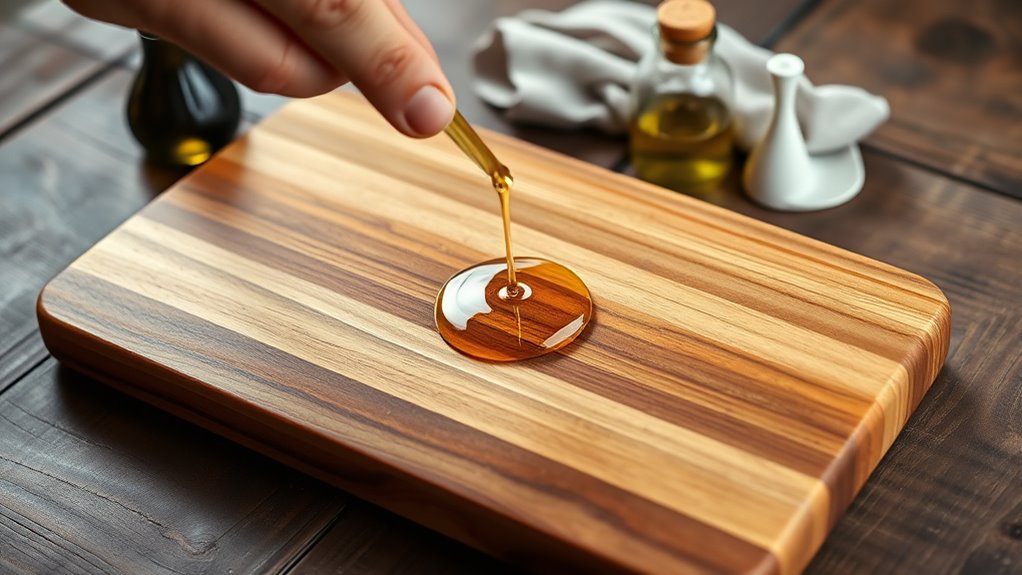
Although many people reach for olive oil to condition wooden cutting boards, it’s not always the best choice. You might think it’s natural and safe, but olive oil can actually cause your board to become sticky and rancid over time. Unlike mineral oil, olive oil contains fats that oxidize and spoil, attracting bacteria and unpleasant odors.
If you want to keep your cutting board in top shape, it’s better to use food-grade mineral oil or specially formulated cutting board oils. These don’t go rancid and penetrate the wood effectively, creating a protective barrier. So, while olive oil is generally safe for cooking, using it to maintain wooden cutting boards isn’t ideal if you want longevity and hygiene.
You’ll avoid sticky residue and unpleasant smells by choosing the right oil.
Why People Use Olive Oil on Cutting Boards
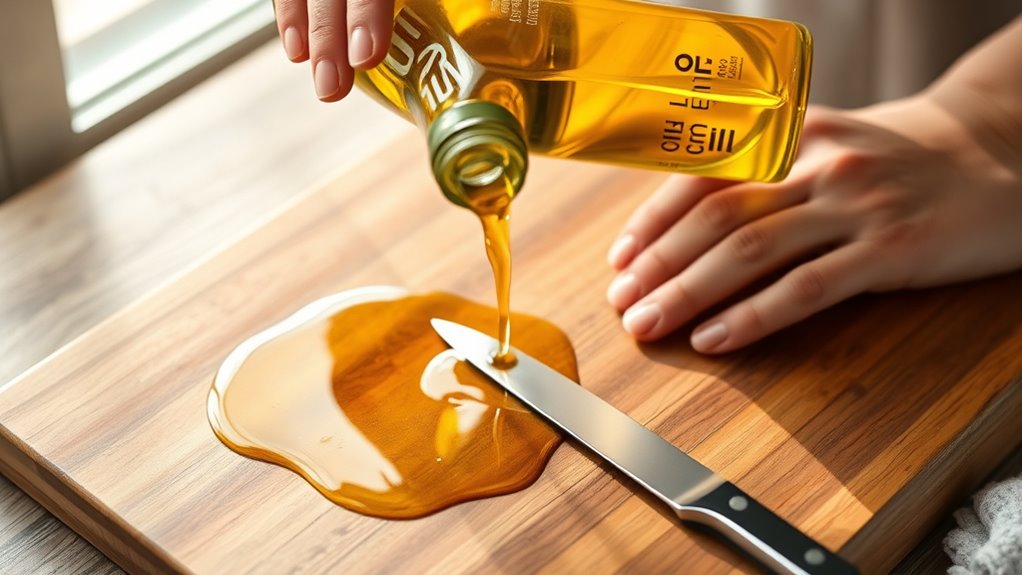
You use olive oil on cutting boards to keep the wood moisturized and healthy. It helps prevent cracks and warping, which can shorten your board’s lifespan.
Moisturizing Wood Surfaces
When wood cutting boards dry out, they can crack and warp, which shortens their lifespan. Moisturizing your board with olive oil helps maintain its natural moisture, keeping it smooth and resilient. Olive oil penetrates the wood fibers, preventing splits and rough patches.
Here’s a quick look at how moisturizing benefits your board:
| Benefit | Explanation |
|---|---|
| Prevents Cracking | Keeps wood fibers flexible |
| Maintains Smoothness | Reduces rough, splintered surfaces |
| Enhances Appearance | Restores natural wood shine |
| Resists Warping | Balances moisture content |
| Improves Hygiene | Creates a smoother surface easier to clean |
Regularly applying olive oil keeps your cutting board in top shape, ensuring it stays functional and attractive over time.
Enhancing Board Longevity
Because olive oil nourishes the wood deeply, it considerably extends the life of your cutting board. When you regularly apply olive oil, it seeps into the wood fibers, keeping them supple and preventing dryness that can lead to surface wear. This nourishment helps maintain the board’s smooth texture, so it stays pleasant to use and clean.
Olive oil also creates a subtle barrier against everyday stains and food residue, making your board easier to maintain. By incorporating olive oil into your cutting board care routine, you actively protect your investment and reduce the need for frequent replacements. Just remember to use food-grade olive oil and apply it evenly for the best results.
This simple step keeps your board functional and looking great for years.
Preventing Cracks And Warping
Although wood is naturally durable, it can crack and warp if it dries out or absorbs too much moisture. Applying olive oil helps create a protective barrier that locks in moisture, preventing the wood from drying and splitting. When you regularly oil your cutting board, you maintain its natural flexibility and strength.
Olive oil seeps into the wood fibers, keeping them hydrated and less prone to damage from fluctuating humidity or water exposure. To prevent cracks and warping, oil your board after each deep clean or whenever it looks dry. Just rub a small amount of olive oil onto the surface, let it soak in, and wipe off any excess.
This simple step keeps your cutting board stable and extends its lifespan.
Preparing Your Cutting Board for Olive Oil
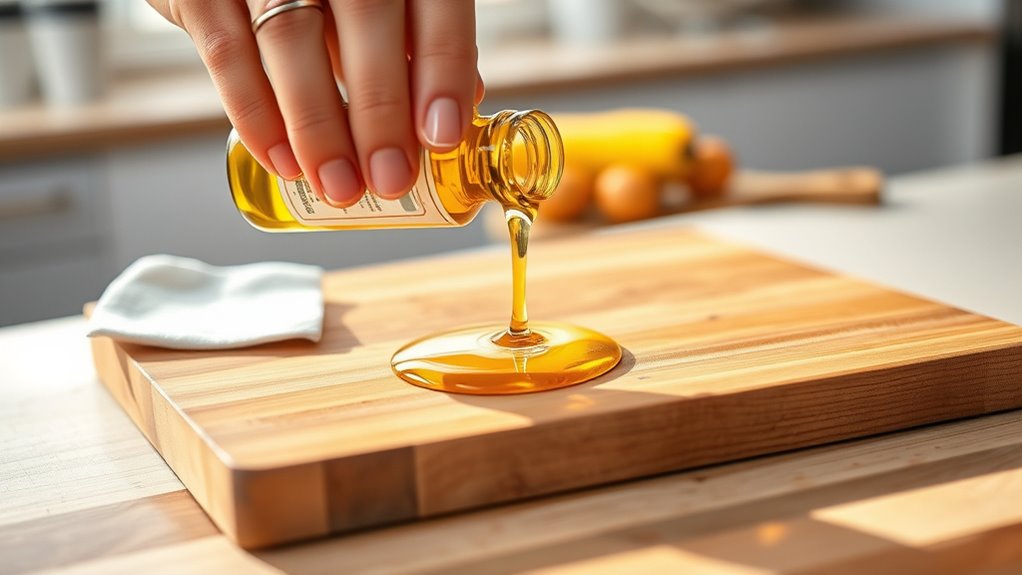
Before applying olive oil, make sure you clean your cutting board thoroughly to remove any residue. Always choose food-grade olive oil to keep your board safe and well-conditioned.
Finally, dry the board completely to help the oil absorb evenly.
Clean Board Thoroughly
To guarantee the olive oil penetrates your cutting board properly, you need to clean it thoroughly first. Start by scrubbing the surface with hot, soapy water to remove food particles and bacteria. Use a stiff brush or sponge to reach every groove and crevice.
Rinse well to wash away soap residue, which can interfere with the oil’s absorption. After washing, dry the board completely with a clean towel or let it air dry upright to prevent moisture buildup. Avoid soaking the board in water, as excess moisture can cause warping or cracking.
Once your cutting board is spotless and dry, it’s ready to absorb the olive oil effectively, helping to keep the wood conditioned and protected for longer use.
Choose Food-Grade Olive Oil
When preparing your cutting board for oiling, you’ll want to select a food-grade olive oil to guarantee safety and effectiveness. Food-grade oils are specifically processed to be safe for contact with food, ensuring no harmful chemicals or additives will contaminate your board. Avoid using non-food-grade or industrial olive oils, as they might contain impurities or substances unsafe for kitchen use.
Extra virgin or virgin olive oil are excellent choices because they’re natural and free from synthetic additives. Using the right type of olive oil helps nourish the wood, preventing cracking and warping, while keeping your cutting board safe for food preparation. Always check the label to confirm the oil is food-grade, ensuring you maintain both the board’s quality and your health.
Dry Board Completely
Why is it essential to dry your cutting board completely before applying olive oil? Moisture trapped in the wood can prevent the oil from soaking in properly, leading to uneven absorption and a sticky surface.
After washing your board, pat it dry with a clean towel and let it air-dry thoroughly. If you skip this step, the water can mix with the oil, causing it to sit on the surface rather than nourishing the wood fibers.
This not only reduces the oil’s effectiveness but can also promote bacterial growth. Make sure your board feels completely dry to the touch before you start oiling. Taking this simple precaution guarantees your cutting board stays protected, durable, and safe to use for a long time.
How to Apply Olive Oil Evenly and Safely
Although applying olive oil to your cutting board might seem straightforward, doing it evenly and safely guarantees the wood absorbs the oil properly without creating slippery spots. Start by pouring a small amount of olive oil directly onto the board’s surface. Use a clean, soft cloth or paper towel to spread the oil in circular motions, covering every inch without over-saturating.
Focus on thin, even layers rather than dumping oil in one spot. Avoid pouring oil on the edges or bottoms to prevent drips and mess. After spreading, let the board rest for at least 20 minutes to allow absorption.
Wipe off any excess oil with a dry cloth to prevent a sticky surface. This careful approach keeps your cutting board well-conditioned and safe to use.
How Often to Oil Your Cutting Board
How often you oil your cutting board depends on the type of wood it’s made from and how much you use it. You’ll know it’s time to oil when the board looks dry or starts to crack.
Many people find that applying oil seasonally keeps their board in great shape.
Frequency Based On Wood
Because different woods absorb oil at varying rates, you’ll need to adjust how often you oil your cutting board accordingly. Hardwoods like maple and walnut usually require oiling every month or two since their dense grain absorbs oil more slowly.
Softer woods such as pine soak up oil faster, so you might want to apply oil every few weeks to keep them well-conditioned. Exotic woods like teak, known for natural oils, need less frequent treatment—every three to six months often suffices.
If you use your board daily, consider oiling more regularly regardless of the wood type. By matching your oiling schedule to the wood’s characteristics, you’ll maintain the board’s durability and prevent cracking or warping.
Signs Board Needs Oiling
When your cutting board starts looking dry or feels rough to the touch, it’s a clear sign you need to oil it. You might also notice small cracks or the wood appearing dull. These signs mean the board is losing moisture and protection, which can lead to warping or bacteria buildup.
If water no longer beads on the surface and instead soaks in, it’s time to oil. Pay attention after washing and drying your board; if it feels lighter or less smooth, that’s another cue. Regularly checking for these signs helps maintain your board’s durability and hygiene.
Seasonal Oiling Recommendations
Noticing your cutting board needs oiling is a great first step, but knowing how often to do it keeps it in top shape year-round. The frequency depends on the season and usage. In dry winter months, wood dries out faster, so oiling every 2–3 weeks helps prevent cracking.
During humid summer months, oiling once a month is usually enough. If you use your board daily, you might need to oil it more often regardless of season.
| Season | Oiling Frequency |
|---|---|
| Winter | Every 2–3 weeks |
| Spring | Every 3–4 weeks |
| Summer | Once a month |
| Fall | Every 3–4 weeks |
| Daily Use | Weekly or as needed |
Stick to this schedule to keep your board safe and looking great.
Signs Your Cutting Board Needs More Olive Oil
If your cutting board starts to look dull or feels rough to the touch, it probably needs more olive oil. When the wood dries out, it can crack or warp, reducing its lifespan. You might also notice water soaking in quickly instead of beading on the surface—this means the protective layer has worn off.
Additionally, if food sticks more than usual or the board looks faded, it’s time to reapply oil. Regularly checking for these signs helps you maintain a smooth, durable surface that resists stains and odors.
How to Clean and Maintain an Oiled Cutting Board
Keeping your cutting board well-oiled is only part of the care it needs; proper cleaning and maintenance play a big role in preserving its condition. After each use, wash your board with warm water and mild dish soap, scrubbing gently with a soft sponge. Avoid soaking it or using harsh detergents, as these can damage the wood.
Once cleaned, dry your board thoroughly with a towel and let it air dry completely before applying oil. To maintain its longevity, oil your cutting board once a month or when it looks dry. Regularly inspect for deep cuts or cracks, sanding lightly if necessary before re-oiling.
With consistent care, your oiled board will stay smooth, hygienic, and ready for safe food prep.
Risks of Using Olive Oil on Cutting Boards
Although olive oil is a popular choice for many kitchen uses, it poses some risks when applied to cutting boards. Olive oil can go rancid over time, creating an unpleasant smell and potentially affecting the taste of your food. Because it’s a vegetable oil, it doesn’t dry or harden well, which means it won’t provide the long-lasting protection your cutting board needs.
Using olive oil can also make the surface sticky, attracting dirt and bacteria. Additionally, it may cause your cutting board to become slippery, increasing the chance of accidents while chopping. If you rely on olive oil, you might find yourself needing to reapply it frequently, which can be time-consuming and inefficient.
Understanding these risks helps you make safer choices for your kitchen tools.
Safer Alternatives to Olive Oil for Cutting Boards
Since olive oil can cause issues like rancidity and stickiness, you’ll want to choose safer oils that protect your cutting board effectively. Mineral oil is a popular choice because it’s food-safe, odorless, and doesn’t go rancid. Applying it regularly keeps your board hydrated and smooth.
Beeswax mixed with mineral oil adds extra protection by sealing the surface, preventing moisture from penetrating. You might also consider specialized cutting board oils, which are often blends designed to nourish and shield wood without the downsides of cooking oils. Avoid vegetable oils like flaxseed or walnut unless specifically processed for cutting boards, as they can spoil over time.
Tips for Storing Cutting Boards to Prevent Damage
To prevent your cutting board from warping or cracking, store it in a dry, well-ventilated area away from direct sunlight and extreme temperatures. Avoid stacking heavy items on top of it, which can cause dents or uneven surfaces.
Position your cutting board upright or flat on a shelf with enough airflow to keep it dry and fresh. Regularly check for moisture buildup and clean spills promptly.
| Storage Location | Ideal Conditions | Avoid |
|---|---|---|
| Kitchen counter | Dry, cool, out of sun | Near stove or dishwasher |
| Cabinet shelf | Well-ventilated, flat | Crowded spaces |
| Wall rack | Upright, good airflow | Areas with high humidity |
| Drawer | Dry, clean | Overcrowded or damp drawers |
| Pantry or closet | Cool, dark | Warm, humid environments |
Frequently Asked Questions
Can Olive Oil Prevent Bacteria Growth on Cutting Boards?
No, olive oil won’t prevent bacteria growth on cutting boards. You should clean your board thoroughly instead.
Olive oil can actually trap bacteria if not used properly, so always sanitize and dry your cutting board after use.
Is It Safe to Use Olive Oil on Plastic Cutting Boards?
It’s not ideal to use olive oil on plastic cutting boards because it can become sticky and attract bacteria. Instead, you should clean plastic boards thoroughly with soap and water and avoid oils that don’t absorb well.
Using olive oil on plastic surfaces may leave a residue that is difficult to remove. This residue can create a breeding ground for bacteria.
For plastic cutting boards, it’s best to stick to regular cleaning methods rather than applying oil.
Does Olive Oil Affect the Taste of Food Prepared on the Board?
No, olive oil won’t affect the taste of food prepared on your cutting board if you use it sparingly. Just apply a thin layer, let it absorb, and wipe off any excess to avoid greasy residue.
Can Olive Oil Cause the Cutting Board to Become Slippery?
Yes, olive oil can make your cutting board slippery if you use too much. To avoid this, apply a thin, even layer and wipe off any excess.
This keeps your board safe and easy to use.
How Long Does Olive Oil Last Once Applied to a Cutting Board?
Once applied, olive oil lasts about 3-4 weeks on your cutting board before it starts to go rancid. Since olive oil oxidizes quickly, you’ll want to reapply regularly to keep your board conditioned and safe.
Reapplying helps maintain the board’s surface and prevents drying or cracking. Be sure to check the board periodically for any off smells or sticky residue. This will indicate it’s time for another application.
Conclusion
You’ve learned that while olive oil feels like a natural choice, it can turn rancid and harm your wooden cutting board. Instead, consider safer options like mineral oil to keep your board in top shape.
Think of your cutting board as a trusty steed—you wouldn’t want to feed it anything that could slow it down. Oil it regularly, clean it well, and store it properly to guarantee it serves you faithfully for years to come.
Using olive oil on cutting boards safely means avoiding it altogether and opting for food-safe oils like mineral oil. Proper maintenance ensures your cutting board stays durable and hygienic. Regular care is key to preserving your wooden cutting board’s quality.