Are All Glass Cooktops Induction
Not all glass cooktops use induction technology; many actually rely on radiant heating with electric coils beneath the smooth, tempered glass surface. It can be difficult to tell if a cooktop is induction just by looking since both types share a sleek, flat design.
Understanding the differences between glass cooktops is essential when choosing the right one for your kitchen.
Induction cooktops require magnetic cookware and offer faster, more efficient heating. In contrast, radiant glass cooktops work with all types of pots but heat up more slowly.
Exploring these features can help you find the best fit for your cooking needs.
Key Takeaways
- Not all glass cooktops are induction; many are radiant cooktops with electric coils beneath the glass surface. Induction cooktops use electromagnetic fields and require magnetic cookware, while radiant cooktops work with all cookware types. Induction cooktops have no visible heating elements, unlike radiant cooktops that have coils or zone markings under the glass.
- Both induction and radiant cooktops have smooth, tempered glass surfaces, but their heating methods and cookware compatibility differ. Checking product specifications or user manuals is the most reliable way to identify if a glass cooktop is induction or radiant.
What Are Glass Cooktops and How Do They Look?
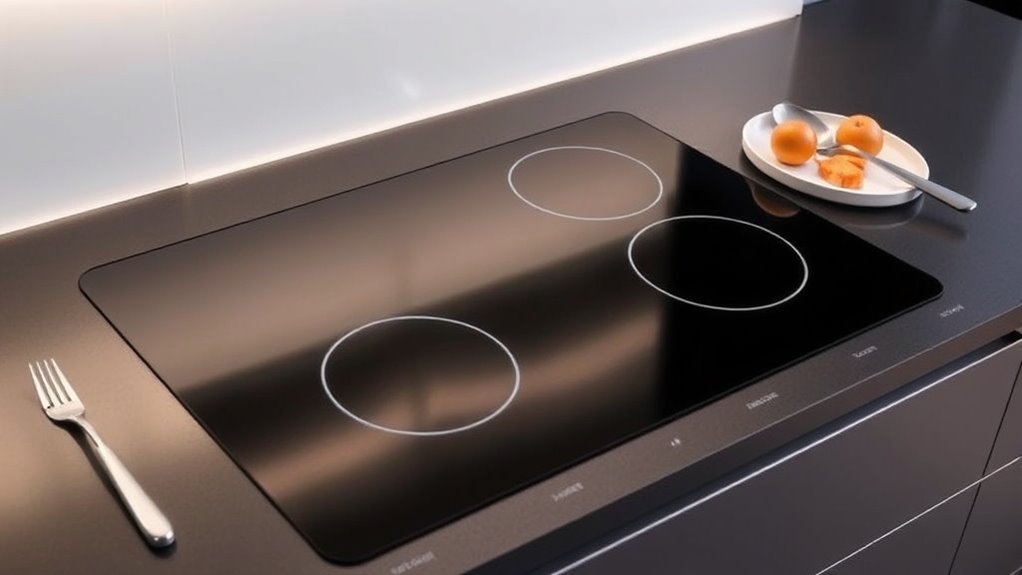
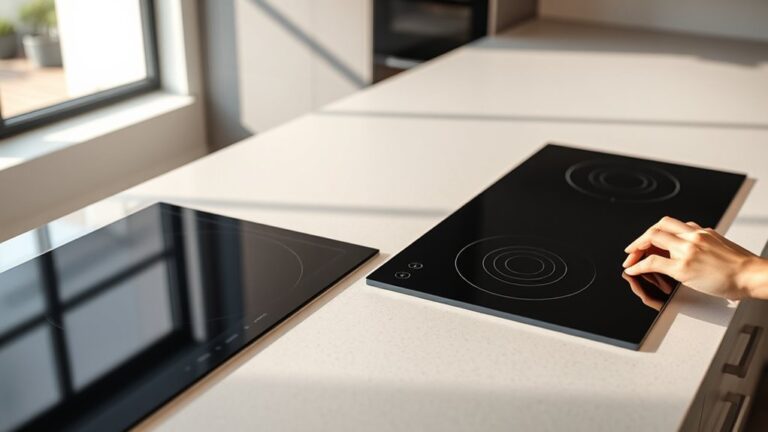
Although glass cooktops might seem delicate, they’re actually designed to handle everyday cooking tasks with ease. When you look at a glass cooktop, you’ll notice a smooth, flat surface made of tempered glass, often black or dark gray, which gives your kitchen a sleek, modern appearance. The surface is easy to clean because of its seamless design, with burners or heating elements subtly marked beneath the glass.
You’ll find either radiant heating elements or induction coils hidden under the surface, depending on the model. Glass cooktops don’t have traditional raised burners or grates, so pots and pans sit directly on the smooth glass. This design not only looks stylish but also makes your cooking area straightforward to maintain and visually open.
How Does Induction Cooking Work Compared to Radiant Glass Cooktops?
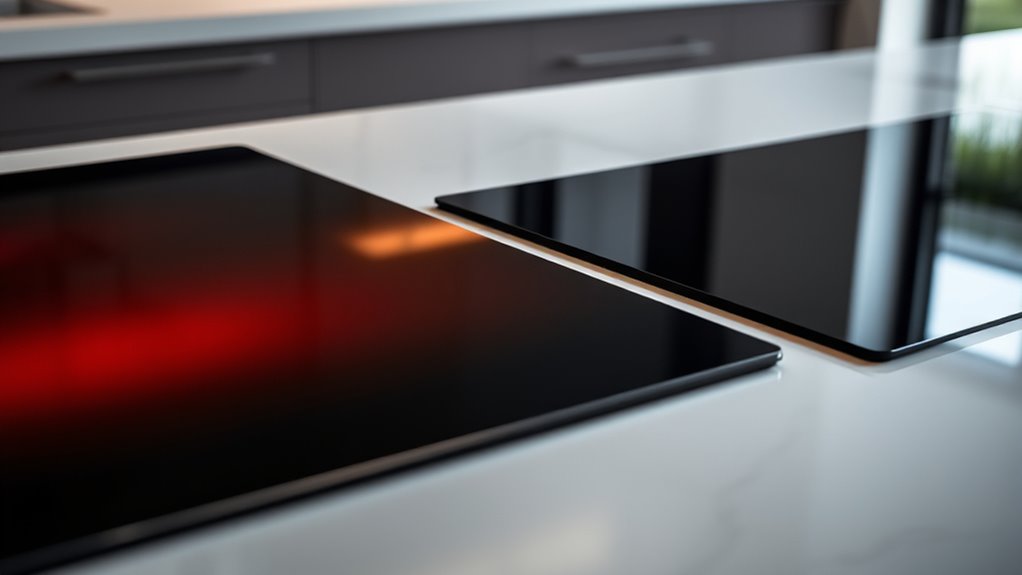
You’ll find that induction cooktops heat your pots through electromagnetic fields, making them faster and more efficient. Radiant glass cooktops, on the other hand, use electric heating elements beneath the glass to warm up.
Understanding these differences helps you see why induction offers better heat control and energy savings.
Induction Heating Mechanism
When you place a pot on an induction cooktop, electromagnetic fields generate heat directly in the cookware, unlike radiant glass cooktops that rely on heating elements beneath the surface. This happens because induction cooktops use a coil of copper wire beneath the glass that produces a magnetic field when electric current passes through it. The magnetic field induces electric currents, called eddy currents, in the ferromagnetic cookware, causing it to heat up quickly.
Since the heat is generated inside the pot itself, the cooktop surface stays relatively cool, reducing burn risks and making cleanup easier. You’ll also notice faster heating and precise temperature control, thanks to this direct, efficient transfer of energy from cooktop to pot, setting induction apart from other glass cooktop types.
Radiant Glass Cooktop Operation
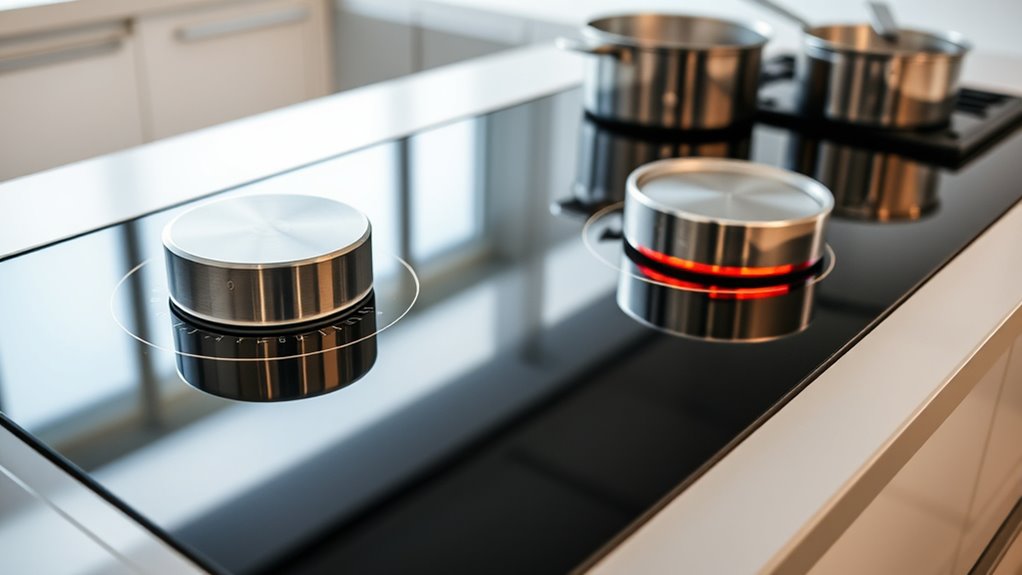
While induction cooktops generate heat directly in the cookware, radiant glass cooktops work by heating an element beneath the glass surface, which then transfers heat to your pots and pans. This element is usually made of coils that glow red-hot as they warm up, radiating heat through the glass. You’ll notice the glass surface itself gets hot because of this heat transfer.
Unlike induction, radiant cooktops don’t require special magnetic cookware; any pot or pan will work since heat moves through the glass to the cookware. However, because the glass heats up, it stays hot even after you turn off the element, so you need to be careful to avoid burns. Radiant cooktops offer a familiar cooking experience but operate quite differently under the surface.
Efficiency And Heat Control
Although both induction and radiant glass cooktops heat your food, they differ considerably in efficiency and heat control. Induction cooktops use electromagnetic fields to directly heat the cookware, so the cooktop surface stays relatively cool and energy isn’t wasted heating the air around the pot. This means you get faster heat-up times and precise temperature adjustments, letting you respond instantly to changes.
Radiant glass cooktops, on the other hand, rely on electric heating elements beneath the glass to transfer heat through conduction. This method takes longer to heat and cool, so controlling temperature can feel less responsive. When you want efficient cooking with sharp control, induction gives you an edge, while radiant cooktops offer a more traditional, slower heating experience.
How Induction and Radiant Glass Cooktops Differ
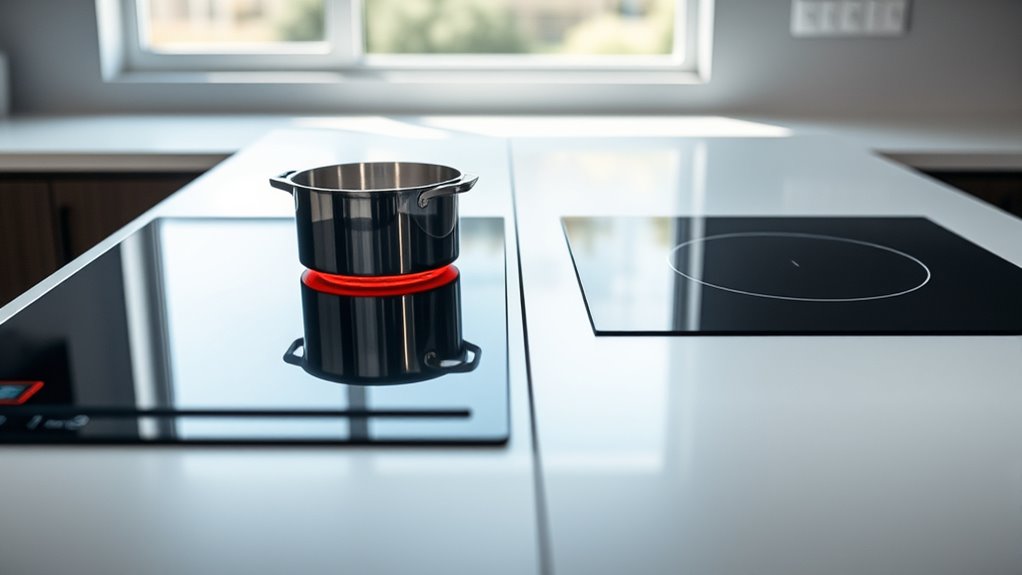
You’ll notice induction and radiant glass cooktops heat differently—induction uses magnetic fields, while radiant relies on electric coils beneath the glass. This difference affects how energy efficiently transfers to your cookware.
Plus, the surface temperature varies, with induction staying cooler compared to radiant cooktops.
Heating Mechanism Differences
How exactly do induction and radiant glass cooktops differ in heating? With induction cooktops, you’ll find that the glass surface itself doesn’t get hot. Instead, electromagnetic coils beneath the glass generate a magnetic field that directly heats your cookware.
This means the heat is focused only where you need it—under the pot or pan. Radiant glass cooktops, on the other hand, use electric heating elements beneath the glass. These elements heat up and transfer heat to the glass surface, which then heats your cookware.
Energy Efficiency Comparison
Why does energy efficiency matter when choosing between induction and radiant glass cooktops? It directly impacts your utility bills and environmental footprint. Induction cooktops use electromagnetic energy to heat pots and pans directly, so almost all the energy goes into cooking.
This means you waste less power, and your food cooks faster. On the other hand, radiant cooktops heat a coil beneath the glass surface, which then transfers heat to your cookware. This process loses more energy as heat escapes into the surrounding air and the cooktop itself.
If you want a more energy-efficient option that saves money and cooks quickly, induction is the way to go. Radiant cooktops feel simpler but don’t offer the same energy savings or speed.
Surface Temperature Variations
What makes the surface temperature of induction and radiant glass cooktops so different? With induction cooktops, the surface stays relatively cool because the heat is generated directly in the cookware through magnetic induction. You’ll notice the cooktop only warms up from the heat transferred by the pot or pan, which means less risk of burns or accidental fires.
On the other hand, radiant glass cooktops heat up the entire surface using electric heating elements beneath the glass. This means the cooktop itself gets very hot during cooking, so you need to be more cautious. Understanding these differences helps you choose the right cooktop for your safety preferences and cooking style.
Can You Tell If a Cooktop Is Induction Just by Looking?
You might expect all glass cooktops to look similar at first glance, but spotting an induction cooktop requires a closer look. Induction cooktops often have distinct circle outlines or coil patterns marking the cooking zones, though some smooth glass electric cooktops do too. The key difference is labels or symbols near the controls—induction models frequently feature a coil icon or the word “induction.”
You won’t see visible heating elements like on traditional electric cooktops. Also, induction surfaces tend to be completely flat and sleek without raised burners. However, appearances can be deceiving, so the best way to tell is by checking the product specifications or user manual.
Visual cues alone aren’t always reliable, but these tips can help you make an educated guess.
Pros and Cons of Induction Glass Cooktops
Once you know how to identify an induction glass cooktop, it helps to weigh its advantages and disadvantages before deciding if it’s right for you. Induction cooktops use magnetic fields to heat pots directly, making cooking faster and more efficient. However, they require compatible cookware and can be pricier than other options.
Understanding induction cooktops helps you weigh their efficiency against cost and cookware compatibility.
Here are some key pros and cons to *evaluate*:
- Pros: Energy-efficient, cooks food quickly, and offers precise temperature control.
- Cons: Only works with ferromagnetic cookware, glass surface can scratch easily, and initial cost is higher.
- Neutral: The surface stays cooler than traditional cooktops, reducing burn risk, but you need to clean spills promptly to avoid staining.
Knowing these points helps you decide if induction glass cooktops fit your cooking style and budget.
Pros and Cons of Radiant Glass Cooktops
Although radiant glass cooktops don’t rely on magnetic fields like induction models, they still offer a sleek, smooth surface that heats cookware through electric coils beneath the glass. You’ll appreciate their compatibility with any type of cookware, unlike induction cooktops that require magnetic pots or pans. They’re generally more affordable and simpler to install, making them a convenient choice.
However, they take longer to heat up and cool down, so you’ll need to be cautious to avoid burns. Energy efficiency is lower compared to induction, as heat can dissipate around the cookware. Cleaning is easy because of the smooth surface, but residual heat indicators are essential since the cooktop remains hot after use.
Best Cooktops for Different Cooking Styles
When choosing a cooktop, you’ll want to think about how you like to cook, whether that’s with gas or electric heat. Induction cooktops offer fast, precise control but might not work with all cookware.
Let’s explore the benefits and drawbacks of each to find the best fit for your cooking style.
Gas Versus Electric
How do you choose between gas and electric cooktops for your kitchen? It depends largely on your cooking style and preferences. Gas cooktops offer immediate heat control and visible flames, ideal if you like quick adjustments and traditional cooking methods.
Electric cooktops provide consistent, even heating with a smooth glass surface, making cleanup easier.
Consider these points:
- Heat Control: Gas lets you change temperatures instantly; electric heats steadily.
- Safety: Electric cooktops cool down faster, reducing burn risks.
- Maintenance: Gas burners can be tricky to clean, while electric glass tops wipe down easily.
Induction Benefits and Drawbacks
If you’re weighing gas versus electric, you might want to think about induction cooktops as well. They heat up faster and offer precise temperature control, which is great if you like cooking with accuracy. Because induction uses magnetic fields to heat only the pan, your cooktop stays cooler and safer to touch.
Plus, they’re energy-efficient, saving you money over time. However, induction requires compatible cookware—typically ferrous metals like cast iron or stainless steel—so you might need to replace some pots. Also, induction cooktops can be pricier upfront compared to traditional options.
If you prioritize speed, safety, and efficiency, induction fits well. But if you want to use any pan or prefer lower initial costs, you might lean toward gas or standard electric instead.
How to Choose the Right Glass Cooktop for Your Kitchen
Although glass cooktops offer a sleek, modern look, choosing the right one for your kitchen means considering factors like cooking style, energy efficiency, and compatibility with your cookware. Start by evaluating how you cook—do you prefer quick heating or steady simmering?
Next, think about the energy source; induction cooktops save energy but require magnetic cookware, while radiant models work with any pot. Finally, assess your cookware to ensure it matches the cooktop type.
Here’s what to focus on:
- Cooking habits: Match the cooktop to your typical meals and pace.
- Energy use: Choose a model that balances efficiency and convenience.
- Cookware compatibility: Avoid surprises by confirming your pots will work seamlessly.
This approach helps you pick a glass cooktop that fits your kitchen perfectly.
Common Myths About Glass and Induction Cooktops Debunked
Wondering whether all glass cooktops are induction or if they share other features? Not all glass cooktops use induction technology. Some are radiant, heating the glass surface directly, while induction cooktops heat pots through magnetic fields.
A common myth is that glass cooktops are fragile; in reality, they’re made from durable, tempered glass designed to withstand daily cooking. Another misconception is that induction cooktops only work with special cookware. While they do require magnetic cookware, many common pots and pans qualify.
People also think induction cooktops waste energy, but they’re actually more efficient than traditional electric or gas ranges. Understanding these facts helps you make smarter choices and clears up confusion about glass and induction cooktops.
Safe Cleaning Tips for Glass Cooktops
Knowing how your glass cooktop works is just the start—keeping it clean guarantees it stays efficient and looks great. You want to avoid scratches and damage that can occur from improper cleaning. Always wait for the cooktop to cool completely before you start.
Use gentle, non-abrasive tools and cleaners to maintain its smooth surface.
Here are three safe cleaning tips to follow:
- Use a soft cloth or sponge with warm, soapy water to wipe down daily spills.
- For stubborn stains, apply a cooktop cleaner specifically designed for glass surfaces and gently scrub with a non-scratch pad.
- Avoid harsh chemicals, abrasive pads, or steel wool as they can scratch or dull the surface.
Following these tips helps you keep your glass cooktop both safe and spotless.
Frequently Asked Questions
Can Induction Cooktops Affect Pacemakers?
Induction cooktops can sometimes interfere with pacemakers, so you should consult your doctor before use. Most modern pacemakers are well-shielded, but it’s better to be cautious and avoid close, prolonged exposure to the cooktop’s magnetic field.
Do Induction Cooktops Require Special Cookware?
Yes, induction cooktops require special cookware made of magnetic materials like cast iron or stainless steel. If your pots and pans aren’t magnetic, they won’t heat properly, so always check before cooking.
How Energy-Efficient Are Induction Cooktops Compared to Gas?
You’ll find induction cooktops far more energy-efficient than gas, converting about 90% of energy directly to heat.
In contrast, gas loses much energy as heat to the air, making it less eco-friendly and costly.
Are Glass Cooktops Prone to Cracking Under Heavy Pots?
Yes, glass cooktops can crack under heavy pots if you drop them or apply sudden force.
You should always lift heavy cookware gently and avoid dragging pots to keep the surface safe and crack-free.
Can Induction Cooktops Be Installed Over Existing Countertops?
Yes, you can install induction cooktops over existing countertops if the surface is heat-resistant and sturdy.
Just make sure the countertop can support the cooktop’s weight and follow the manufacturer’s installation guidelines carefully.
Conclusion
Choosing between glass cooktops is like picking the right tool in a wizard’s arsenal—each has its unique magic. Induction cooktops offer lightning-fast heat and precision, while radiant glass cooktops bring steady, reliable warmth.
You can’t always tell which is which just by looking, but knowing their differences helps you cook smarter.
So, trust your instincts, weigh the pros and cons, and remember that not all glass cooktops are induction. Understanding the distinctions between induction and radiant glass cooktops will help you choose the perfect surface for your cooking needs and create your own culinary kingdom.