

How to Pan Fry Swordfish
To pan-fry swordfish perfectly, start by selecting firm, thick steaks about 1 to 1.5 inches thick. Swordfish is ideal for pan frying because of its meaty texture and mild flavor, which pairs well with simple seasonings. Proper preparation and cooking techniques will ensure a delicious, flaky result every time.
Trim off any silver skin or membranes, then marinate with lemon juice, herbs, and olive oil for up to 30 minutes but don’t overdo it. Pat the fish dry, season just before cooking, and use a heavy pan with high-smoke-point oil like avocado or grapeseed.
Sear over medium-high heat 3-6 minutes per side until opaque and firm.
Keep going to uncover tips on perfect sides and plating.
Key Takeaways
- Choose fresh, firm swordfish steaks about 1 to 1.5 inches thick, trimming silver skin and membranes before cooking.
- Marinate with lemon juice, herbs, and olive oil for 20-30 minutes, then pat dry to ensure a good sear.
- Preheat a heavy-bottomed pan with high-smoke-point oil like avocado or grapeseed oil over medium-high heat.
- Cook steaks 3-4 minutes per side for 1-inch thickness until opaque, firm, and reaching 130°F to 135°F internal temperature.
- Let the fish rest 2-3 minutes after cooking and serve with quick, colorful sides to enhance flavor and presentation.
How to Choose the Best Swordfish Cut for Pan-Frying
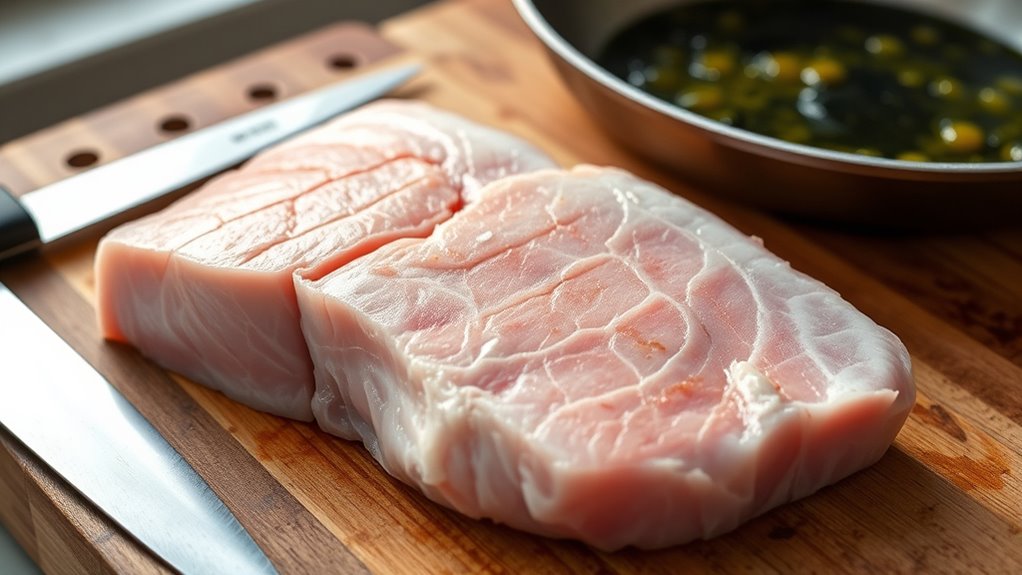
When selecting swordfish for pan-frying, you want to look for thick, firm steaks with a moist texture. Avoid cuts that appear dry or have any discoloration. Ideally, choose steaks about 1 to 1.5 inches thick to guarantee even cooking without drying out.
The flesh should be a pale pinkish-white, indicating freshness. Avoid pieces with ragged edges or excessive sinew, as these can affect the texture after cooking. If possible, buy from a reputable fishmonger who can confirm the swordfish is sustainably caught and fresh.
How to Season Swordfish for Maximum Flavor

To get the most flavor from your swordfish, you’ll want to choose the right seasoning combinations that complement its meaty texture. Don’t wait until after cooking to season; applying spices just before pan-frying locks in flavor and enhances the crust.
Let’s explore the best spices to use and the perfect timing to season your swordfish.
Best Seasoning Combinations
Although swordfish has a naturally rich flavor, seasoning it properly can elevate your dish to a whole new level. You want to balance bold herbs, citrus, and spices without overpowering the fish.
Try combinations that highlight its meaty texture and subtle sweetness.
Here are some top seasoning blends to try:
| Herbs | Citrus Elements | Spices |
|---|---|---|
| Rosemary | Lemon Zest | Smoked Paprika |
| Thyme | Lime Juice | Cracked Black Pepper |
| Oregano | Orange Peel | Red Pepper Flakes |
Mix and match these to create a personalized flavor profile that complements your pan-fried swordfish perfectly.
Timing For Seasoning
Since swordfish has a dense, meaty texture, seasoning it at the right moment can make all the difference in flavor absorption and overall taste. You want to season your swordfish just before cooking to keep the fish juicy and tender. Salt draws out moisture, so adding it too early can dry out the fish.
Right before the pan hits the heat, sprinkle your chosen spices and herbs evenly on both sides. If you’re using marinades, let the swordfish sit in them for 15 to 30 minutes—not longer—to avoid mushiness. Timing your seasoning this way lets the flavors enhance the natural taste without overpowering it.
How to Prepare Swordfish Steaks: Trimming, Marinating, and Drying

Before you start cooking, make sure to trim any tough edges or skin from your swordfish steaks for a clean bite. Marinating the fish not only adds flavor but also helps keep it moist while cooking.
Once marinated, pat the steaks dry to guarantee a perfect sear in the pan.
Trimming Tips For Swordfish
When you start preparing swordfish steaks, trimming plays an essential role in ensuring a clean, enjoyable eating experience. First, remove any silver skin or tough membranes you find on the surface. These can be chewy and detract from the texture.
Use a sharp knife to carefully trim away any dark or discolored areas, as these might taste bitter. Also, check for any remaining bones and pull them out with tweezers if needed. Avoid trimming too much flesh, as swordfish is lean and can dry out easily.
A clean, well-trimmed steak not only cooks evenly but also absorbs flavors better. Taking these simple steps sets you up for perfectly cooked, delicious swordfish every time.
Effective Marinating Techniques
Once you’ve trimmed your swordfish steaks, the next step is to enhance their flavor through marinating. Choose a marinade with acidity—like lemon juice, vinegar, or wine—to tenderize the fish without overpowering its natural taste. Combine it with olive oil, garlic, herbs, and a pinch of salt and pepper.
Place the steaks in a shallow dish or resealable bag, making sure the marinade covers them evenly. Let them soak for 20 to 30 minutes; marinating longer can break down the meat too much and affect the texture. Keep the fish refrigerated while marinating to maintain freshness.
When ready, remove the steaks and pat them dry thoroughly before cooking to guarantee a perfect sear and prevent splattering.
Which Pan and Oil Work Best for Pan-Frying Swordfish?
Choosing the right pan and oil is essential to achieving a perfectly seared swordfish steak with a golden crust and juicy interior. You want a pan that heats evenly and retains high heat without warping.
- Pan Choice: Use a heavy-bottomed skillet like cast iron or stainless steel. These materials provide consistent heat and help form that coveted crust.
- Oil Selection: Pick oils with a high smoke point such as avocado, grapeseed, or refined olive oil. They withstand the heat needed for searing without burning.
- Avoid: Stay away from butter or unrefined oils for the initial sear since they can burn quickly. You can add butter later for flavor once the fish is nearly cooked.
Using the right pan and oil sets the stage for perfectly pan-fried swordfish every time.
Tips for Getting a Perfectly Seared Crust on Swordfish
To achieve a perfectly seared crust on your swordfish, you’ll need to start with a dry, well-seasoned steak and a hot pan. Pat the swordfish dry with paper towels to remove any moisture, which helps the crust develop. Season both sides generously with salt and pepper right before cooking.
Heat your pan over medium-high heat until it’s shimmering hot, then add a high smoke point oil like grapeseed or avocado oil. Place the swordfish in the pan and avoid moving it for the first few minutes to allow a golden-brown crust to form. Use a thin metal spatula to gently lift the edge and check the crust before flipping.
This method guarantees a flavorful, crisp exterior that locks in moisture.
How Long to Cook Pan-Fried Swordfish for Tender, Juicy Results
Although pan-frying swordfish is quick, you need to cook it just long enough to keep it tender and juicy without drying it out. Overcooking can make the fish tough, so timing is key. Here’s how to nail it every time:
Pan-frying swordfish is quick, but perfect timing is crucial to keep it tender and juicy.
- Thickness matters: For 1-inch thick steaks, cook each side for about 3-4 minutes over medium-high heat.
- Adjust for thickness: Thicker cuts (1.5-2 inches) need 5-6 minutes per side; thinner ones require less time.
- Rest before serving: Let your swordfish rest for 2-3 minutes after cooking to allow juices to redistribute.
How to Tell When Pan-Fried Swordfish Is Done
Getting the timing right is just one part of cooking perfect pan-fried swordfish. You’ll know it’s done when the flesh turns opaque and flakes easily with a fork but still feels firm to the touch. Avoid overcooking—it becomes dry and tough quickly.
A good trick is to press the thickest part gently; it should spring back slightly without feeling mushy. If you’re using a thermometer, aim for an internal temperature of 130°F to 135°F for medium doneness. Remember, the fish will continue to cook a bit after you remove it from the pan, so take it off just before it reaches your preferred temperature.
Watching for these signs ensures your swordfish stays juicy and flavorful every time.
Easy Sides That Pair Well With Pan-Fried Swordfish
When you serve pan-fried swordfish, choosing the right sides can elevate the entire meal. You want flavors and textures that complement the meaty, mild taste of the fish without overpowering it. Here are three easy sides that pair perfectly:
- Roasted Vegetables – Carrots, zucchini, and bell peppers add color and a slight sweetness that balances the swordfish.
- Lemon Garlic Quinoa – This light, citrusy grain dish provides a fresh contrast and keeps the meal healthy.
- Simple Green Salad – A crisp salad with mixed greens, cherry tomatoes, and a light vinaigrette adds brightness and crunch.
These sides are quick to prepare and bring out the best in your pan-fried swordfish, making your dinner both delicious and well-rounded.
Frequently Asked Questions
Can I Pan-Fry Swordfish From Frozen?
You shouldn’t pan-fry swordfish straight from frozen because it cooks unevenly. Instead, thaw it in the fridge overnight or under cold water.
Once thawed, you can pan-fry it for a perfect, juicy result.
Is Swordfish Safe to Eat Raw or Rare?
You shouldn’t eat swordfish raw or rare because it often contains mercury levels averaging 0.995 ppm, higher than many fish. Cooking thoroughly reduces health risks, so you’re safer enjoying it well done rather than raw or undercooked.
How Do I Store Leftover Pan-Fried Swordfish?
You should let your leftover swordfish cool completely, then wrap it tightly in plastic wrap or place it in an airtight container.
Store it in the fridge and eat within 2 days for the best taste and safety.
Can I Use Frozen Swordfish Steaks for Pan-Frying?
Frozen swordfish steaks are like hidden treasure waiting to be uncovered; just thaw them completely before pan-frying. Don’t rush—thawing guarantees even cooking and a juicy, flavorful result that’ll make your taste buds sing.
What Are the Health Benefits of Eating Swordfish?
You’ll benefit from swordfish’s rich omega-3 fatty acids, which support heart health and brain function. It’s also packed with protein, vitamin D, and selenium, helping your immune system and promoting strong bones.
Conclusion
Now that you know how to pan-fry perfect swordfish, savor the satisfying sear and succulent, savory flavors. Selecting stellar cuts, seasoning smartly, and searing skillfully sets you up for success. Remember, timing and tenderness turn your fish from fine to fantastic.
Pair with simple sides to spotlight your seafood star. So, step into the kitchen, stir up some sizzle, and serve a stunning, scrumptious swordfish supper that’s sure to shine! Mastering how to pan fry swordfish ensures a delicious and impressive meal every time.