

How Do Rice Cookers Work Step by Step
When you add rice and water to your rice cooker and turn it on, the heating element heats the water to boiling. The rice absorbs the water while the temperature stays steady. This steady temperature ensures the rice cooks evenly and thoroughly.
Once the water is fully absorbed and evaporated, the temperature rises. This temperature change triggers the thermostat to switch the cooker to keep-warm mode. This sensor-driven process guarantees even cooking and perfect texture every time.
Rice cookers use this precise mechanism to simplify cooking. Continue exploring to discover how different settings and parts work together for flawless rice every time. Understanding these steps helps you achieve consistent results with ease.
Key Takeaways
- Add rice and water to the inner pot, then close the lid securely before starting the cooker.
- Heating element heats the water to boiling, which is absorbed by the rice at a steady temperature.
- Temperature sensor detects when water is fully absorbed and temperature rises above 100°C.
- Cooker switches to keep-warm mode automatically when the temperature spike is sensed.
- Let rice rest with the lid closed for about 10 minutes before fluffing and serving.
How a Rice Cooker Cooks Rice: An Overview

Although cooking rice might seem straightforward, a rice cooker simplifies the process by using precise temperature control and timing. When you add rice and water to the cooker and switch it on, the appliance heats the water to boiling. As the water absorbs into the rice, the temperature stays steady.
Once all the water evaporates or is absorbed, the temperature inside the cooker rises above 100°C. The rice cooker senses this change and automatically switches to a “keep warm” mode, preventing overcooking. This automation means you don’t have to watch the pot or guess cooking times.
You just add your ingredients, start the cooker, and let it handle the rest, giving you perfectly cooked rice every time without fuss.
The Main Parts Inside Your Rice Cooker
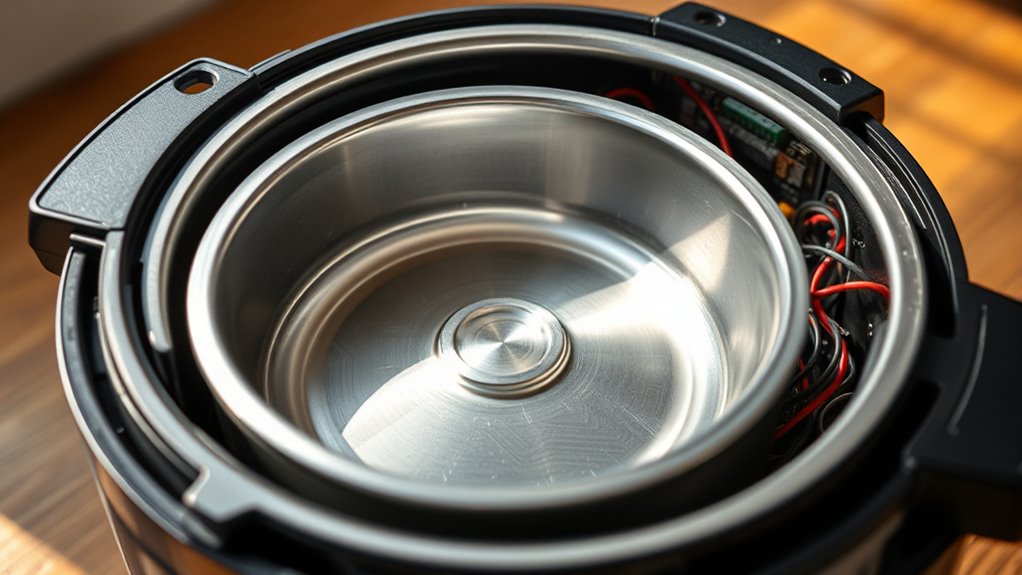
You’ll find a few key parts inside your rice cooker that work together to cook rice perfectly. The heating mechanism is the heart of the process, regulating temperature and timing.
Let’s take a closer look at these essential components and how they function.
Essential Components Overview
What makes your rice cooker tick? It’s a combination of a few essential components working together seamlessly. First, there’s the inner pot where you place the rice and water.
This pot is usually non-stick to prevent sticking and guarantee easy cleaning. Then, you have the heating plate beneath the pot, which delivers the heat needed to cook your rice. Above that, the lid seals in steam to cook rice evenly and quickly.
Inside, a thermostat monitors the temperature, signaling when the rice is done by detecting changes in heat. Finally, the control panel lets you start the cooker and choose settings. Each part plays a vital role, making your rice cooker simple yet efficient.
Heating Mechanism Explained
How does your rice cooker generate the heat needed to transform raw grains into fluffy rice? At its core, the heating mechanism relies on several key parts working together seamlessly. Once you add water and rice, the heating plate at the bottom activates, delivering direct heat to the inner pot.
This heat cooks the rice evenly while the thermostat monitors temperature changes to prevent overcooking.
Here are the main parts involved in the heating mechanism:
- Heating plate: The primary source of heat that warms the pot.
- Thermostat sensor: Detects temperature shifts and controls heat output.
- Inner cooking pot: Conducts heat efficiently to the rice.
- Insulation layer: Retains heat for consistent cooking.
Together, these components ensure your rice cooker performs perfectly every time.
How Adding Rice and Water Triggers Cooking in Your Rice Cooker

Once you add rice and water to the cooker, the appliance activates its heating element to begin the cooking process. The rice and water mixture creates resistance, signaling the cooker that it’s ready to heat. The inner pot’s sensor detects the temperature change caused by the water and rice inside.
When the cooker senses this change, it triggers the heating element to generate heat. As the water heats up, it starts to boil, transferring heat evenly to the rice. This combination of water presence and temperature rise prompts the cooker to maintain the ideal heat level needed for cooking.
Without adding both rice and water, the cooker’s sensors wouldn’t activate, and cooking wouldn’t start. You’re fundamentally setting the stage for the appliance to work its magic.
How the Heating Element Cooks Rice Evenly
You rely on the heating element to deliver consistent heat throughout the rice cooker. It spreads warmth evenly, ensuring every grain cooks at the same pace.
This careful heat distribution is what prevents your rice from burning or sticking.
Role Of Heating Element
Why does rice cook so evenly in a rice cooker? It’s all thanks to the heating element’s essential role. The heating element is the component responsible for generating consistent heat, which guarantees your rice cooks uniformly.
When you turn the cooker on, the element heats the inner pot directly, raising the temperature gradually and evenly.
Here’s what the heating element does for you:
- Provides steady, controlled heat to avoid hot spots
- Responds quickly to temperature changes for precise cooking
- Works continuously until the water is fully absorbed
- Enables automatic shutoff once the rice reaches the perfect texture
Heat Distribution Mechanism
Although the heating element generates the heat, it’s the heat distribution mechanism that guarantees your rice cooks evenly throughout the pot. When you start the cooker, the heating element heats the bottom surface, but if heat stayed concentrated there, your rice would burn or cook unevenly.
To prevent this, the cooker uses a thick, often aluminum or non-stick inner pot that spreads heat across its entire surface. This design ensures every grain gets the same gentle warmth. Additionally, some rice cookers include a diffuser plate or use a multi-layered inner pot to further distribute heat evenly.
As a result, the consistent temperature helps your rice absorb water uniformly, giving you perfectly cooked, fluffy rice every time.
How the Temperature Sensor Helps Cook Perfect Rice
Because rice cooks at a specific temperature, the temperature sensor inside a rice cooker plays a crucial role in achieving perfect results. It constantly monitors the heat to guarantee the rice is cooked evenly without burning or undercooking. This sensor detects when the water inside the cooker reaches boiling point and adjusts the heat accordingly.
Here’s how the temperature sensor helps you cook perfect rice:
- Measures the pot’s temperature to regulate heating cycles
- Prevents overheating by signaling when to lower heat
- Ensures consistent temperature for even cooking
- Detects temperature changes to maintain essential cooking conditions
How Your Rice Cooker Detects When Rice Is Perfectly Done and Switches to Keep-Warm
The temperature sensor not only controls the cooking heat but also signals when your rice is perfectly done. As the water absorbs into the rice, the temperature inside the cooker stays steady around 212°F (100°C). Once the water evaporates completely, the temperature rises quickly, hitting about 230°F (110°C).
Your rice cooker detects this sharp temperature increase through the sensor. It interprets this spike as a cue that the rice has absorbed all the water and is ready. At this moment, it automatically switches off the cooking mode and activates the keep-warm function.
This prevents overcooking and keeps your rice at an ideal serving temperature until you’re ready to eat, ensuring perfectly cooked rice every time without any guesswork on your part.
How Rice Cooker Settings Change for Different Rice Types
When you switch between rice types, your rice cooker adjusts its settings to match their unique cooking requirements. Different rice varieties need distinct water ratios, cooking times, and temperatures to reach ideal texture and flavor. Your rice cooker’s smart sensors and programmed modes handle these variations seamlessly.
Here’s how settings typically change for various rice types:
- White rice: Uses the standard water-to-rice ratio with medium heat for a fluffy texture.
- Brown rice: Requires more water and longer cooking time for softness.
- Sushi rice: Often cooked with a slightly shorter time for stickiness.
- Wild rice: Demands extended cooking and soaking periods to soften tough grains.
Tips to Get Perfect Rice With Your Rice Cooker Every Time
Although rice cookers simplify the cooking process, you can guarantee perfect results by following a few key tips. First, always rinse your rice thoroughly to remove excess starch, which prevents clumping. Use the measuring cup that comes with your cooker for accurate rice and water ratios.
Adjust water levels slightly based on the rice type—less water for firmer rice, more for softer grains. Avoid lifting the lid during cooking; it disrupts steam and affects texture. Once cooking finishes, let the rice rest with the lid closed for 10 minutes to allow moisture to distribute evenly.
Finally, fluff the rice gently with a fork or paddle to separate grains before serving. These simple steps help you get perfectly cooked rice every time.
Frequently Asked Questions
Can I Use My Rice Cooker to Steam Vegetables?
Yes, you can use your rice cooker to steam vegetables. Just add water to the cooker, place veggies in the steaming basket, and turn it on.
It’s quick, easy, and keeps your veggies fresh and tasty.
How Do I Clean My Rice Cooker Properly?
Don’t rush; don’t ignore. You’ll unplug the cooker, clean the inner pot with a soft sponge, wipe the lid and heating plate gently, and let everything dry thoroughly.
This balance keeps your cooker spotless and lasting longer.
Are Rice Cookers Energy Efficient Compared to Stovetop Cooking?
Yes, rice cookers are generally more energy efficient than stovetop cooking because they use precise heat control and insulation. You’ll save energy by avoiding continuous boiling and can multitask while it cooks automatically.
This precise control helps minimize wasted energy. Additionally, the insulation keeps the heat contained, further improving efficiency.
As a result, rice cookers often consume less power compared to traditional stovetop methods.
Can I Cook Other Grains Besides Rice in a Rice Cooker?
Ever wondered if your rice cooker can handle more? Yes, you can cook quinoa, barley, or even oats in it! Just adjust water amounts and cooking times, and you’ll enjoy perfectly cooked grains every time.
What Should I Do if My Rice Cooker Stops Working?
If your rice cooker stops working, first unplug it and check the power source. Inspect the cord and inner pot for damage.
If everything looks fine, consult the manual or contact customer support for repair or replacement options.
Conclusion
You might think a rice cooker is just a fancy pot, but it’s way smarter than that. It uses heat, sensors, and timing to cook your rice perfectly every time, so you don’t have to watch the pot.
Once you add rice and water, it takes care of the rest, even switching to keep-warm when done. With a little practice and the right settings, you’ll always get fluffy, delicious rice without any hassle.
Understanding how rice cookers work step by step helps you make the most of this handy appliance. By mastering these basics, you can enjoy perfectly cooked rice every time with ease.