How to Make a Cast Iron Skillet Non Stick
To make your cast iron skillet non-stick, start with thorough cleaning and ensure it is completely dry.
Proper seasoning is key to creating a durable, non-stick surface on your cast iron cookware. Use a high-smoke-point oil like flaxseed or canola oil to achieve the best results.
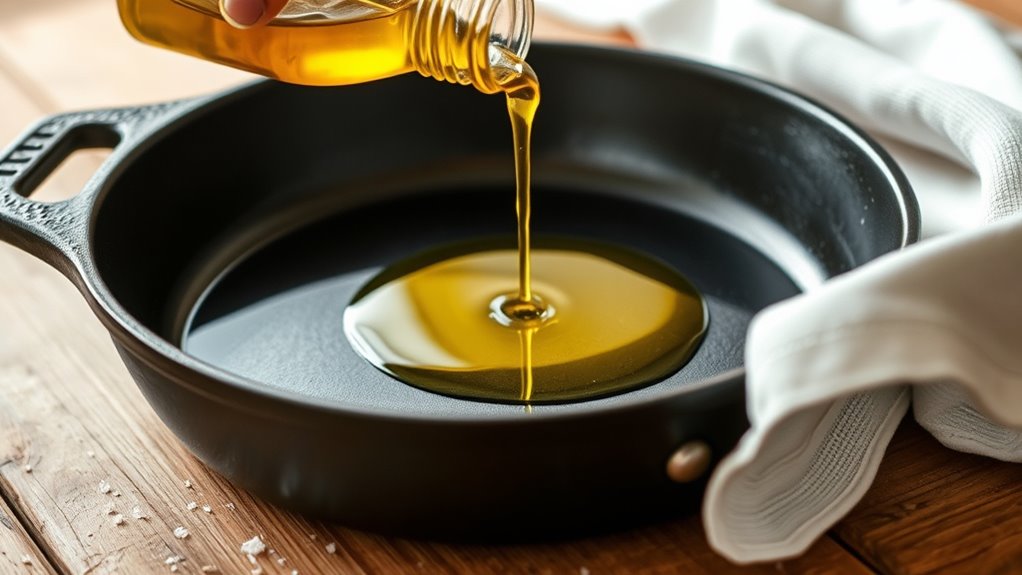
Apply a thin, even layer of the oil all over the skillet.
Then, bake it upside down in the oven at 450°F for one hour.
Let it cool inside the oven to build a strong seasoning layer that enhances non-stick properties.
Regular maintenance is essential to preserve this coating.
Clean your skillet gently after each use and apply a light layer of oil.
This routine will strengthen the non-stick surface, ensuring a smooth cooking experience every time.
Key Takeaways
- Properly season the skillet by applying a thin layer of high-smoke-point oil and baking it upside down at 450°F for one hour.
- Preheat the skillet thoroughly before cooking to prevent food from sticking to the surface.
- Clean the skillet gently with warm water and a brush, avoiding harsh soaps that strip the seasoning layer.
- Regularly maintain the seasoning by drying the skillet and applying a thin layer of oil after each use.
- Avoid cooking acidic or watery foods frequently to protect the seasoning and maintain a non-stick surface.
Why Does Food Stick to Cast Iron Skillets?
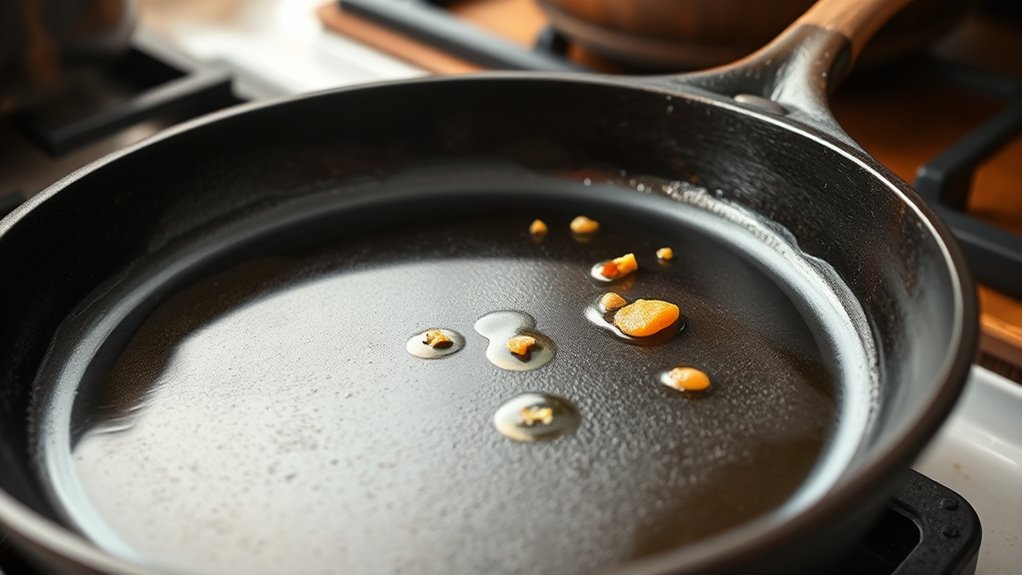
Although cast iron skillets are known for their durability and heat retention, food can stick to them if the surface isn’t properly seasoned or maintained. When the skillet lacks a smooth, well-developed layer of polymerized oil, the food’s natural proteins bond directly with the metal. This causes sticking and makes cooking frustrating.
You also need to preheat the pan adequately—if it’s not hot enough before adding food, sticking increases. Over time, cooking acidic or watery foods without proper care can break down the seasoning, exposing bare iron. Without that protective barrier, your food will cling to the skillet’s surface.
To avoid this, you must build and maintain a strong seasoning layer, allowing your cast iron to become naturally non-stick and give you reliable cooking results.
How to Clean Your Cast Iron Skillet Before Seasoning
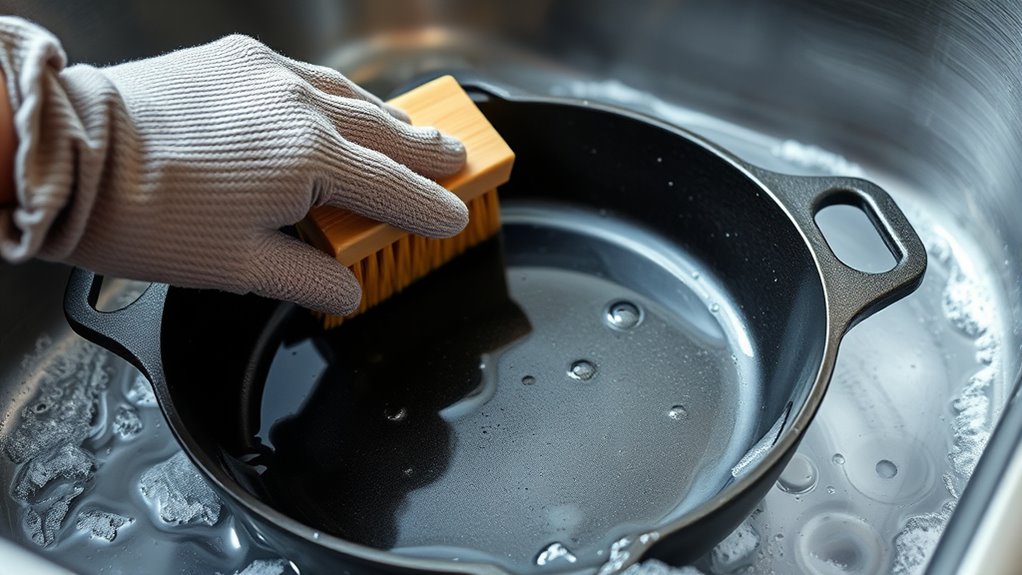
Before you start seasoning your cast iron skillet, you need to clean it thoroughly to remove any factory coatings, rust, or residue that could interfere with the seasoning process.
Begin by scrubbing the skillet with warm water and a stiff brush or non-metal scrubber. Avoid soap if your skillet is already seasoned, but it’s fine to use a small amount if it’s brand new or very dirty.
If rust is present, use steel wool to scrub it off completely. Rinse the skillet well and dry it immediately with a clean towel. To guarantee all moisture is gone, place the skillet on low heat for a few minutes.
Once dry and clean, your skillet is ready for seasoning, guaranteeing a smooth, non-stick surface.
How to Choose the Right Oil for Seasoning
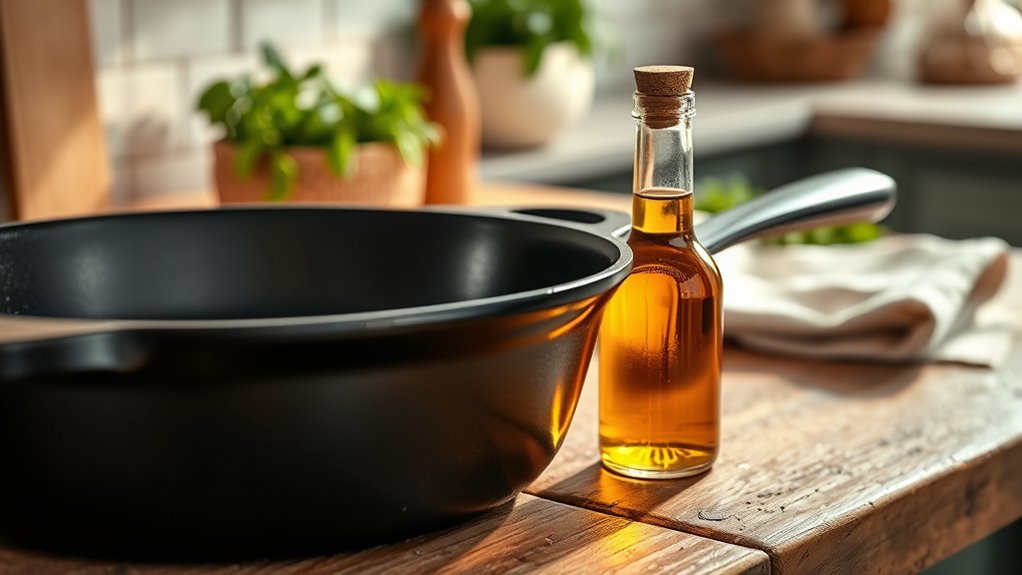
Why does the type of oil you choose matter when seasoning your cast iron skillet? The right oil helps create a durable, non-stick surface by polymerizing into a hard, protective layer. You’ll want an oil with a high smoke point and good drying properties to guarantee it bonds well without leaving a sticky residue.
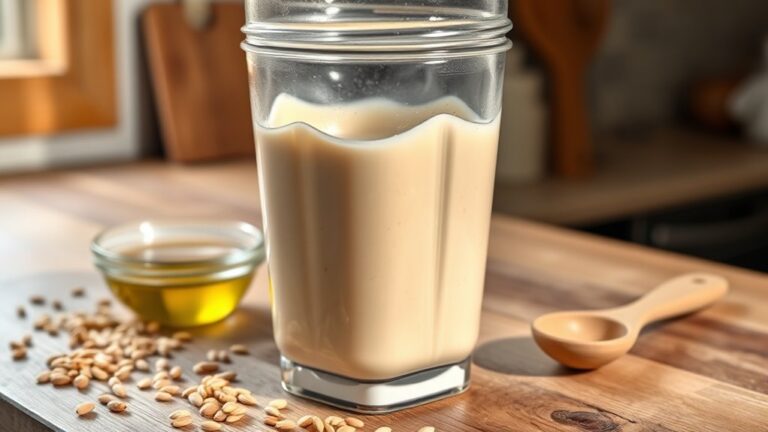
Common choices include flaxseed, grapeseed, canola, and vegetable oils. Flaxseed oil is popular because it dries quickly and forms a tough coating, but it can be pricey. Grapeseed and canola oils offer a balance of affordability and effectiveness.
Avoid oils with low smoke points or strong flavors, like olive oil, as they can break down or leave unwanted tastes. Picking the right oil sets you up for successful seasoning and long-lasting skillet performance.
How to Season a Cast Iron Skillet Step-by-Step
Once you’ve chosen the right oil, you’re ready to season your cast iron skillet. Start by preheating your oven to 450°F (230°C). Next, clean your skillet thoroughly with hot water and a stiff brush—skip soap to preserve the seasoning.
Preheat your oven and clean your skillet with hot water and a stiff brush—avoid soap to keep seasoning intact.
Dry it completely to prevent rust. Then, apply a thin, even layer of oil all over the skillet, including the handle and bottom. Use a cloth or paper towel to wipe off excess oil; too much creates sticky spots.
Place the skillet upside down on the middle oven rack, with a sheet of foil underneath to catch drips. Bake it for one hour. After baking, turn off the oven and let the skillet cool inside.
Your skillet is now seasoned and ready for use.
Building Up Seasoning Layers Over Time
After seasoning your cast iron skillet, the real magic happens with each use. Every time you cook with oil or fat, you add another thin layer of polymerized seasoning. These layers build up gradually, creating a smoother, more durable non-stick surface.
Don’t worry if your skillet isn’t perfectly slick right away; patience pays off. Use your skillet regularly and clean it gently without soap to maintain those layers. Over time, repeated heating and cooking will deepen the seasoning’s black patina and improve its release.
If you notice any sticky or uneven spots, a light re-seasoning can help sustain the skillet’s performance. By consistently building these layers, you guarantee your cast iron becomes a reliable, naturally non-stick tool in your kitchen.
Cooking Techniques That Improve Non-Stick Skillets
Although seasoning creates a solid foundation, how you cook plays a big role in maintaining and enhancing your skillet’s non-stick surface. Start by preheating your skillet gradually; sudden temperature changes can cause food to stick. Use moderate heat rather than blasting high heat, which can break down the seasoning.
Adding a small amount of oil or fat before cooking helps create a natural barrier between food and the pan. Avoid overcrowding the skillet, as this traps moisture and leads to sticking. When cooking proteins, let them sear undisturbed for a few minutes—this helps release them easily.
Finally, using wooden or silicone utensils prevents scratching the surface, preserving the seasoning. These techniques keep your cast iron performing at its best for years.
How to Maintain Your Cast Iron Skillet’s Seasoning
To keep your cast iron skillet non-stick, you need to clean it carefully without stripping the seasoning. Regularly applying a thin layer of oil helps maintain its protective coating.
Also, store your skillet in a dry place to prevent rust and preserve its seasoning.
Cleaning Without Stripping Seasoning
When you clean your cast iron skillet, you want to preserve the seasoning that makes it non-stick and flavorful. Avoid using harsh soaps or scrubbing pads that can strip away the baked-on oil layers. Instead, rinse your skillet with warm water immediately after cooking while it’s still warm.
If food sticks, use a stiff brush or a non-metal scrubber to gently remove residue. For stubborn bits, simmer a bit of water in the pan to loosen them, then scrub lightly. Never soak your skillet or put it in the dishwasher, as prolonged exposure to water can cause rust and damage seasoning.
After cleaning, dry the skillet thoroughly with a towel or by warming it on the stove to prevent moisture buildup. This careful cleaning keeps your skillet’s seasoning intact for great cooking results.
Regular Oil Application
Keeping your skillet clean is important, but maintaining its seasoning requires regular oil application. After each use and cleaning, dry your skillet thoroughly to prevent rust. While still warm, apply a thin layer of cooking oil—like vegetable, flaxseed, or canola oil—over the entire surface, inside and out.
Use a paper towel to spread the oil evenly and wipe away any excess to avoid sticky buildup. This step replenishes the protective polymerized layer that makes your skillet non-stick and guards against moisture. Regular oiling not only preserves the seasoning but also improves it over time.
Make it a habit to oil your skillet after every cleaning, and you’ll keep that smooth, non-stick surface lasting for years.
Proper Storage Techniques
Although seasoning can be strengthened through regular use and oiling, how you store your cast iron skillet plays an essential role in preserving its non-stick surface. Always make sure your skillet is completely dry before storing it to prevent rust. Avoid stacking other cookware directly on top of it, as this can damage the seasoning.
If you need to stack, place a paper towel or cloth between pans to protect the surface. Store your skillet in a cool, dry place with good air circulation to keep moisture at bay. Occasionally, wipe a thin layer of oil on the skillet before storing to maintain the seasoning and prevent oxidation.
When and How to Use Soap Without Ruining Your Seasoning
Since cast iron skillets develop their non-stick surface through layers of seasoning, you might worry that using soap will strip away all your hard work. The truth is, gentle soap used occasionally won’t ruin your seasoning if you handle it right. Use mild dish soap and warm water only when your skillet is particularly greasy or sticky.
Avoid harsh detergents or scrubbing pads that can damage the seasoning. After washing, dry the skillet thoroughly and apply a thin layer of oil while it’s still warm to protect the surface. Regular soap use isn’t necessary, but when you do, it’s all about moderation and care.
This way, you keep your skillet clean without losing the seasoning that makes it non-stick.
How to Fix Cast Iron Skillet Seasoning Problems
Even with careful cleaning, your cast iron skillet’s seasoning can sometimes wear down or develop sticky spots. When this happens, don’t panic. Start by heating the skillet on medium heat until it’s dry.
Then, use a paper towel to rub a thin layer of cooking oil—like vegetable or flaxseed oil—over the surface. Next, heat the skillet in the oven at 350°F for about an hour to help the oil bond with the iron.
If sticky spots persist, it might mean excess oil was applied; wipe off any pooling oil before heating next time. Avoid cooking acidic foods until the seasoning is fully restored, as acid can break down the layer.
With these steps, you’ll keep your skillet smooth and nonstick without stripping its seasoning.
How to Re-Season a Rusty or Damaged Cast Iron Skillet
If your cast iron skillet has developed rust or suffered damage, you’ll need to strip it down and start fresh with a thorough re-seasoning. Begin by scrubbing the skillet with steel wool or a rust remover to eliminate all rust and old seasoning. Rinse and dry it completely—never leave it wet.
Next, apply a thin layer of high-smoke-point oil, like flaxseed or vegetable oil, all over the skillet, inside and out. Place it upside down in a preheated oven at 450°F (230°C) with a foil-lined rack beneath to catch drips. Bake for one hour, then turn off the oven and let the skillet cool inside.
Repeat this process two to three times for a durable, non-stick surface that’ll restore your skillet’s performance.
Tips for Storing Your Cast Iron Skillet to Keep It Non-Stick
To keep your cast iron skillet non-stick, you need to store it properly to prevent moisture buildup and rust. After cleaning and drying your skillet thoroughly, apply a thin layer of oil to maintain the seasoning. Avoid stacking other cookware directly on top without protection; place a paper towel or cloth between pans to allow air circulation and absorb any residual moisture.
Store your skillet in a dry place, away from humidity. If possible, leave the lid off or slightly ajar to prevent trapped moisture. Regularly check your skillet for signs of rust or dryness, and reapply oil as needed.
Following these storage tips guarantees your skillet stays well-seasoned and non-stick, ready for your next cooking adventure.
Best Foods to Cook in a Well-Seasoned Cast Iron Skillet
Proper storage keeps your cast iron skillet seasoned and ready, so you can focus on cooking meals that truly benefit from its unique heat retention and non-stick surface. You’ll find that searing steaks, frying eggs, and sautéing vegetables work exceptionally well. The skillet’s even heat helps create a perfect crust on meats without sticking.
You can also bake cornbread or skillet cookies, as the heat distribution ensures even cooking. When cooking acidic foods like tomato sauce, use your well-seasoned pan sparingly to maintain seasoning. Avoid boiling or simmering liquids for long periods.
Frequently Asked Questions
Can I Use a Cast Iron Skillet on Induction Cooktops?
Yes, you can use a cast iron skillet on induction cooktops because cast iron is magnetic. Just make sure the skillet’s bottom is flat for even contact, and you’ll enjoy efficient, quick heating every time you cook.
How Heavy Is a Typical Cast Iron Skillet?
A typical cast iron skillet feels like holding a small anvil, weighing between 5 to 12 pounds. You’ll notice its solid heft, giving you control and even heat, perfect for serious cooking adventures.
Are Cast Iron Skillets Safe for Oven Use?
Yes, you can safely use cast iron skillets in the oven. They tolerate high temperatures well, making them perfect for roasting or baking.
Just avoid sudden temperature changes to prevent cracking or warping your skillet.
Can I Put a Cast Iron Skillet in the Dishwasher?
No, you shouldn’t put your cast iron skillet in the dishwasher. It can strip the seasoning and cause rust.
Instead, wash it by hand with hot water and a brush, then dry and oil it promptly.
What Is the Difference Between Cast Iron and Carbon Steel Pans?
Imagine a heavyweight boxer versus a nimble dancer: cast iron is thick, retains heat longer, and’s heavier; carbon steel heats quickly, is lighter, and more responsive.
You’ll notice cast iron’s patience and carbon steel’s agility in your kitchen battles.
Conclusion
Did you know that a well-seasoned cast iron skillet can last for generations, improving its non-stick surface with every use? By regularly seasoning and properly caring for your skillet, you’ll enjoy cooking with less oil and effortless food release.
Remember, the more you cook in it, the better it gets—so keep building those seasoning layers. With just a bit of care, your cast iron will become your kitchen’s most reliable, non-stick workhorse. Proper seasoning is key to making your cast iron skillet non stick and durable.