How to Make Tahini Paste With a Blender in 10 Easy Steps
To make tahini paste with a blender in 10 easy steps, start by choosing fresh, high-quality sesame seeds. These seeds should be lightly roasted until fragrant to bring out their rich flavor. Roasting is a crucial step for perfect tahini.
Let the roasted seeds cool completely before blending. Begin blending on low speed, gradually increasing to achieve a smooth, creamy texture. Adding a neutral oil bit by bit helps enhance creaminess and consistency.
Be sure to scrape the sides of the blender as you go for even blending. Adjust the consistency with more oil or warm water until you reach your desired texture.
Finally, store your homemade tahini paste in an airtight container to preserve freshness. Keep following these steps, and you’ll master the art of making perfect tahini every time.
Key Takeaways
- Roast and cool high-quality sesame seeds until light golden to enhance flavor without burning.
- Blend cooled seeds on low, gradually increasing speed, using pulse and scraping sides for smoothness.
- Add 2-4 tablespoons of neutral oil while blending to achieve a silky, creamy tahini paste.
- Adjust consistency with extra oil or warm water for a smooth, pourable texture without graininess.
- Store tahini in an airtight container in the refrigerator, stirring before use to prevent oil separation.
Gather Ingredients for Fresh Tahini
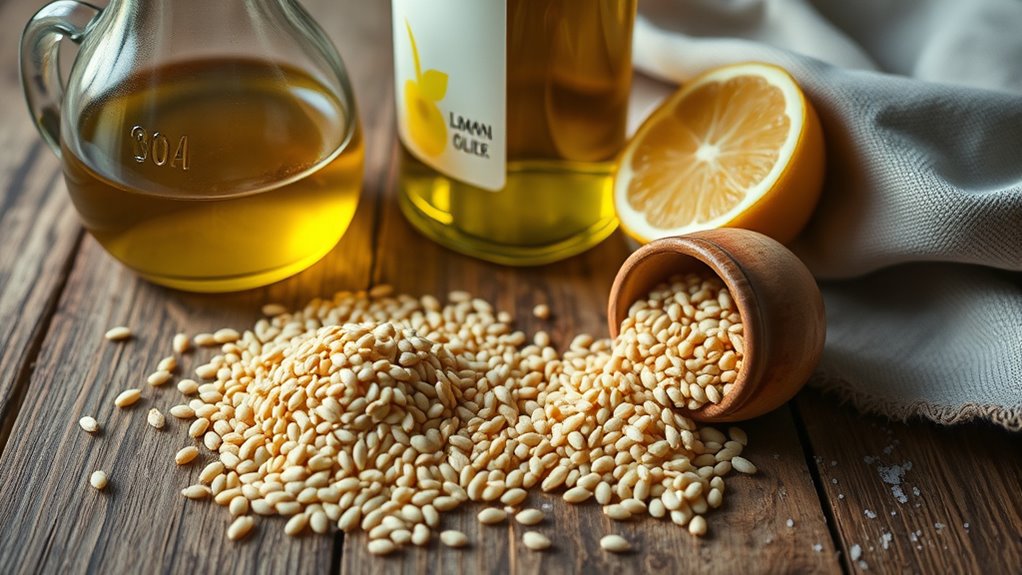
Where do you begin when making fresh tahini? Start by gathering high-quality sesame seeds—these are the foundation of your tahini paste. You’ll want raw or hulled sesame seeds, which provide a smooth texture and mild flavor.
Avoid pre-ground sesame seed powders or blends; whole seeds give you the freshest taste and best control over consistency. Next, have a neutral oil ready, like grapeseed or light olive oil, to help achieve a creamy texture as you blend. You might also want a pinch of salt to enhance flavor.
Keep your ingredients simple and fresh—no need for additives or preservatives. Once you have these on hand, you’re set for the blending process, ensuring your tahini will be fresh, smooth, and delicious.
Roast Sesame Seeds for Better Flavor
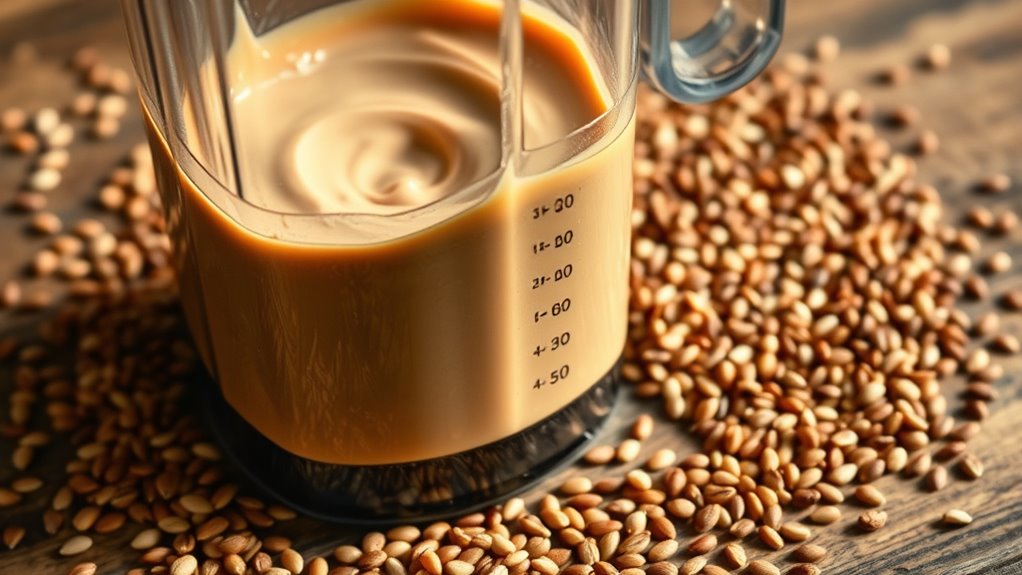
Although you can use raw sesame seeds, roasting them first releases a richer, nuttier flavor that truly elevates your tahini. Here’s how to roast them perfectly:
- Heat a dry skillet over medium heat until warm.
- Add sesame seeds in a single layer, spreading them evenly.
- Stir continuously for about 3-5 minutes, watching for a light golden color.
- Smell the seeds; when they emit a toasty aroma, they’re ready.
Roasting enhances the natural oils and deepens the taste, making your tahini more flavorful. Keep a close eye to avoid burning, as sesame seeds toast quickly. Once done, you’ll notice a beautiful golden hue that signals your tahini will have that irresistible nutty depth.
Cool Sesame Seeds Completely
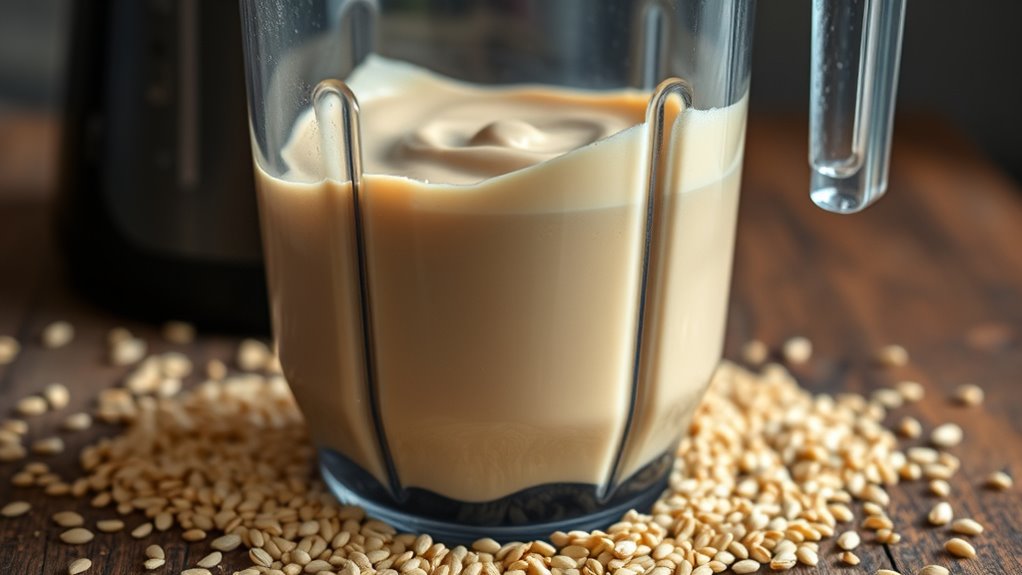
You’ll want to cool the sesame seeds completely before grinding to prevent overheating the oil and affecting the flavor. Spread them out on a baking sheet or a large plate to speed up the cooling process.
Taking this step guarantees your tahini paste turns out smooth and delicious.
Importance Of Cooling
Why is it essential to let sesame seeds cool completely before grinding them into tahini? Cooling ensures the seeds don’t release excess oil prematurely, which can make your tahini greasy and separate. When seeds are hot, they soften too quickly, affecting the texture and flavor.
Here’s why cooling matters:
- Prevents overheating — keeps the blender from overheating and preserves motor life.
- Maintains texture — cool seeds grind into a smooth, creamy paste instead of clumping.
- Enhances flavor — cooling locks in the nutty aroma without a burnt taste.
- Improves shelf life — reduces risk of oil rancidity, keeping tahini fresh longer.
Methods To Cool
After roasting, you need to let the sesame seeds cool completely to achieve the perfect tahini texture and flavor. The easiest method is spreading them in a single layer on a baking sheet or large plate, allowing air to circulate freely. Stir occasionally to speed up cooling and prevent uneven heat.
If you’re short on time, transfer the seeds to a metal colander and run cool air from a fan over them. Avoid using the fridge or freezer, as rapid cooling may introduce moisture, affecting the paste’s consistency. Once the seeds feel room temperature or slightly warm to the touch, they’re ready for blending.
Taking this step seriously guarantees your tahini won’t be bitter or oily, giving you a smooth, rich result every time.
Blend Sesame Seeds to Start Tahini
Before blending, toast the sesame seeds lightly to enhance their nutty flavor and aroma. Once cooled, transfer them to your blender. Start pulsing to break down the seeds gradually.
Here’s how to blend sesame seeds effectively:
- Add a handful of toasted seeds into the blender jar.
- Pulse in short bursts to avoid overheating and ensure even grinding.
- Use a spatula to scrape down the sides, preventing clumps.
- Continue pulsing until the seeds form a crumbly, coarse paste.
This step creates the base texture for your tahini. Avoid blending too long here—otherwise, the seeds might release oil prematurely, making it harder to control the final consistency later.
Taking these steps ensures a smooth, rich tahini paste once you add oil.
Add Oil and Blend Until Smooth Tahini
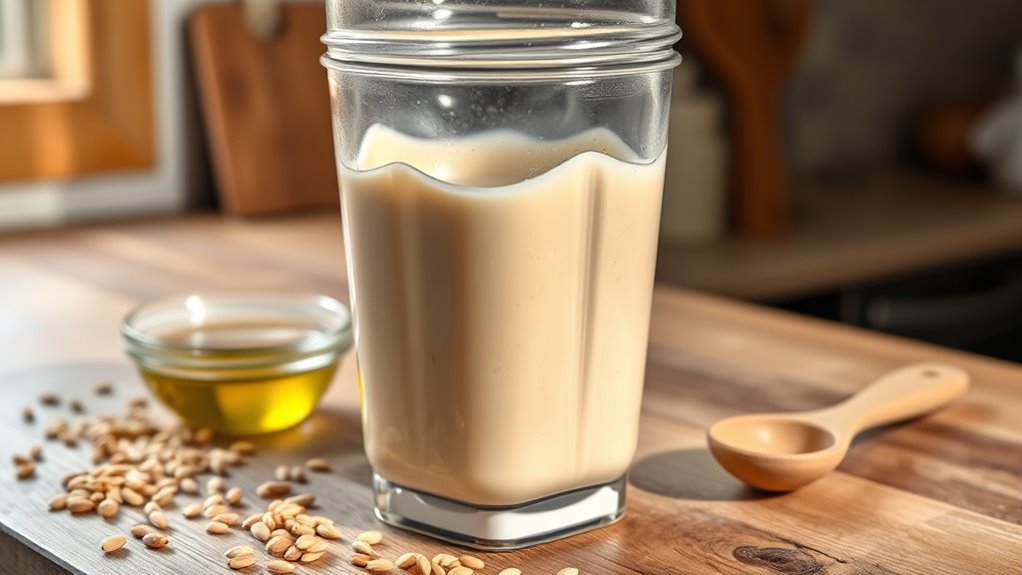
Once the sesame seeds have formed a crumbly paste, add a neutral oil like olive or grapeseed to your blender. Pour in about 2 to 4 tablespoons, depending on the amount of seeds and your desired consistency. Start blending on a low speed, gradually increasing to high.
The oil helps loosen the paste, making it smooth and creamy. If your blender struggles, pause and scrape down the sides to keep everything moving. Blend for about 1 to 2 minutes until the mixture is silky and uniform.
The result should be a thick yet pourable tahini paste without graininess. Avoid adding too much oil at once; you can always add more later if needed. This step transforms your tahini into a luscious, spreadable consistency.
Adjust Tahini Texture and Flavor
Although your tahini is already smooth and creamy, you can adjust its texture and flavor to suit your taste and recipe needs. If you find it too thick, add a little more oil or warm water, blending gradually until you reach your desired consistency.
If your tahini feels too thick, gradually blend in oil or warm water until perfectly smooth.
To enhance flavor, consider these tweaks:
- Add a pinch of salt to bring out nuttiness.
- Squeeze in fresh lemon juice for brightness.
- Stir in a small amount of garlic for a savory kick.
- Mix in a bit of honey or maple syrup for subtle sweetness.
Make adjustments slowly, tasting as you go, so your tahini perfectly complements your dishes without overpowering them.
Store Homemade Tahini Properly
How should you store homemade tahini to keep it fresh and flavorful? Store your tahini in an airtight container to prevent exposure to air, which can cause it to oxidize and spoil.
Keep it in the refrigerator where it will stay fresh for up to a month. Before using, stir well as oil separation is natural. Avoid contamination by using a clean spoon each time.
| Storage Tip | Details |
|---|---|
| Container | Use glass or BPA-free plastic |
| Temperature | Refrigerate at 35-40°F (2-4°C) |
| Shelf Life | Up to 1 month |
| Handling | Stir before use, avoid double dipping |
Following these guidelines guarantees your tahini stays creamy and delicious longer.
Use Your Tahini in Favorite Recipes
When you have fresh tahini ready, you can easily elevate a variety of dishes by incorporating its rich, nutty flavor. Tahini adds depth and creaminess, transforming everyday meals into something special.
Fresh tahini brings rich, nutty flavor and creamy depth, turning simple dishes into delightful culinary experiences.
Here are some ways to enjoy your homemade tahini:
- Drizzle it over roasted vegetables for a savory finish.
- Mix it into salad dressings to add a smooth, nutty twist.
- Blend it with lemon juice, garlic, and water to make classic hummus.
- Use it as a base for sauces or dips to accompany grilled meats or falafel.
Fix Common Tahini Blending Problems
If your tahini isn’t blending smoothly, don’t worry—you can fix common issues with a few simple adjustments. First, make sure your blender jar isn’t too full; overcrowding can prevent proper blending. If the paste seems too thick or dry, add a small amount of neutral oil or water gradually to help it move.
Scrape down the sides regularly to incorporate all the seeds evenly. If your blender struggles with the seeds, pulse in short bursts instead of running continuously to avoid overheating. Also, use hulled sesame seeds for a creamier texture, as unhulled ones can be gritty.
Finally, be patient—sometimes blending takes a bit longer to reach the perfect smooth consistency.
Tips for Perfect Blender Tahini Every Time
To make perfect tahini in your blender, start by choosing the right sesame seeds for the best flavor and texture. You’ll want to adjust your blender’s speed settings to achieve a smooth, creamy consistency without overheating the paste.
Finally, learn how to prevent your tahini from separating so it stays perfectly blended every time.
Choosing The Right Sesame Seeds
Although sesame seeds might seem like a simple ingredient, choosing the right type can make all the difference in your tahini’s flavor and texture. You’ll want to pick seeds that enhance your blend perfectly. Here’s what to take into account:
- Raw vs. Toasted: Raw seeds offer a milder taste, while toasted seeds give a deeper, nuttier flavor.
- Color: White sesame seeds produce a smoother, creamier tahini; black seeds yield a bolder, earthier paste.
- Freshness: Use fresh seeds for the best flavor—stale seeds can taste bitter or rancid.
- Organic vs. Conventional: Organic seeds avoid pesticides, which might slightly improve taste and health benefits.
Choosing wisely sets the foundation for your tahini, making your blender’s work easier and tastier every time.
Optimizing Blender Speed Settings
When you adjust your blender’s speed settings thoughtfully, you release the smoothest, creamiest tahini with minimal effort. Start blending the toasted sesame seeds on a low speed to break them down evenly without overheating or splattering.
Once you see the seeds turning into a crumbly texture, gradually increase the speed to medium-high. This progression helps prevent the motor from straining and guarantees a uniform grind. Pause occasionally to scrape down the sides, promoting consistent blending.
If your blender has a pulse function, use it to control the texture and avoid over-processing. Remember, maintaining the right speed balance prevents the paste from becoming too runny or grainy.
With these adjustments, you’ll achieve perfect tahini every time, smooth and ready for your recipes.
Preventing Tahini From Separating
Even if you follow every step perfectly, tahini can still separate because of its natural oil content. To keep your tahini smooth and creamy, you need to know how to prevent this separation. Here’s what you can do:
- Stir well before use – Always give your tahini a good stir to reincorporate the oils.
- Store in a cool, dry place – Heat speeds up separation, so avoid warm spots.
- Use an airtight container – This limits air exposure and keeps the paste stable.
- Re-blend if needed – If it separates a lot, pulse it briefly in your blender to restore its creamy texture.
Frequently Asked Questions
Can I Use Raw Sesame Seeds Instead of Roasted?
Yes, you can use raw sesame seeds instead of roasted, but your tahini will taste milder and less nutty. Roasting enhances flavor, so consider toasting them lightly for a richer, more traditional tahini paste.
What Type of Oil Works Best for Tahini?
Wondering which oil suits tahini best? You’ll want to use a neutral oil like light olive oil or grapeseed oil.
They won’t overpower the sesame flavor and help you achieve that smooth, creamy consistency effortlessly.
How Long Does Homemade Tahini Last in the Fridge?
Your homemade tahini lasts about 1 month in the fridge. Keep it in an airtight container to maintain freshness. Stir it before each use.
If you notice any off smell or mold, discard it immediately.
Can I Make Tahini Without a Blender?
You can make tahini without a blender by using a food processor or grinding sesame seeds manually with a mortar and pestle. It takes more effort, but you’ll still get creamy tahini by adding oil gradually while mixing.
Is Tahini Paste Gluten-Free and Vegan?
Yes, tahini paste is naturally gluten-free and vegan since it’s made from sesame seeds. Just make sure to check labels for added ingredients or cross-contamination if you have allergies or dietary restrictions, and you’re good to go!
Conclusion
Making tahini paste with your blender is as simple as a breeze on a sunny day. By roasting your sesame seeds, blending them with oil, and following these easy steps, you’ll have smooth, creamy tahini ready to elevate any dish.
Store it well, fix any blending hiccups, and enjoy using your homemade tahini in countless recipes. With a little care, you’ll master perfect tahini every time—fresh, flavorful, and effortlessly delicious.
Using a blender to make tahini paste ensures a quick, smooth texture that enhances your cooking. Homemade tahini paste is a versatile ingredient that can transform salads, sauces, and dips with its rich flavor.
Perfect your tahini paste with these simple steps and enjoy the fresh taste and creamy consistency that only homemade tahini can provide.