
How to Clean Rust off Blackstone Griddle
To clean rust off your Blackstone griddle effectively, it’s important to follow a few key steps that ensure your cooking surface stays in great condition. Rust can develop on your Blackstone griddle due to moisture and improper storage, so regular maintenance is essential.
Start by scraping off loose rust flakes and scrubbing the affected areas with a wire brush or steel wool to remove surface rust.
Next, spray white vinegar on the rusted spots to help break down stubborn rust deposits. Wipe the surface clean with warm soapy water and dry it thoroughly to prevent further rusting.
After cleaning, reseason your Blackstone griddle by applying a thin layer of high-smoke-point oil to protect the surface and maintain its nonstick quality.
Keeping your griddle dry and well-seasoned is crucial to preventing rust buildup. Proper maintenance and storage will ensure your Blackstone griddle lasts for many cooking sessions to come.
Key Takeaways
- Scrape loose rust flakes with a metal scraper, then scrub remaining rust using a wire brush or fine steel wool gently.
- Apply white vinegar or a vinegar and baking soda paste to rust spots, let sit, then scrub with a non-metallic pad.
- Rinse the surface with warm, soapy water and dry thoroughly to prevent further rust formation.
- Immediately reseason the griddle by applying a thin layer of high-smoke-point oil and heating until it smokes.
- Store the griddle in a dry, covered area and always wipe off moisture after cleaning to avoid rust recurrence.
Essential Tools for Removing Rust From Your Blackstone Griddle

To effectively remove rust from your Blackstone griddle, you’ll need a handful of essential tools. First, grab a wire brush or steel wool pad to scrub away the rust without damaging the surface. You’ll also want some coarse sandpaper for stubborn spots.
Have a scraper handy to lift off any loose flakes. Next, keep a clean cloth or paper towels nearby for wiping down the griddle after scrubbing. A bucket of warm, soapy water helps rinse off debris, so don’t forget that.
Finally, use cooking oil to season the griddle once it’s clean, preventing future rust. With these tools ready, you’ll tackle rust quickly and restore your Blackstone griddle to good working order.
How to Prepare Your Blackstone Griddle Surface Before Cleaning
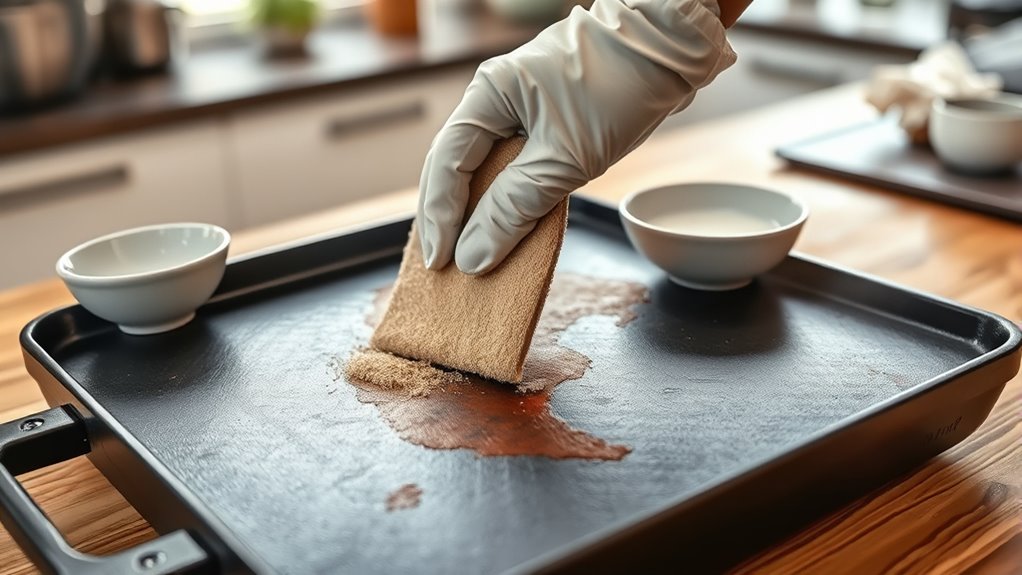
Before you start cleaning, make sure to remove any loose debris from the griddle surface. Then, heat the griddle slightly to loosen rust and make the cleaning process easier.
Finally, apply a thin layer of cooking oil to protect the surface and prepare it for rust removal.
Remove Loose Debris
Several loose particles often accumulate on your Blackstone griddle after cooking, and removing them is essential for effective rust cleaning. Start by using a scraper or spatula to gently push off any food crumbs, grease, or charred bits. Make certain to cover the entire surface to clear away debris that can interfere with your cleaning process.
After scraping, wipe the griddle down with a damp cloth or paper towels to lift remaining particles. Pay attention to corners and edges where residue tends to gather. Removing this loose debris not only prepares the surface for rust removal but also prevents scratching during cleaning.
Taking this step ensures you’re working on a clean slate, making your rust treatment more effective and your griddle ready for the next stage.
Heat Griddle Slightly
Once you’ve cleared away loose debris, it’s time to heat your Blackstone griddle slightly to loosen rust and make cleaning easier. Turn your burner on low heat and let the surface warm up for about 5 to 10 minutes. The gentle heat will expand the metal, softening the rust without causing damage.
Avoid overheating, as excessive heat can warp the griddle or make rust harder to remove. Use your hand cautiously to gauge warmth—it should feel warm but not hot enough to burn. Warming the griddle this way prepares the surface for more effective scrubbing and rust removal.
Once heated, you’re ready to move on to the next step of cleaning, ensuring the rust loosens for easier elimination.
Apply Cooking Oil
Even though the griddle is warm, you’ll want to apply a thin layer of cooking oil to the surface before scrubbing. This helps loosen rust and protects the metal underneath. Use an oil with a high smoke point like vegetable, canola, or flaxseed oil for best results.
Spread the oil evenly using a paper towel or cloth.
Here’s a quick reference for applying oil:
| Oil Type | Smoke Point (°F) | Best Use |
|---|---|---|
| Vegetable | 400 | General purpose |
| Canola | 435 | High-heat cooking |
| Flaxseed | 225 | Seasoning layers |
| Olive (light) | 465 | Light rust removal |
Apply sparingly to avoid excess pooling, which can cause uneven cleaning.
Step-by-Step Rust Removal for Your Blackstone Griddle

First, you’ll want to identify all the rust spots on your Blackstone griddle. Then, gather the right tools like a steel wool pad or scraper to tackle the rust effectively.
Finally, don’t forget to season the surface after removal to protect it from future rusting.
Identifying Rust Spots
How can you tell if rust is starting to form on your Blackstone griddle? Rust usually appears as reddish-brown or orange spots on the cooking surface. These patches are often rough or flaky to the touch, contrasting the smooth, seasoned steel underneath.
Pay close attention to areas that aren’t used as often or where moisture tends to collect, like corners or edges. You might also notice discoloration, where the steel looks duller or uneven compared to the rest of the griddle. Early rust spots often start small but can spread quickly if left untreated.
Regularly inspecting your griddle after each use helps you catch these signs early, so you can address rust before it damages your cooking surface further.
Effective Cleaning Tools
Noticing rust spots means it’s time to take action with the right tools to clean your Blackstone griddle effectively. Start with a stiff wire brush or a steel wool pad to scrub away loose rust. For tougher spots, a pumice stone or fine-grit sandpaper works well without damaging the surface.
You’ll also need a scraper to remove any stubborn flakes. Have a bucket of warm, soapy water and clean rags handy to wipe down the griddle between scrubbing sessions. Don’t forget rubber gloves to protect your hands and a spray bottle filled with white vinegar—its acidity helps break down rust.
Using these tools correctly will make rust removal easier and prepare your griddle for a smooth, clean surface ready for cooking.
Seasoning After Removal
Once you’ve removed all the rust, you’ll need to season your Blackstone griddle to restore its protective coating and prevent future rusting. Start by heating the griddle on medium until it’s hot. Apply a thin layer of high-smoke point oil (like flaxseed or canola) evenly across the surface.
Let it smoke for about 10-15 minutes, then wipe off excess oil with a paper towel. Repeat this process 2-3 times to build a durable, non-stick layer.
This step is essential for keeping your griddle ready for cooking and shielded from moisture.
| Feel Confident | Cook Safely | Enjoy Cooking |
|---|---|---|
| Rust-free surface | Protected metal | Smooth flipping |
| Durable seasoning | No sticking | Perfect sear |
| Long-lasting use | Easy cleaning | Tasty meals |
Natural Remedies for Removing Rust on Your Blackstone Griddle
Although commercial rust removers are available, you can often tackle rust on your Blackstone griddle using simple natural remedies. One effective method is using white vinegar, which contains acetic acid that dissolves rust. Soak a cloth in vinegar and lay it over the rusty spots for about an hour, then scrub gently with a non-abrasive pad.
Another option is lemon juice mixed with salt; apply the mixture to rusted areas and let it sit for 30 minutes before scrubbing. Baking soda also works well—make a paste with water, spread it on the rust, and scrub after 15 minutes.
These natural ingredients are safe, inexpensive, and easy to find, making them perfect for maintaining your griddle without harsh chemicals.
How to Season Your Blackstone Griddle After Rust Removal
After removing rust with natural remedies, you’ll want to restore your Blackstone griddle’s surface to prevent future corrosion and guarantee peak cooking performance. Seasoning creates a protective layer that enhances non-stick properties and extends your griddle’s lifespan.
Start by heating the griddle until it’s hot, then apply a thin layer of high-smoke-point oil like flaxseed or canola. Spread the oil evenly using a cloth or paper towel. Let it smoke for 10-15 minutes, then repeat the process 2-3 times for the best results.
| Step | Action | Tip |
|---|---|---|
| 1 | Heat griddle hot | Use medium-high heat |
| 2 | Apply thin oil layer | Don’t over-oil |
| 3 | Let oil smoke | 10-15 minutes per layer |
| 4 | Repeat 2-3 times | Builds strong seasoning layer |
Tips to Prevent Rust on Your Blackstone Griddle
To keep your Blackstone griddle rust-free, you need to maintain it regularly and protect it from moisture. After each use, wipe down the surface with a paper towel or cloth to remove excess grease and food particles. Avoid leaving water on the griddle—always dry it thoroughly.
Applying a light coat of cooking oil after cleaning creates a protective barrier against rust. Store your griddle in a dry place or use a waterproof cover when it’s not in use, especially during wet weather. Avoid exposing the griddle to rain or snow.
Finally, handle your griddle gently to prevent scratches, which can become rust-prone spots. Following these simple steps helps you keep your Blackstone griddle in great shape for years.
How Often Should You Clean and Season Your Blackstone Griddle?
Since regular upkeep is key to keeping your Blackstone griddle in top condition, knowing how often to clean and season it is essential. You should clean your griddle after every use by scraping off food debris and wiping it down with a cloth. This prevents buildup that can cause rust and affect cooking performance.
As for seasoning, it’s best to do it thoroughly every few uses or at least once a month if you use the griddle regularly. After cleaning, apply a thin layer of oil and heat the surface to maintain its protective coating. Staying consistent with cleaning and seasoning guarantees your griddle stays rust-free and ready for your next cookout.
Troubleshooting Rust Removal Issues on Your Blackstone Griddle
Even if you follow all the recommended cleaning and seasoning steps, you might still encounter stubborn rust spots on your Blackstone griddle. When this happens, don’t panic.
First, try scrubbing the rust with a non-metallic scrub pad and a mixture of vinegar and baking soda, which helps break down rust without damaging the surface. If rust persists, gently use fine steel wool, but be cautious not to scratch the griddle.
After removing rust, thoroughly clean the area, dry it completely, and reseason immediately to prevent recurrence. Avoid using harsh chemicals or wire brushes, as they can damage the seasoning layer.
Consistently inspecting your griddle for early rust signs will save you time and effort in the long run.
Best Practices for Storing Your Blackstone Griddle to Avoid Rust
To keep your Blackstone griddle rust-free, you’ll want to clean it thoroughly after each use, removing all food residue and moisture. Store it in a dry, covered area where humidity and exposure to the elements are minimal.
Following these simple steps helps protect your griddle and extends its lifespan.
Proper Cleaning Techniques
Although your Blackstone griddle is designed for durability, proper cleaning and storage are essential to prevent rust from forming. You should clean your griddle immediately after each use to remove food particles and grease that can trap moisture. Use a scraper to clear debris, then wipe the surface with a damp cloth or paper towel.
Avoid using harsh chemicals that can damage the seasoning.
To clean your griddle effectively:
- Heat the surface slightly before cleaning to loosen stuck-on food.
- Apply a thin layer of cooking oil after wiping the surface dry.
- Use a non-abrasive scrubber to maintain the seasoning without scratching.
Following these steps helps maintain your griddle’s performance and prevents rust buildup.
Ideal Storage Conditions
When you’re done cleaning your Blackstone griddle, storing it properly is key to preventing rust. First, always let the griddle cool completely before covering it. Use a breathable cover designed for Blackstone griddles to keep moisture out while allowing air circulation.
Avoid plastic covers that trap condensation, which leads to rust. Store your griddle in a dry, sheltered place away from rain or humidity, like a garage, shed, or covered patio. If storing outdoors, elevate the griddle off the ground to prevent water pooling underneath.
Regularly check your griddle for any signs of moisture buildup and wipe it down if needed. Following these storage best practices will keep your Blackstone rust-free and ready for your next cookout.
Why Does Rust Form on Your Blackstone Griddle?
Have you ever wondered why rust suddenly appears on your Blackstone griddle? Rust forms when your griddle’s iron surface reacts with moisture and oxygen, creating iron oxide. This usually happens when:
- Water or humidity sits on the griddle without being wiped off promptly.
- The griddle isn’t seasoned properly, leaving the metal exposed.
- You store the griddle in damp or unprotected conditions, allowing moisture to accumulate.
When these factors combine, rust can quickly develop, damaging the cooking surface and affecting performance. To keep your Blackstone griddle rust-free, it’s essential to keep it clean, dry, and well-seasoned after every use.
Understanding why rust forms helps you take the right steps to protect your griddle and extend its lifespan.
Frequently Asked Questions
Can I Use Vinegar to Clean My Blackstone Griddle?
Yes, you can use vinegar to clean your Blackstone griddle. Just spray it on the rusted areas, let it sit for a few minutes, then scrub gently.
Rinse and re-season to protect the surface afterward.
Is It Safe to Cook Immediately After Seasoning?
Yes, you can cook immediately after seasoning. Just make sure the seasoning layer has cooled down and looks even.
Cooking right after helps build a stronger, non-stick surface while adding flavor to your griddle.
What Type of Oil Is Best for Seasoning?
You’ll want to use oils with high smoke points like flaxseed, grapeseed, or canola oil for seasoning. They create a durable, non-stick layer and won’t burn or leave sticky residue on your griddle surface.
Can Rust Damage the Cooking Surface Permanently?
Rust can scar your griddle like a stubborn villain, but don’t worry—you won’t face permanent damage if you act fast.
Regular cleaning and seasoning will keep your cooking surface smooth and ready for your next culinary masterpiece.
How Do I Clean the Griddle After Each Use?
After each use, let your griddle cool slightly, then scrape off food debris with a spatula. Wipe it down with a damp cloth, apply a thin layer of oil to prevent rust, and store it covered.
Conclusion
Think of your Blackstone griddle as a trusted ship weathering the sea. Rust is like barnacles clinging to its hull, slowing its journey. By regularly cleaning and seasoning, you’re not just removing rust—you’re keeping your ship swift and ready for every culinary adventure.
Treat it with care and it’ll reward you with smooth sailing and delicious meals, time after time. Keep your griddle shining, and it’ll always be your reliable kitchen companion. Proper rust removal and maintenance ensure your Blackstone griddle stays in top condition for years to come.
Remember, regular cleaning and seasoning are key steps in how to clean rust off Blackstone griddle. This routine protects your investment and guarantees the best cooking performance every time.