How to Strip a Cast Iron Skillet
To strip a cast iron skillet effectively, start by wearing gloves and using a scraper or steel wool to remove old seasoning, rust, and sticky residue. This essential process helps restore your skillet’s cooking surface and prepares it for re-seasoning.
Properly stripping your cast iron ensures a clean, smooth base for seasoning oil to adhere to.
Rinse the skillet thoroughly with warm water and dry it immediately to prevent flash rust.
Apply a thin layer of seasoning oil evenly across the surface.
Then, bake the skillet at high heat to restore its non-stick properties and protect it from moisture.
This method refreshes your skillet for better cooking performance.
If you continue reading, you’ll find helpful tips on maintenance and troubleshooting to keep your cast iron skillet in top condition.
Key Takeaways
- Remove old seasoning, rust, and sticky residue by scrubbing with steel wool or using oven cleaner for heavy buildup.
- Wear gloves, goggles, and work in a ventilated area to ensure safety during the stripping process.
- Thoroughly rinse with warm water and dry immediately to prevent rust after stripping the skillet.
- Apply a thin, even layer of seasoning oil and bake at 450-500°F to reseason the skillet.
- Repeat seasoning as needed and maintain by drying promptly and applying oil after each use.
Why You Should Strip Your Cast Iron Skillet
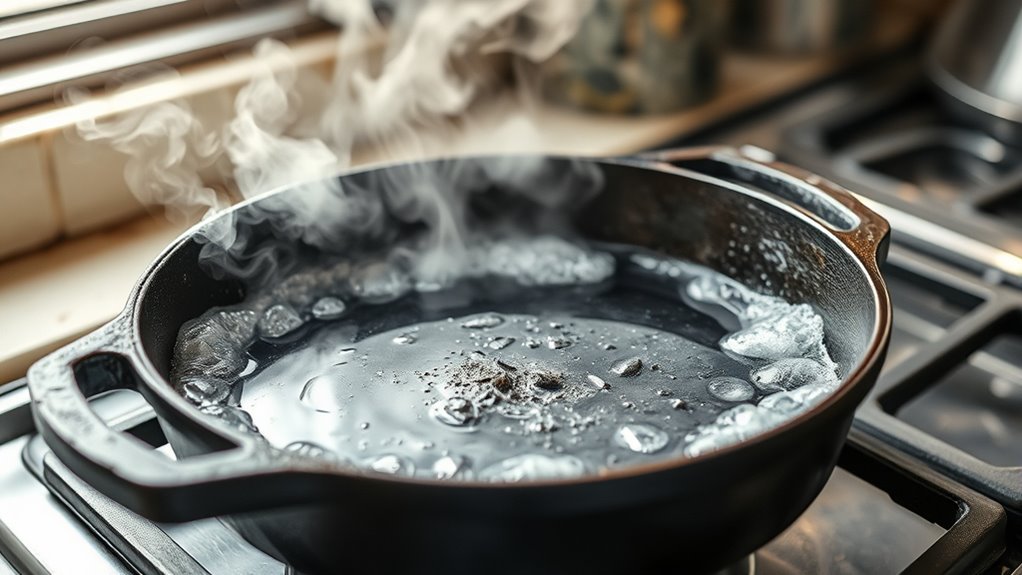
Although cast iron skillets are known for their durability, you should strip yours when it develops a sticky residue, rust, or uneven seasoning. This buildup can affect how your skillet cooks and even ruin the flavor of your food. Stripping removes old layers of seasoning that have become damaged or contaminated, giving you a fresh start.
If you notice patches where food sticks more than usual or the surface looks dull and rough, stripping will help restore that smooth, non-stick finish. It also prevents rust from worsening, protecting your skillet’s longevity. By stripping your cast iron, you maintain its peak performance, ensuring it heats evenly and cooks beautifully every time you use it.
Regular care keeps your skillet in top shape.
Gather Tools and Supplies for Stripping
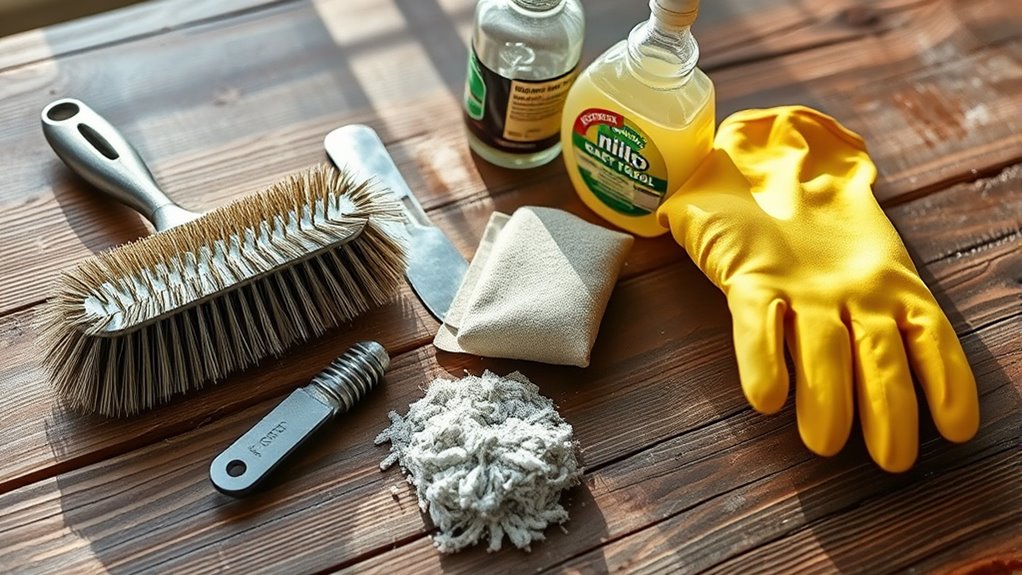
Before you start stripping your cast iron skillet, make sure you have the right tools and supplies on hand. You’ll need a few essentials like a scraper, steel wool, and some cleaning agents that work best for cast iron.
Don’t forget safety gear like gloves and protective eyewear to keep yourself safe during the process.
Essential Tools Checklist
To strip your cast iron skillet effectively, you’ll need a few essential tools and supplies on hand. First, gather rubber gloves to protect your hands from harsh chemicals or abrasive scrubbing. A sturdy scrub brush or steel wool pad is vital for removing built-up seasoning and rust.
Have a plastic or metal scraper ready to tackle stubborn residue without damaging the skillet. You’ll also want a bucket or basin to soak the skillet if necessary. Additionally, prepare a sink or work area where water and debris can be contained easily.
Finally, keep some old towels or rags nearby for drying the skillet thoroughly after cleaning to prevent rust. Having these tools ready will make the stripping process smoother and more efficient.
Choosing Cleaning Supplies
With your tools ready, the next step is selecting the right cleaning supplies to strip your cast iron skillet effectively. You’ll need items that break down old seasoning without damaging the skillet. Common choices include oven cleaner, coarse salt, and steel wool.
Each has strengths depending on how heavy the buildup is.
Here’s a quick comparison to help you decide:
| Cleaning Supply | Effectiveness | Best Use |
|---|---|---|
| Oven Cleaner | High | Heavy buildup removal |
| Coarse Salt | Moderate | Light scrubbing |
| Steel Wool | High | Removing rust & grime |
| Dish Soap | Low | Final cleaning |
| Baking Soda | Moderate | Gentle scrubbing |
Choose based on your skillet’s condition and follow up with proper rinsing.
Safety Gear Needed
Although stripping a cast iron skillet is straightforward, you’ll want to protect yourself by wearing the right safety gear. Start with a pair of sturdy rubber gloves to shield your hands from harsh chemicals or abrasive scrubbing. Safety goggles are a smart choice too, especially if you’re using chemical strippers or working with rust removers that can splash.
Wearing old clothes or an apron prevents stains or damage from splashes. If you’re sanding or using power tools, a dust mask will help protect your lungs from fine particles. Make sure your workspace is well-ventilated to avoid inhaling fumes.
Taking these precautions helps you strip your skillet safely and efficiently without risking irritation or injury.
Remove Old Seasoning and Rust From Your Skillet
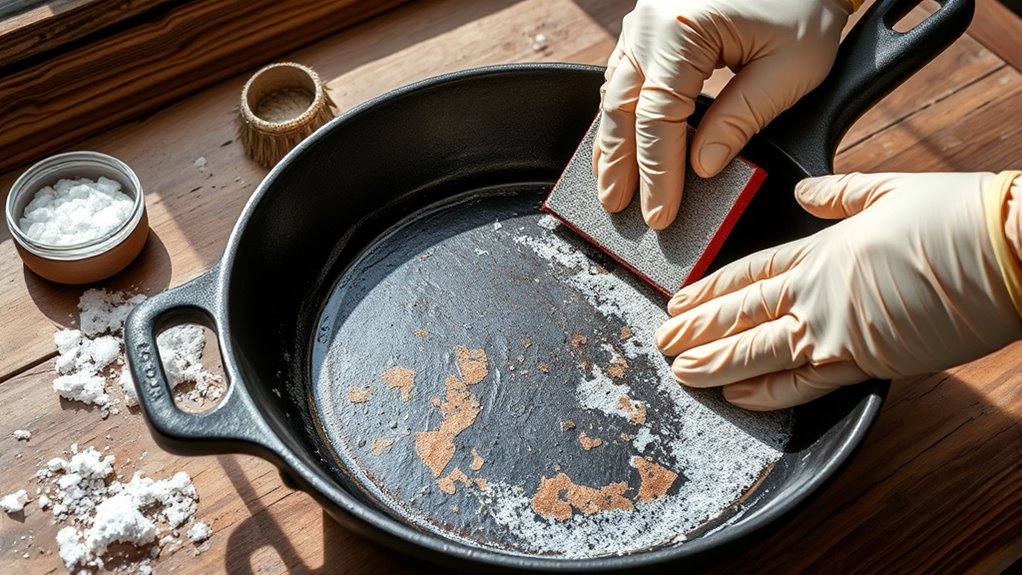
Before you can restore your cast iron skillet, you’ll need to remove any old seasoning and rust that have built up over time. Start by scrubbing the skillet with steel wool or a stiff brush under hot water. This will help strip away flaky seasoning and surface rust.
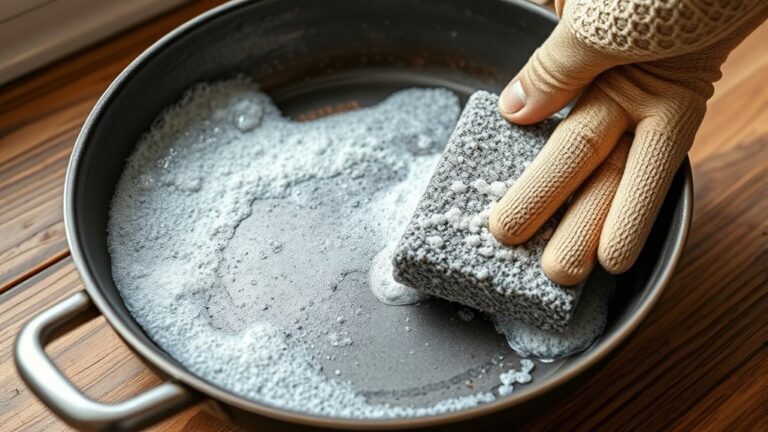
For stubborn rust spots, sprinkle coarse salt on the skillet and use a scrub pad to work it in, acting as a mild abrasive. Keep scrubbing until the metal surface looks clean and smooth. Rinse thoroughly and dry the skillet immediately to prevent new rust from forming.
If rust persists, repeat the process until the skillet’s surface is mostly bare metal. Once clean, you’re ready to move on to the next step in restoring your cast iron.
How to Use Oven Cleaner and Chemical Strippers Safely
If you’re dealing with particularly stubborn seasoning or rust that scrubbing can’t remove, using oven cleaner or chemical strippers can help restore your cast iron skillet effectively. However, you need to handle these chemicals carefully to protect yourself and your cookware.
Always work in a well-ventilated area, wear gloves, and avoid skin contact. Follow the product instructions exactly, and never mix chemicals. After applying the stripper, allow it to sit as directed, then proceed to the next step.
| Safety Tip | Reason | Action |
|---|---|---|
| Wear Gloves | Protect skin from burns | Use durable, chemical-resistant gloves |
| Ventilate Area | Avoid inhaling fumes | Open windows and use fans |
| Follow Instructions | Ensure safe, effective use | Read labels before application |
| Avoid Mixing | Prevent dangerous reactions | Use one product at a time |
Clean and Rinse Your Skillet After Stripping
After stripping your skillet, make certain you remove all residue thoroughly to avoid any leftover chemicals. Rinse it well using warm water to help break down and wash away any stubborn bits.
Taking these steps ensures your cast iron is clean and ready for seasoning.
Remove Residue Thoroughly
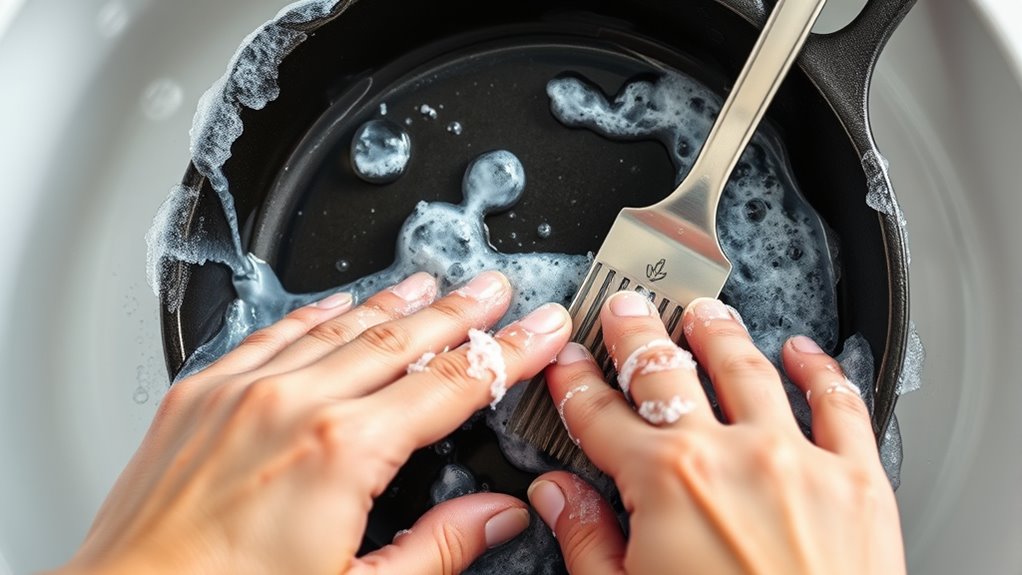
Though stripping your cast iron skillet removes most of the old seasoning and buildup, you still need to clean and rinse it thoroughly to eliminate any leftover residue. After stripping, inspect the skillet closely for any stuck-on bits or stubborn patches. Use a stiff brush or non-metallic scrubber to scrub every surface, paying special attention to corners and edges where residue tends to hide.
Make sure you reach inside the skillet’s curves and the handle if it’s hollow. This step guarantees nothing interferes with your re-seasoning process. If residue remains, repeat scrubbing until the skillet feels smooth and looks clean.
Removing all remnants now prevents off-flavors and uneven seasoning later, helping your skillet perform better and last longer.
Use Warm Water
Why is using warm water essential when cleaning your cast iron skillet after stripping? Warm water helps break down any remaining residue and grease without shocking the metal. It’s gentle enough to avoid damaging the skillet’s surface but effective in loosening stubborn bits left over from the stripping process.
After you’ve scraped off residue, rinse your skillet thoroughly with warm water to wash away loosened debris. Avoid using soap, as it can strip away seasoning. Use a soft brush or sponge to scrub gently if needed.
Once clean, dry the skillet immediately to prevent rust. Using warm water ensures your skillet is clean and ready for reseasoning, keeping it in great shape for your next cooking session.
Dry Your Skillet and Prevent Flash Rust
Once you’ve thoroughly cleaned your cast iron skillet, you’ll need to dry it immediately to stop flash rust from forming. Flash rust can appear quickly when moisture lingers on the surface, so don’t let your skillet air dry. Use a clean towel to wipe it down thoroughly, removing all water.
To guarantee it’s completely dry, place the skillet on a stove burner set to low heat for a few minutes. This evaporates any remaining moisture trapped in tiny crevices. Keep an eye on it to avoid overheating.
Once dry, your skillet is safe from rust and ready for the next step. Prompt drying is key to maintaining your skillet’s longevity and preventing damage that’s tough to reverse.
Prepare Your Skillet for Reseasoning and Use
Before you start reseasoning your cast iron skillet, make sure it’s completely dry and free of any residual debris. Use a clean cloth or paper towel to wipe it down thoroughly. This step guarantees better oil adhesion during seasoning.
Next, inspect your skillet for any remaining rust spots or stubborn residue. If needed, give it a quick scrub with a non-metal brush. Once prepped, choose your seasoning oil wisely.
| Step | Action | Tip |
|---|---|---|
| 1 | Dry skillet | Use a towel or heat briefly |
| 2 | Remove debris | Scrub with a brush if needed |
| 3 | Inspect surface | Look for rust or residue |
| 4 | Select seasoning oil | Flaxseed or vegetable oil |
| 5 | Apply thin oil layer | Use a cloth for even spread |
Now you’re ready to reseason confidently.
Troubleshooting Common Issues and Maintenance Tips
Although reseasoning your cast iron skillet restores its non-stick surface, you may still encounter issues like rust, sticky residue, or uneven seasoning. If rust appears, scrub the affected area with steel wool, rinse, dry thoroughly, and reseason immediately to prevent further corrosion.
Sticky residue often means too much oil was used during seasoning—clean the skillet with hot water and a non-metal brush, then apply a thinner coat of oil and bake it again. Uneven seasoning can result from inconsistent oil application or heat distribution; confirm you apply a thin, even layer of oil and heat the skillet in a well-preheated oven.
To maintain your skillet, avoid soaking it in water, always dry it promptly, and apply a light coat of oil after each use to keep it in top shape.
Frequently Asked Questions
Can I Strip a Cast Iron Skillet in a Dishwasher?
No, you shouldn’t strip a cast iron skillet in a dishwasher. The harsh detergents and water can cause rust and damage the seasoning.
Instead, use oven heat or a gentle scrubbing method to strip it safely.
How Often Should I Strip My Cast Iron Skillet?
Think of your skillet like a favorite leather jacket—strip it only when it’s visibly damaged or sticky.
Usually, you’ll strip it every few years, depending on use, preserving its seasoning and cooking performance.
Is It Safe to Strip a Skillet With Vinegar?
Yes, you can safely strip a skillet with vinegar, but don’t soak it too long—usually 30 minutes max.
Vinegar removes rust effectively, but prolonged exposure can damage the iron, so rinse and dry it thoroughly afterward.
Can Stripped Cast Iron Be Used on Induction Cooktops?
Yes, you can use stripped cast iron on induction cooktops. Just make sure the skillet has a flat, smooth base for proper contact.
Once seasoned again, it’ll work efficiently and heat evenly on your induction stove.
Will Stripping Remove All Flavors From the Skillet?
Stripping removes about 100% of the seasoning, meaning all flavors vanish too.
Conclusion
Stripping your cast iron skillet might seem like a chore, but it’s a fresh start—a blank canvas ready for a flawless seasoning. With the right tools and care, you’ll breathe new life into your trusty pan, ensuring it cooks like a dream for years to come.
Remember, every great chef knows the secret: a well-loved skillet is the heart of the kitchen. So, strip it, season it, and let the magic happen!
By stripping your cast iron skillet properly, you set the stage for perfect seasoning and long-lasting non-stick performance. This essential maintenance keeps your cookware in top shape, making cooking easier and more enjoyable.