What Is a Bundt Cake Pan?
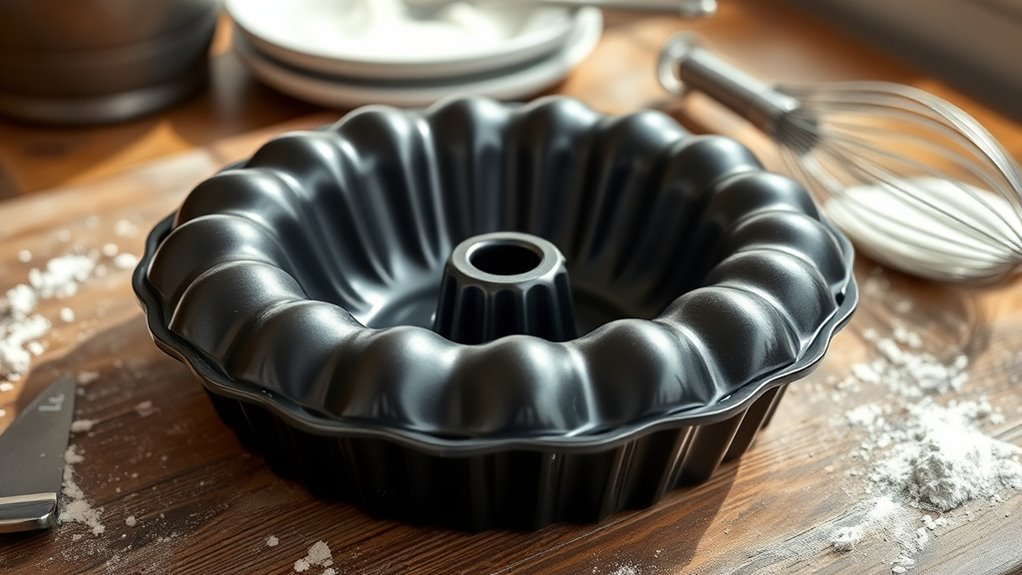
A Bundt cake pan is a ring-shaped baking pan with fluted sides and a central hole. This unique design helps your Bundt cake bake evenly and faster by distributing heat efficiently throughout the batter.
Made from materials like aluminum or nonstick coated steel, these pans are essential for creating beautifully decorative cakes with minimal effort. Proper greasing is crucial to release the cake cleanly from the pan’s intricate design.
The shape of a Bundt cake pan not only promotes uniform cooking but also adds an elegant touch to your baked goods. Keep reading to discover helpful tips on choosing, baking, and decorating your perfect Bundt cake.
Key Takeaways
- A Bundt cake pan is a ring-shaped baking pan with fluted or grooved sides for decorative cakes.
- It features a central tube that allows heat to reach the cake’s center for even baking.
- The pan’s design increases surface area, promoting uniform heat exposure and a moist texture.
- Bundt pans are typically made from cast aluminum, nonstick materials, or silicone for varied baking results.
- Its decorative shape creates an attractive cake presentation with minimal effort after baking.
What Is a Bundt Cake Pan and Why Use It

Although you might have seen Bundt cakes at celebrations, you may not know what makes the Bundt cake pan unique. This pan has a distinctive ring shape with fluted or grooved sides, created from heavy cast aluminum or nonstick materials. When you use a Bundt pan, you get more surface area exposed to heat, which helps your cake bake evenly.
You’ll also appreciate how it creates an attractive design without any extra effort on your part. Plus, the hole in the center means your cake cooks faster than a regular round cake, saving you time. Whether you’re making a rich chocolate cake or a simple pound cake, the Bundt pan offers a reliable way to make your baked goods look impressive and bake perfectly every time.
Why the Shape of a Bundt Pan Matters for Baking

You’ll notice the unique shape of a Bundt pan helps heat reach every part of your cake evenly, so it bakes perfectly throughout.
Plus, the fluted design creates a beautiful, decorative pattern that makes your cake stand out without extra effort.
Understanding how the shape impacts baking can help you get better results every time.
Even Heat Distribution
How does the unique shape of a Bundt pan guarantee your cake bakes evenly? Its distinctive design features a central tube that allows heat to flow through the middle of the cake, ensuring the batter cooks uniformly from all sides. Unlike traditional pans, the Bundt’s fluted edges increase the surface area exposed to heat, helping the cake to bake faster and more consistently.
This means you won’t end up with undercooked centers or overly browned edges. When you use a Bundt pan, the heat reaches every part of the batter more efficiently, so your cake holds its moist texture throughout. This even heat distribution is why Bundt cakes come out perfectly baked, with a tender crumb and no surprises.
Decorative Cake Design
Because the Bundt pan’s shape features intricate fluted patterns and a central hole, it turns ordinary cakes into stunning centerpieces without extra effort. When you bake with a Bundt pan, the design naturally creates a visually appealing texture that highlights every slice. You don’t need fancy frosting or decorations to make your cake impressive; the pan’s shape facilitates the work for you.
Plus, the central hole ensures even baking, so your cake rises uniformly and holds its decorative form perfectly. Whether you’re baking for a special occasion or just a treat, using a Bundt pan lets you present a beautiful, professional-looking cake with minimal fuss. It’s a simple way to elevate your baking and wow your guests every time.
What Bundt Cake Pans Are Made Of
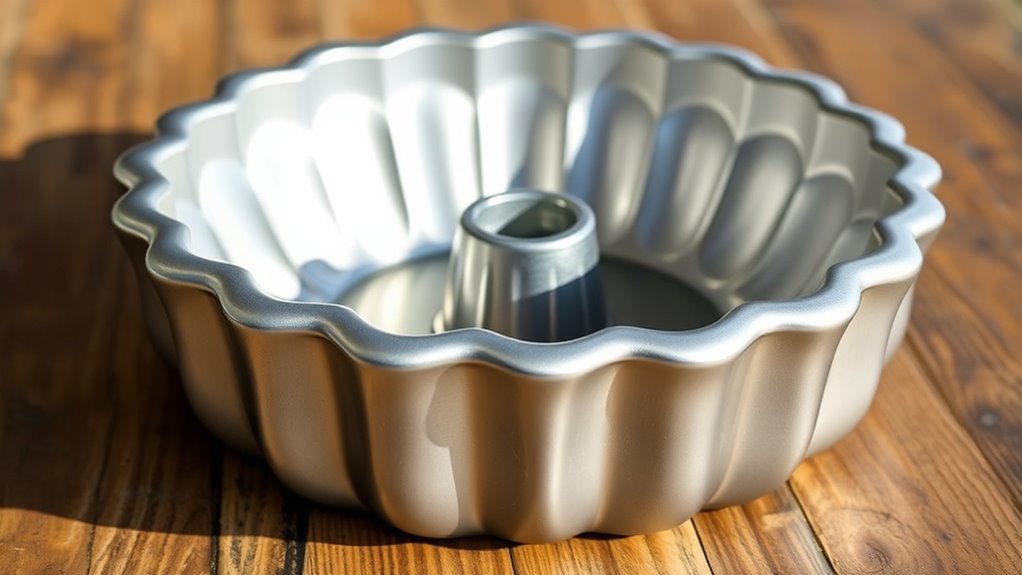
Although Bundt cake pans come in various styles, their materials profoundly impact baking results and ease of use. You’ll find Bundt pans made from different materials, each offering unique benefits. Choosing the right one can improve your baking experience and the cake’s texture.
Bundt pan materials greatly influence baking outcomes and ease, so choose one that suits your needs and style.
Common materials include:
- Cast iron: excellent heat retention but heavy and requires seasoning
- Aluminum: lightweight, heats evenly, but may warp over time
- Silicone: non-stick and flexible, making unmolding easy, but less even heating
- Non-stick coated steel: combines durability and easy release but can scratch easily
Understanding these materials helps you select a Bundt pan that fits your baking style and maintenance preferences perfectly.
How to Choose the Right Size Bundt Cake Pan
When choosing the right size Bundt cake pan, think about how many people you want to serve. You’ll also need to check if the pan fits comfortably in your oven. Balancing these factors helps you pick the perfect size for your baking needs.
Assess Cake Serving Needs
If you want to choose the right size Bundt cake pan, start by considering how many people you plan to serve. Knowing your guest count helps you pick a pan that won’t leave you with too little or too much cake. Think about whether your gathering is casual or formal, as portion sizes may vary.
Also, consider if the cake will be the main dessert or part of a larger spread.
To assess your cake serving needs, ask yourself:
- How many guests will be attending?
- What size slice will each person likely want?
- Will leftovers be a concern?
- Are you baking for a special occasion or everyday treat?
This approach guarantees you choose a pan that fits your exact serving needs.
Consider Oven Space
How much oven space do you have available for your Bundt cake pan? Before choosing your pan’s size, measure your oven’s interior width, height, and depth. Larger Bundt pans, especially 12-cup models, require extra room to fit comfortably without touching oven walls or racks.
If your oven is compact, opt for a smaller pan to ensure even heat circulation and prevent uneven baking. Also, keep in mind that a heavily decorated pan can take up a bit more space. If you plan to bake multiple Bundt cakes at once, confirm your oven can accommodate them without crowding.
Considering oven space helps you pick a pan that fits well, bakes evenly, and matches your kitchen setup, making your baking experience smoother and more successful.
Where to Buy Quality Bundt Cake Pans
Although finding the perfect Bundt cake pan might seem intimidating, you can easily locate high-quality options both online and in specialty kitchen stores. When shopping, focus on trusted retailers known for durable bakeware. You’ll want a pan that offers even heat distribution and a non-stick surface to make your baking experience smooth.
Consider these places to buy quality Bundt pans:
- Kitchen specialty stores, like Williams Sonoma or Sur La Table
- Online marketplaces such as Amazon or Wayfair
- Department stores with kitchen sections, like Macy’s or Target
- Direct from manufacturers, like Nordic Ware’s official website
How to Prepare Your Bundt Pan for Baking
Once you have your Bundt pan ready, the next step is to prepare it properly to guarantee your cake releases cleanly and bakes evenly. Start by thoroughly greasing the pan with softened butter or a nonstick spray that includes flour. Pay special attention to every nook and cranny, since Bundt pans have intricate designs where batter can stick.
After greasing, lightly dust the pan with flour or cocoa powder for chocolate cakes, then tap out the excess. This extra step prevents sticking. Avoid using too much flour, or your cake’s surface could become uneven.
If your pan is nonstick, you might still want to grease it lightly for best results. Once prepared, your Bundt pan will help your cake come out perfectly shaped and easy to remove.
Tips for Even Baking With Bundt Cake Pans
Because Bundt pans have thick walls and intricate designs, they can cause uneven baking if you’re not careful. To get your cake baked perfectly throughout, follow these tips.
First, preheat your oven thoroughly to guarantee even heat distribution. Second, place the pan in the center of the oven, avoiding proximity to the walls or heating elements. Third, reduce the baking temperature by 25°F from what a regular cake recipe calls for to prevent over-browning on the edges.
Finally, rotate the pan halfway through baking to promote uniform cooking.
- Preheat oven fully before baking
- Center the pan in the oven
- Lower baking temperature slightly
- Rotate pan halfway through baking
These steps help you avoid undercooked centers and burnt edges.
Removing Cakes Cleanly From Bundt Pans
To remove your Bundt cake cleanly, you need to prepare the pan properly before baking and handle it carefully after cooling. Start by thoroughly greasing every nook and cranny of the pan with butter or nonstick spray, then dust it lightly with flour or cocoa powder for chocolate cakes.
After baking, let the cake cool in the pan for about 10-15 minutes; this helps it set but keeps it warm enough to release easily. Place a cooling rack over the pan, then invert both together and gently tap or shake to loosen the cake.
If it sticks, run a thin knife carefully around the edges without scratching the pan. Patience and proper prep will guarantee your Bundt cake comes out perfectly shaped every time.
Best Bundt Cake Recipes to Try
You’ll want to start with classic Bundt cake flavors like lemon or chocolate to get a feel for the pan. Then, try unique recipes that add interesting twists and textures.
Follow a few simple tips to guarantee your Bundt cakes come out perfectly every time.
Classic Bundt Cake Flavors
When you bake with a Bundt pan, classic flavors like lemon, chocolate, and vanilla come to life in a moist, beautifully shaped cake. These timeless tastes highlight the pan’s design, offering not just flavor but an impressive presentation. You’ll find that simple, well-loved flavors are perfect for showcasing the Bundt’s curves and details.
Here are a few classic Bundt cake flavors you should try:
- Lemon poppy seed for a fresh, zesty twist
- Chocolate fudge for a rich, decadent treat
- Vanilla almond for a smooth, nutty flavor
- Cinnamon spice for warmth and comfort
Each recipe brings out the pan’s charm, making your baking efforts both delicious and visually stunning.
Unique Bundt Cake Ideas
Classic Bundt cake flavors create a perfect foundation, but experimenting with unique recipes can take your baking to the next level. Try a lemon lavender Bundt for a fresh, floral twist or a chai-spiced Bundt cake that fills your kitchen with warm, aromatic scents.
If you love chocolate, a mocha Bundt with a coffee glaze adds depth and richness. For something fruity, a blueberry basil Bundt offers a sweet and herbaceous combo that’s unexpected yet delightful. You can also explore savory options, like a cheddar and herb Bundt, perfect for brunch or appetizers.
These unique ideas let you showcase creativity and impress friends or family. Don’t hesitate to customize glazes or toppings to complement your Bundt’s flavors and make each bake truly your own.
Tips for Perfect Bundts
Although Bundt cakes look impressive, mastering their perfect texture and shape is easier than you might think. To get the best results, start by properly greasing your Bundt pan—use a baking spray with flour or brush with melted butter and dust with flour.
Next, avoid overmixing your batter to keep the crumb tender. When baking, place the pan on the middle rack for even heat distribution. Finally, allow the cake to cool in the pan for about 15 minutes before inverting it to keep the intricate design intact.
Here are key tips to perfect your Bundt cakes:
- Thoroughly grease and flour the pan
- Mix batter gently, don’t overdo it
- Bake on the center oven rack
- Cool briefly before removing from pan
Following these will help you bake stunning Bundts every time.
Decorating Ideas That Highlight the Bundt Shape
Because the Bundt pan’s distinctive ring shape naturally draws the eye, decorating your cake to emphasize its curves can make a striking presentation. Start by drizzling a simple glaze or powdered sugar over the top, letting it cascade down the ridges to highlight the pan’s design. You can also pipe whipped cream or frosting along the edges or in the center hole for contrast.
Fresh berries or edible flowers placed strategically in the grooves add vibrant color and texture without overshadowing the shape. For a more dramatic look, dust the cake with cocoa or cinnamon using a stencil that follows the pan’s pattern. These techniques enhance the Bundt’s sculptural beauty, making your cake both attractive and inviting.
Cleaning and Maintaining Your Bundt Cake Pan
When you finish baking, properly cleaning your Bundt cake pan guarantees it stays in great condition for years. Avoid letting batter dry in the intricate grooves by soaking the pan in warm, soapy water right after use. Use a soft brush or sponge to clean without scratching the nonstick surface.
Never use abrasive cleaners or metal utensils, as they can damage the coating. After washing, dry the pan thoroughly to prevent rust, especially if your pan is cast iron.
To maintain your Bundt pan:
- Soak immediately to loosen stuck batter
- Use gentle cleaning tools only
- Avoid harsh chemicals or scrubbing pads
- Dry completely before storing
Following these steps keeps your pan performing perfectly for every delicious Bundt cake you bake.
Frequently Asked Questions
Can Bundt Pans Be Used for Non-Cake Recipes?
Yes, you can use bundt pans for non-cake recipes like savory breads, meatloaf, or gelatin molds. Their shape helps with even cooking and presentation, so don’t hesitate to get creative beyond just cakes!
Are Bundt Pans Dishwasher Safe?
Most Bundt pans aren’t dishwasher safe because harsh detergents and high heat can damage their nonstick coating.
You should hand wash them gently with warm, soapy water to keep your pan in great shape for years.
Do Bundt Pans Require Special Storage?
You don’t need a vault for bundt pans, but you should store them carefully to avoid scratches or dents. Keep them in a cool, dry place, and avoid stacking heavy items on top to preserve their intricate shape.
Can You Use a Bundt Pan in a Convection Oven?
Yes, you can use a Bundt pan in a convection oven. Just reduce the temperature by 25°F and check your cake earlier, since convection ovens circulate heat and bake faster than conventional ovens.
How Long Do Bundt Pans Typically Last?
You can expect your Bundt pan to last many years, even decades, if you care for it properly. Avoid abrasive cleaners and store it carefully to prevent warping or rust, keeping it in great shape for baking.
Proper care ensures your pan remains durable and functional over time. Handle it gently to maintain its non-stick surface.
Store it in a dry place to avoid moisture damage. With good maintenance, your Bundt pan can be a long-lasting kitchen companion.
Conclusion
Using a Bundt cake pan is like giving your cake a beautiful stage to shine on. Its unique shape not only bakes your cake evenly but also turns every slice into a work of art.
With the right pan, careful removal, and a touch of creativity, you’ll whip up desserts that wow every time.
So, grab your Bundt pan, and let your baking journey swirl with flavor and style. Make memories one delicious ring at a time with this essential Bundt cake pan for perfect cakes.