How Long to Cook Frozen Salmon in Oven
You can cook frozen salmon in the oven at 425°F (220°C) for about 20 to 25 minutes without thawing. Cooking frozen salmon in the oven is a quick and convenient way to enjoy a healthy meal without the need to plan ahead.
Season it beforehand with olive oil, salt, and herbs for the best flavor, and consider wrapping it or brushing with oil to keep it moist.
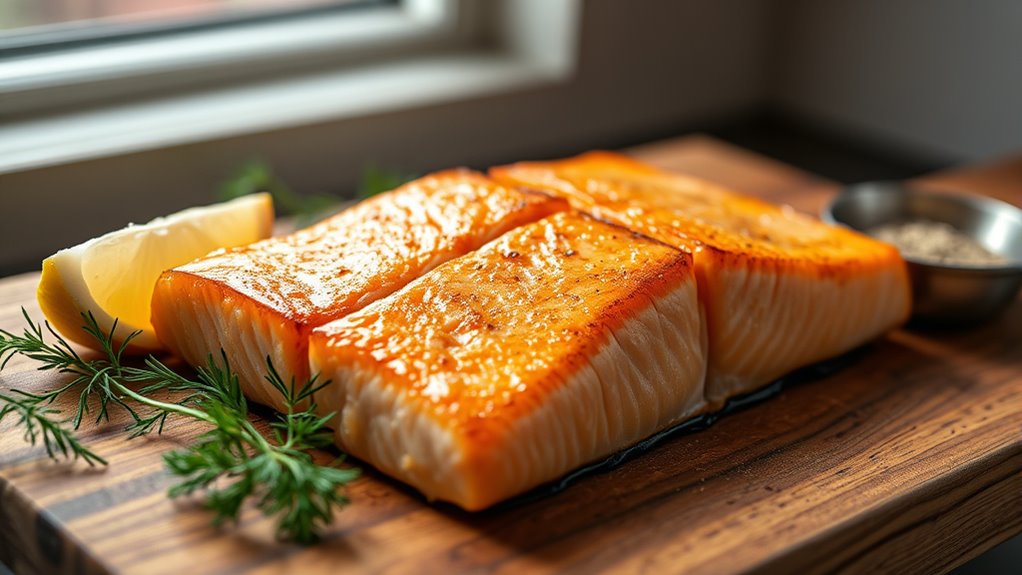
Check doneness by ensuring the internal temperature hits 145°F (63°C) or when the flesh turns opaque and flakes easily.
This method ensures your salmon is perfectly cooked, tender, and flavorful. Keep going to discover tips for perfect texture and seasoning tricks.
Key Takeaways
- Bake frozen salmon at 425°F (220°C) for about 20 to 25 minutes, adjusting time for fillet thickness.
- No need to thaw; bake directly from frozen for best convenience and texture.
- Use a thermometer to ensure internal temperature reaches 145°F (63°C) for safe doneness.
- Season salmon before baking and consider brushing with olive oil to retain moisture and enhance flavor.
- Check for opaque pinkish-orange flesh and easy flaking to confirm salmon is fully cooked.
How Long and at What Temperature to Cook Frozen Salmon
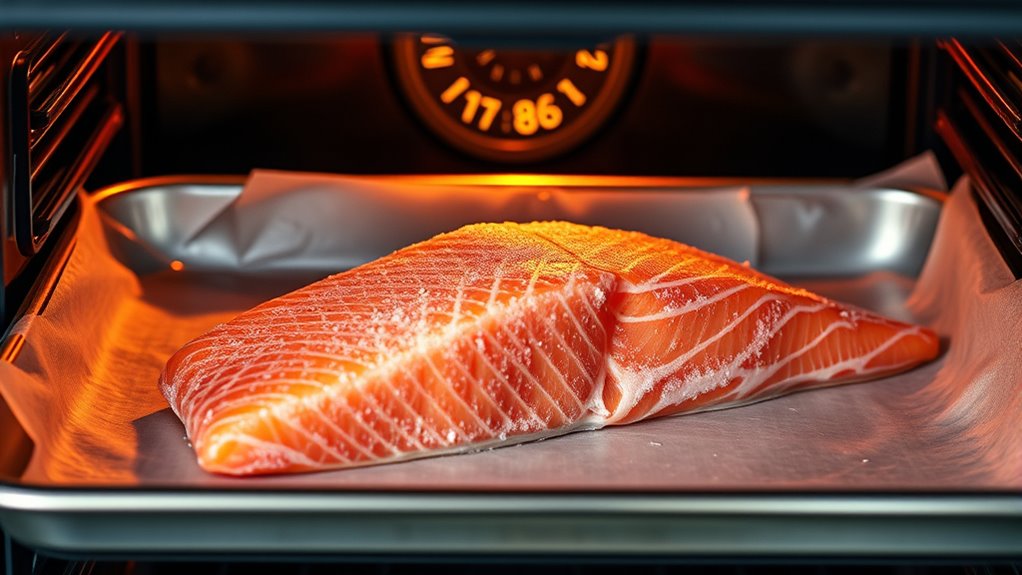
Wondering how long and at what temperature you should cook frozen salmon in the oven? Preheat your oven to 425°F (220°C) for the best results. Cooking frozen salmon at this temperature helps it cook evenly and quickly without drying out.
Place the salmon fillets on a baking sheet lined with parchment paper or foil. You don’t need to thaw the fish first. Bake the fillets for about 20 to 25 minutes, depending on thickness.
Thicker pieces may need a few extra minutes. You can season the salmon before or after cooking, but adding seasoning beforehand allows flavors to meld better. This method guarantees your frozen salmon cooks thoroughly and stays moist, saving you time while delivering a delicious meal.
How to Tell When Frozen Salmon Is Cooked and Safe to Eat
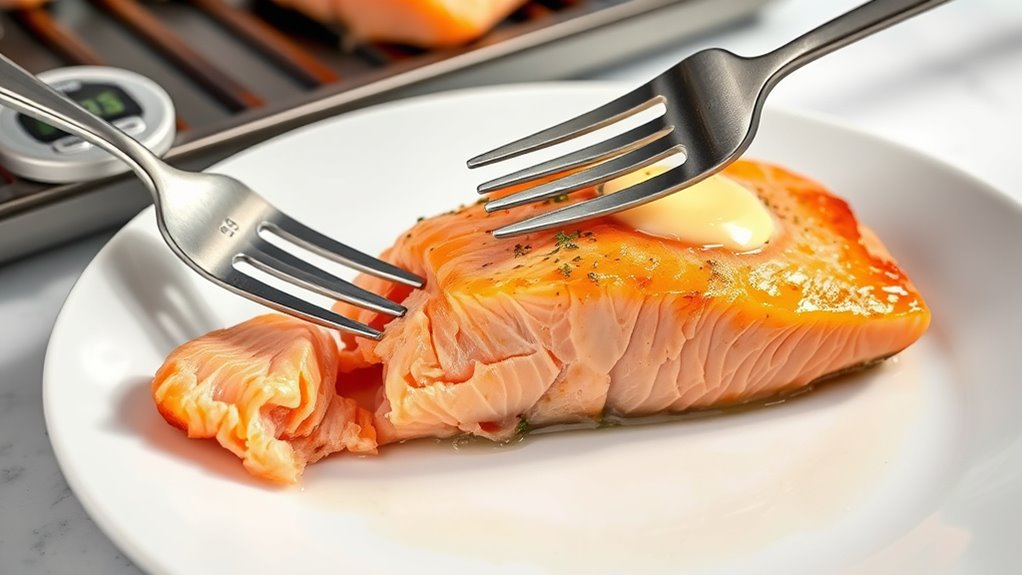
You’ll know your frozen salmon is cooked and safe to eat by checking a few key signs. Look for opaque flesh that flakes easily with a fork, and use a thermometer to confirm it reaches 145°F internally.
Paying attention to these indicators guarantees your salmon is perfectly done every time.
Visual Indicators Of Doneness
Although cooking frozen salmon might seem straightforward, knowing exactly when it’s done can be tricky. You want to look for clear visual signs to avoid undercooking or overcooking. First, check the color: cooked salmon changes from translucent to opaque pinkish-orange.
The flesh should flake easily when you gently press it with a fork or knife. If it resists flaking or looks shiny and raw, it needs more time. Also, the edges often cook faster and may slightly pull away from the skin.
Avoid any gray or raw-looking spots, especially near the center. Keep an eye on these visual cues, and you’ll confidently know when your salmon is safe and delicious, even without cutting into it prematurely.
Internal Temperature Guidelines
Visual cues can guide you, but relying on them alone might leave uncertainty about whether your frozen salmon is fully cooked and safe to eat. To be sure, use a food thermometer to check the internal temperature. Insert the thermometer into the thickest part of the salmon, avoiding bones.
The USDA recommends cooking fish to an internal temperature of 145°F (63°C) for safety. Once your salmon reaches this temperature, you can confidently remove it from the oven. If the temperature is lower, continue cooking and check again after a few minutes.
Using a thermometer takes the guesswork out of cooking frozen salmon and guarantees it’s safe to eat without overcooking. This simple step helps you serve perfectly cooked, delicious salmon every time.
Texture And Flake Test
While a thermometer provides an exact measure, you can also use the texture and flake test to tell when frozen salmon is cooked and safe to eat. Gently press the thickest part of the salmon with a fork or your finger. If it feels firm yet slightly springy, it’s likely done.
Next, try the flake test: insert a fork at an angle and twist gently. Cooked salmon will easily flake apart along the natural lines of the flesh. If the fish resists or looks translucent, it needs more time.
Avoid overcooking, as salmon becomes dry and tough. Using these tactile cues alongside temperature checks guarantees your salmon is perfectly cooked, safe, and delicious every time.
Can You Cook Frozen Salmon With Skin On or Off?
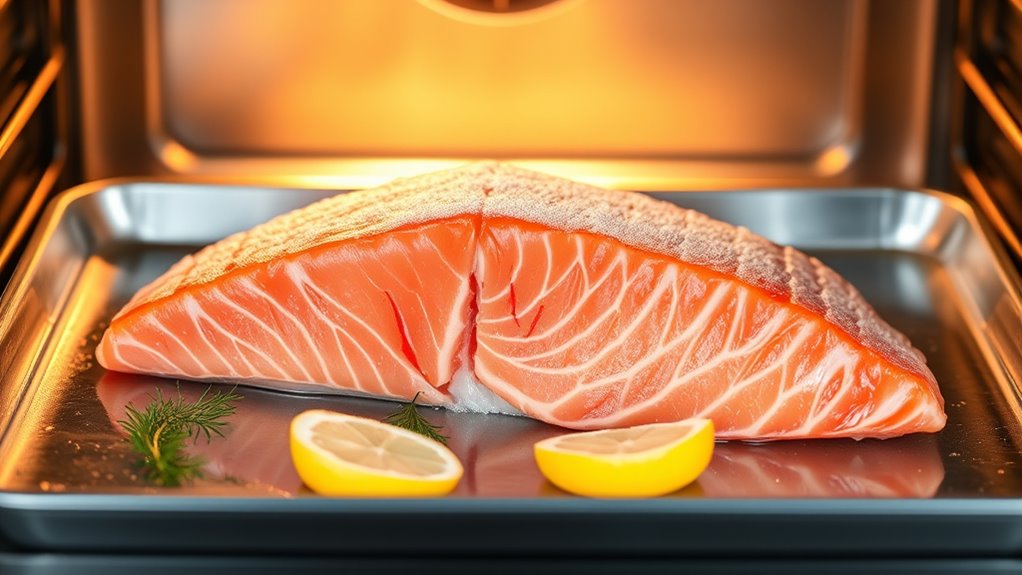
Whether you choose to cook frozen salmon with the skin on or off depends on your texture preference and cooking method. Cooking with the skin on helps lock in moisture and adds a crispy texture if you finish under the broiler or in a hot pan. Removing the skin allows seasonings to penetrate the flesh more easily and gives you a softer bite.
Consider these points:
- Skin On: Retains moisture, protects flesh, and crisps nicely if cooked properly.
- Skin Off: Absorbs seasonings better and offers a more uniform texture.
- Cooking Method: Oven baking works well both ways, but skin-on benefits more from searing or broiling for crispiness.
Choose based on your desired texture and cooking style to get the best results.
How to Season Frozen Salmon Before Baking for Best Flavor
Although seasoning frozen salmon might seem tricky since it’s not thawed, you can still infuse plenty of flavor before baking. Start by lightly brushing the surface with olive oil or melted butter to help spices adhere. Use a mix of salt, pepper, garlic powder, and lemon zest for a bright, balanced taste.
You can also sprinkle fresh or dried herbs like dill or parsley.
Here’s a quick guide to seasoning frozen salmon:
| Ingredient | Amount per Fillet | Flavor Effect |
|---|---|---|
| Olive Oil | 1 tsp | Moisture, richness |
| Salt | ½ tsp | Enhances flavor |
| Black Pepper | ¼ tsp | Mild heat |
| Garlic Powder | ⅛ tsp | Savory depth |
| Lemon Zest | ½ tsp | Fresh citrus note |
This simple approach ensures your salmon tastes great straight from frozen.
Do You Need to Cover Frozen Salmon When Baking?
Seasoning your frozen salmon properly sets the stage for a flavorful bake, but you might wonder if you should cover the fish while it cooks. Generally, you don’t need to cover frozen salmon when baking. Leaving it uncovered helps the heat circulate evenly, promoting a nicely browned surface.
However, there are situations where covering can be beneficial:
- Preventing Dryness: Covering with foil traps moisture, reducing the risk of drying out.
- Even Cooking: Foil can help distribute heat more evenly, especially with thicker fillets.
- Flavor Infusion: Wrapping salmon can lock in herbs, lemon slices, or marinades, intensifying flavor.
Ultimately, whether to cover depends on your texture preference and recipe. For most straightforward bakes, leaving it uncovered works best.
Tips for Keeping Frozen Salmon Moist and Flaky After Baking
To keep your frozen salmon moist and flaky, start by thawing it properly to guarantee even cooking. Pay attention to cooking temperatures—too high can dry it out, while the right heat locks in moisture.
You can also use simple methods like adding a drizzle of oil or covering the fish to retain juiciness during baking.
Proper Thawing Techniques
When you want your salmon to stay moist and flaky after baking, proper thawing is key. Thawing frozen salmon correctly helps preserve its texture and prevents drying out during cooking.
Here are three effective thawing methods:
- Refrigerator Thawing: Place the salmon in its packaging on a plate and thaw in the fridge for 12-24 hours. This slow method keeps the fish at a safe temperature, maintaining moisture.
- Cold Water Thawing: Seal the salmon in a leak-proof bag and submerge it in cold water, changing the water every 30 minutes. It thaws faster, usually within an hour, while preserving firmness.
- Microwave Thawing: Use the defrost setting carefully, checking every 30 seconds to avoid partial cooking.
Avoid thawing at room temperature to reduce bacterial risk and moisture loss.
Optimal Cooking Temperatures
Although cooking frozen salmon may seem straightforward, maintaining the right temperature is essential to keep it moist and flaky. You want to bake your salmon at a moderate heat—around 375°F (190°C) works perfectly. This temperature allows the fish to cook evenly without drying out the exterior while the inside finishes cooking.
Avoid cranking up the oven too high; doing so will cause the edges to overcook and become tough before the center is done. Use a reliable meat thermometer to check when the internal temperature reaches 125°F (52°C) for medium-rare or 145°F (63°C) if you prefer it fully cooked.
Sticking to these temperatures guarantees your salmon stays tender and flavorful, making every bite enjoyable.
Moisture Retention Methods
A key step to keeping your frozen salmon moist and flaky after baking is managing moisture throughout the cooking process. You want to prevent dryness while ensuring even cooking.
Here are three effective methods:
- Wrap it tightly – Use foil or parchment paper to seal in steam, which keeps the salmon juicy.
- Add a moisture barrier – Before baking, brush the salmon with olive oil, melted butter, or a marinade to lock in moisture and add flavor.
- Don’t overcook – Monitor the internal temperature closely, aiming for 125°F to 130°F. Overcooking squeezes out moisture, leaving your fish dry.
How Cooking Times Change With Different Salmon Portion Sizes
Because salmon portions vary in size, you’ll need to modify your cooking time accordingly to guarantee even doneness. Smaller portions, such as 4-ounce fillets, typically cook faster—usually around 12 to 15 minutes at 400°F (204°C). Larger portions, like 8-ounce fillets or whole sides, require more time, often 20 to 25 minutes or longer depending on thickness.
Thicker pieces need extra minutes to allow heat to penetrate fully without drying out the surface. To guarantee accuracy, use a meat thermometer; salmon is done when it reaches 145°F (63°C) internally. If you’re cooking multiple portions of different sizes simultaneously, remove smaller pieces earlier to avoid overcooking.
Adjusting cooking times based on size helps you serve perfectly cooked salmon every time.
Common Mistakes to Avoid When Baking Frozen Salmon
When baking frozen salmon, you’ll want to steer clear of common pitfalls that can compromise texture and flavor. Avoid these mistakes to ensure your salmon turns out perfectly cooked every time:
- Skipping the seasoning – Don’t wait until after baking to add flavor. Season your salmon before it hits the oven so the spices infuse as it cooks.
- Cooking at too high a temperature – High heat can dry out the salmon’s surface while leaving the inside undercooked. Stick to moderate oven temps for even cooking.
- Not using a baking sheet or foil – Placing salmon directly on the oven rack causes uneven cooking and mess. Use a lined baking sheet to catch drips and promote consistent heat.
Avoid these errors, and your frozen salmon will come out tender, juicy, and flavorful every time.
Bonus Tips for Perfect Frozen Salmon Every Time
Mastering the common mistakes sets a solid foundation, but a few extra tips can elevate your frozen salmon to restaurant-quality. First, always pat your salmon dry before seasoning; this helps the spices stick better and creates a nice crust. Use a meat thermometer to check doneness—salmon is perfectly cooked at 125°F for medium-rare, ensuring it stays moist.
Don’t overcrowd the baking sheet; give each piece room to cook evenly. Consider adding a squeeze of lemon or a drizzle of olive oil halfway through baking to boost flavor and moisture. Ultimately, let your salmon rest for a few minutes after baking; this allows the juices to redistribute, keeping each bite tender and juicy every time.
Frequently Asked Questions
Can You Freeze Cooked Salmon After Baking From Frozen?
Yes, you can freeze cooked salmon after baking from frozen. Just let it cool completely, wrap it tightly in foil or airtight containers, and freeze.
When reheating, do so gently to keep it moist and tasty.
Is It Safe to Eat Salmon Slightly Pink in the Center?
Yes, it’s safe to eat salmon slightly pink in the center as long as it reaches 145°F internally. The pink color can remain due to natural pigments, so always check the temperature to be sure.
What Are the Nutritional Benefits of Salmon?
You’re treating your body to a treasure trove of nutrients when you eat salmon. It’s packed with heart-loving omega-3s, muscle-strengthening protein, and mood-boosting vitamin D, keeping you vibrant and energized every day.
Can You Marinate Frozen Salmon Before Cooking?
You can’t effectively marinate frozen salmon because the marinade won’t penetrate. It’s best to thaw it first, then marinate for 15-30 minutes to enhance flavor before cooking.
This way, you get the best taste.
How Long Can Frozen Salmon Be Stored in the Freezer?
You can store frozen salmon in your freezer for up to six months—long enough to forget you ever had it.
Just don’t wait too long, or you’ll be fishing for freshness instead of dinner!
Conclusion
Cooking frozen salmon is like opening a treasure chest—simple with the right timing and care. By baking at 425°F for 15-20 minutes, you’ll transform icy fillets into flaky, flavorful delights. Keep an eye on doneness, season boldly, and avoid common pitfalls to guarantee every bite sings.
With these tips, your oven becomes a magic wand, turning frozen fish into a delicious masterpiece every time. Get ready to savor success! For perfectly cooked frozen salmon in the oven, remember that timing, temperature, and seasoning are key to delicious results every time.