
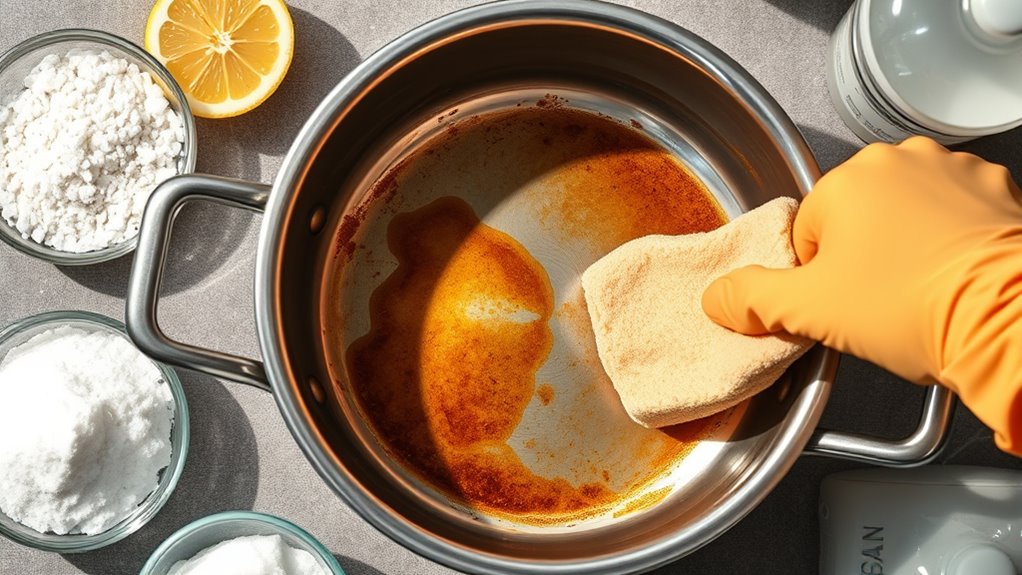
How to Clean Stained Cookware in 10 Easy Steps
To clean stained cookware effectively, it’s important to identify the type of stain you’re dealing with—whether it’s burnt residue, discoloration, or mineral deposits. Using common kitchen staples like baking soda, vinegar, and a soft sponge can make the cleaning process easier and more natural. These ingredients are excellent for tackling tough stains while being gentle on your cookware’s surface.
Start by washing the cookware with warm, soapy water to remove grease and loose debris.
Soaking the cookware helps to loosen stubborn residue, making it easier to clean.
For burnt spots, use natural cleaners such as a paste made from baking soda and vinegar or lemon combined with salt. These solutions break down tough stains without harsh chemicals.
Rinse the cookware thoroughly to remove any cleaning agents, then dry it immediately to prevent water spots.
Gentle scrubbing and regular maintenance will keep your cookware shiny and extend its lifespan.
Keep going to uncover smarter cleaning tricks.
Key Takeaways
- Identify the stain type (burnt food, discoloration, mineral deposits) to choose the best cleaning method and supplies.
- Soak cookware in warm, soapy water or use baking soda and vinegar to loosen grime and stains effectively.
- Gently scrub with a soft sponge or nylon brush, avoiding abrasive tools to prevent surface damage.
- Rinse thoroughly with warm water and dry immediately with a soft towel to prevent water spots and maintain shine.
- Follow safety precautions like using gloves, avoiding harsh chemicals, and not soaking cast iron or wooden cookware.
Diagnose Common Cookware Stains
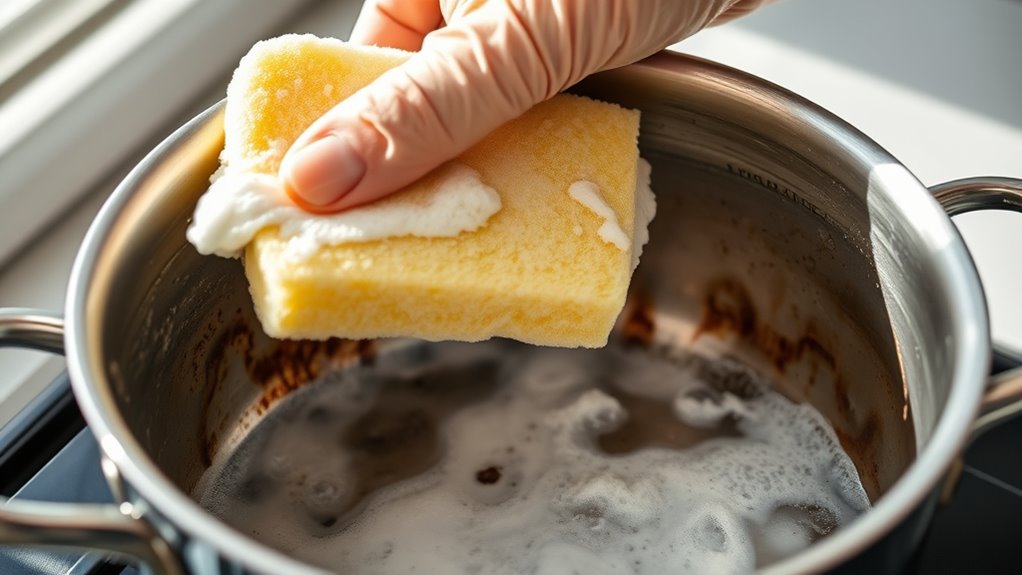
Before you start scrubbing, you need to identify the type of stain on your cookware. Is it burnt-on food, discoloration, or mineral deposits? Burnt-on stains often look blackened and crusty, usually caused by high heat or forgotten pots.
Discoloration appears as rainbow hues or dark patches, common with stainless steel after overheating. Mineral deposits show up as white, chalky spots, especially if you have hard water. Recognizing the stain helps you choose the right cleaning method and avoid damage.
For instance, acidic cleaners work well on mineral buildup but can harm some metals. By diagnosing the stain correctly, you save time and protect your cookware’s surface, ensuring it looks great and lasts longer.
Gather Everyday Items to Clean Cookware
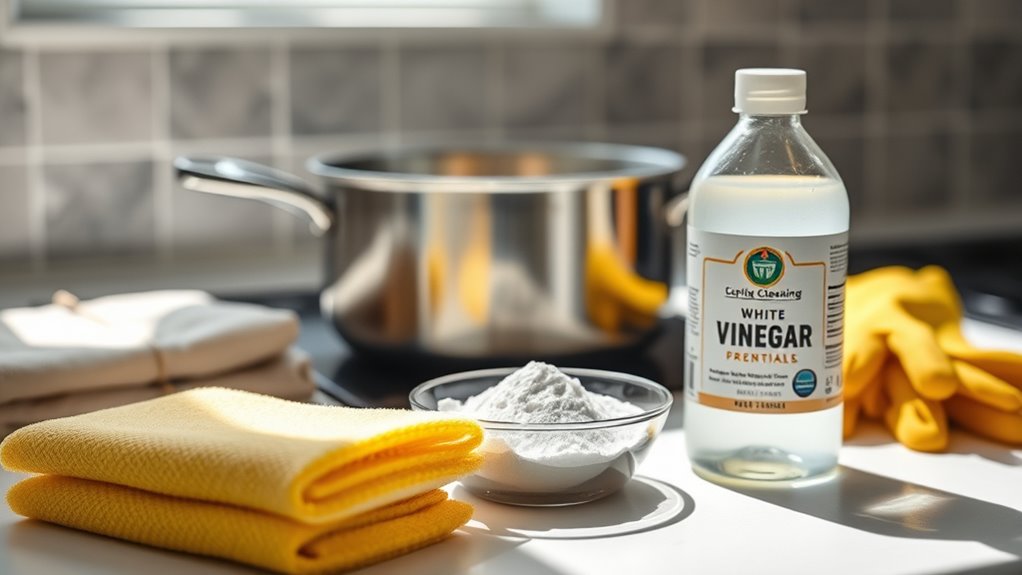
Once you know what kind of stain you’re dealing with, you can gather the right items to tackle the cleaning effectively. Start with basic household staples like baking soda, white vinegar, and lemon juice—these natural cleaners work wonders on most stains. You’ll also want a soft sponge or cloth to avoid scratching your cookware.
For tougher spots, a nylon scrubber or a paste made from baking soda and water can help lift stubborn residue. Keep a bowl nearby for soaking, and have some warm water ready. If you have aluminum foil, you can crumple a small ball to gently scrub burnt areas.
Remove Grease With Dish Soap and Hot Water
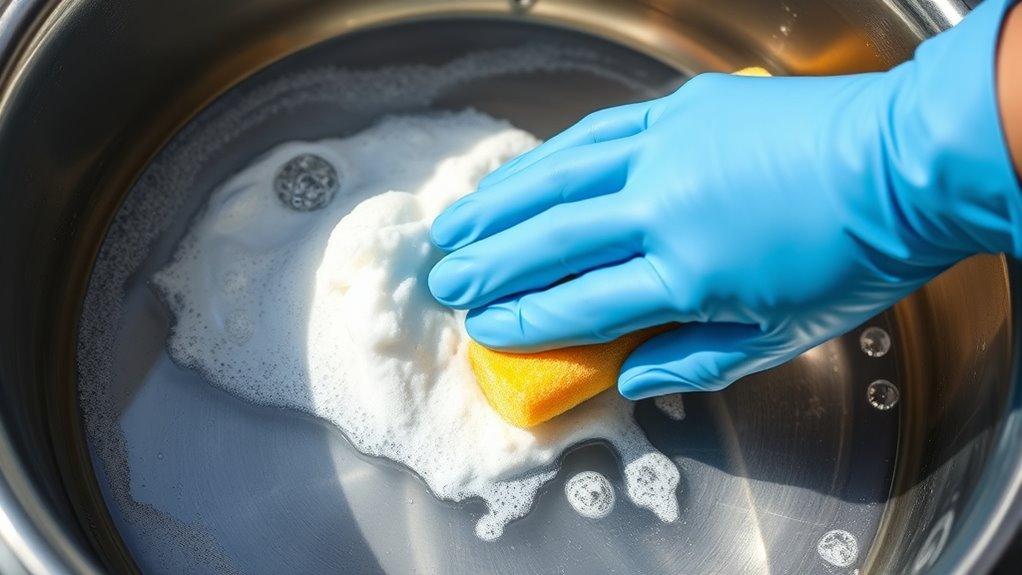
How do you effectively cut through grease on your cookware? Start by filling your sink or a basin with hot water—hot enough to help break down grease but safe to handle. Add a generous squirt of dish soap designed to tackle oily residues.
Submerge your cookware, then use a sponge or soft scrubber to work the soapy water into the greasy areas. The combination of hot water and detergent loosens and dissolves grease, making it easier to wipe away. Rinse thoroughly with warm water to remove all soap and residue.
Repeat if necessary, but avoid harsh scrubbing to protect your cookware’s surface. This simple step restores cleanliness, making your pots and pans ready for the next cooking session.
Soak Cookware to Loosen Tough Residue
When you soak cookware, pick a solution that matches the type of residue and material. Let it sit just long enough—usually 15 to 30 minutes—to loosen grime without damaging the surface.
Always follow safety tips, like avoiding harsh chemicals on non-stick pans, to protect both your cookware and yourself.
Choosing The Right Solution
Why settle for scrubbing endlessly when soaking can do the hard work for you? Choosing the right soaking solution is key to loosening tough residue without damaging your cookware. For stainless steel or glass, a simple mix of warm water and dish soap works well.
If you’re dealing with burnt-on food, add a bit of baking soda to the mix for gentle abrasion. For cast iron or nonstick pans, avoid harsh chemicals; instead, use warm water with mild soap to protect the seasoning or coating. For stubborn stains, a diluted vinegar solution can help break down mineral deposits and grease.
Always tailor your soaking solution to your cookware’s material to guarantee effective cleaning without causing harm.
Optimal Soaking Duration
Wondering how long you should soak your cookware to tackle tough residue effectively? Generally, soaking for 30 minutes to one hour loosens most burnt-on food and stains. If your cookware is heavily stained or has stubborn residue, extend the soak up to several hours or overnight.
Use warm water combined with your chosen cleaning solution for the best results. Avoid soaking for too long without checking, as certain materials, like cast iron or wood, can be damaged by prolonged exposure to water. After soaking, you’ll find it much easier to scrub away residue without excessive effort.
Remember to adjust soaking time based on the cookware’s material and stain severity to get *most suitable* cleaning without risking damage.
Safety Precautions To Follow
Although soaking cookware helps loosen tough residue, you need to take safety precautions to protect both yourself and your pots and pans. First, always use warm, not boiling, water to avoid warping or damaging delicate surfaces. Second, wear gloves to shield your hands from harsh detergents or prolonged exposure to water, which can dry out your skin.
Third, confirm you soak cookware in a well-ventilated area to prevent buildup of any fumes from cleaning agents. Avoid soaking cast iron or wooden cookware as water can cause rust or warping. By following these simple steps, you’ll keep your cookware in great shape and protect yourself from potential hazards during the cleaning process.
Safety comes first, even with easy tasks like soaking cookware.
Clean Cookware Naturally With Baking Soda and Vinegar
When your cookware develops stubborn stains, you can tackle them effectively using baking soda and vinegar. Start by sprinkling a generous layer of baking soda over the stained area. Then, pour enough vinegar to cover the baking soda, allowing the mixture to fizz and break down grime.
Let it sit for 10–15 minutes. Next, scrub gently with a soft sponge or cloth to avoid scratching the surface. For tougher stains, repeat the process or let the mixture soak longer.
Finally, rinse thoroughly with warm water and dry your cookware completely. This natural method is safe, non-toxic, and works well on various materials, restoring your pots and pans without harsh chemicals. Give it a try to keep your cookware clean and shining naturally!
Remove Burnt Food Using Salt and Lemon
If your cookware has burnt food stuck to it, you can remove it effectively using salt and lemon. This natural method is simple and gentle on your pots and pans.
Here’s what you do:
- Sprinkle a generous amount of coarse salt over the burnt areas. The salt acts as a mild abrasive to loosen stuck-on food.
- Cut a lemon in half and use one half to scrub the salt into the burnt spots. The lemon’s acidity helps break down the burnt residue.
- Let the mixture sit for 10-15 minutes, then rinse with warm water and scrub gently with a sponge if needed.
This technique freshens and cleans your cookware without harsh chemicals or scrubbing pads.
Tackle Discoloration With Cream of Tartar
After removing burnt food with salt and lemon, you might notice some discoloration on your cookware that’s harder to clean. To tackle this, grab some cream of tartar. Mix two tablespoons of cream of tartar with a cup of water to create a gentle cleaning solution.
Pour it into your stained cookware and bring it to a boil. Let it simmer for about 10 minutes. The acidic nature of cream of tartar helps break down those stubborn stains without damaging the surface.
After simmering, allow the pot or pan to cool, then discard the solution. This method works well on stainless steel and aluminum cookware, restoring their shine and removing discoloration effectively. You’ll see your cookware looking fresher and more vibrant in no time.
Scrub Gently Using Non-Abrasive Tools
Although tough stains can be tempting to scrub aggressively, you should always use non-abrasive tools to protect your cookware’s surface. Scrubbing too hard or with rough materials can scratch or damage the finish, reducing your cookware’s lifespan.
Instead, opt for gentle cleaning tools that effectively remove stains without harm. Here are three great options to evaluate:
- Soft sponges – They’re perfect for everyday scrubbing and won’t scratch delicate surfaces.
- Nylon scrub brushes – These provide extra scrubbing power but stay gentle on coatings.
- Microfiber cloths – Ideal for wiping away residue and polishing your cookware to a shine.
Using these tools helps you clean efficiently while preserving your cookware’s appearance and performance.
Rinse and Dry Cookware to Prevent Spots
Since leftover soap and minerals can cause unsightly spots, you should rinse your cookware thoroughly with warm water once you’ve finished scrubbing. Make sure to remove all soap residues by running water over every surface. If you notice any stubborn soap film, use your fingers or a soft cloth to wipe it away gently.
After rinsing, dry your cookware immediately with a clean, soft towel to prevent water spots from forming. Leaving your cookware to air dry can lead to mineral deposits, especially if you have hard water. For best results, pat the cookware dry instead of rubbing, which can cause scratches.
Taking these simple steps helps maintain your cookware’s appearance and keeps it ready for your next cooking adventure.
Keep Cookware Shining With Regular Care
You can keep your cookware shining by following simple daily cleaning habits and choosing gentle cleaners that won’t damage the surface. Taking steps to prevent stains before they form will save you time and effort later.
Let’s explore how regular care makes a big difference.
Daily Cleaning Tips
When you clean your cookware right after use, you prevent stains and buildup from setting in. This simple habit keeps your pots and pans looking fresh and extends their lifespan.
To make daily cleaning easier, follow these steps:
- Rinse immediately with warm water to remove food particles before they dry.
- Use a soft sponge or cloth with mild dish soap to gently scrub away grease and residue.
- Dry thoroughly with a clean towel to prevent water spots and rust, especially on metal cookware.
Choosing Gentle Cleaners
How often do you consider the type of cleaner you use on your cookware? Choosing gentle cleaners helps maintain your pots and pans without damaging their surfaces. Harsh chemicals can cause discoloration or wear down coatings, so sticking to mild options is key.
Here’s a quick guide to help you pick safe cleaners:
| Cleaner Type | Suitable For | Benefits |
|---|---|---|
| Dish Soap | All cookware types | Removes grease, gentle |
| Baking Soda | Stainless steel, cast iron | Mild abrasive, deodorizes |
| White Vinegar | Stainless steel | Dissolves stains, natural |
Preventing Future Stains
Although stains can be tough to remove, regular care keeps your cookware looking bright and new. You can prevent future stains by adopting a few simple habits that protect your pots and pans from discoloration and buildup.
- Clean promptly – Wash cookware soon after use to prevent food residue from hardening.
- Use appropriate heat – Avoid overheating, which can cause stubborn stains and damage the surface.
- Choose the right utensils – Use wooden, silicone, or plastic tools to prevent scratches that trap stains.
Frequently Asked Questions
Can I Use These Cleaning Methods on Non-Stick Cookware?
You can use gentle cleaning methods on non-stick cookware, but avoid abrasive scrubbing or harsh chemicals.
Stick to soft sponges and mild detergents to protect the coating and keep your cookware in great shape.
How Often Should I Deep Clean My Cookware?
You should deep clean your cookware about once a month or whenever you notice stubborn stains or buildup. This keeps your pots and pans in great shape, ensuring they last longer and cook more evenly.
Are These Cleaning Tips Safe for Cast Iron Pans?
Think of your cast iron pan as a loyal friend—you wouldn’t use harsh chemicals on it. You shouldn’t use abrasive cleaners; instead, stick to gentle scrubbing and seasoning to keep it safe and well-maintained.
Can I Put Cleaned Cookware Directly Into the Dishwasher?
You shouldn’t put all cleaned cookware directly into the dishwasher. Some materials, like cast iron or nonstick pans, can get damaged. Always check the manufacturer’s instructions to avoid ruining your cookware’s surface or finish.
What Should I Do if Cookware Still Smells After Cleaning?
If your cookware still smells after cleaning, don’t worry—you can soak it in a mixture of baking soda and vinegar overnight.
You’ll be surprised how this combo neutralizes odors and leaves your cookware fresh and ready.
Conclusion
Now that you know these simple steps, cleaning stained cookware will feel like a breeze instead of a chore. With just everyday items and a bit of elbow grease, your pots and pans can shine brighter than a supernova in no time.
Keep up with regular care, and you’ll never dread scrubbing again. Trust me, your kitchen will thank you, and your cookware will last longer than you ever imagined!
By following these easy steps, you can ensure your cookware stays clean, stain-free, and in great condition. Proper cleaning of stained cookware not only improves its appearance but also extends its lifespan. Start today and enjoy sparkling, well-maintained pots and pans every time!