How to Pan Fry Eggplant
To pan fry eggplant to perfection, start by selecting firm, glossy eggplant slices about half an inch thick. Proper preparation is key to achieving a crispy exterior and tender interior. Salting the slices briefly helps reduce bitterness, making your dish more flavorful.
After salting, pat the slices dry to remove excess moisture. Heat a heavy pan with a high smoke point oil like avocado or grapeseed oil. This ensures even frying without burning the oil.
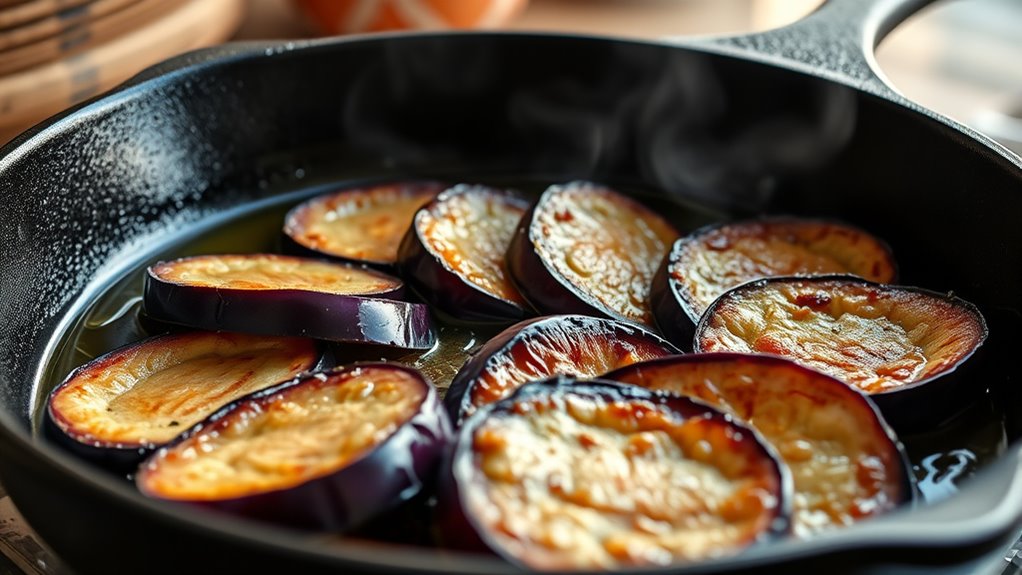
Fry the eggplant slices for 3–4 minutes on each side until they turn golden and crispy. Avoid overcrowding the pan to allow proper cooking.
Once done, drain the slices on paper towels and season while still warm.
Following these steps will help you maintain the perfect texture. You can also explore various flavor ideas to enhance your pan-fried eggplant experience.
Key Takeaways
- Select small to medium eggplants with smooth, glossy skin and vibrant purple color for best flavor and texture.
- Slice eggplant evenly, salt for 20 minutes to remove bitterness, then pat dry before frying.
- Use a heavy-bottomed pan with high smoke point oil like avocado or grapeseed for even cooking.
- Fry slices 3–4 minutes per side over medium heat, avoiding overcrowding to prevent sogginess.
- Drain on paper towels immediately after frying, season while hot, and rest briefly before serving.
Picking the Best Eggplant for Pan Frying
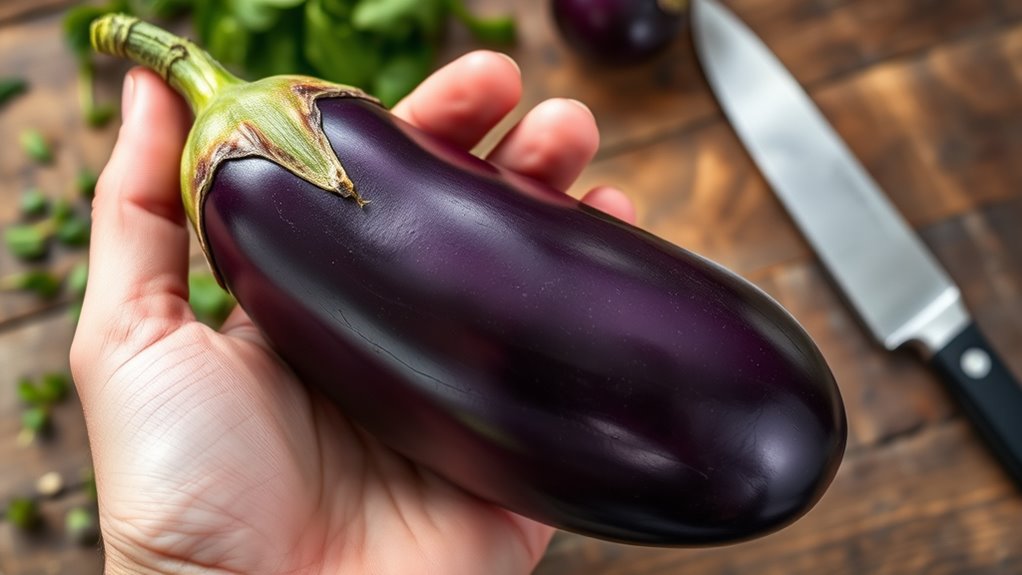
When you pick an eggplant for pan frying, choose one that feels heavy for its size and has smooth, glossy skin without blemishes. This indicates freshness and firmness, which are key for even cooking. Avoid eggplants with wrinkled skin or soft spots, as they tend to be overripe and mushy.
Smaller to medium-sized eggplants usually have fewer seeds and a sweeter flavor, making them ideal for pan frying. Look for a vibrant purple color, which suggests ripeness. Also, check the stem; it should be green and fresh-looking, not brown or dried out.
Picking the right eggplant ensures your pan-fried dish will have the perfect texture and taste, setting a solid foundation before you even start cooking.
How to Prep Eggplant for Creamy Texture
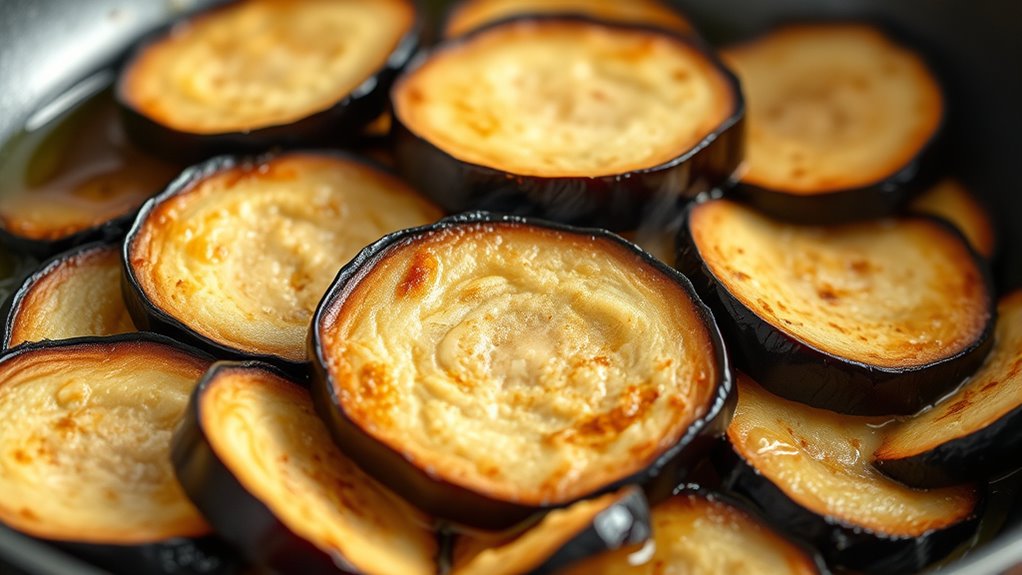
How do you achieve that perfect creamy texture when pan frying eggplant? It starts with the right prep. You want to soften the eggplant so it melts in your mouth without turning mushy.
Here’s how to prep it:
- Slice the eggplant evenly, about ½-inch thick, for uniform cooking
- Lightly salt the slices and let them sit for 20 minutes to draw out bitterness and excess moisture
- Pat the slices dry with a paper towel to prevent sogginess
- Soak the slices briefly in milk or a plant-based alternative to add moisture and creaminess
- Gently press the slices to remove excess liquid without crushing the flesh
This prep routine ensures your eggplant cooks up tender and lush, creating that irresistible creamy texture every time.
Best Oils and Pans for Crispy Eggplant
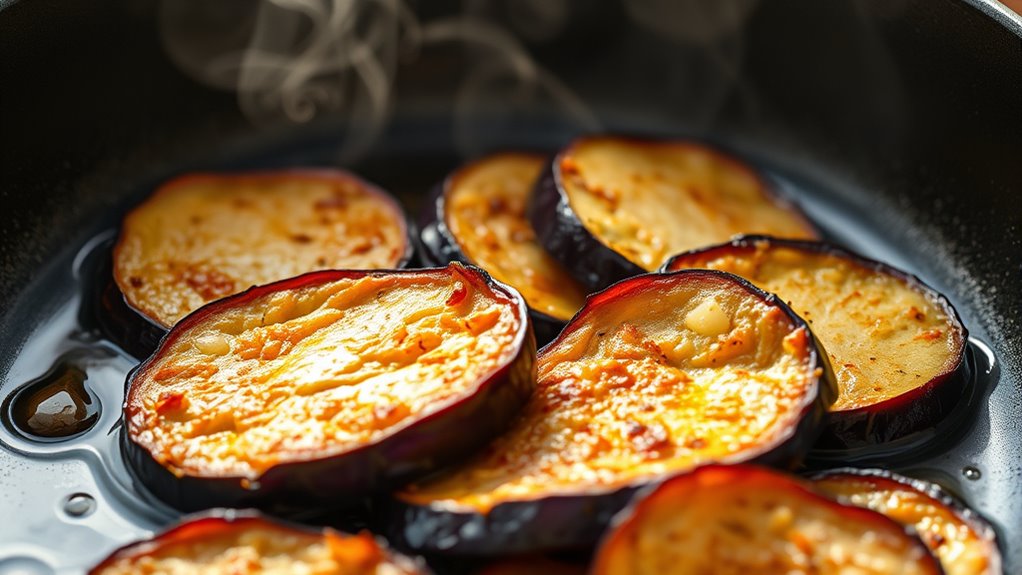
Achieving that creamy texture starts with proper prep, but getting a crispy exterior depends largely on the oil and pan you choose. Use oils with high smoke points like avocado, grapeseed, or refined olive oil to avoid burning and maintain flavor. These oils let you cook at higher temperatures, ensuring a golden, crispy crust without sogginess.
When it comes to pans, a heavy-bottomed skillet—preferably cast iron or stainless steel—works best. They distribute heat evenly and retain it, giving you consistent browning. Nonstick pans can work but may not develop as much crispiness.
Avoid overcrowding the pan; this causes steaming instead of frying. With the right oil and pan, you’ll get perfectly crisp, deliciously cooked eggplant every time.
Step-by-Step Pan Frying Eggplant
Now that you’ve chosen the right oil and pan, it’s time to prepare your eggplant slices properly for frying. You’ll learn essential cooking techniques and tips to get that perfect golden crust without sogginess.
Follow these steps closely to master pan frying eggplant every time.
Preparing Eggplant Slices
Before you start pan frying, make sure you slice the eggplant evenly to guarantee each piece cooks at the same rate. Begin by washing the eggplant and drying it thoroughly. Use a sharp knife to cut off the stem and base.
Then, slice the eggplant into even rounds, about ¼-inch thick. If you prefer, you can also cut the rounds into strips or cubes. To prepare for frying, pat the slices dry with a paper towel to remove excess moisture.
Visualize your prep with these steps:
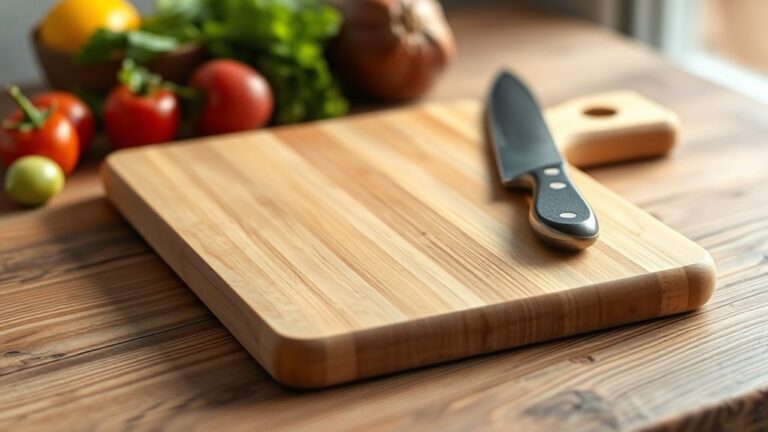
- Smooth, firm eggplant resting on your cutting board
- Sharp knife gliding through to create uniform slices
- Neatly stacked, even rounds ready for seasoning
- Paper towels gently absorbing moisture
- A clean surface waiting for your next move
This careful prep ensures perfect, evenly cooked eggplant slices.
Cooking Techniques and Tips
Once your eggplant slices are prepped and dried, you’re ready to pan fry them to golden perfection. Heat a generous amount of oil in a skillet over medium heat. Place the slices carefully to avoid overcrowding, which can cause sogginess.
Cook each side for 3-4 minutes until crisp and brown. Use a spatula to flip gently, preserving the shape. Drain excess oil on paper towels.
Season immediately for the best flavor absorption.
Tips for a Golden, Crispy Exterior
Although eggplant naturally absorbs oil, you can achieve a golden, crispy exterior by properly preparing and cooking it. Start by slicing the eggplant evenly to guarantee uniform cooking. Salt the slices and let them sit for 20-30 minutes to draw out moisture.
Pat them dry with paper towels to prevent sogginess. Use a non-stick or well-seasoned pan and heat the oil until shimmering before adding the eggplant. Cook in batches without overcrowding the pan, allowing each slice to brown beautifully.
- Evenly sliced, about ½-inch thick
- Salted and rested to remove bitterness
- Thoroughly patted dry before frying
- Hot oil shimmering before cooking
- Sliced eggplant spaced out in the pan
These steps help you get that perfect golden, crispy finish every time.
Mistakes to Avoid When Frying Eggplant
If you want perfectly fried eggplant, you need to steer clear of common pitfalls that can ruin texture and flavor. First, don’t overcrowd the pan; too many slices lower the oil’s temperature, causing soggy, greasy eggplant instead of crispy pieces. Avoid skipping the salting step, which removes excess moisture and bitterness—without it, your eggplant may turn mushy.
Also, don’t use too little oil; a shallow pool helps achieve even browning. Resist the urge to flip too often; let each side develop a golden crust before turning. Ultimately, avoid cutting the slices too thick or too thin; aim for about a half-inch thickness to cook evenly.
Draining and Resting Pan Fried Eggplant
After frying your eggplant to a perfect golden brown, you’ll want to remove excess oil to keep it from becoming greasy. Start by placing the slices on a plate lined with paper towels. The towels will soak up the oil, leaving your eggplant crisp and light.
After frying, place eggplant on paper towels to absorb excess oil and keep it crisp and light.
Let the slices rest for about 5 minutes; this helps them firm up and improves texture.
Here’s a quick checklist to help you drain and rest your eggplant properly:
- Use multiple layers of paper towels
- Arrange slices in a single layer, not stacked
- Gently blot the tops with additional towels
- Let them sit at room temperature, uncovered
- Avoid pressing down to keep the coating intact
This simple step guarantees your pan-fried eggplant stays deliciously crisp.
Flavor Twists and Toppings for Fried Eggplant
When you want to elevate your pan-fried eggplant, adding bold flavors and creative toppings can make all the difference. Try sprinkling smoked paprika or cumin for a warm, earthy kick. A drizzle of balsamic glaze or lemon juice brightens the rich, tender slices.
Fresh herbs like basil, mint, or parsley add vibrant freshness. For texture, toss on toasted pine nuts or sesame seeds. You can also layer on crumbled feta or grated Parmesan to introduce a salty, tangy contrast.
If you enjoy a bit of heat, a pinch of red pepper flakes or a swipe of harissa will do the trick. These simple additions transform your eggplant into a dynamic dish bursting with complex flavors and textures.
Ways to Use Pan Fried Eggplant
Although pan-fried eggplant shines on its own, you can easily incorporate it into a variety of dishes to boost flavor and texture. Try layering it in lasagna for a rich, meaty bite without meat. Toss it into salads to add a smoky, tender contrast to fresh greens.
Use it as a base for bruschetta topped with tomatoes and basil for a tasty appetizer. Stir it into pasta sauces for an extra depth of flavor and heartiness. Or wrap it in pita bread with yogurt sauce and veggies for a satisfying sandwich.
Here are some ideas:
- Eggplant parmesan stacks
- Mediterranean grain bowls
- Spicy eggplant stir-fries
- Vegetarian tacos
- Savory breakfast hash
These options make pan-fried eggplant a versatile kitchen staple.
Storing Leftover Pan Fried Eggplant
After pan frying your eggplant, make sure you let it cool properly before storing. Use airtight containers to keep it fresh and prevent moisture buildup.
Knowing how long it stays good will help you enjoy your leftovers safely.
Proper Cooling Techniques
Since pan fried eggplant can quickly lose its texture and flavor if not cooled properly, you’ll want to handle leftovers with care. Start by letting the eggplant cool at room temperature for about 15 to 20 minutes. Avoid stacking pieces while still warm to prevent sogginess.
Once cooled, transfer them promptly to a clean surface before storing. Keep these tips in mind for proper cooling:
- Spread eggplant slices on a wire rack to allow air circulation
- Use parchment paper to absorb excess oil
- Keep the cooling area dry and well-ventilated
- Avoid covering with lids or plastic wrap too soon
- Cool in a single layer to maintain crispness
Following these steps helps preserve the flavor and texture, so your leftover eggplant stays delicious.
Ideal Storage Containers
When you’re ready to store leftover pan fried eggplant, choosing the right container plays a crucial role in maintaining its texture and flavor. Opt for an airtight container to keep moisture and air out, preventing the eggplant from becoming soggy or stale. Glass containers with tight-fitting lids work best because they don’t absorb odors and are easy to clean.
If you don’t have glass, BPA-free plastic containers are a good alternative. Avoid using flimsy plastic bags or loosely covered dishes, as they can cause the eggplant to lose its crispness. Before sealing, let the eggplant cool completely to avoid condensation inside the container, which can make it mushy.
Proper storage containers help your eggplant stay fresh and ready to enjoy later.
Shelf Life Expectations
Although pan fried eggplant tastes best fresh, you can store leftovers safely for a limited time. To keep your eggplant flavorful and safe to eat, refrigerate it promptly in airtight containers. Generally, leftover pan fried eggplant lasts about 3 to 4 days in the fridge.
If you want to extend its life, you can freeze it, but expect some texture changes upon thawing.
Keep these tips in mind to maintain quality:
- Cool eggplant before storing
- Use airtight containers or wrap tightly
- Label with the date stored
- Refrigerate within two hours of cooking
- Reheat thoroughly before eating
Following these guidelines helps you enjoy your pan fried eggplant without waste or risk.
Reheating Tips to Keep Eggplant Crispy
To keep your pan-fried eggplant crispy during reheating, you’ll want to avoid the microwave, which tends to make it soggy. Instead, use a skillet or oven to revive that perfect texture.
Here’s a quick guide to help you reheat eggplant without losing its crispiness:
| Method | Tips |
|---|---|
| Skillet | Heat on medium, add a little oil |
| Oven | Bake at 375°F for 10-15 minutes |
| Air Fryer | Use 350°F for 5-7 minutes |
| Toaster Oven | Crisp at 375°F for 8-10 minutes |
These methods help evaporate moisture and restore crunch. Avoid covering the eggplant as it reheats to prevent steam buildup.
You’ll enjoy your eggplant just like it was freshly cooked!
Frequently Asked Questions
Can I Freeze Pan Fried Eggplant for Later Use?
Yes, you can freeze pan-fried eggplant for later. Just cool it completely, place it in an airtight container or freezer bag, and freeze.
When ready, thaw and reheat gently to keep its texture and flavor intact.
Is Pan Fried Eggplant Healthy Compared to Other Cooking Methods?
Pan fried eggplant can be healthy if you use minimal oil and avoid heavy breading. It retains nutrients better than deep frying but less than steaming or roasting. You can make it healthier by controlling oil type and quantity.
How Long Does Pan Fried Eggplant Stay Fresh at Room Temperature?
You might wonder how long that golden, crispy eggplant lasts out on your counter. Don’t wait more than two hours at room temperature, or it could spoil, losing its flavor and safety.
Can I Use an Air Fryer Instead of Pan Frying Eggplant?
Yes, you can use an air fryer to cook eggplant. It’s quicker, uses less oil, and still gives you a crispy texture.
Just slice, season, and air fry at 375°F for about 15 minutes, flipping halfway.
What Side Dishes Pair Best With Pan Fried Eggplant?
You’ll love pairing pan-fried eggplant with garlic mashed potatoes, a fresh tomato salad, or steamed green beans. These sides balance eggplant’s richness and add vibrant flavors, making your meal both satisfying and deliciously well-rounded.
Conclusion
Now that you’ve mastered the art of pan frying eggplant, you’re ready to turn a simple veggie into a golden masterpiece. With the right prep, oil, and a little patience, you’ll have crispy, creamy bites that hit the nail on the head every time.
Whether you enjoy it plain or jazz it up with your favorite toppings, pan fried eggplant is a versatile dish that’s sure to steal the show at your table. Perfectly cooked eggplant can be the star of any meal, offering rich flavor and satisfying texture.
By following these pan frying eggplant tips, you’ll consistently create delicious, crispy eggplant dishes that everyone will love. Embrace the process and enjoy the wonderful taste of perfectly pan fried eggplant every time.