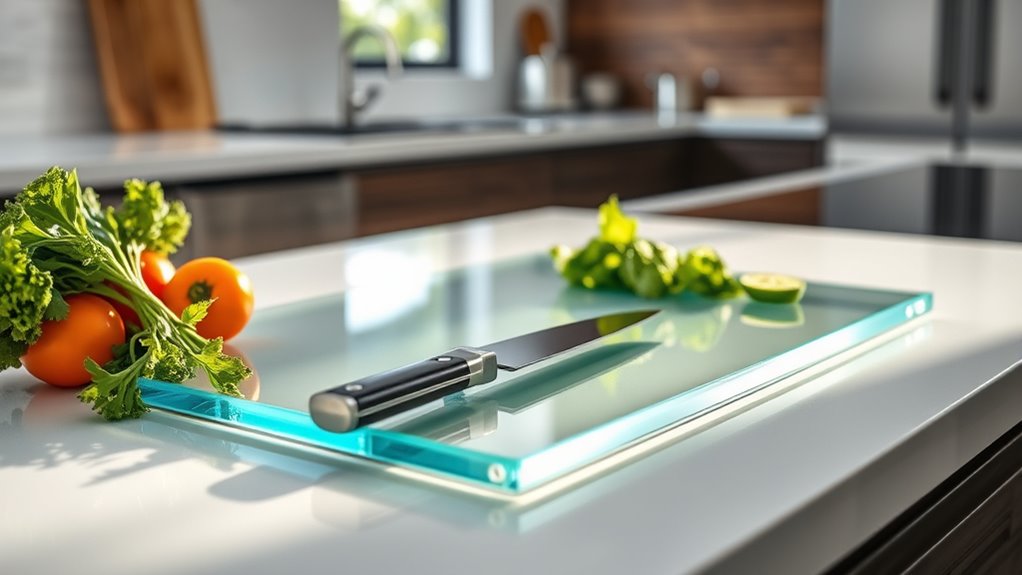
Are Glass Cutting Boards Good: 7 Key Pros and Cons
Glass cutting boards offer a sleek, modern look and are easy to clean, making them a popular choice for many kitchens. They resist stains and bacteria well, ensuring a hygienic surface for food preparation. This makes them great for light prep and serving tasks.
However, glass cutting boards can be slippery and are prone to chipping if dropped, which may pose safety concerns. Additionally, their hard surface dulls knives faster than other materials, so heavy chopping isn’t ideal.
If you’re after style and hygiene but want to protect your knives, it’s worth considering these trade-offs before choosing glass for every task.
Balancing aesthetics with functionality will help you decide if a glass cutting board suits your kitchen needs.
Key Takeaways
- Glass cutting boards offer a sleek, modern look and are easy to clean, enhancing kitchen aesthetics and hygiene. They resist stains, odors, and bacteria due to their non-porous surface, ensuring long-lasting cleanliness.
- Glass boards dull knives faster and risk chipping edges because of their hard, unforgiving surface. They are prone to cracking or chipping under heavy chopping or impact, requiring careful handling.
- Best suited for light prep and serving; avoid for forceful chopping or tasks needing knife preservation.
Why Choose Glass Cutting Boards?
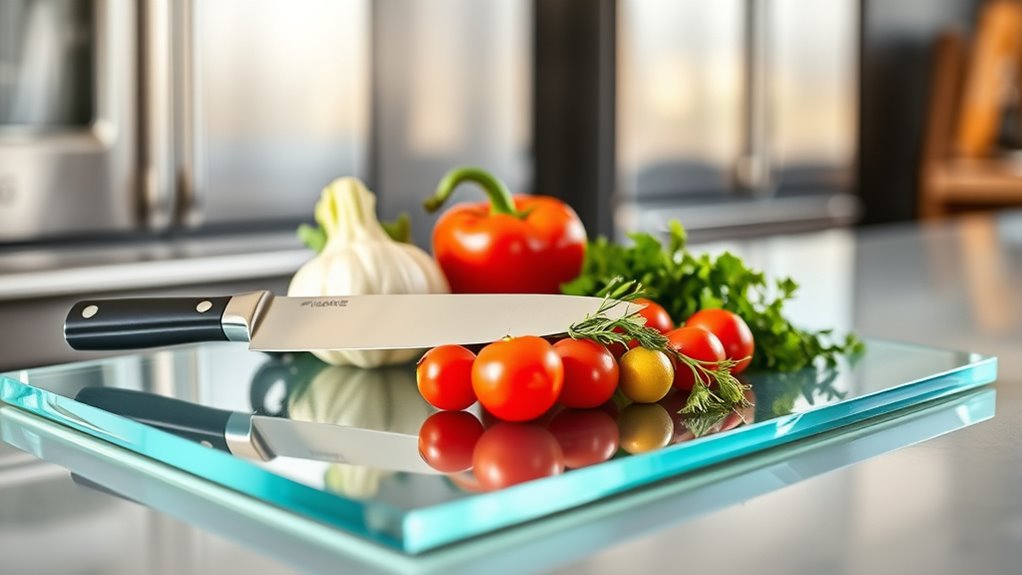
Although many cooks prefer traditional materials, you might find glass cutting boards appealing for their sleek design and easy maintenance. You’ll appreciate how effortlessly they clean—just a quick scrub or toss in the dishwasher, and they’re ready to go. Their non-porous surface means they don’t absorb odors or stains, so your board stays fresh and hygienic over time.
Plus, their smooth, shiny appearance adds a modern touch to your kitchen, making them a stylish choice. You can easily use them for serving as well, doubling their function. If you value a cutting board that combines practicality with a clean aesthetic, glass boards are worth considering for your culinary space.
How Durable Are Glass Cutting Boards Compared to Others?
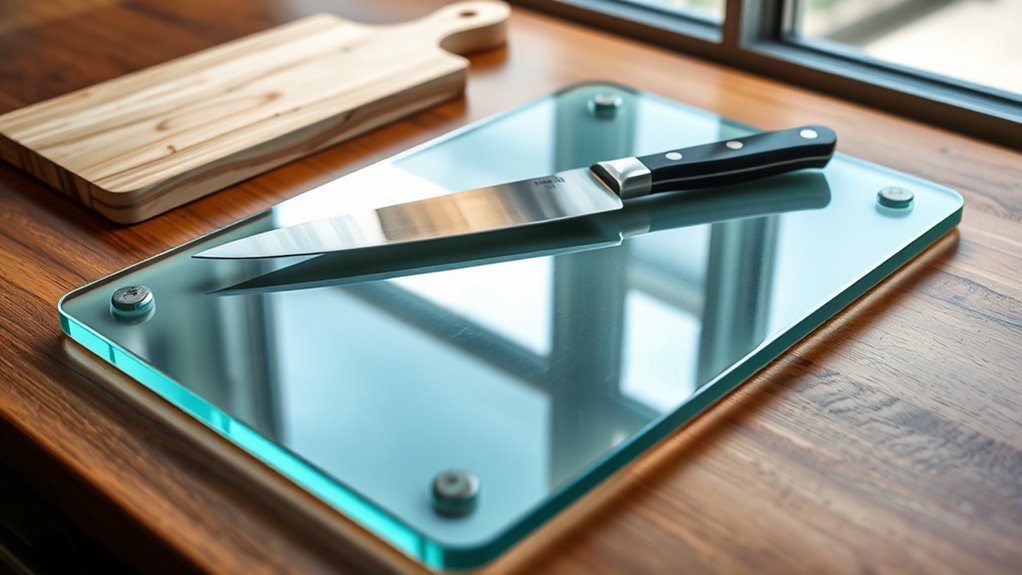
You’ll find that glass cutting boards are strong but can chip more easily than wood or plastic. Their hardness helps them resist scratches, yet repeated use might affect their longevity.
Let’s compare how these materials hold up over time.
Material Strength Comparison
When comparing durability, glass cutting boards stand out for their resistance to scratches and stains, but they don’t absorb impacts as well as wood or plastic boards. You’ll find that wood cutting boards offer a bit of give, which helps protect your knives and handle impacts without cracking. Plastic boards, while softer than glass, can dent and scratch easily but don’t shatter under pressure.
Glass, on the other hand, is very rigid and can handle daily wear without showing marks, yet it’s more brittle overall. This means if you drop a glass board or hit it hard, it’s more likely to break compared to wood or plastic. So, while glass excels at staying pristine, it’s less forgiving under physical stress.
Resistance to Chipping
Since glass cutting boards are rigid and brittle, they tend to chip more easily than wood or plastic boards. If you’re handling a glass board, you need to be cautious, especially around the edges and corners where chips are more likely to occur. Unlike wood or plastic, which can absorb some impact, glass doesn’t flex and can crack or chip from drops or heavy knife strikes.
While tempered glass boards offer improved resistance, they’re still prone to chipping under rough use. So, if durability against chipping is a priority, you might find wood or plastic boards more forgiving. Just keep in mind that glass boards require gentler handling to maintain their appearance and functionality over time.
Longevity Under Use
Although glass cutting boards resist deep knife grooves better than wood or plastic, their overall durability depends on how you use them. Glass boards can last a long time if you handle them carefully, but they’re more prone to cracking or breaking if dropped or subjected to heavy impact. Unlike wood, which can be sanded down to remove scratches, glass is unforgiving once damaged.
To maximize longevity, avoid excessive force and sudden temperature changes. Consider these points for durability:
- Handle glass boards gently to prevent chips or cracks
- Avoid cutting with extremely sharp or serrated knives that may cause stress points
- Refrain from placing hot pots or pans on the glass surface to prevent thermal shock
With proper care, your glass cutting board can stay in good shape for years.
How Easy Is It to Clean Glass Cutting Boards?
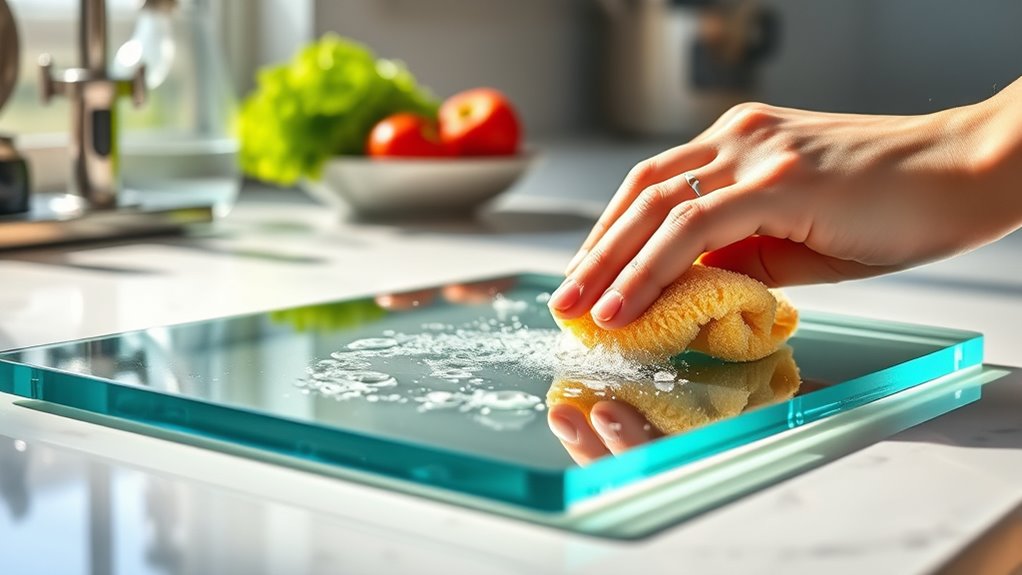
If you want a cutting board that’s simple to clean, glass boards are hard to beat. Their non-porous surface means food particles and bacteria don’t seep in, making cleanup quick and hygienic. You can easily wash them with soap and water or toss them in the dishwasher without worry.
However, their smooth surface can be slippery when wet, so be careful while cleaning.
| Cleaning Method | Ease of Use | Hygiene Level |
|---|---|---|
| Hand Washing | Very Easy | High |
| Dishwasher Safe | Convenient | Very High |
| Surface Material | Non-porous | Resists Bacteria |
How Do Glass Cutting Boards Affect Your Knives’ Sharpness?
When you use a glass cutting board, you’ll quickly notice it’s much harder on your knives compared to wood or plastic boards. Glass is a very hard, non-porous surface, which means your blade edges dull faster. The firmness doesn’t allow the knife to slightly sink or slide, causing more friction and faster wear on the sharp edge.
Glass cutting boards dull knives faster due to their hard, non-porous surface and increased friction.
If you want to keep your knives sharp longer, glass boards aren’t ideal.
Here’s how glass cutting boards affect your knives’ sharpness:
- Increased blade dulling due to hard, unforgiving surface
- Greater risk of chipping or nicking the blade edge
- More frequent sharpening needed to maintain cutting efficiency
How Hygienic Are Glass Cutting Boards for Food Prep?
You’ll appreciate that glass cutting boards have a non-porous surface, which helps prevent bacteria from hiding in tiny grooves. Compared to wood or plastic, they tend to resist germs better, but how you clean them still matters a lot.
Let’s look at how their maintenance affects hygiene during food prep.
Non-Porous Surface Benefits
Because glass cutting boards have a non-porous surface, they resist bacteria and odors better than many other materials. This means you won’t have to worry about lingering smells or harmful microbes hiding in tiny crevices. You can clean them easily with soap and water, and they won’t absorb juices or stains from your food.
This makes glass cutting boards a hygienic choice for food prep.
Here are some key benefits of their non-porous surface:
- Prevents bacteria buildup since there are no microscopic holes for germs to hide.
- Resists odors, so your board stays fresh even after cutting strong-smelling foods.
- Easier to sanitize thoroughly, reducing the risk of cross-contamination.
These advantages help keep your kitchen cleaner and safer.
Bacteria Resistance Comparison
Although glass cutting boards resist bacteria better than many materials, their overall hygiene depends on how you use and maintain them. Glass is non-porous, so it doesn’t absorb juices where bacteria can hide, making it less likely to harbor harmful germs compared to wood or plastic. However, surface scratches on glass can eventually trap bacteria, so you need to be mindful of that.
| Material | Bacteria Resistance | Notes |
|---|---|---|
| Glass | High | Non-porous, resists bacteria well |
| Plastic | Moderate | Can develop grooves trapping bacteria |
| Wood | Moderate | Porous surface, but some natural antibacterial properties |
Cleaning and Maintenance
When you clean glass cutting boards properly, they stay highly hygienic for food prep. Their non-porous surface prevents food particles and bacteria from seeping in, making cleaning straightforward. You can simply wash them with hot, soapy water or toss them in the dishwasher without worrying about damage.
However, you need to watch out for cracks or chips, as these can harbor bacteria.
To maintain hygiene, focus on:
- Washing immediately after use to avoid residue buildup
- Avoiding abrasive scrubbers that could scratch the surface
- Regularly inspecting for chips or cracks to replace when necessary
What Are the Design and Aesthetic Benefits of Glass Cutting Boards?
If you want a cutting board that doubles as a stylish kitchen accessory, glass options deliver on design and aesthetic benefits. Glass cutting boards come in sleek, modern styles that add a polished look to your countertop. Their smooth, transparent surface can showcase colorful designs or patterns underneath, letting you personalize your kitchen effortlessly.
You’ll appreciate how they reflect light, brightening up your prep space. Glass boards also maintain their appearance over time without staining or dulling, so they stay visually appealing longer than some other materials. Plus, their clean lines and minimalistic vibe fit well with various kitchen decors, from contemporary to classic.
Choosing a glass cutting board means you’re not just getting functionality—you’re enhancing your kitchen’s overall style.
When Not to Use Glass Cutting Boards
Glass cutting boards bring a sleek, modern look to your kitchen, but they’re not the best choice for every task. You should avoid using them when you need a gentler surface, as their hardness can dull knives quickly. They’re also not ideal for heavy chopping or pounding because the glass can chip or crack under pressure.
Additionally, glass boards can be slippery, making it risky to handle delicate or small items securely.
Consider skipping glass cutting boards in these situations:
- When prepping ingredients that require frequent, forceful chopping
- If you want to preserve your knives’ sharpness
- When working with slippery or small foods that need stable cutting surfaces
Choosing the right board helps you work safer and keeps your tools in top shape.
Frequently Asked Questions
Can Glass Cutting Boards Be Used for Hot Pots and Pans?
You shouldn’t use glass cutting boards for hot pots and pans because they can crack or shatter from sudden heat changes.
Instead, use heat-resistant trivets or silicone mats to protect both your surfaces and cookware safely.
Are Glass Cutting Boards Safe for Children to Use?
Sure, you can hand a glass cutting board to a kid—if you want their fingers auditioning for a bandaged look. They’re slick, hard, and unforgiving, so maybe stick to safer, softer surfaces for little chefs.
Do Glass Cutting Boards Cause Noise When Chopping?
Yes, glass cutting boards cause noise when chopping because your knife hits the hard surface. You’ll hear loud, sharp sounds, which can be annoying.
If noise bothers you, consider using wood or plastic boards instead.
Can Glass Cutting Boards Be Customized With Personal Designs?
Yes, you can customize glass cutting boards with personal designs, photos, or logos. Many companies offer printing options, letting you add a unique touch to your board, making it both functional and visually appealing in your kitchen.
How Heavy Are Glass Cutting Boards Compared to Plastic Ones?
Glass cutting boards are generally heavier than plastic ones, so you’ll notice the weight difference when handling them. They feel sturdier but less portable, which can be a downside if you move your board around often.
Conclusion
You might love the sleek, hygienic look of glass cutting boards, but don’t expect them to be gentle on your knives. They’re super easy to clean and durable, yet their hard surface can dull blades faster than wood or plastic.
If style and sanitation top your list, glass is a winner. But if you value preserving your knives, you might want to think twice. It’s all about balancing sharpness with shine!
In conclusion, glass cutting boards are great for those prioritizing cleanliness and modern design, but they may not be the best choice if you want to keep your knives sharp for longer. Choosing the right cutting board depends on your needs and whether you prefer durability and hygiene over blade preservation.