
What Is a Griddle Cake
A griddle cake is a thick, fluffy cake cooked on a hot griddle or skillet, made from a batter of flour, eggs, milk, and leavening. This popular breakfast item develops a golden, crispy exterior while remaining soft and tender inside.
Griddle cakes are often compared to pancakes but are thicker and heartier.
Unlike thinner pancakes, griddle cakes take a bit longer to cook, making them perfect for filling breakfasts or satisfying snacks.
They offer versatility with both savory and sweet variations, allowing for creative flavor combinations.
Many regions have their own unique twists on griddle cakes, adding to their appeal and variety.
Whether you enjoy them with syrup, fruit, or savory toppings, griddle cakes are a delicious and comforting choice for any meal.
Key Takeaways
- Griddle cakes are flat, thick cakes cooked on a hot griddle or skillet using a batter of flour, eggs, milk, and leavening agents.
- They develop a golden-brown crust with a soft, fluffy interior and can be customized with fruits, nuts, or spices.
- Unlike thinner pancakes, griddle cakes are denser and cook slower for a crispier outside and tender inside.
- Griddle cakes are versatile, suitable for any meal, and can include sweet or savory toppings and fillings.
- They are prepared by mixing dry and wet ingredients gently, cooking on medium heat, and flipping when bubbles form.
What Exactly Are Griddle Cakes?

What exactly are griddle cakes? You’ll find that griddle cakes are simple, flat cakes cooked on a hot griddle or skillet. They’re made from a batter typically combining flour, eggs, milk, and a leavening agent like baking powder.
When you pour the batter onto the heated surface, it cooks quickly, forming a golden-brown exterior with a soft, fluffy inside. You can customize them by adding ingredients such as berries, nuts, or spices to the batter. Griddle cakes aren’t just breakfast food; you can enjoy them any time of day.
They offer a quick, satisfying option that’s easy to prepare and versatile enough to suit many tastes and meals. You’ll appreciate their straightforward, comforting appeal.
How Griddle Cakes Differ From Regular Pancakes

Although griddle cakes and regular pancakes might seem similar, they have distinct differences in texture, thickness, and preparation. When you make griddle cakes, you’ll notice they’re usually thicker and denser than your typical pancakes. This happens because griddle cakes often use a slightly different batter, sometimes with less liquid or added ingredients like cornmeal, giving them a heartier texture.
You’ll also find that griddle cakes cook slower and more evenly on a well-heated griddle, resulting in a crispier outside while staying soft inside. Regular pancakes, on the other hand, tend to be thinner and fluffier, cooking quickly on a frying pan. Understanding these differences helps you appreciate why griddle cakes offer a distinct eating experience compared to your everyday pancake stack.
When Should You Choose Griddle Cakes for Breakfast?
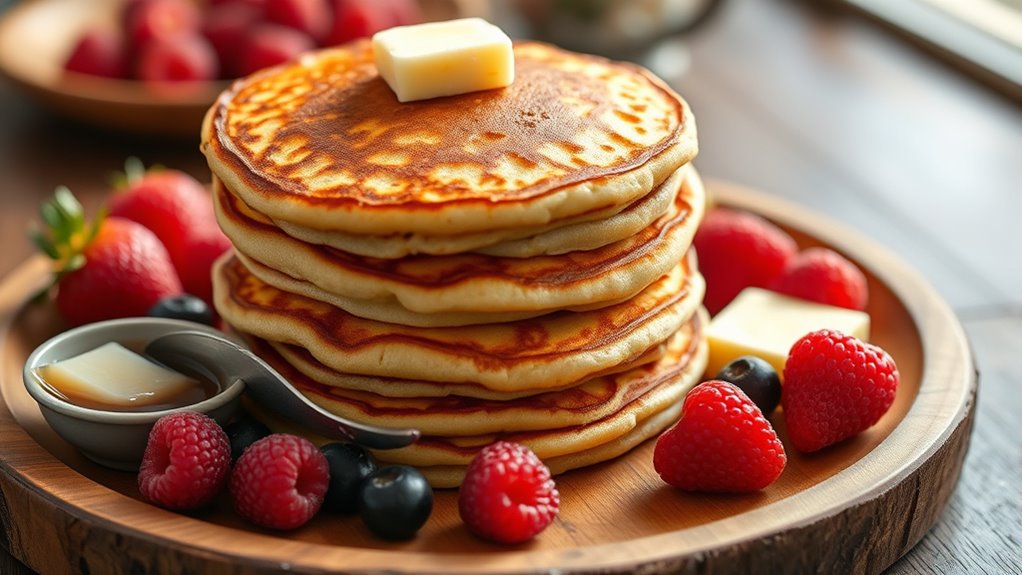
When you want a breakfast that feels hearty and satisfying, griddle cakes are an excellent choice. You’ll find them perfect for mornings when you crave something warm, filling, and a bit more substantial than your usual pancakes. Choose griddle cakes when you’re feeding a crowd or need a quick, straightforward dish that still feels special.
They’re ideal if you want a versatile base that pairs well with sweet toppings like syrup or fruit, or savory options like bacon and eggs. Griddle cakes also work well on weekends or holidays when you have extra time to enjoy a comforting meal.
How Cooking on a Griddle Changes Texture and Flavor
When you cook on a griddle, the even heat distribution helps create a consistent texture throughout your griddle cake.
You’ll notice how the Maillard reaction adds a rich, golden-brown crust that enhances flavor.
This combination makes griddle cakes distinctively tasty and satisfying.
Heat Distribution Effects
Because a griddle provides even heat across its surface, it transforms how your griddle cakes cook, resulting in a distinct texture and enhanced flavor. Here’s how the heat distribution makes a difference:
- Consistent Cooking: Your griddle cakes cook evenly without hot spots, preventing burnt edges or undercooked centers.
- Better Rise: Even heat encourages uniform batter expansion, giving your cakes a fluffy, tender crumb.
- Improved Browning: The steady warmth ensures a golden, appealing crust develops all over, adding to the flavor.
- Controlled Temperature: You can easily maintain the ideal cooking heat, avoiding sudden temperature spikes that might ruin texture.
Maillard Reaction Impact
Even heat on a griddle doesn’t just affect how your cakes cook—it also triggers the Maillard reaction, which plays a big role in shaping their texture and flavor. When you cook griddle cakes, the proteins and sugars on the surface react under high heat, creating that golden-brown crust you love.
This reaction adds complexity, giving your cakes a slightly nutty, toasted flavor you won’t get from baking alone. Plus, the Maillard reaction changes the texture, making the outside crisp while keeping the inside tender and fluffy.
Common Ingredients Used in Classic Griddle Cakes
To make classic griddle cakes, you’ll start with essential dry ingredients like flour, baking powder, and a pinch of salt. Then, you’ll add typical wet ingredients such as milk, eggs, and melted butter to create the perfect batter.
Understanding these basics helps you master the texture and flavor griddle cakes are known for.
Essential Dry Ingredients
What ingredients do you need to create the perfect griddle cake? The secret lies in the essential dry ingredients that form the base of your batter. Here’s what you’ll want to gather:
- All-purpose flour – It provides structure and a tender crumb.
- Baking powder – This gives your griddle cakes that light, fluffy texture by helping them rise.
- Sugar – A touch of sweetness enhances flavor and aids browning on the griddle.
- Salt – Just a pinch balances the flavors and brings out the sweetness.
These dry ingredients combine to create the foundation of your griddle cake. Make sure to measure them accurately and sift them together to avoid lumps and ensure even distribution.
This way, your griddle cakes will come out perfectly every time.
Typical Wet Ingredients
How do you bring those dry ingredients to life and create the perfect griddle cake batter? You start with typical wet ingredients that add moisture and help bind everything together. Usually, you’ll mix in milk or buttermilk, which provides the right consistency and a slight tang.
Eggs are essential—they give structure and help the batter rise. Melted butter or oil adds richness and keeps your cakes tender. Sometimes, a touch of vanilla extract enhances flavor without overpowering the classic taste.
You’ll want to combine these wet ingredients gently with the dry mix to avoid overworking the batter, ensuring your griddle cakes stay light and fluffy. With these simple wet ingredients, you’re well on your way to making delicious, classic griddle cakes every time.
How to Make Perfect Griddle Cakes at Home
Although griddle cakes seem simple, mastering their perfect texture and flavor requires attention to a few key details. To make perfect griddle cakes at home, follow these steps:
- Preheat your griddle to medium heat to guarantee even cooking without burning.
- Use a non-stick surface or lightly grease the griddle for easy flipping.
- Pour batter in small, consistent amounts to control size and thickness.
- Flip the cakes when bubbles appear on the surface and the edges look set.
Popular Griddle Cake Toppings and Fillings
You can dress up your griddle cakes with a variety of sweet toppings like fresh fruit, syrup, or whipped cream. If you prefer something savory, try fillings like cheese, herbs, or cooked vegetables.
Exploring these options lets you customize your griddle cakes to match any taste or meal.
Sweet Topping Favorites
What makes griddle cakes truly delicious often comes down to the sweet toppings and fillings you choose. You can easily transform a simple griddle cake into a decadent treat with the right extras.
Here are four popular sweet topping favorites you’ll want to try:
- Maple Syrup – Classic and rich, it soaks in perfectly, adding warmth and sweetness.
- Fresh Berries – Strawberries, blueberries, or raspberries bring a juicy, tangy contrast.
- Whipped Cream – Light and airy, it balances the cake’s texture and adds indulgence.
- Nutella or Chocolate Spread – For a creamy, chocolatey twist that melts right into every bite.
Mix and match these toppings to suit your mood and enjoy endless variations of your griddle cakes!
Savory Filling Options
While sweet toppings bring a delightful touch, savory fillings can turn griddle cakes into hearty, satisfying meals. You can load your griddle cakes with ingredients like crispy bacon, sautéed mushrooms, or melted cheese for a rich flavor boost. Consider adding scrambled eggs or smoked salmon for a protein-packed option.
Fresh herbs, such as chives or parsley, add a bright contrast that complements savory elements perfectly. You might also try avocado slices or a dollop of sour cream to enhance texture and taste. Don’t hesitate to experiment with spicy fillings like jalapeños or a smear of pesto to give your griddle cakes a bold twist.
With these savory options, you’ll enjoy griddle cakes beyond just breakfast—they’re perfect for any time you crave something filling.
Tips for Making Thicker, Heartier Griddle Cakes
Although griddle cakes are often light and fluffy, making them thicker and heartier can turn them into a more satisfying meal. To attain this, focus on the batter consistency and cooking technique. Here are four tips to help you:
- Use less liquid in your batter to create a thicker texture that holds its shape better on the griddle.
- Add ingredients like mashed potatoes, oats, or whole wheat flour for extra density and nutrition.
- Cook over medium-low heat to ensure the thicker cakes cook through without burning the outside.
- Don’t flip too early—wait until bubbles form and edges look set, so the cake stays intact.
With these tips, you’ll enjoy griddle cakes that are more filling and flavorful every time.
Regional Variations of Griddle Cakes Worldwide
Since griddle cakes have been enjoyed for centuries, you’ll find fascinating regional variations that reflect local ingredients and culinary traditions. In the southern United States, for example, you’ll encounter fluffy buttermilk pancakes, often served with syrup or honey.
Head to Scotland, and you’ll find oatcakes—denser, savory griddle cakes made from oats, perfect with cheese or smoked fish. In Japan, you’ll taste okonomiyaki, a savory pancake filled with vegetables, seafood, or meat, topped with tangy sauces.
Meanwhile, in India, you’ll discover dosas, thin and crispy rice and lentil pancakes, usually paired with chutneys and sambar. Each variation offers a unique flavor and texture, so exploring these worldwide griddle cakes lets you appreciate how versatile this simple dish can be.
How to Store and Reheat Griddle Cakes for Best Taste
Exploring various griddle cake styles around the world shows just how popular and adaptable they are. To keep your griddle cakes fresh and tasty, follow these simple steps:
- Store leftover cakes in an airtight container or wrap them tightly in plastic wrap to prevent drying out. Refrigerate if you plan to eat them within 2-3 days; for longer storage, freeze them individually wrapped.
- When reheating, use a skillet over low heat to warm evenly and maintain crisp edges. Avoid the microwave if possible, but if you must, heat in short bursts to prevent sogginess.
Frequently Asked Questions
Can Griddle Cakes Be Made Gluten-Free?
Yes, you can make griddle cakes gluten-free by using gluten-free flour blends or almond flour. Just mix your usual ingredients, substitute the flour, and cook them on a hot griddle for delicious, allergy-friendly cakes.
Are Griddle Cakes Suitable for Vegan Diets?
Imagine Sarah, who loves breakfast but avoids animal products. You can make griddle cakes vegan by swapping eggs with flaxseed and using plant-based milk.
You’ll enjoy delicious, fluffy cakes without compromising your diet or taste buds.
What Is the Origin of the Term “Griddle Cake”?
You’ll find that the term “griddle cake” comes from cooking batter on a flat metal griddle. This simple name highlights the method, tracing back to early American and British kitchens where griddles were common cookware.
Can Griddle Cakes Be Frozen Before Cooking?
You can freeze griddle cakes before cooking! Imagine prepping a batch on Sunday, freezing them, then popping a few straight onto your griddle for quick breakfasts all week.
Just thaw slightly for best results and enjoy!
How Do Griddle Cakes Compare Nutritionally to Waffles?
Griddle cakes usually have fewer calories and less sugar than waffles because they lack added syrup or toppings. You’ll find them slightly less sweet and sometimes lower in fat, depending on your recipe and ingredients.
Conclusion
Now that you know what griddle cakes are and how they stand apart from regular pancakes, you’re ready to bring a little breakfast magic to your table. Cooking on a griddle gives them a golden, crispy edge that’s like sunshine on a plate.
Whether you prefer them thick and hearty or topped with sweet or savory delights, griddle cakes promise a warm, comforting start to your day. So, fire up that griddle and enjoy!
Embrace the delicious simplicity of griddle cakes and transform your morning routine. With their unique texture and flavor, griddle cakes are sure to become a favorite breakfast treat.