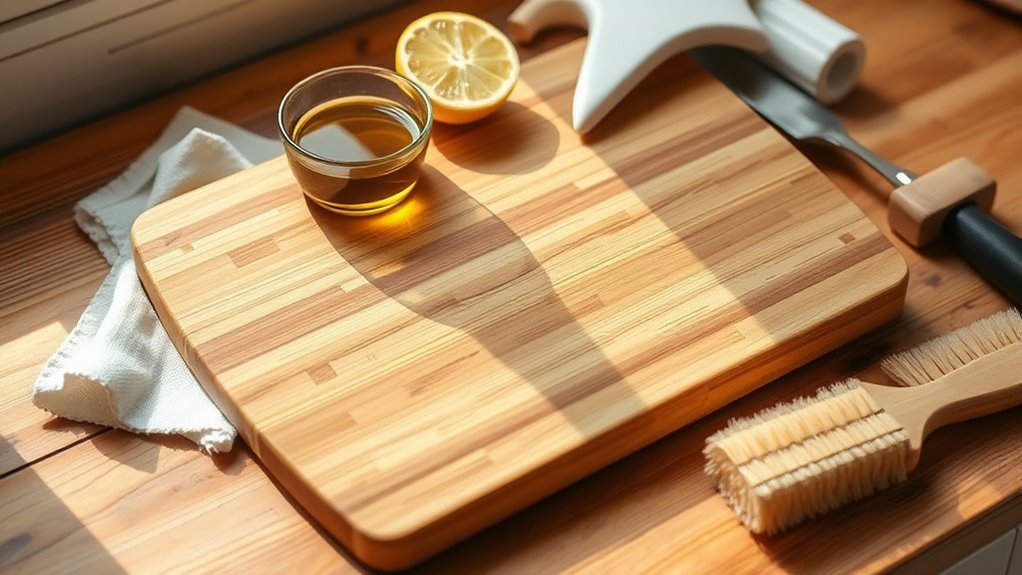
7 Essential Tips to Care for Bamboo Cutting Boards
To care for your bamboo cutting board and ensure its longevity, it’s important to follow some essential tips. Bamboo cutting boards are durable and eco-friendly, but they require proper maintenance to prevent damage and keep them hygienic.
Regular cleaning and conditioning are key to preserving their natural beauty and functionality. Always clean your bamboo cutting board gently with mild soap and warm water, avoiding soaking. Dry it immediately and store it upright in a cool, dry place away from heat or sunlight.
Remove stains using baking soda and lemon, and regularly oil the board to prevent cracking and warping. Use proper cutting techniques to avoid deep cuts that harbor bacteria.
Keep these tips in mind, and you’ll discover even more ways to extend your board’s life and maintain its quality.
Key Takeaways
- Clean bamboo boards with mild soap and warm water, avoiding harsh detergents and prolonged soaking.
- Dry boards immediately and store upright in a cool, dry place away from sunlight and heat.
- Remove stains and odors using coarse salt or baking soda rubbed with lemon halves, then rinse and dry.
- Regularly oil boards to prevent cracking, maintain moisture resistance, and extend their lifespan.
- Use gentle cutting techniques and hand wash only to avoid deep cuts and damage.
Why Bamboo Cutting Boards Need Special Care
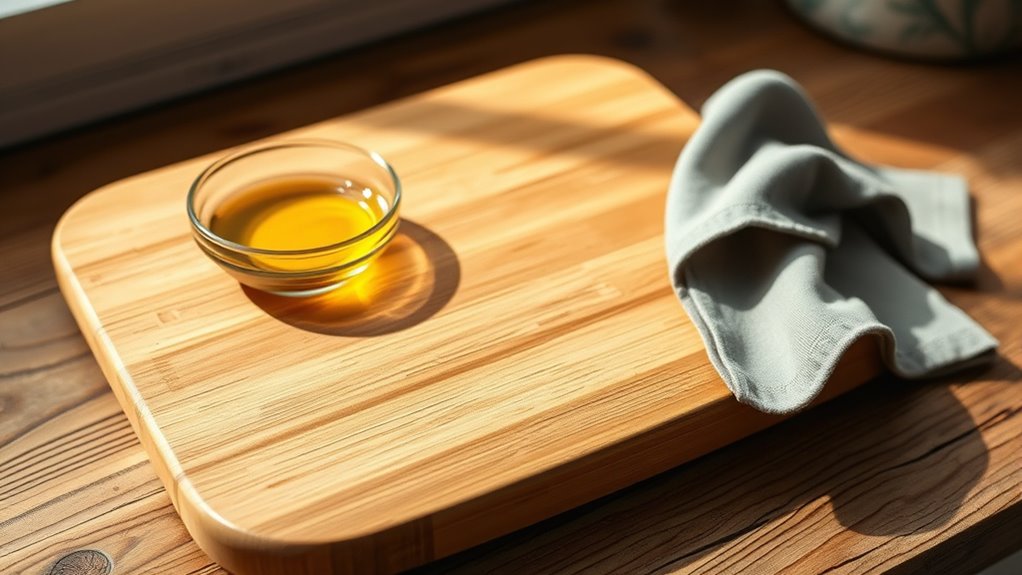
Because bamboo is a dense yet natural material, it requires special care to maintain its durability and appearance. When you use your bamboo cutting board, you’re relying on its strong fibers, but those fibers can dry out or crack if neglected. Unlike plastic boards, bamboo isn’t dishwasher-safe, and excessive moisture can cause warping or splitting.
You’ll want to keep it dry and avoid prolonged exposure to water. Also, bamboo’s natural oils help protect it, so it’s important to regularly treat your board with food-safe mineral oil or bamboo conditioner. Without this, your board may become brittle and prone to damage.
Taking these precautions guarantees your bamboo cutting board stays functional and attractive for years to come.
How to Clean Your Bamboo Cutting Board Safely

To keep your bamboo cutting board in great shape, use mild soap when cleaning it. Don’t soak the board in water, as that can cause damage.
After washing, make sure you dry it thoroughly to prevent warping or cracking.
Use Mild Soap
How should you clean your bamboo cutting board without damaging it? The key is to use mild soap. Harsh detergents or strong chemicals can strip the natural oils from bamboo, causing it to dry out and crack.
Instead, choose a gentle dish soap that’s free of bleach or abrasive ingredients. Apply a small amount of soap to a soft sponge or cloth, then gently scrub the board’s surface. This method removes food residue and bacteria effectively without compromising the board’s integrity.
After cleaning, rinse thoroughly with warm water to get rid of all soap traces. Using mild soap regularly will keep your bamboo cutting board clean and in great condition, preserving its durability and appearance for years to come.
Avoid Soaking Board
While it might seem like a good idea to soak your bamboo cutting board for a deep clean, you should avoid leaving it submerged in water. Bamboo is a natural material that can absorb water, causing it to swell, warp, or crack over time. Soaking also weakens the adhesive that holds the board together, reducing its durability.
Instead, clean your board promptly with a soft sponge or cloth using mild soap and warm water. Rinse it quickly to remove soap residue but don’t let water sit on the surface. By steering clear of soaking, you preserve the board’s structure and extend its lifespan, keeping it safe and effective for your food prep.
Dry Thoroughly Afterwashing
Why does drying your bamboo cutting board thoroughly matter? When you leave your board damp, it creates a perfect environment for bacteria and mold to grow. Bamboo is naturally resistant to moisture, but excess water can still seep into its fibers, causing warping or cracking over time.
After washing your board, use a clean towel to wipe it down immediately, then stand it upright or place it in a well-ventilated area to air dry completely. Avoid laying it flat, as trapped moisture underneath can lead to damage.
How to Dry and Store Your Bamboo Cutting Board

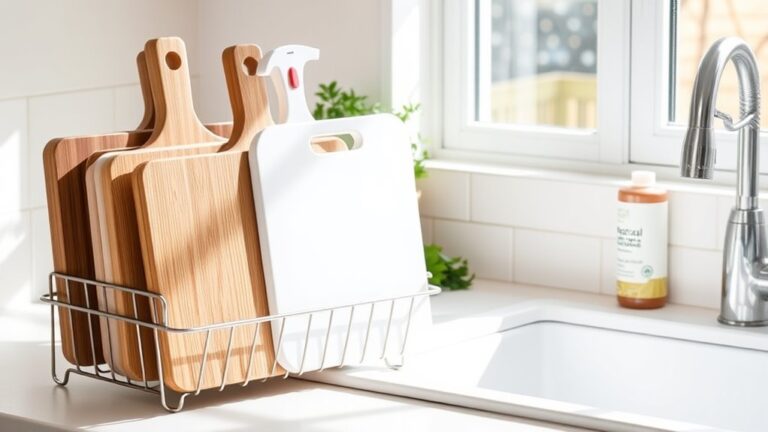
After washing your bamboo cutting board, you’ll want to dry it thoroughly to prevent warping and cracking. Use a clean towel to remove excess water immediately. Then, stand your board upright or place it on a drying rack to allow air to circulate around all sides.
Avoid laying it flat, as trapped moisture can damage the wood.
When storing, keep your bamboo board in a cool, dry place away from direct sunlight or heat sources, which can cause it to dry out and split. Make certain it’s completely dry before putting it away to discourage mold growth. Proper drying and storage extend your board’s lifespan and keep it safe for food prep, so make these steps part of your routine every time you clean your cutting board.
Remove Stains and Odors From Bamboo Cutting Boards
Because bamboo cutting boards absorb oils and liquids during use, they can develop stubborn stains and lingering odors over time. To keep your board fresh and clean, follow these steps:
- Sprinkle coarse salt or baking soda on the surface to absorb odors and loosen stains.
- Rub the salt or baking soda gently with a lemon half, allowing the natural acidity to break down stains and neutralize smells.
- Rinse the board with warm water and mild dish soap, then pat dry with a clean towel.
- For deeper cleaning, create a paste from baking soda and water, apply it to the board, let it sit for 10 minutes, then scrub gently before rinsing.
These simple methods help restore your bamboo cutting board’s appearance and freshness effectively.
Why Oil Treatment Protects Your Bamboo Cutting Board
You’ll want to oil your bamboo cutting board regularly to prevent cracking and splitting. The oil creates a water-resistant barrier that keeps moisture out. It also helps maintain the board’s smooth surface, making it easier to clean and use.
Prevents Cracking And Splitting
When you regularly oil your bamboo cutting board, it forms a protective barrier that keeps moisture from escaping, which prevents the wood from drying out and cracking. Without this treatment, bamboo becomes brittle and prone to splits.
To keep your board in top shape, follow these tips:
- Apply mineral oil generously every few weeks to maintain moisture balance.
- Use a clean cloth to spread oil evenly, ensuring full coverage.
- Let the oil soak in overnight for deep hydration.
- Wipe off any excess oil to avoid sticky residue.
Enhances Water Resistance
Although bamboo is naturally durable, oiling your cutting board greatly boosts its water resistance by sealing tiny pores that would otherwise absorb moisture. When you apply oil regularly, you create a protective barrier that repels water, preventing it from soaking in and causing swelling or warping. This barrier also helps reduce the risk of bacteria growth, as moisture trapped inside can lead to mold.
Without oil, your board can become brittle and weaken over time due to repeated exposure to water. To keep your bamboo cutting board in top shape, apply food-safe mineral oil or specialized bamboo oil every few weeks, especially after washing. This simple step guarantees your board stays water-resistant, extending its lifespan and maintaining its functionality in your kitchen.
Maintains Smooth Surface Texture
Because bamboo cutting boards face constant use and cleaning, their surface can become rough and prone to splintering over time. Applying oil treatment regularly keeps the board smooth and safe for food prep.
When you oil your cutting board, you:
- Fill microscopic cracks to prevent roughness and splinters.
- Create a protective barrier against moisture, preserving texture.
- Enhance the natural sheen, making the surface easier to clean.
- Prolong the board’s lifespan by reducing wear and tear from knives.
How to Prevent Cracks and Warping in Bamboo Cutting Boards
To keep your bamboo cutting board in top shape, you need to control its exposure to moisture and temperature changes. Avoid soaking it in water and never put it in the dishwasher. Instead, wash it promptly with mild soap and dry it thoroughly.
Store your board in a well-ventilated area away from direct heat or sunlight to prevent warping and cracks.
| Action | Why It Helps | Tip |
|---|---|---|
| Hand wash only | Prevents water absorption | Use warm water and soap |
| Dry immediately | Stops moisture buildup | Wipe with a dry towel |
| Store properly | Avoids heat damage | Keep away from stoves/windows |
Following these simple steps will keep your bamboo cutting board sturdy and crack-free for years.
Common Mistakes to Avoid With Bamboo Cutting Boards
Several common mistakes can shorten the life of your bamboo cutting board if you’re not careful. Avoid these pitfalls to keep your board in top shape:
- Skipping oiling: Don’t neglect regular oiling; it prevents drying and cracking.
- Using harsh detergents: Avoid strong soaps that can strip natural oils and damage the surface.
- Soaking in water: Prolonged soaking causes warping and weakens the board’s structure.
- Cutting with excessive force: Applying too much pressure can create deep cuts, making the board prone to bacteria buildup.
Frequently Asked Questions
Can Bamboo Cutting Boards Be Used for Hot Pots and Pans?
You shouldn’t place hot pots or pans directly on bamboo cutting boards because the heat can cause warping or cracking.
Instead, use trivets or heat-resistant pads to protect your board and keep it in good shape.
Are Bamboo Cutting Boards Dishwasher Safe?
No, you shouldn’t put bamboo cutting boards in the dishwasher. The heat and water can warp or crack them.
Instead, wash them by hand with mild soap and water, then dry them thoroughly to keep them lasting longer.
How Often Should I Replace My Bamboo Cutting Board?
Like a loyal friend, your bamboo cutting board should be replaced every 1-3 years, or sooner if deep cracks or excessive wear appear.
You’ll keep your kitchen safe and your meals tasting fresh by doing this.
Can Bamboo Cutting Boards Be Used for Meat and Vegetables?
Yes, you can use bamboo cutting boards for meat and vegetables, but you should avoid cross-contamination by thoroughly cleaning and sanitizing the board between uses.
Consider using separate boards for raw meat and veggies to stay safe.
Is Bamboo More Hygienic Than Plastic Cutting Boards?
Wondering if bamboo’s really more hygienic than plastic? Yes, it naturally resists bacteria better, but you’ve got to clean and dry it properly.
Otherwise, neither board stays safe for your food prep!
Conclusion
Caring for your bamboo cutting board is like tending a garden—nurture it with gentle cleaning, proper drying, and regular oiling. Picture the smooth, rich wood glowing with each use, resisting cracks and stains like a well-loved friend.
By avoiding common mistakes, you keep its natural beauty alive, turning every meal prep into a moment of mindful care. Treat your bamboo board well, and it’ll serve you with lasting strength and grace.
Following these essential tips for bamboo cutting board care ensures durability and hygiene. Proper maintenance helps prevent damage and keeps your board looking its best. Embrace these practices to enjoy the full benefits of your bamboo cutting board every day.